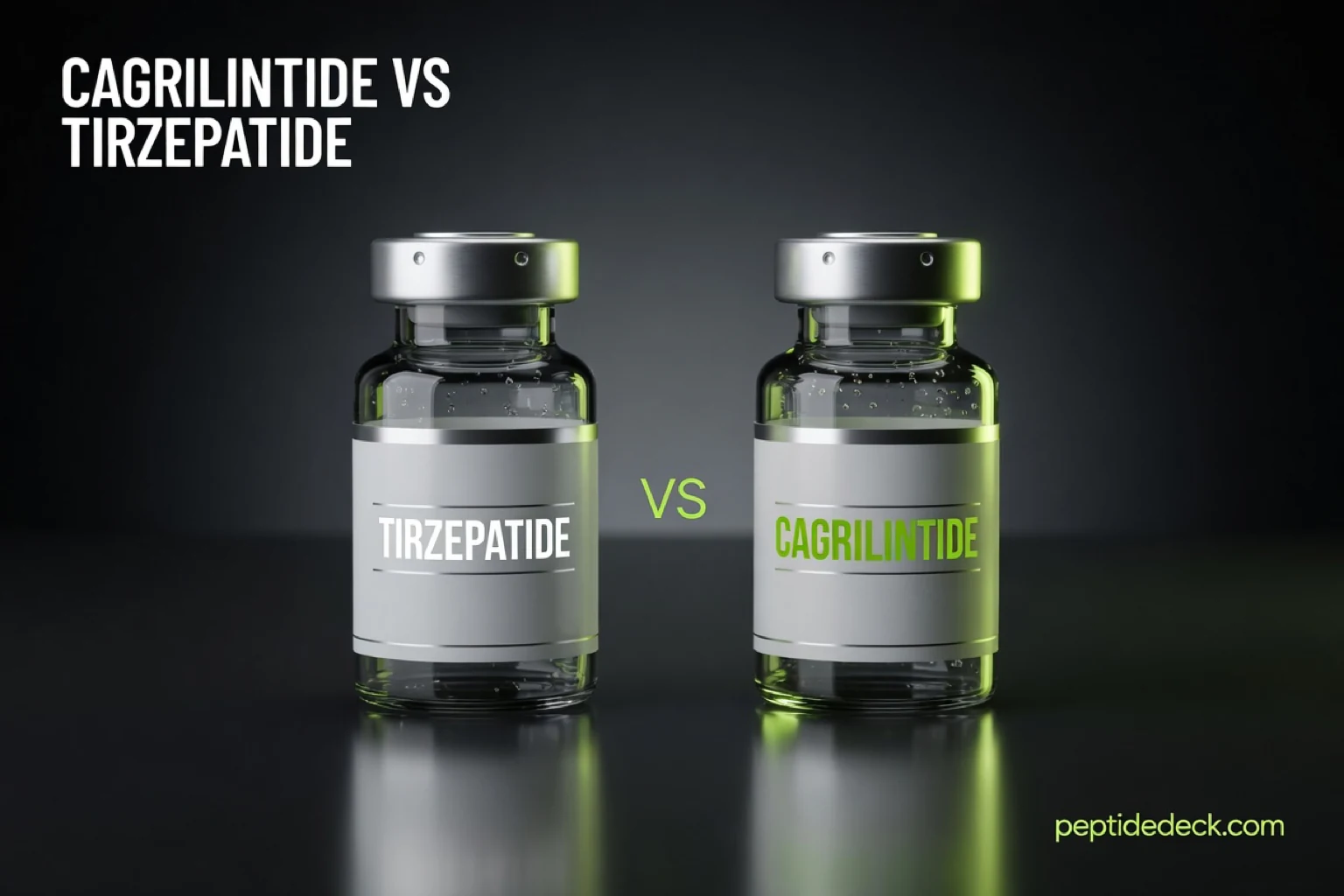
These two are not competitors. Read that first.
Most comparison pages line them up as if you pick one, and that framing is why the search results for this pair are so confused. Tirzepatide is a finished, approved drug that stands on its own. Cagrilintide is a different kind of molecule that was designed from the start to be paired with something else. Comparing them head to head is a bit like comparing an engine to a turbocharger.
This cagrilintide vs tirzepatide guide explains what each actually does, why the trial numbers for cagrilintide alone look the way they do, what happens when it is combined, and which question you should really be asking.
🔑 Key Takeaways
- Tirzepatide is a GLP-1/GIP agonist. Cagrilintide is an amylin analogue. They act on different hormone systems, which is exactly why one of them is used as an add-on rather than an alternative.
- Cagrilintide's standalone number is roughly half of tirzepatide's, and that is not a mark against it. It was engineered to be combined, and its combination result lands right beside tirzepatide's.
- Amylin does something to satiety that GLP-1 does not, and the difference is felt at a specific moment in a meal.
- The comparison people actually mean is tirzepatide versus a cagrilintide combination, and that one is close enough to be interesting.
- One of these two you can be prescribed today. The other is still approaching the finish line, and only as part of a pair.
Cagrilintide's most-studied partner is semaglutide, covered in cagrilintide vs semaglutide and the CagriSema protocol. The pairing with tirzepatide itself has a page in tirzepatide + cagrilintide stack. This page is about the two molecules on their own terms.
Two different hormone systems
GLP-1 and amylin are both satiety signals. They are not the same signal.
Tirzepatide works through GLP-1 and GIP, the incretin hormones released by the gut when you eat. GLP-1 slows stomach emptying, blunts appetite centrally, and improves insulin release. GIP adds effects on fat tissue and, usefully, seems to take the edge off GLP-1's nausea. Together they produce the strongest appetite suppression of any approved drug.
Cagrilintide is a long-acting analogue of amylin, a hormone released alongside insulin from the pancreas. Amylin also slows gastric emptying and reduces appetite, but it acts through different receptors and different brain regions, with a particular effect on the sense of fullness during and immediately after a meal rather than on the background hunger between meals.
That distinction is the whole reason cagrilintide exists. Two satiety signals through two separate pathways stack; two drugs on the same pathway mostly do not. Novo Nordisk developed cagrilintide as the amylin half of a pair, with semaglutide as the GLP-1 half, and the combination is what the pivotal trials test.
Cagrilintide vs tirzepatide: the numbers, and why they mislead
Alone, it is not close. Combined, it is.
The standalone cagrilintide figure is from a 26-week phase 2 study and would have kept climbing with time, so it understates the molecule somewhat. But even generously extrapolated it lands well short of tirzepatide, and that is fine, because nobody is proposing cagrilintide on its own. The number that matters is the combination one, and 20.4% at 68 weeks is within touching distance of tirzepatide's 20.9% at 72.
What amylin adds that GLP-1 does not
Fullness at the table.
People on GLP-1 drugs describe the change as a drop in background hunger and in the mental pull toward food. People on amylin analogues describe something slightly different: the meal itself ends sooner, the plate feels finished earlier, and the sense of being satisfied holds after eating. It is the same overall effect from a different direction, and the two are additive rather than redundant.
There is a second, quieter point. Because cagrilintide does not work through GLP-1, it does not add GLP-1's specific gut side effects in the same dose-dependent way. Combination trials have found the pair tolerable at doses of each component that, added together, produce more loss than either alone. That is the design logic, and it has held up so far.
The comparison you actually mean
Tirzepatide against a cagrilintide combination.
Nobody chooses between cagrilintide alone and tirzepatide. The live question is whether tirzepatide, a single drug with two mechanisms, beats a pair of drugs with two mechanisms. On current data they are close: 20.9% against 20.4%, from trials of similar length, in populations that were broadly comparable. Tirzepatide has the longer safety record and the approval. The combination has the amylin pathway, which tirzepatide does not touch, and which leaves open a third mechanism to add later.
Where this is heading
The next round of trials pairs amylin analogues with GLP-1/GIP drugs rather than with GLP-1 alone, which is the tirzepatide plus cagrilintide idea. That is the combination with the strongest theoretical ceiling in the current pipeline, and it is the reason this comparison will look different in two years.
For now, tirzepatide is the drug you can be prescribed, and cagrilintide is the ingredient that makes an equal number possible for semaglutide. Neither is a reason to wait on the other.
What you can actually use
One prescription, one pipeline.
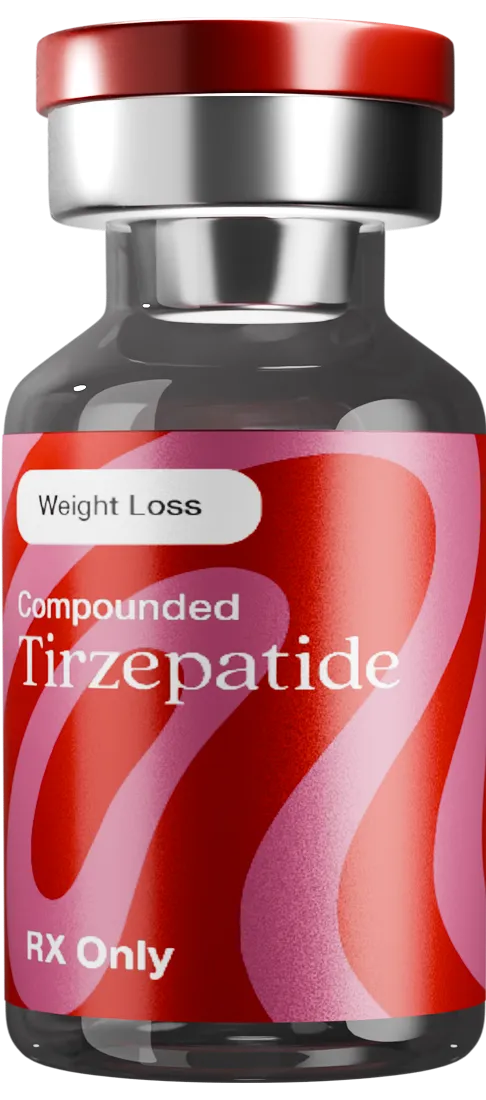
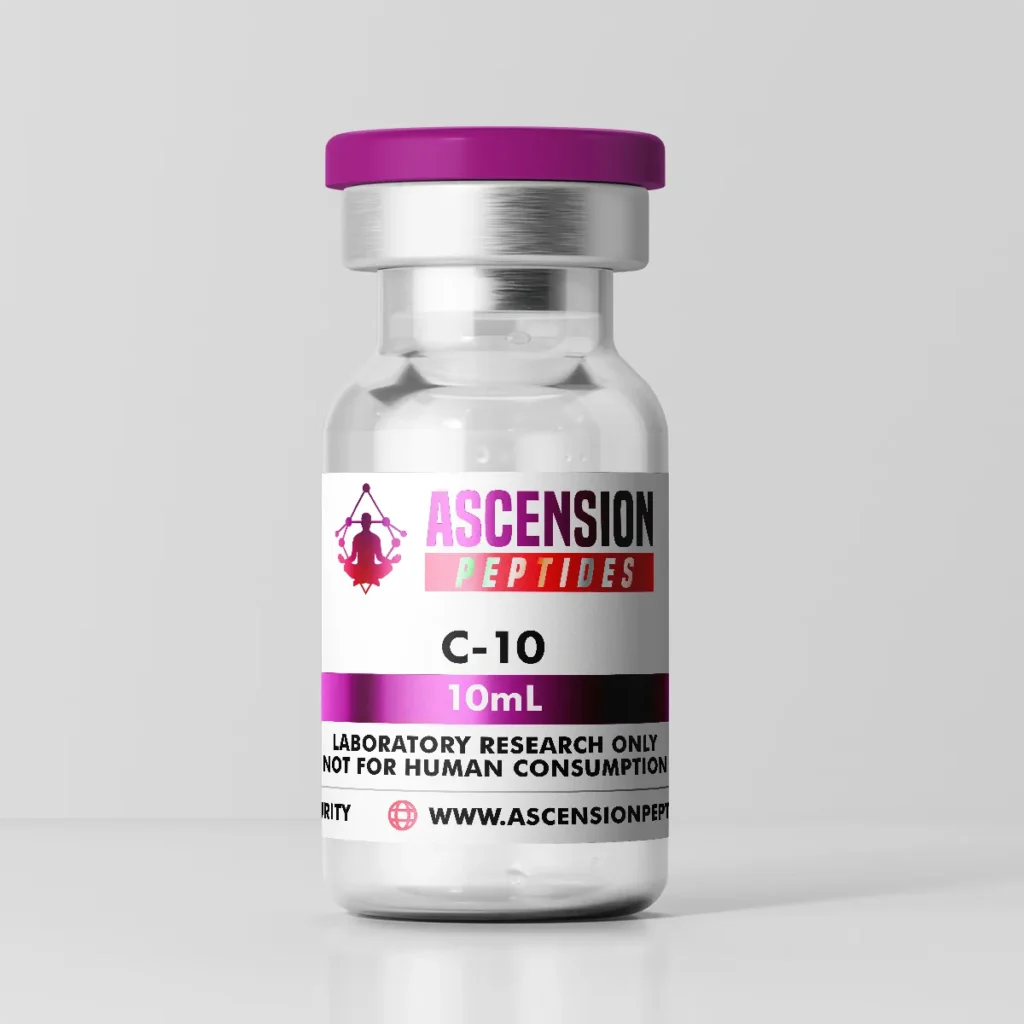
Tirzepatide is approved as Mounjaro and Zepbound and available through insurance, LillyDirect, telehealth and compounding; the routes are compared in compounded tirzepatide. Cagrilintide has no approval on its own anywhere, and outside trials exists only as a laboratory-labelled peptide from vendors, with no established human dose for standalone use. What is known about it is in the cagrilintide guide.
Frequently Asked Questions
Medical disclaimer. This article is informational and does not replace individual medical advice. Tirzepatide is a prescription medicine and cagrilintide is an investigational drug with no standalone approval; neither should be started, combined, switched or stopped without a clinician, and cagrilintide should not be used outside a clinical trial. Trial figures are population averages from studies of different lengths and designs, presented to show scale rather than to predict an individual result. Anyone with a history of pancreatitis, thyroid cancer, gallbladder disease or an eating disorder, or who is pregnant or planning pregnancy, should discuss any of these treatments with a doctor first.