VIP peptide, also written vasoactive intestinal polypeptide, is sold as a nasal spray and studied as a drug under the name aviptadil. Most people searching for it want to know three things: what it does, whether the CIRS spray works, and what it feels like to use.
🔑 Key Takeaways
- VIP is a potent anti-inflammatory neuropeptide that suppresses pro-inflammatory cytokines (TNF-α, IL-6, IL-12)
- Used in CIRS (mold illness) protocols to restore regulatory neuropeptide balance
- Bronchodilator — relaxes smooth muscle in the airways and pulmonary vasculature
- Supports gut motility and intestinal immune regulation
- Intranasal is the primary research delivery route for systemic effects
VIP at a glance
- Names: vasoactive intestinal peptide, vasoactive intestinal polypeptide, VIP; the synthetic drug form is called aviptadil.
- Size: 28 amino acids, first isolated from hog small intestine in 1970 (Said & Mutt 1970).
- Receptors: VPAC1 and VPAC2, plus PAC1, which it shares with PACAP.
- Half-life: about 1 minute in blood after IV infusion in 4 healthy volunteers (Domschke 1978).
- Approval status: aviptadil combined with phentolamine (Invicorp) is an injection licensed in the UK for erectile dysfunction (SMC advice, 11 December 2017). Aviptadil has no FDA approval; Drugs@FDA lists no aviptadil product as of November 2026.
- Best human data: small inhaled studies in pulmonary hypertension (8 and 20 patients), one open-label CIRS study (20 patients), and two IV trials in COVID-19 respiratory failure that missed their primary endpoints.
VIP is well-known in a specific corner of the medical world: CIRS (Chronic Inflammatory Response Syndrome) — a condition associated with biotoxin exposure (mold, Lyme disease) that leaves the immune system chronically dysregulated. Dr. Ritchie Shoemaker's CIRS protocol includes VIP as a late-stage treatment to normalize inflammatory markers and restore regulatory neuropeptide levels that biotoxin illness depletes.
Outside of CIRS, VIP has a broader pharmacological profile worth understanding. It's a genuine anti-inflammatory peptide with activity across multiple organ systems — lungs, gut, immune system, and vasculature.
What Is VIP?
Vasoactive Intestinal Peptide is a 28-amino acid neuropeptide first isolated from porcine intestine in 1970 (hence the "intestinal" in the name). It's found throughout the body — in the enteric nervous system of the gut, peripheral autonomic nerves, the lungs, the brain, and immune cells. VIP receptors (VPAC1, VPAC2, and PAC1) are expressed across a wide range of tissues, which explains its diverse effects.
It works primarily through cAMP-mediated signaling, causing smooth muscle relaxation (vasodilation, bronchodilation) and suppressing inflammatory immune responses.
What Is the "VIP Effect"? VIPoma, Not the Peptide
Two very different things share the name.
In medicine, the "VIP effect" usually points to what too much VIP does to the body, which is best known from VIPoma, a rare tumour that releases VIP. In 1958 Verner and Morrison described an islet cell tumour causing refractory watery diarrhoea and low potassium (Verner & Morrison 1958), and in 1973 Bloom and colleagues linked that watery-diarrhoea syndrome to VIP (Bloom 1973). That is why VIPoma is also called Verner-Morrison syndrome.
The peptide sold as a spray is the same molecule, but at tiny doses and for a short time. When healthy volunteers were infused with enough VIP to reach VIPoma-range blood levels, they had flushing, a faster pulse and small rises in blood glucose (Domschke 1978). The diarrhoea of VIPoma comes from persistently high tumour output, which a nasal spray with a 1-minute half-life does not reproduce.
VIP Benefits & Research Applications
Anti-Inflammatory
VIP potently suppresses TNF-α, IL-6, IL-12, and IFN-γ — the core pro-inflammatory cytokines driving many chronic inflammatory conditions. It simultaneously upregulates anti-inflammatory IL-10 and TGF-β.
Pulmonary Vasodilation
VIP relaxes pulmonary vascular smooth muscle — it's been studied for pulmonary arterial hypertension (PAH). Inhaled VIP reduced mean pulmonary artery pressure in PAH patients in early clinical studies.
Immune Modulation (CIRS)
In CIRS protocols, VIP addresses the regulatory neuropeptide deficiency that biotoxin illness creates. It normalizes VEGF, MMP9, C4a, and TGF-β1 — inflammatory markers that define CIRS severity.
Gut Motility & Intestinal Health
VIP regulates intestinal smooth muscle, blood flow, and immune function in the gut. It's involved in secretion, motility, and the maintenance of the gut immune barrier. Relevant for IBS and inflammatory bowel conditions.
Neuroprotection
VIP has neurotrophic and neuroprotective effects. It supports neuronal survival and is being studied in neuroinflammatory conditions including multiple sclerosis and Parkinson's disease models.
Autoimmune Regulation
By shifting immune responses from Th1/Th17 (pro-inflammatory) toward Treg (regulatory) phenotypes, VIP reduces autoimmune inflammation. Studied in rheumatoid arthritis, lupus, and Crohn's disease models.
VIP in CIRS Protocols
In Shoemaker's CIRS protocol, VIP is typically used in the final stage after:
- Removal from biotoxin exposure
- Cholestyramine or welchol (binders) to clear toxins
- Correction of MARCoNS, hormone imbalances, and prior inflamm markers
VIP at this stage is used to normalize persistent dysregulation — particularly elevated TGF-β1, low VEGF, and ongoing symptoms that don't resolve with earlier interventions. It's considered a regulatory peptide replacement, addressing what biotoxin illness depletes from the body's natural regulatory system.
What the CIRS study actually showed
The evidence for the CIRS spray comes mainly from one study. Shoemaker and colleagues ran an open-label trial of 20 patients (11 women, 9 men) whose CIRS had not resolved after a mean of 36 months of earlier treatment steps (Shoemaker 2013). Each used 50 mcg of aviptadil by nasal spray, starting four times a day and then adjusted, for 18 months.
- Symptoms: fell from about 23 at baseline to the range of healthy controls in all treated patients.
- Lab markers: C4a, TGF-β1 and MMP-9 started well above controls and were no longer different from controls by the end.
- Regulatory T cells: CD4+CD25+ counts rose from a mean of 8.9 to 22.5.
- Exercise lung pressure: entry required a rise of more than 8 mmHg in pulmonary artery systolic pressure on exercise; the authors report it fell below that within two months, but the data are "not shown".
- Safety: no dropouts for side effects; one patient had a temporary lipase rise without pain.
The limits matter. There was no placebo group, the comparison was against the clinic's historical controls, and the study was run at the protocol author's own clinic. It is a reasonable signal for a hard-to-treat group, not proof.
Inhaled VIP for Pulmonary Hypertension: The Numbers
This is the best-measured use of VIP.
In 2003 a Vienna group gave 8 patients with primary pulmonary hypertension inhaled VIP, 200 mcg a day split into four inhalations, for 3 months (Petkov 2003). Mean pulmonary artery pressure fell from 59 to 46 mmHg, cardiac output rose from 4.7 to 6.4 L/min, pulmonary vascular resistance roughly halved, and the 6-minute walk improved from 296 to 409 m at 12 weeks. The authors reported virtually no side effects. The trial was small and uncontrolled.
A 2008 Munich study tested a single 100 mcg dose of inhaled aviptadil in 20 patients during right-heart catheterisation (Leuchte 2008). It caused a small, short-lived drop in lung vascular pressure without changing systemic blood pressure, and 6 of the 20 had a resistance drop of more than 20%. The authors called the effect "modest and short-lived".
IV aviptadil in COVID-19: two misses
IV aviptadil was also tested in hospitalised COVID-19 respiratory failure. A 196-patient trial missed its primary endpoint (alive and free of respiratory failure at day 60), though it reported better survival odds as a secondary result (Youssef 2022; one author works for NRx Pharmaceuticals, which was running aviptadil trials). The larger TESICO trial, run at 28 US sites, randomised 471 patients and found no benefit: 38% of the aviptadil group and 36% of the placebo group had died by day 90 (Brown 2023, TESICO).
VIP Dosage Protocol
Only the CIRS and PAH rows come from published human studies. The middle row is common practice with no trial behind it.
VIP Side Effects
VIP is generally well tolerated at intranasal doses. Reported effects:
- Nasal irritation or congestion (from intranasal application)
- Mild facial flushing (vasodilatory effect)
- Hypotension at higher doses — VIP is a vasodilator; those with low blood pressure should start low
- Some CIRS patients report temporary symptom flaring when starting VIP
Side effects by route, from human studies
The route changes what you notice. IV doses reach the whole circulation at once, while a spray or inhaler delivers far less to the bloodstream.
If you get lightheaded, a pounding pulse or flushing that does not settle, stop and talk to a doctor. People on blood pressure medicines should check with their prescriber first, because VIP is a vasodilator.
VIP vs PACAP-38 vs BPC-157 vs KPV
These four get compared because all are sold for inflammation or gut issues.
Only VIP has human trial data in a named disease, and even that is small. PACAP-38 is VIP's closest relative, discovered in 1989 from sheep hypothalamus and at least 1,000 times more potent than VIP at stimulating adenylate cyclase in pituitary cells (Miyata 1989).
Where to Get VIP Peptide
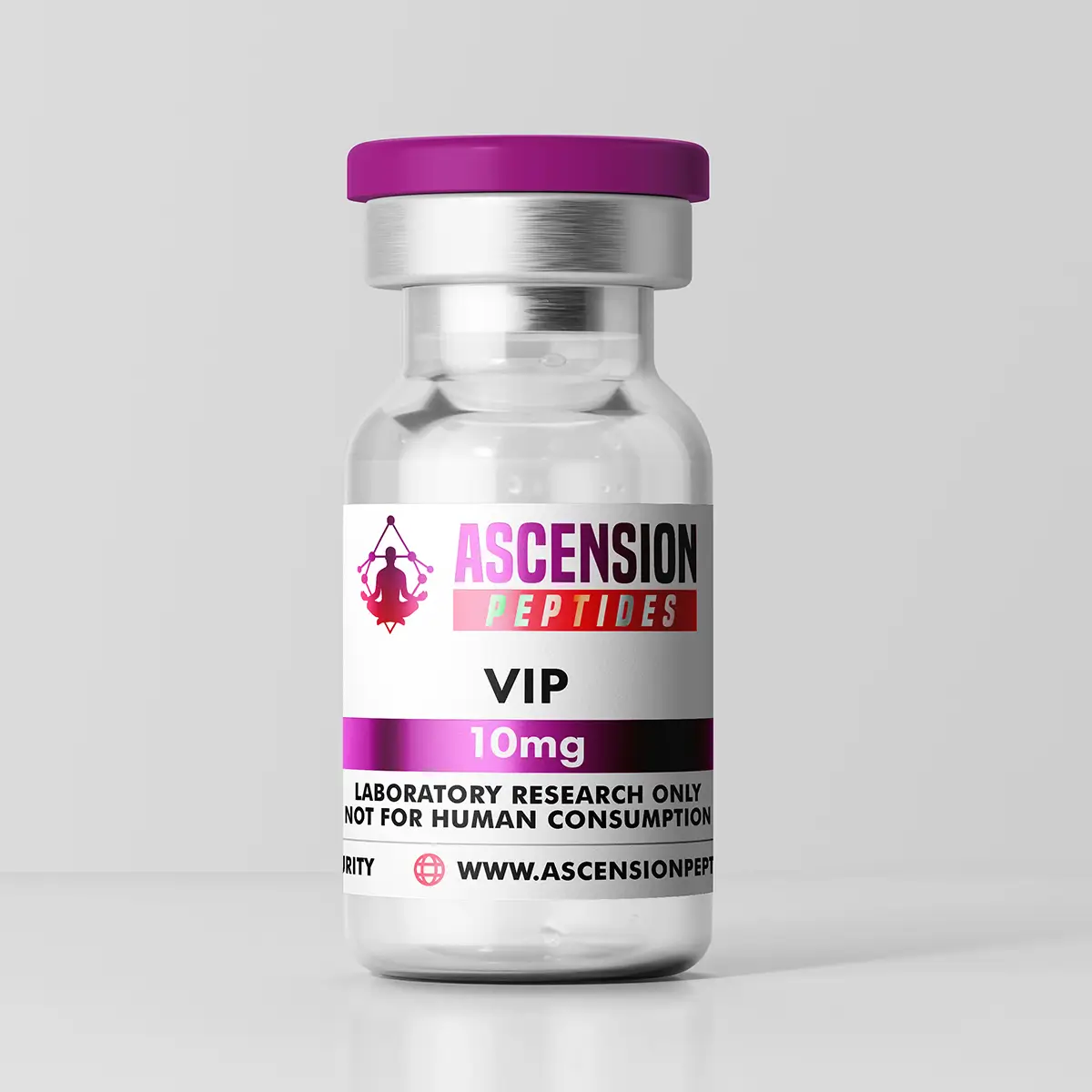
Ascension Peptides carries VIP 10mg — lyophilized, third-party tested. For intranasal use, you'll need a nasal spray atomizer and bacteriostatic water for reconstitution. Check the dose math before the first spray: a 10mg vial mixed with 2 mL gives 500mcg in every 0.1 mL spray, ten times the CIRS dose. To get 50mcg per spray the solution has to be 0.5 mg/mL, for example 0.2 mL of that mix (1mg) plus 1.8 mL bacteriostatic water in the spray bottle, which gives 20 sprays of 50mcg. Store lyophilized VIP at -20°C and reconstituted solution at 4°C.
VIP is one of several peptides with a genuine role in gut physiology but no human gastrointestinal trial behind it. Our guide to gut health peptides compared by evidence tier sets out which compounds in this category are approved drugs and which, like VIP, remain preclinical.
Frequently Asked Questions
References
- Said SI, Mutt V. Polypeptide with broad biological activity: isolation from small intestine. Science. 1970.
- Domschke S et al. Vasoactive intestinal peptide in man: pharmacokinetics, metabolic and circulatory effects. Gut. 1978.
- Gill JS et al. Haemodynamic actions and pharmacokinetics of VIP-related peptides in man. Clin Sci. 1990.
- Petkov V et al. Vasoactive intestinal peptide as a new drug for treatment of primary pulmonary hypertension. J Clin Invest. 2003.
- Leuchte HH et al. Inhalation of vasoactive intestinal peptide in pulmonary hypertension. Eur Respir J. 2008.
- Shoemaker R, House D, Ryan J. Vasoactive intestinal polypeptide (VIP) corrects chronic inflammatory response syndrome (CIRS) acquired following exposure to water-damaged buildings. Health. 2013;5(3):396-401.
- Youssef JG et al. IV aviptadil in critical COVID-19 respiratory failure: 60-day randomized controlled trial. Crit Care Med. 2022.
- Brown SM et al. Intravenous aviptadil and remdesivir for COVID-19 hypoxaemic respiratory failure (TESICO). Lancet Respir Med. 2023.
- Verner JV, Morrison AB. Islet cell tumor and a syndrome of refractory watery diarrhea and hypokalemia. Am J Med. 1958.
- Bloom SR, Polak JM, Pearse AG. Vasoactive intestinal peptide and watery-diarrhoea syndrome. Lancet. 1973.
- Miyata A et al. Isolation of a novel 38 residue-hypothalamic polypeptide which stimulates adenylate cyclase in pituitary cells. Biochem Biophys Res Commun. 1989.
- Kannengiesser K et al. Melanocortin-derived tripeptide KPV in models of inflammatory bowel disease. Inflamm Bowel Dis. 2008.
- Gwyer D et al. Gastric pentadecapeptide BPC 157 and musculoskeletal soft tissue healing. Cell Tissue Res. 2019.
- Lee E, Padgett B. Intra-articular injection of BPC 157 for multiple types of knee pain. Altern Ther Health Med. 2021.
- Scottish Medicines Consortium. Aviptadil/phentolamine mesilate (Invicorp), advice 11 December 2017.