Are Peptides Steroids? Key Differences, Safety & Which to Choose
🔑 At a Glance
- Short answer: No. Peptides are not steroids, and they do not act like testosterone derivatives.
- Main difference: Peptides usually signal or stimulate a process. Steroids directly alter the hormonal environment.
- Muscle gain: Steroids are far stronger for rapid size and strength. Peptides are usually milder and more goal-specific.
- Side effects: Steroids carry more suppression, estrogenic, androgenic, and cardiovascular baggage.
- Best fit: Peptides usually make more sense for recovery, fat loss, GH support, skin, or libido goals than for pure mass building.
- Bottom line: People group them together, but they are not the same class and should not be judged like they are.
No. Peptides are not steroids. That is the short answer, and honestly it should be stated that plainly because a lot of people searching this are not looking for nuance first. They just want to know if peptides belong in the same bucket as anabolic steroids.
They do not. Peptides and steroids can both show up in conversations about muscle, recovery, performance, fat loss, and anti-aging, but they work through very different pathways and come with very different tradeoffs. This article now targets both peptides vs steroids and are peptides steroids, because those two searches are really the same question from slightly different angles.
Short version: if you want to build 20 pounds of muscle in 12 weeks, steroids are more effective and peptides can't replicate that. If you want to improve body composition, accelerate recovery, preserve hormonal health, and operate without federal criminal exposure, peptides are the better tool. Most people's actual goals fall into the second category.
Peptides vs Steroids: Side-by-Side Comparison Table
How Anabolic Steroids Work: Mechanisms, Effects, and Risks
Anabolic androgenic steroids (AAS) are synthetic derivatives of testosterone. They're engineered to bind androgen receptors with high affinity: often higher than testosterone itself: and once bound, the AR-steroid complex migrates into the cell nucleus and directly activates gene transcription programs responsible for protein synthesis, nitrogen retention, and red blood cell production.
The downstream effects are not subtle. Even modest doses of exogenous testosterone in controlled clinical trials produce statistically significant increases in muscle protein synthesis within weeks. Heavy cycles amplify this further. This is why AAS are genuinely effective: the muscle-building effect is not placebo and not hype.
Testosterone Suppression: The Core Trade-Off
The fundamental problem with anabolic steroid use is the HPG axis trade-off. When exogenous androgens flood the hypothalamic-pituitary-gonadal feedback sensors, the system reads "testosterone surplus" and shuts down LH and FSH signals that tell the testes to produce testosterone naturally. Endogenous testosterone production can fall to near zero within weeks of a cycle start.
This is the origin of post-cycle therapy (PCT). Compounds like Clomid (clomiphene citrate) or Nolvadex (tamoxifen) are used after a steroid cycle to restart the HPG axis. But recovery is not guaranteed: with sustained heavy use over years, some degree of permanent HPG dysfunction is a documented real risk, not a theoretical one. Some long-term AAS users require TRT for life because natural production never returns.
Liver Strain From Oral Steroids
Oral anabolic steroids: particularly the 17-alpha-alkylated variants like Dianabol (methandrostenolone), Anavar (oxandrolone), and Winstrol (stanozolol): are chemically modified to survive first-pass liver metabolism. This modification makes them effective when taken orally, but it places a substantial burden on hepatic function.
Elevated liver enzymes (ALT, AST) are among the most commonly observed side effects of oral AAS. Peliosis hepatis: blood-filled cysts on the liver: is associated with long-term use. Hepatic carcinoma in severe long-term cases. Injectable steroids (testosterone enanthate, Deca-Durabolin, Equipoise) are significantly less hepatotoxic, but not completely benign either: the androgenic load still affects the liver's metabolic burden.
Gynecomastia and Aromatization
Many anabolic steroids aromatize: they convert to estradiol via the aromatase enzyme. When estrogen levels rise without a corresponding corrective in the androgen-to-estrogen ratio, gynecomastia (development of breast tissue in males) can develop. This is particularly common with testosterone, Dianabol, and boldenone.
Managing aromatization requires adding aromatase inhibitors (AI compounds like Anastrozole or Exemestane) or selective estrogen receptor modulators on-cycle. This adds complexity, cost, and additional compounds to manage: none of which is a concern with peptide protocols.
Cardiovascular Impact
The cardiovascular effects of anabolic steroids are probably their most medically serious long-term risk. AAS typically suppress HDL cholesterol ("good") and elevate LDL ("bad"), creating a lipid profile associated with increased cardiovascular disease risk. Left ventricular hypertrophy: thickening of the heart muscle: is well-documented in long-term AAS users, and unlike the athlete's heart seen from endurance training, AAS-related LVH is associated with impaired diastolic function. Elevated hematocrit (red blood cell mass) increases blood viscosity and thrombotic risk.
These cardiovascular changes are dose-dependent and partially reversible after cessation, but the recovery is not complete in all users and the risk accumulates with years of sustained use.
How Research Peptides Work: Stimulating Natural Production
Peptides are short chains of amino acids that function as signaling molecules: see our complete peptide therapy guide for an overview. They bind to receptors on cell surfaces and trigger intracellular signaling cascades: they do not enter the nucleus directly and do not override gene transcription programs the way steroids do. The distinction is fundamental to understanding the peptides vs steroids risk comparison.
In the performance context, the research peptides most commonly compared to steroids: covered in our peptides for bodybuilding guide: are GH secretagogues (Ipamorelin, CJC-1295, Sermorelin, GHRP-6), healing peptides (BPC-157, TB-500), and fat-targeted peptides (AOD-9604, Fragment 176-191).
GH Secretagogues: Amplifying Natural Production
GH secretagogues work by stimulating the pituitary gland to produce and release its own growth hormone: they do not replace it. Ipamorelin binds the ghrelin receptor in the pituitary and amplifies the natural GH pulse. CJC-1295 extends the half-life of GHRH (growth hormone releasing hormone) to sustain elevated GH release over a longer window. The net effect is elevated GH and downstream IGF-1, but through a physiological mechanism that preserves the body's own feedback loop.
The critical difference from exogenous HGH: as explored in our peptides vs HGH comparison: is that peptides amplify what the body already produces instead of replacing it externally. The pituitary gland continues to function. The HPG axis is completely unaffected. When use stops, GH levels return to baseline without any recovery protocol needed.
Healing Peptides: Tissue Repair Without Hormonal Disruption
BPC-157 and TB-500 work through growth factor signaling and angiogenesis pathways. BPC-157 (Body Protection Compound-157) upregulates growth hormone receptors in connective tissue, activates the nitric oxide pathway, and stimulates VEGF-driven angiogenesis: all contributing to accelerated tendon, ligament, muscle, and gut healing in animal models. TB-500 promotes actin polymerization and endothelial cell migration, supporting cellular repair and tissue regeneration.
Neither peptide affects testosterone levels, liver function, or the cardiovascular system in any documented negative way. They don't interact with the HPG axis at all. This is the landscape of peptides vs steroids from a risk standpoint: healing peptides address tissue-level repair through mechanisms steroids don't even touch, without any of the systemic hormonal disruption.
No HPG Axis Suppression: The Defining Difference
The most important practical difference in peptides vs steroids comes down to this single point: research peptides: as we detail in our are peptides safe analysis: GH secretagogues, healing peptides, fat loss peptides: do not suppress natural testosterone production. There is no PCT. No recovery period. No risk of permanent HPG dysfunction from peptide use. This is not a minor advantage: for users who care about long-term hormonal health, it changes everything about the risk calculus.
Peptides vs Steroids for Muscle Growth: An Honest Comparison
Honesty first: if your only goal is to maximize lean mass gains in the shortest possible time frame, anabolic steroids are more effective than research peptides. That's not controversial: it's documented in controlled trials. Even low-dose testosterone without resistance training produces significant increases in lean mass and strength. Peptides cannot replicate this.
GH secretagogues: ranked in our best peptides for muscle growth guide: improve body composition over time: primarily through enhanced fat oxidation, better sleep quality (GH is secreted primarily during deep sleep, and peptides amplify this), elevated collagen synthesis, and improved recovery capacity. These are meaningful cumulative effects, but they don't compress 12 weeks of natural gains into 6 weeks the way a testosterone or nandrolone cycle can.
💡 The Honest Take on Peptides vs Steroids for Muscle Growth
Peptides are not a steroid replacement for direct hypertrophy. Comparing them head-to-head on muscle building misses the point entirely: they target different biological systems. GH peptides support the conditions for muscle growth (better recovery, improved sleep, reduced fat, elevated IGF-1) while steroids directly force it. If someone tells you a peptide stack will give you steroid-like mass gains, they're selling you something.
Where peptides genuinely compete on the muscle side: sustained use of GH secretagogues over 6–12 months produces measurable improvements in lean mass composition: typically more gradual, more sustainable, and with a dramatically better side effect profile. No PCT. No post-cycle muscle loss as the hormonal system recovers. Gains accumulated under elevated GH/IGF-1 tend to be more compositionally favorable: lean tissue rather than glycogen and water.
Muscle preservation during a caloric deficit is another area where GH peptides genuinely shine. The anti-catabolic effects of elevated GH/IGF-1 help retain lean mass during fat loss phases: which is arguably the more important goal for most people than maximum hypertrophy.
Peptides vs Steroids for Fat Loss
Fat loss is one area where the peptides vs steroids comparison gets genuinely competitive: and in some cases, more favorable for peptides than most people expect.
Steroids for fat loss: Certain androgens: Anavar, Winstrol, Trenbolone: are associated with fat oxidation effects and are commonly used in cutting phases. But they work primarily by elevating metabolic rate through increased muscle mass and some direct androgenic effects on adipose tissue. The lipolytic mechanism of most AAS is not particularly targeted. Trenbolone arguably has the most potent fat loss effects among steroids, but also carries among the harshest side effect profiles of any compound in this class: including severe androgenic effects, cardiovascular strain, and mood disturbances that many users describe as difficult to manage.
Peptides for fat loss: GH secretagogues directly enhance lipolysis through a clean physiological mechanism: elevated GH stimulates adipose tissue to release fatty acids for oxidation. This is targeted and effective, particularly for visceral fat (the metabolically dangerous fat around organs). AOD-9604 was specifically engineered to isolate the fat-burning portion of the HGH molecule, producing fat loss effects without the IGF-1 elevation or growth-promoting activity of full HGH. Fragment 176-191 works through similar mechanisms.
For someone who wants to lose visceral fat while preserving lean mass over 3–6 months without any hormonal system disruption, a GH peptide protocol (CJC-1295 + Ipamorelin, or AOD-9604) is a genuinely strong option. Not as fast as a cutting steroid stack, but sustainable and repeatable without the accumulated cardiovascular and hormonal costs.
Peptides vs Steroids for Recovery
Recovery is probably the area where peptides most clearly outcompete steroids: not in the magnitude of anabolic signaling, but in the breadth and specificity of tissue-level repair that steroids simply cannot address.
Steroids and recovery: AAS do enhance recovery: elevated protein synthesis means damaged muscle tissue repairs faster, and increased RBC production from some compounds improves oxygen delivery. But this is essentially systemic anabolic signaling applied broadly, not targeted tissue repair. Steroids don't specifically accelerate tendon healing, gut repair, joint regeneration, or ligament recovery. At high doses, some AAS actually impair collagen synthesis in tendons: creating a dangerous strength-tendon imbalance where muscles get stronger but connective tissue doesn't keep up.
Peptides and recovery: This is where BPC-157 and TB-500 have no equivalent in the steroid world. BPC-157 has shown consistent tendon, ligament, muscle, bone, and gut healing in animal models across multiple research groups. The mechanism involves upregulating growth factor receptors, activating the nitric oxide system, and driving angiogenesis in injured tissue: new blood vessel formation that supports healing in under-vascularized connective tissue like tendons. TB-500 promotes cellular migration and tissue regeneration through the actin pathway.
GH secretagogues also contribute to recovery through elevated GH's role in collagen synthesis, particularly for joints, cartilage, and connective tissue: areas notoriously difficult to address through training or nutrition alone.
Legal Status: Peptides vs Steroids in 2026
The legal landscape around peptides vs steroids is one of the most practically important differences for most people outside of pure competitive athletics: and it's not ambiguous.
Anabolic Steroids: Schedule III Controlled Substances
Under the Anabolic Steroids Control Act of 1990 and its 2004 amendments, anabolic steroids are classified as Schedule III controlled substances in the United States. Same legal category as ketamine and certain benzodiazepines: not Schedule I or II, but criminal federal law nonetheless.
- Simple possession without a valid prescription: up to 1 year federal imprisonment + $1,000 minimum fine for first offense
- Distribution or trafficking: 5 years for first offense, 10 years for repeat offenses, plus asset forfeiture
- Prescriptions are legally available only for approved indications: hypogonadism, delayed puberty, muscle-wasting diseases
- TRT (testosterone replacement therapy) prescribed by a licensed physician is legal: non-prescribed use for performance enhancement is not
Internationally: UK Schedule IV, Canada Schedule IV, Australia Schedule 4, most EU countries require prescription. No major developed country treats non-prescribed AAS use for performance as legal.
Research Peptides: Unscheduled but Regulated
Most research peptides: GH secretagogues (CJC-1295, Ipamorelin, Sermorelin, GHRP-6), healing peptides (BPC-157, TB-500), and fat-targeted peptides (AOD-9604): are not scheduled controlled substances in the United States. Civilian possession carries no federal criminal penalties in most cases.
The legal nuance is in the use framing:
- Legal: Purchasing and possessing peptides labeled as research chemicals for legitimate research purposes
- Illegal: Vendors selling with explicit human consumption claims or therapeutic use representations
- Grey zone: Personal use without research documentation: technically against FDA rules but enforcement at the individual possession level is essentially non-existent
For competitive athletes, WADA bans most GH secretagogues and peptide hormones regardless of civilian legal status. The testing technology has improved dramatically and detection windows, while generally shorter than for AAS, are no longer reliably short enough to avoid detection with modern assays.
Are Peptides Safer Than Steroids? A Detailed, Honest Answer
Yes: in most meaningful dimensions, research peptides have a substantially better safety profile than anabolic steroids. But "safer than steroids" is not the same as "safe," and treating it that way is how people get into trouble. The comparison requires nuance.
Where Peptides Are Clearly Safer
- HPG axis: Peptides do not suppress natural testosterone production. Zero HPG disruption, zero PCT requirement, zero risk of permanent hormonal dysfunction from this mechanism. This alone is a massive safety differential.
- Cardiovascular: Research peptides don't cause the LDL/HDL shifts, left ventricular hypertrophy, or elevated hematocrit associated with AAS use. BPC-157 may actually have cardioprotective effects in some preclinical models.
- Liver: No hepatotoxicity. No elevated liver enzymes from peptide protocols. The 17-alpha-alkylation concern is entirely absent.
- Androgenic effects: No acne, no male-pattern baldness acceleration, no virilization risk for women, no prostate enlargement or PSA elevation.
- Gynecomastia: Complete non-issue: no aromatization, no estrogenic activity from GH peptides or healing peptides. No AI management required.
- Reversibility: Peptide side effects: water retention, carpal tunnel symptoms from GH elevation: resolve when use stops. Hormonal and cardiovascular damage from heavy AAS use may not fully reverse.
Where Research Peptides Still Carry Risk
- Long-term IGF-1 elevation: Sustained GH peptide use chronically elevates IGF-1. Epidemiological data shows associations between higher IGF-1 and certain cancer risks: though causation in the context of research peptide use is not established, the theoretical concern exists.
- Melanocortin peptides: MT-II and PT-141 affect pigmentation pathways and carry risks of mole darkening; PT-141 commonly causes nausea and facial flushing at effective doses.
- Injection-related risks: All injectable peptides carry infection risk if sterile technique is not followed. This risk applies equally to injectable AAS.
- Unknown long-term data: Research peptides are not approved drugs. Long-term human safety data doesn't exist the way it does for pharmaceuticals. This is a genuine, irreducible uncertainty.
- Quality control: Peptides from unregulated research chemical suppliers have no pharmaceutical-grade QC guarantees. Impurities or incorrect sequence in lower-quality products are real risks: always source from vendors with third-party CoA documentation.
Can You Stack Peptides with Steroids? Yes: Here's How It's Done
Combining peptides with anabolic steroids is one of the most common approaches in the performance community: and the pharmacological rationale for it is straightforward. Anabolic steroids and GH peptides target entirely different biological pathways. AAS occupy androgen receptors and drive muscle protein synthesis through nuclear gene transcription. GH secretagogues stimulate pituitary GH release and elevate IGF-1 through the GH axis. These systems don't compete, don't negatively interact, and combining them doesn't amplify either compound's specific risks.
Common Peptide + Steroid Stack Combinations
TRT + GH Peptides
Testosterone replacement therapy (physician-prescribed) combined with CJC-1295/Ipamorelin is one of the most popular optimization stacks in the men's health and longevity space. TRT maintains the hormonal baseline; GH peptides add body composition, recovery, sleep quality, and anti-aging benefits without creating additional HPG suppression on top of the existing TRT protocol.
AAS Cycle + BPC-157 / TB-500
Common in performance training circles. Heavy steroid cycles create strength-tendon imbalances: muscles grow faster than connective tissue can adapt. BPC-157 and TB-500 are run concurrently to maintain joint and tendon health throughout the cycle, specifically addressing the recovery gap that steroids don't cover.
PCT + BPC-157
Post-cycle therapy is the standard post-AAS recovery protocol. Some users add BPC-157 during PCT to support tissue healing and systemic recovery during the hormonal transition period. Specific research on this combination is limited, but the mechanistic rationale is reasonable.
💡 Why the "Peptides vs Steroids" Framing Falls Short
Most experienced users don't see this as an either/or choice. GH peptides don't replace AAS for muscle building. AAS don't replace BPC-157 for tendon repair. Each does something the other doesn't: and the combination addresses both the anabolic axis and the tissue-repair axis simultaneously. The real question isn't peptides vs steroids, it's which tools are appropriate for your specific goals and risk tolerance.
Who Should Choose Peptides Over Steroids?
Choosing peptides isn't about settling for a weaker option: it's about matching the tool to the actual goal. For most people, in most situations, peptides are the more appropriate choice. Here's specifically who:
Anyone Who Wants to Stay Legal
Unscheduled research peptides carry no criminal possession risk in the US. Anabolic steroids without a prescription are a federal Schedule III offense. For anyone not prepared to accept the legal risk of controlled substances, peptides are the clear choice.
Anyone Preserving Hormonal Health
If maintaining natural testosterone production matters: for fertility, long-term endocrine function, or simply not wanting PCT cycles: peptides are the right tool. GH secretagogues enhance GH/IGF-1 without touching the HPG axis at all.
Anyone With Cardiovascular Risk Factors
AAS definitively cause adverse cardiovascular changes. Anyone with pre-existing lipid issues, elevated hematocrit, cardiac risk factors, or family history of cardiovascular disease should weigh this carefully. The cardiovascular safety profile of research peptides is meaningfully better.
Anyone Focused on Recovery and Longevity
If the primary goals include joint health, injury recovery, connective tissue repair, improved sleep, skin quality, gut health, or immune function: these are peptide domains. Steroids don't compete here.
Women
AAS carry significant virilization risks for women at performance doses: clitoral enlargement, voice deepening, facial hair, menstrual disruption. Research peptides (GH secretagogues, healing peptides, fat loss peptides) have neutral or positive profiles for women with no androgenic effects.
Anyone Playing a Long Game
Steroid cycles are time-limited with compounding accumulated costs: cardiovascular, hormonal, hepatic. Peptide protocols can be maintained long-term with a substantially lower ongoing risk profile. For someone optimizing health over decades rather than transforming physique in 12 weeks, peptides fit the timeline better.
💡 When Steroids Actually Make Sense
Medically supervised TRT for diagnosed hypogonadism is a legitimate, beneficial, and well-supported use case. Muscle-wasting conditions with approved indications qualify. Non-competing adults who have fully researched the risks, have physician oversight, and have made an informed decision: that's a personal autonomy call. What is not appropriate: casual use without medical oversight, without understanding the risks, or without acknowledging the legal exposure.
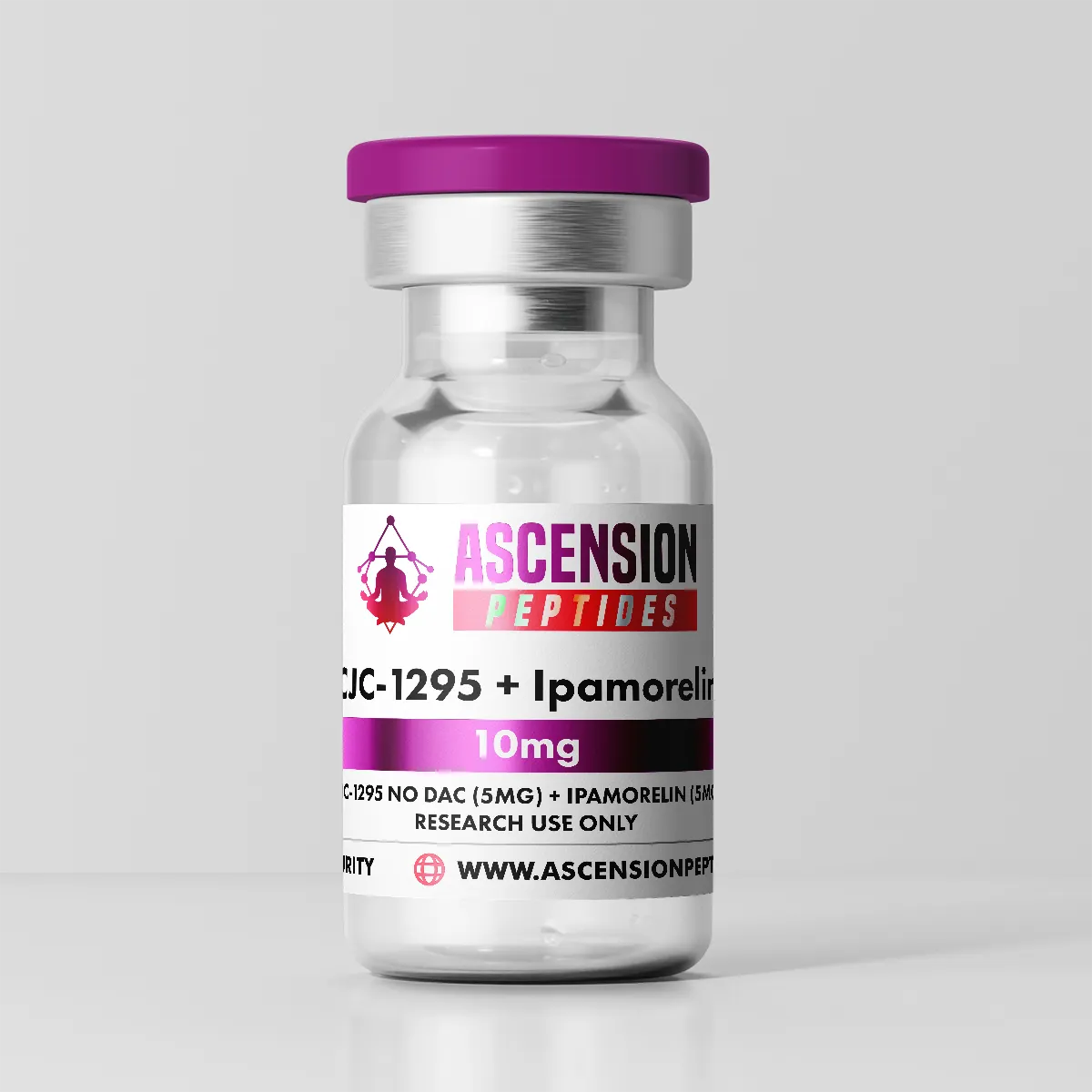
If you're exploring the peptide side of this equation, a GH secretagogue stack like Ascension's FIT Stack (CJC-1295 + Ipamorelin) is one of the most widely used protocols for body composition support without hormonal suppression. It covers the GH axis directly and is a solid starting point for the peptides-not-steroids approach.
Frequently Asked Questions: Peptides vs Steroids
📚 References
- Bhasin S et al. "The effects of supraphysiologic doses of testosterone on muscle size and strength in normal men." N Engl J Med. 1996;335(1):1-7. PubMed
- Pope HG Jr et al. "Adverse health consequences of performance-enhancing drugs: an Endocrine Society scientific statement." Endocr Rev. 2014;35(3):341-375. PubMed
- Raun K et al. "Ipamorelin, the first selective growth hormone secretagogue." Eur J Endocrinol. 1998;139(5):552-561. PubMed
- Sikiric P et al. "Brain-gut axis and pentadecapeptide BPC 157." Curr Neuropharmacol. 2016;14(8):857-865. PubMed
- Kanayama G et al. "Long-term psychiatric and medical consequences of anabolic-androgenic steroid abuse." Drug Alcohol Depend. 2008;98(1-2):1-12. PubMed
- Heffernan M et al. "The effects of human GH and its lipolytic fragment (AOD9604) on lipid metabolism." Endocrinology. 2001;142(12):5182-5189. PubMed