💡 Quick Answer
FOXO4-DRI is the only peptide specifically designed to clear senescent "zombie" cells — damaged cells that refuse to die and instead pump out inflammatory signals that accelerate aging. It works by disrupting the FOXO4-p53 interaction that keeps these cells alive, selectively triggering their death while leaving healthy cells unharmed. It's the most scientifically fascinating compound in longevity research right now, backed by a landmark 2017 Cell paper that showed striking rejuvenation effects.
Cellular senescence is one of the most actively studied areas in aging biology. Senescent cells — often called "zombie cells" — are cells that have permanently stopped dividing but refuse to die. They accumulate with age in virtually every tissue, secreting a toxic cocktail of inflammatory signals called the SASP (Senescence-Associated Secretory Phenotype) that damages surrounding tissue, promotes chronic inflammation, and accelerates aging in neighboring cells.
By some estimates, senescent cells make up only 1–2% of total cells in aged tissue — but their outsized inflammatory output means they punch well above their weight. Clearing them has become one of the most promising anti-aging strategies, and FOXO4-DRI is the only peptide-based approach to doing it. If you're interested in the broader longevity peptide space, our best anti-aging peptides for 2026 guide covers the full spectrum.
🔑 Key Takeaways
- FOXO4-DRI is a D-retro-inverso peptide that selectively kills senescent cells by disrupting the FOXO4-p53 survival mechanism
- The 2017 study in Cell showed restored fitness, hair regrowth, and improved organ function in aged mice
- Selectivity is the key advantage — healthy cells are not affected because they don't overexpress FOXO4
- No human clinical trials exist yet — all data comes from published studies in mice
- The D-retro-inverso modification is critical — regular L-peptide versions degrade too quickly to work
- Typical protocols use periodic 1–2 week courses, 2–4 times per year
What Is FOXO4-DRI?
FOXO4-DRI is a D-retro-inverso peptide — a synthetic modification where both the chirality of amino acids (D instead of L) and the sequence direction are reversed. This modification dramatically increases stability against enzymatic breakdown, allowing the peptide to survive long enough in the body to reach its targets.
The name tells you what it does: it disrupts the FOXO4 protein interaction. Here's the biology in plain terms:
- Normal cells that become damaged activate p53 — the "guardian of the genome" — which triggers apoptosis (programmed cell death)
- Senescent cells escape this death signal through a survival trick: FOXO4 binds to p53 in the nucleus and suppresses its ability to trigger cell death
- FOXO4-DRI competitively interferes with this FOXO4-p53 interaction, freeing p53 to do its job
- Result: senescent cells undergo apoptosis and get cleared by the immune system, while healthy cells (which don't overexpress FOXO4) are unaffected
The selectivity is what makes FOXO4-DRI special. Most approaches to killing damaged cells are blunt instruments — chemotherapy drugs, for instance, kill rapidly dividing cells indiscriminately. FOXO4-DRI's mechanism targets only cells with elevated FOXO4 expression, which correlates strongly with senescence. It's a precision tool, not a sledgehammer.
How Senescent Cells Accelerate Aging
To understand why clearing senescent cells matters, you need to understand what they're doing to your body. A senescent cell isn't just sitting there passively — it's actively causing damage through the SASP.
The SASP: Why Zombie Cells Are Toxic
The Senescence-Associated Secretory Phenotype includes a cocktail of inflammatory cytokines (IL-6, IL-8, TNF-α), matrix-degrading enzymes (MMPs), and growth factors that collectively:
- Drive chronic inflammation — the "inflammaging" that underlies most age-related diseases
- Degrade surrounding tissue — collagen breakdown, extracellular matrix damage
- Convert neighboring cells — SASP signals can induce senescence in nearby healthy cells, creating a cascade effect
- Suppress immune function — chronic SASP exposure exhausts immune surveillance, allowing more senescent cells to accumulate
- Promote fibrosis — abnormal tissue scarring in organs like the liver, lungs, and kidneys
This is why senescent cell accumulation is now considered one of the nine hallmarks of aging — alongside telomere shortening, mitochondrial dysfunction, and genomic instability. Clearing senescent cells addresses the root cause rather than treating downstream symptoms.
Where Senescent Cells Accumulate
Senescent cells concentrate in specific tissues as you age: skin (contributing to thinning, wrinkling, and slow wound healing), joints (contributing to osteoarthritis), kidneys (reducing filtration capacity), lungs (reducing elasticity), and adipose tissue (promoting metabolic dysfunction). This broad distribution explains why clearing them produces systemic rather than localized benefits.
The 2017 Study: What the Published Data Actually Shows
The foundational paper establishing FOXO4-DRI was published in Cell in 2017 by Baar, Brandt, Putavet, and colleagues at the Erasmus University Medical Center. The results were striking enough to make headlines across the scientific press:
The selectivity was confirmed across all models — treatment did not cause measurable damage to healthy tissue. Blood panels remained normal. The weight loss typical of toxic compounds was not observed. This safety profile is what distinguishes FOXO4-DRI from more aggressive senolytic approaches.
Important caveat: these are results in mice. The FOXO4-p53 interaction is conserved in humans, which gives mechanistic plausibility for human translation, but no human clinical trials have been completed yet. The gap between a mouse study and proven human therapy is real, and honest researchers acknowledge it.
FOXO4-DRI vs. Other Senolytics: How They Compare
FOXO4-DRI is the only peptide senolytic available. The other major approaches use small molecule drugs:
D+Q has more human data — there are actual clinical trials in humans showing reduced senescent cell markers and improved physical function. But FOXO4-DRI has a theoretically cleaner mechanism — it targets one specific protein-protein interaction rather than hitting multiple pathways. Some longevity researchers run both: D+Q for its established evidence base, and FOXO4-DRI for its precision mechanism.
Dosing Protocols Used in Research
No human clinical dosing exists for FOXO4-DRI. The published mouse data and commonly reported protocols from the self-experimentation community suggest the following framework:
Administration Notes
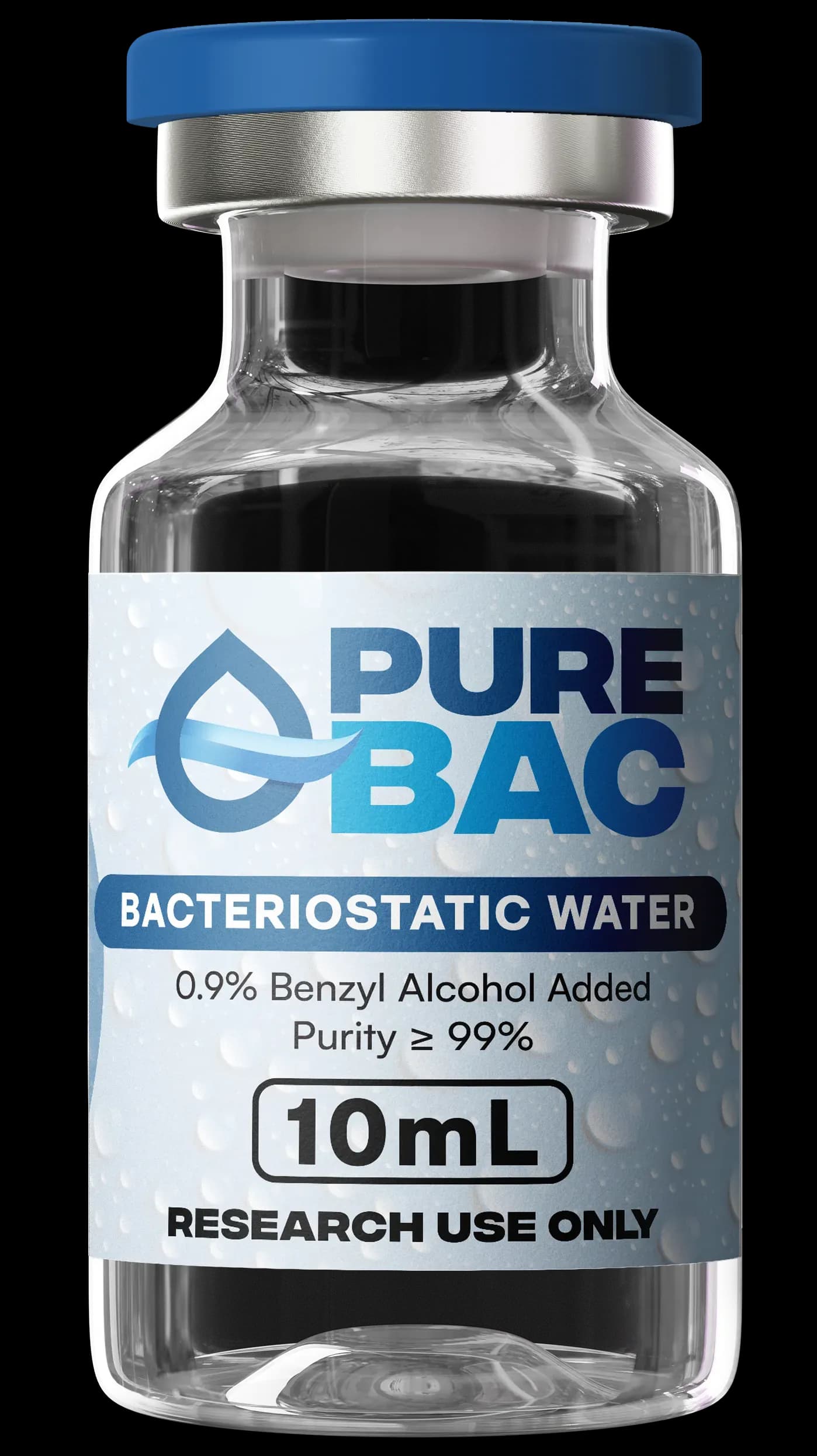
FOXO4-DRI is administered via subcutaneous injection in most reported human use. The peptide should be reconstituted with bacteriostatic water and stored refrigerated (2–8°C). Avoid freeze-thaw cycles after reconstitution. Given the typical 7–14 day course length, a single 10mg vial provides sufficient material for most protocols.
What to Realistically Expect
Based on the published data and community reports, here's an honest assessment:
What the Science Supports
- Selective clearance of senescent cells (demonstrated mechanism)
- Reduced SASP-driven inflammation (follows from senescent cell clearance)
- Potential improvements in tissue function where senescent cells were concentrated
- Possible improvements in skin quality, joint function, energy levels (reported anecdotally)
What Remains Uncertain
- Optimal human dosing — nobody has established this definitively
- Long-term safety in humans — no multi-year data exists
- Whether periodic clearing is sufficient or if continuous suppression would be needed
- How FOXO4-DRI interacts with the immune system's own senescent cell surveillance
The honest take: FOXO4-DRI has a compelling mechanism, strong published science, and fascinating potential. But it's early-stage. If you're the type of person who follows longevity research closely and understands the difference between "published evidence in a respected journal" and "proven safe and effective in humans," this compound is worth studying.
Stacking FOXO4-DRI with Other Longevity Peptides
FOXO4-DRI addresses one specific hallmark of aging — senescent cell accumulation. A thorough longevity protocol might also address:
- Epitalon — telomere maintenance via telomerase activation (different aging hallmark)
- SS-31 (Elamipretide) — mitochondrial membrane support, addressing mitochondrial dysfunction
- MOTS-c — mitochondrial-derived peptide that improves metabolic function and exercise capacity
- GHK-Cu — tissue remodeling and gene expression modulation (over 4,000 genes affected)
These target complementary mechanisms and are not pharmacologically antagonistic. The logic of combining them makes sense from a multi-target longevity perspective, though no studies have tested these specific combinations. For a broader view of anti-aging peptide options, see our injectable peptides for anti-aging guide.
The Science of Senolytics: Why This Approach Matters
Before 2011, the idea of selectively clearing senescent cells was mostly theoretical. Then a groundbreaking paper from the Mayo Clinic showed that genetically eliminating p16-positive senescent cells in mice delayed age-related pathology in multiple organ systems. That study (Baker et al., 2011) opened the floodgates — suddenly, senolytics went from fringe concept to one of the most funded areas in aging research.
The Hayflick Limit and Cellular Senescence
Every cell in your body has a limited number of divisions — roughly 40–60 for most human cell types. This is called the Hayflick limit, and it's controlled by telomere shortening. When a cell reaches its division limit, or experiences severe DNA damage, oxidative stress, or oncogenic signaling, it enters a permanent state of growth arrest: senescence.
Senescence itself isn't inherently bad. It originally evolved as a tumor suppressor mechanism — better to stop dividing than to become cancerous. And in wound healing, transient senescence plays a useful role: senescent cells secrete factors that recruit immune cells and promote tissue repair, then get cleared by the immune system. The problem arises when senescent cells accumulate beyond the immune system's ability to clear them, which happens increasingly with age.
The Tipping Point
Young, healthy immune systems are quite good at recognizing and clearing senescent cells. Natural killer (NK) cells and macrophages both participate in this surveillance. But as the immune system itself ages (immunosenescence — yes, the irony is thick), its capacity to clear senescent cells declines at precisely the same time senescent cell production is accelerating. By middle age, the balance has tipped, and senescent cells begin to accumulate faster than they're removed.
This is the theoretical window where periodic senolytic treatment could be most impactful — not replacing immune surveillance entirely, but supplementing it during the decades when the balance tips. Think of it as calling in reinforcements rather than replacing the existing defense.
Who Should Consider FOXO4-DRI
FOXO4-DRI occupies a specific niche in the longevity peptide space. It's not for everyone, and being honest about who might benefit most is important:
Strong Candidates
- People over 40 — senescent cell accumulation becomes increasingly significant from this age onward
- Post-chemotherapy — chemotherapy dramatically accelerates senescent cell production, and clearing these cells may help with recovery
- Those with chronic inflammatory conditions — if part of the inflammatory burden is SASP-driven, reducing senescent cell numbers could provide relief
- Serious longevity enthusiasts — people who already optimize diet, exercise, sleep, and other longevity interventions and want to address the senescence hallmark specifically
Less Ideal Candidates
- Under 30 — senescent cell burden is typically low; other interventions are more impactful
- Immunocompromised individuals — the apoptotic debris from cleared senescent cells needs to be processed by functional immune cells
- Anyone looking for a quick cosmetic fix — FOXO4-DRI works at the cellular level; visible effects are gradual and subtle compared to, say, GHK-Cu for skin
Monitoring Response to FOXO4-DRI
One challenge with senolytics is measuring whether they're actually working. Senescent cells aren't directly visible, and their effects are distributed across multiple systems. Some markers that researchers track:
Blood Biomarkers
- hs-CRP (high-sensitivity C-reactive protein): General inflammation marker — should trend downward over months if SASP burden is reduced
- IL-6: A key SASP cytokine — reductions suggest successful senescent cell clearance
- GDF-15: Emerging marker of cellular stress and aging — some researchers use this as a senescence proxy
- p16INK4a expression in T cells: Research-grade test that directly measures a senescence marker, though not widely available clinically
Functional Markers
- Grip strength — a simple proxy for overall aging and functional capacity
- Walking speed — another validated aging biomarker
- Skin elasticity — can be measured with consumer devices
- Subjective energy levels and recovery time
Don't expect dramatic overnight changes. The benefit of clearing senescent cells is reducing a chronic, slow-acting inflammatory burden — think of it as removing rust rather than rebuilding an engine. The effects accumulate over time and are best measured in trends rather than single time points.
Verifying Your FOXO4-DRI Is Authentic
Why the DRI Modification Matters
L-peptides (standard amino acid configuration) are rapidly degraded by proteases in biological systems — most would be broken down within minutes before reaching their target cells. D-amino acids are not recognized by most endogenous proteases, extending the peptide's functional lifespan dramatically. The retro-inverso configuration additionally mirrors the binding geometry of the original L-peptide sequence, maintaining target affinity while gaining metabolic stability.
If a vendor is selling "FOXO4" without specifying DRI, confirm whether it's the D-retro-inverso form. The L-peptide version would have minimal biological activity due to rapid degradation.
What to Look for in a COA
- Mass spectrometry (MS): Should confirm the correct molecular weight for FOXO4-DRI specifically
- HPLC purity: Look for >95% purity minimum, preferably >98%
- Amino acid analysis: Some labs can specifically verify D-amino acid content
- Batch-specific: The COA should reference the specific batch number, not be a generic document
FOXO4-DRI Safety Profile: What We Know and Don't Know
Let's be direct about the safety picture, because honesty matters more than hype here.
What Published Data Shows
In the 2017 Cell study, FOXO4-DRI showed no significant adverse effects across multiple mouse models. Comprehensive blood panels — including liver enzymes, kidney function markers, complete blood counts, and metabolic panels — remained within normal ranges throughout treatment. Body weight, which typically drops with toxic compounds, was maintained or improved. Organ histology showed no signs of off-target damage.
The theoretical safety advantage of FOXO4-DRI comes from its mechanism: it only triggers apoptosis in cells that overexpress FOXO4, which is primarily a senescence marker. Healthy cells, with normal FOXO4 levels, don't bind enough of the peptide to trigger p53-mediated death. This selectivity is built into the mechanism rather than being a hoped-for side effect.
What We Don't Know
Multi-year human safety data doesn't exist. Period. Some open questions include:
- Are there human cell types that express moderate FOXO4 levels for non-senescence reasons that could be affected?
- What happens if you clear too many senescent cells too quickly — could the debris overwhelm the immune system?
- Are there tissues where a small population of senescent cells actually serves a useful structural or signaling role?
- What are the interactions with common medications, particularly immunosuppressants?
These are genuine unknowns, and anyone using FOXO4-DRI should understand that they're operating in uncharted territory — informed by strong published science, but without the safety net of large-scale human trials.
Reported Side Effects from Community Use
Anecdotal reports from the self-experimentation community (forums, Reddit, longevity communities) are generally mild:
- Mild flu-like symptoms during the first few days (possibly reflecting immune processing of apoptotic debris)
- Transient fatigue
- Mild injection site reactions (common with any subcutaneous injection)
- Some users report feeling noticeably better after a course — improved energy, skin quality, reduced joint stiffness — though placebo effects are impossible to rule out without controlled conditions
Where to Source FOXO4-DRI
FOXO4-DRI is an expensive peptide to synthesize correctly. The D-amino acid configuration requires different synthetic chemistry than standard L-peptide synthesis. At $120–180 per vial, pricing reflects the genuine manufacturing complexity — cheap offerings that undercut this range typically lack verifiable COA documentation or may contain the less effective L-peptide version.
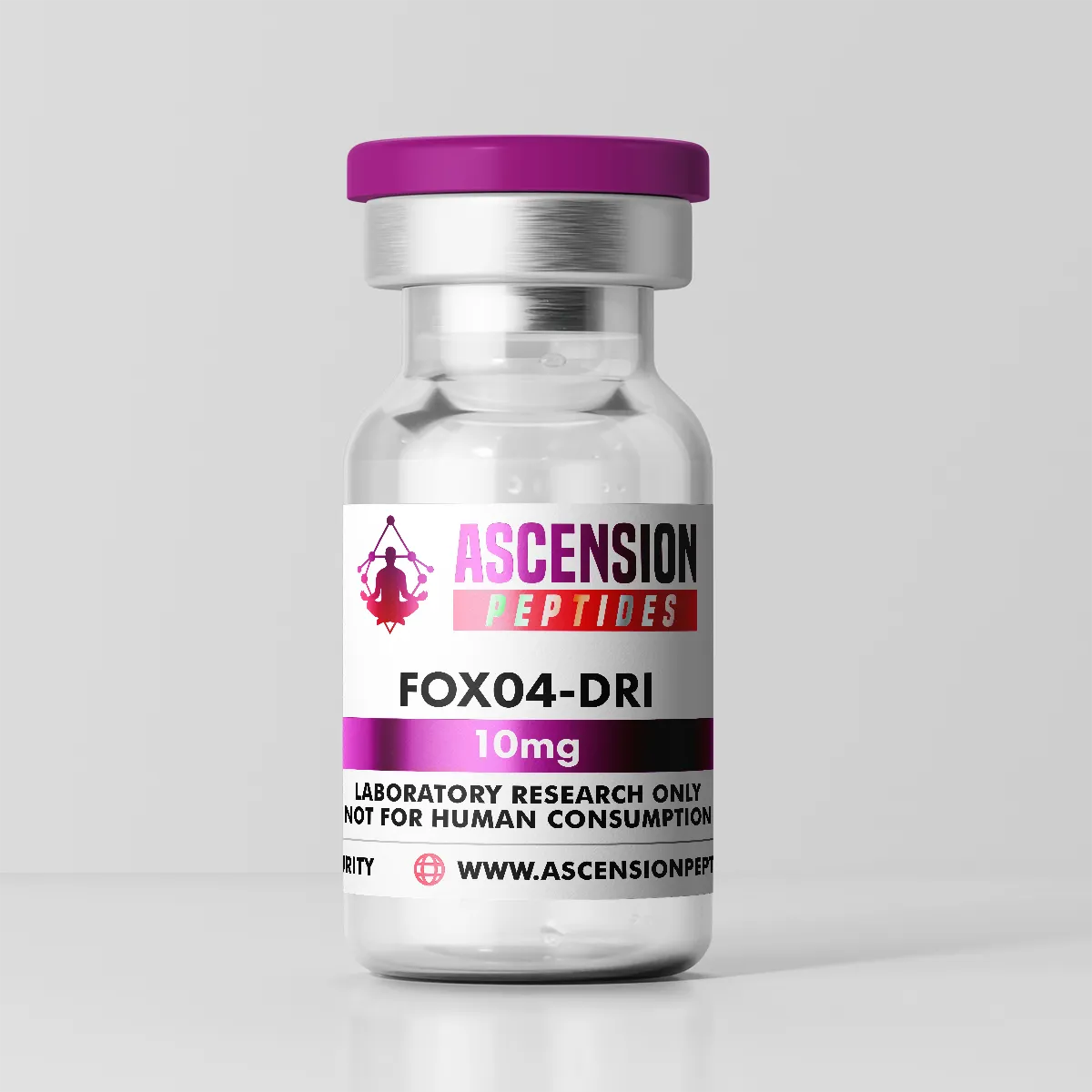
FOXO4-DRI from Ascension Peptides comes with batch-specific COA including mass spectrometry data. At $140 per 10mg vial, it's competitively priced for a verified DRI product. Confirm the mass spec data matches FOXO4-DRI specifications before using.
The Future of Senolytic Research
FOXO4-DRI represents the first generation of targeted senolytic peptides, but the field is moving fast. Several developments worth watching:
Second-Generation Senolytic Peptides
Researchers are working on modified versions of FOXO4-DRI with improved pharmacokinetics — longer half-lives, better tissue penetration, and potentially oral bioavailability. Some groups are exploring nanoparticle-encapsulated delivery to target specific tissues where senescent cell burden is highest (kidneys, joints, skin). These are likely 3–5 years from availability, but they represent the direction the field is headed.
Combination Senolytic Approaches
The Mayo Clinic group pioneering D+Q has published data on combining senolytics with senomorphics — compounds that don't kill senescent cells but suppress their SASP output. The combination approach (kill some, silence the rest) may prove more effective and safer than aggressive clearance alone. FOXO4-DRI could fit into combination protocols as the precision clearance component alongside broader senomorphic coverage.
Biomarker Development
The biggest bottleneck in senolytic research isn't the drugs — it's measuring the results. Reliable, accessible biomarkers for senescent cell burden would transform the field by allowing precise before-and-after measurement. Companies like Sapere Bio and others are developing blood-based senescence panels that could be available within 1–2 years, which would finally give individual users objective data on whether their protocols are working.
Frequently Asked Questions
References
- Baar MP, Brandt RMC, Putavet DA, et al. "Targeted Apoptosis of Senescent Cells Restores Tissue Homeostasis in Response to Chemotoxicity and Aging." Cell. 2017;169(1):132-147.e16. PMID: 28340339
- Baker DJ, et al. "Clearance of p16Ink4a-positive senescent cells delays ageing-associated disorders." Nature. 2011;479(7372):232-236. PMID: 22048312
- Kirkland JL, Tchkonia T. "Senolytic drugs: from discovery to translation." J Intern Med. 2020;288(5):518-536. PMID: 32686219
- Xu M, et al. "Senolytics improve physical function and increase lifespan in old age." Nat Med. 2018;24(8):1246-1256. PMID: 29988130
- Zhu Y, et al. "The Achilles' heel of senescent cells: from transcriptome to senolytic drugs." Aging Cell. 2015;14(4):644-658. PMID: 25754370
- Hickson LJ, et al. "Senolytics decrease senescent cells in humans: Preliminary report from a clinical trial of Dasatinib plus Quercetin." EBioMedicine. 2019;47:446-456. PMID: 31542391