🔑 Key Takeaways
- Epithalon (Ala-Glu-Asp-Gly) is a synthetic tetrapeptide developed by Russian gerontologist Vladimir Khavinson, designed to stimulate telomerase activity
- The most consistent user-reported benefit is noticeably improved sleep quality — often within the first few days of a cycle
- Standard protocol: 5–10mg subcutaneous daily for 10 days, repeated once or twice per year
- At roughly $70 per 10mg vial, it's one of the more affordable peptide cycles you can run
Epithalon sits in a weird spot in the peptide world. It's not flashy. Nobody's posting dramatic before-and-afters. There's no weight loss transformation or muscle gain to photograph. And yet it keeps showing up in longevity circles, year after year, with a quiet but loyal following that swears by it.
So what's the deal? Is there actual science here, or is this just another anti-aging supplement riding on vibes and wishful thinking? I've spent a fair amount of time digging through the research — and talking to people who've run multiple cycles — and the answer is somewhere in between. There's real science. But also real limitations in what we know.
What Is Epithalon and How Does It Work?
Epithalon (sometimes spelled Epitalon) is a four-amino-acid peptide: Ala-Glu-Asp-Gly. It was developed by Vladimir Khavinson at the St. Petersburg Institute of Bioregulation and Gerontology, and it's a synthetic version of a naturally occurring peptide called epithalamin, which is produced by the pineal gland.
The mechanism — at least the proposed one — centers on telomerase activation. Quick refresher: telomeres are the protective caps at the ends of your chromosomes. Every time a cell divides, they get a little shorter. When they get too short, the cell either stops dividing or dies. Telomerase is an enzyme that can rebuild those caps.
Most adult cells have very low telomerase activity. Epithalon, in theory, turns the dial back up — not to embryonic levels, but enough to slow the shortening process. That's the pitch, anyway.
The Research: Khavinson's 2003 Study and Beyond
The landmark study that put Epithalon on the map was Khavinson et al. (2003), published in the Bulletin of Experimental Biology and Medicine. The researchers found that epithalon activated telomerase in human somatic cells — specifically, it induced telomerase activity in cells where it was previously absent or suppressed. They also observed elongation of telomeres in cell cultures.
This wasn't just a petri dish curiosity. Khavinson's group conducted animal studies spanning years — some stretching back to the 1990s using epithalamin (the natural precursor). In rodent models, they documented:
- Increased maximum lifespan by 13-25% in certain mouse strains
- Normalized circadian melatonin rhythms in aging animals
- Improved immune function markers in aged rats
- Suppression of spontaneous tumor development (more on this later — it matters)
There were also some small human observational studies from the same group, following elderly patients in St. Petersburg over a 6-year period, suggesting reduced cardiovascular mortality and improved biomarkers. The problem? These were conducted by the same team that developed the peptide, sample sizes were small, and the work hasn't been independently replicated in large Western trials.
That's the honest assessment. The early data is genuinely interesting. But we're still waiting for the kind of rigorous, independent confirmation that would make mainstream medicine sit up and pay attention.
What Users Actually Report
Here's where it gets practical. Forget the telomere theory for a second — what do people actually feel when they run an Epithalon cycle?
Sleep. That's the big one.
An overwhelming number of users — across Reddit threads, peptide forums, and private communities — report significantly improved sleep quality within the first 3-5 days of a cycle. Deeper sleep, more vivid dreams, waking up feeling actually rested. This tracks with the melatonin connection: Epithalon appears to improve pineal gland function and normalize melatonin secretion, especially in people over 40 whose natural production has declined.
💡 The Sleep Effect
If you're running Epithalon primarily for longevity, great. But the sleep improvement alone — which most users notice during the 10-day cycle — may be worth the cost of entry. Better sleep cascades into everything: recovery, cognition, mood, immune function.
Other commonly reported effects:
- Skin quality improvements — some users notice smoother skin texture after 2-3 cycles
- General "well-being" boost — hard to quantify, but frequently mentioned
- Subtle energy improvements — not stimulant-like, more of a background vitality
- Better mood regulation — possibly tied to improved sleep architecture
What people don't report: dramatic transformations, rapid visible changes, or anything you'd call life-changing after a single cycle. This is a slow-burn peptide. The effects are subtle and cumulative. If you're expecting BPC-157-level "holy shit" moments, adjust your expectations.
Dosage Protocol: The 10-Day Cycle

Epithalon dosing is refreshingly simple compared to something like a GH secretagogue stack.
Most people run 5-10mg per day, injected subcutaneously (belly fat, love handles, wherever you normally pin). A 10-day cycle, repeated once or twice annually. That's it. No complex tapering, no loading phase, no PCT.
Some users split the dose — 5mg in the morning, 5mg before bed — arguing this gives more sustained levels throughout the day. Others just bang out the full dose once daily. Honestly, there's no controlled data showing one approach beats the other. Pick whatever fits your routine.
Reconstitution is standard — add bacteriostatic water to the lyophilized powder, swirl gently (don't shake), refrigerate. A single 10mg vial gives you either 10 days at 1mg (too low for most), or you'll need 1-2 vials depending on your chosen dose.
Value Assessment: Is $70 Worth It?
Let's talk money. At around $70 per 10mg vial from a reputable source, Epithalon lands in the "surprisingly affordable" category for peptides. A single 10-day cycle at 5mg/day costs about $35 — and you only do it once or twice a year. That's $35-70 annually for a longevity intervention.
Compare that to:
- NAD+ precursors (NMN/NR) — $40-80/month, $480-960/year
- GH secretagogue cycles — $150-300 per month during cycle
- Rapamycin (off-label) — $100-200/month plus doctor visits
- FOXO4-DRI — easily $200+ per cycle
Even if the longevity effects of Epithalon turn out to be modest, the sleep improvement alone might justify the cost. You're paying less than a month of melatonin supplements for something that appears to actually fix the underlying melatonin production issue rather than just supplementing exogenous melatonin.
The value proposition is strong. Low cost, short commitment, minimal side effects, and at least one very noticeable benefit (sleep) that most users can confirm within days.
Where to Buy Epithalon in 2026
Sourcing matters with peptides — especially with Epithalon, where purity directly affects whether the telomerase activation mechanism works at all. You need a vendor with third-party HPLC testing, proper lyophilization, and a track record of consistent quality.
Our Top Pick: Ascension Peptides
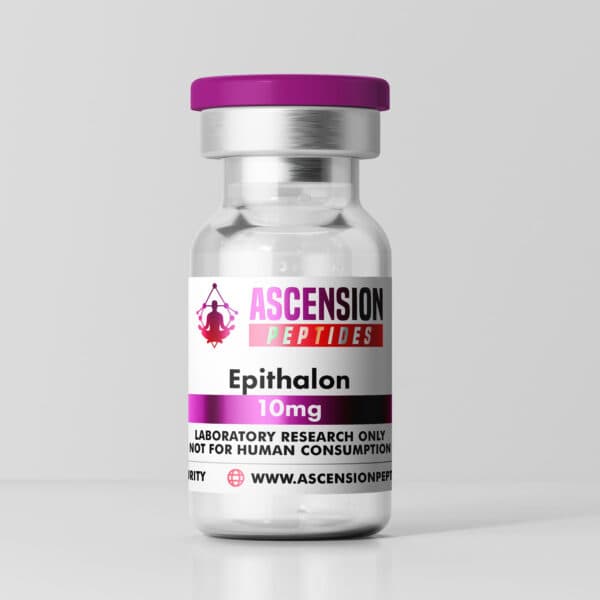
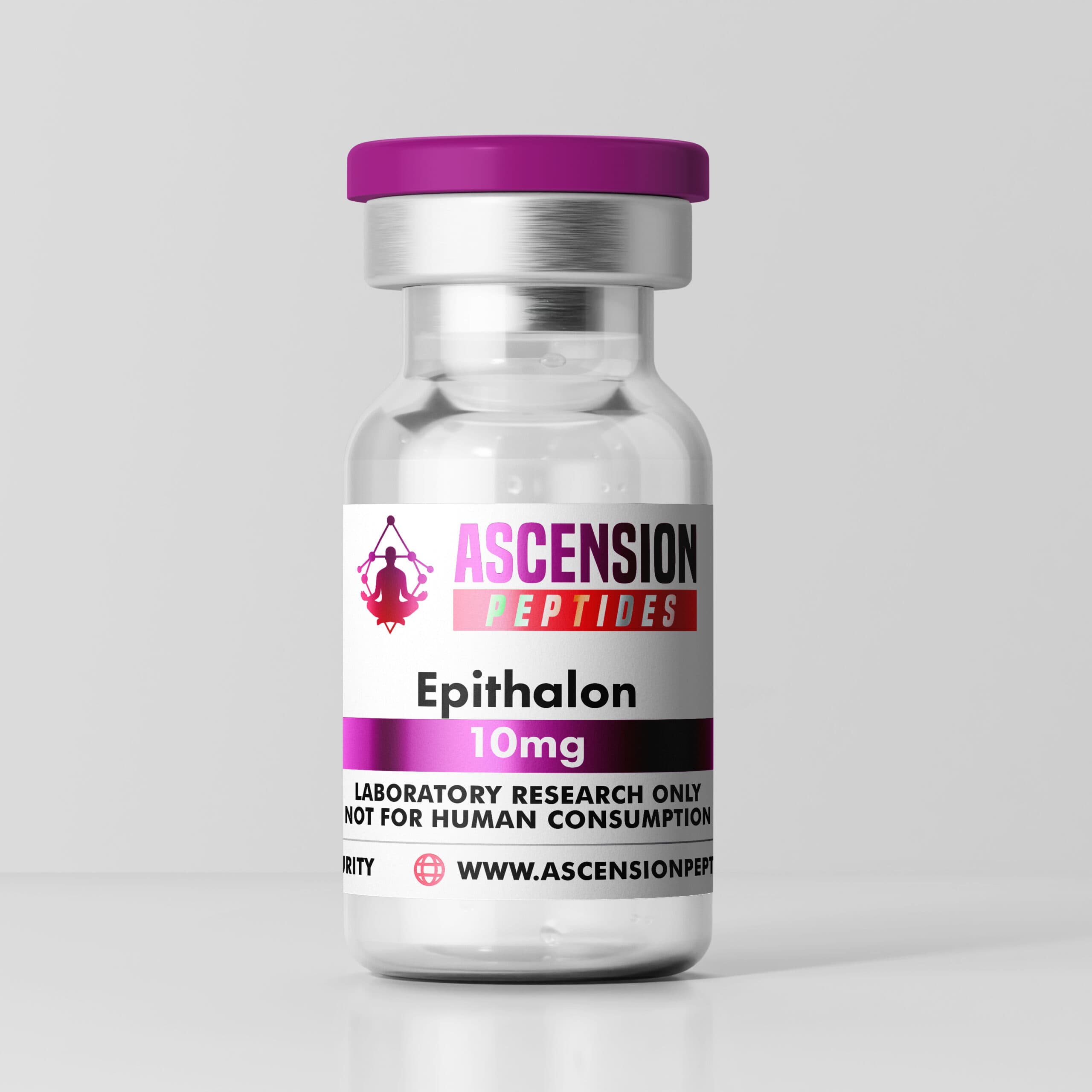
Ascension Peptides carries Epithalon in 10mg vials at $70 — US-based, third-party COA on every batch, and one of the most reliable peptide vendors in the space. At $70 per vial, one vial covers a full 10-day course at 1mg/day.
What to Look for When Buying Epithalon
- HPLC purity ≥98% — Epithalon is a tetrapeptide (only 4 amino acids), so synthesis is relatively straightforward, but impurities still matter
- Third-party COA — not just internal testing. Independent lab verification is non-negotiable
- Proper lyophilization — the powder should be a white to off-white cake or powder, not clumpy or discolored
- US-based vendor — avoids customs delays and heat exposure during international shipping
Red Flags to Avoid
- ❌ No COA or "available on request" only
- ❌ Epithalon 10mg for under $30 — quality synthesis costs money
- ❌ Ships from overseas with no domestic warehouse
- ❌ Vague labeling without mg quantities or lot numbers
For a full comparison of peptide vendors, see our where to buy peptides guide.
The Bottom Line
Epithalon isn't a miracle peptide. It's not going to reverse aging overnight or add 20 years to your life. But the science behind it — telomerase activation, melatonin normalization, the Khavinson longevity data — is more interesting than the typical anti-aging supplement pitch.
The sleep improvement is real and noticeable. The cost is low. The protocol is dead simple. And the risk profile is about as mild as peptides get. If you're already running other longevity interventions and want to add something with a reasonable scientific basis that won't break the bank, Epithalon belongs on your short list.
Just don't expect fireworks. Expect better sleep and the quiet satisfaction of doing something that might be keeping your telomeres a little longer. Sometimes the boring interventions are the ones that actually matter.