🔑 Key Takeaways
- Both Argireline and SNAP-8 target the same SNARE pathway — SNAP-8 adds two amino acids for theoretically stronger binding
- Argireline has the stronger evidence base with multiple independent studies; SNAP-8's "30% more potent" claim comes mostly from manufacturer data
- Expect ~30% wrinkle depth reduction at 10% concentration after 30 days with either peptide
- Neither replaces Botox — they're complementary, topical, and reversible
- Formulation matters more than peptide choice: skin penetration, carrier, pH, and co-ingredients drive real-world results
Two peptides dominate the anti-wrinkle skincare conversation right now: Argireline and SNAP-8. Both target the same biological pathway. Both promise to soften expression lines without needles. And both show up in premium serums worldwide at surprisingly similar price points.
But they're not the same compound — and if you're choosing one for a formulation, a research protocol, or even just your own skincare routine, the differences matter. Argireline has been around since 2002 and has the clinical data to show for it. SNAP-8 is the newer, theoretically improved version. The question is whether "theoretically improved" translates to actually better results on real human skin.
I've gone through the published literature, manufacturer technical documents, and independent lab data to give you a straight answer. Here's what actually holds up.
How Both Peptides Work: The SNARE Complex
You can't meaningfully compare these two without understanding the biology they target. So let's get into it — but without the textbook lecture.
Every time you make a facial expression — squinting, frowning, smiling — a nerve signal reaches the muscles in your face. At the nerve ending, little vesicles filled with acetylcholine need to fuse with the cell membrane to release their contents and trigger the muscle contraction. This fusion process requires a protein complex called SNARE, which includes a critical component called SNAP-25.
Argireline's Approach
Argireline (Acetyl Hexapeptide-3, or Ac-EEMQRR-NH₂) is a six-amino-acid synthetic peptide that mimics the N-terminal sequence of SNAP-25. It competes with native SNAP-25 for incorporation into the SNARE complex, partially blocking vesicle fusion. Less fusion means less acetylcholine release, which means less muscle contraction, which means softer expression lines. Original research by Blanes-Mira et al. (2002) first demonstrated this mechanism.
The key word is "partially." Unlike Botox, which completely paralyzes the muscle, Argireline only reduces contraction. You still look like yourself. You still make expressions. They're just slightly softer.
SNAP-8's Extension
SNAP-8 (Acetyl Octapeptide-3, or Ac-EEMQRRAD-NH₂) keeps the exact six-amino-acid core of Argireline and adds two more residues: Alanine and Aspartic Acid. These extra residues extend the SNAP-25 mimicry, theoretically improving binding affinity to the SNARE complex.
Think of it this way: Argireline has six teeth in the lock. SNAP-8 has eight. More teeth should mean a better grip — and in vitro binding assays suggest it does. But "in vitro" and "on your face" are very different environments.
The Shared Limitation
Both peptides face the same fundamental challenge: skin penetration. The stratum corneum is designed to keep things out. Peptides are relatively large molecules. Even if SNAP-8 binds the SNARE complex better in a test tube, that advantage is irrelevant if both peptides struggle equally to reach the neuromuscular junction through intact skin. This is why formulation matters at least as much as the peptide itself — maybe more.
Clinical Evidence: Who Has the Data?
This is where the comparison gets interesting, because the evidence gap between these two peptides is larger than most skincare articles admit.
Argireline Studies
Argireline has the most published clinical data of any cosmeceutical SNARE-targeting peptide. Key findings:
- Periorbital trial: ~30% reduction in wrinkle depth after 30 days of twice-daily application at 10% solution concentration. Controlled against vehicle. Published by Blanes-Mira et al.
- Dose-response data: 5% concentration showed measurable but lower efficacy than 10%. Going above 10% didn't produce proportional gains.
- Independent confirmatory studies: Multiple labs have reproduced the basic finding, not just the manufacturer. This is unusual for cosmeceutical peptides.
- Mechanism validation: In vitro SNARE competition assays confirm the proposed pathway, with catecholamine release inhibition demonstrated in chromaffin cell models
- Long-term use: Widespread commercial use since 2002 without significant safety signals
SNAP-8 Studies
SNAP-8 has a thinner evidence base. Here's what exists:
- Manufacturer trials: 25–35% wrinkle depth reduction after 28 days at 10% solution. The numbers look similar to Argireline — or slightly better — but the studies are primarily manufacturer-funded.
- The "30% more potent" claim: This comes from manufacturer technical documentation and in vitro comparative data. It has not been independently verified in a peer-reviewed head-to-head clinical trial with sufficient sample size.
- In vitro binding data: Does suggest improved SNARE complex affinity compared to the hexapeptide. This is the strongest evidence supporting SNAP-8's theoretical advantage.
- Independent clinical studies: Very few. Most SNAP-8 data in the public domain originates from the peptide's commercial developer.
The 30% Potency Claim: Breaking It Down
This claim gets repeated everywhere and deserves scrutiny.
The "SNAP-8 is 30% more active than Argireline" figure comes from in vitro catecholamine release assays where both peptides were tested at equivalent concentrations against chromaffin cells. SNAP-8 showed approximately 30% greater inhibition of exocytosis in this model system.
What this tells us: at the molecular level, the two extra amino acids do appear to improve SNARE complex inhibition.
What this doesn't tell us: whether that 30% in vitro advantage survives the journey through human skin, through the dermis, to the actual neuromuscular junction, in a complex formulation with multiple other ingredients, across different skin types, at different ages, on different areas of the face.
The honest answer is: we don't know. The in vitro data is promising. The clinical data is insufficient to confirm the advantage translates in vivo. The 30% figure should be treated as a manufacturer claim — not as established clinical fact.
Concentration and Formulation: What Actually Matters
Here's something most Argireline vs SNAP-8 comparisons miss entirely: formulation has a bigger impact on results than which peptide you choose.
Understanding Concentration Labels
Both peptides are typically sold as pre-diluted solutions (usually 10% peptide in water or a carrier). When a formulation uses "10% Argireline," that usually means 10% of the commercial solution — which contains approximately 0.0005% actual pure peptide. The numbers get confusing fast.
Skin Penetration Enhancers
The biggest variable in real-world performance isn't which peptide you choose — it's how well the formulation delivers it through the stratum corneum. Penetration enhancers, liposomal delivery, microemulsions, and even simple formulation pH can dramatically affect how much peptide actually reaches the target.
A well-formulated 5% Argireline serum with effective penetration enhancement could easily outperform a poorly formulated 10% SNAP-8 serum. This is the part most marketing comparisons conveniently ignore.
pH Considerations
Both peptides are stable at slightly acidic to neutral pH (5.0–7.0). Formulations outside this range risk peptide degradation. For reference, healthy skin surface pH is approximately 5.5 — well within the optimal stability range.
Safety Profile Comparison
Good news here: both peptides have excellent safety records.
Argireline Safety Data
Over two decades of commercial use (since 2002) without significant adverse event reports. Cosmetic safety assessments confirm tolerability at 5–10% solution concentrations. No systemic absorption concerns at topical levels. Rare irritation reports are typically attributed to carrier ingredients, not the peptide. Dermatological safety reviews have consistently found it well-tolerated.
SNAP-8 Safety Data
Structurally similar to Argireline, so the safety profile is expected to be comparable. Published industry safety data confirms good tolerability at standard concentrations. Less independent long-term data available simply because the compound is newer and less widely studied.
Neither Causes Botox-Like Effects
A common concern worth addressing directly: topical SNARE-targeting peptides do not produce the systemic paralysis or facial "freezing" associated with botulinum toxin. The mechanism is partial, localized, surface-level, and completely reversible upon discontinuation. If you stop using either peptide, muscle function returns to baseline within days to weeks.
Argireline vs SNAP-8: Complete Comparison

Who Should Choose Argireline
Argireline is the right choice when evidence weight matters more than theoretical potency:
- Formulators building product claims: You can reference published independent data. That's valuable for marketing and regulatory positioning.
- Research protocols: If you're studying SNARE-targeting peptides, Argireline gives you the most comparable published data to build on.
- Budget-conscious formulations: Argireline is typically cheaper per gram at equivalent purity levels.
- First-time peptide users: If you're new to anti-wrinkle peptides, start with the better-documented compound.
- Periorbital focus: The specific controlled trial data for crow's feet comes from Argireline studies.
Who Should Choose SNAP-8
SNAP-8 makes sense in more specific scenarios:
- Premium formulations: The "next-generation" positioning differentiates products in a crowded market.
- Structure-activity research: If you're comparing hexapeptide vs. octapeptide SNARE inhibition, SNAP-8 is the logical comparison compound.
- Maximum theoretical potency: If you accept the manufacturer data at face value, SNAP-8 offers a marginal edge.
- Combination with Argireline: Some formulators use both at reduced concentrations to potentially engage the SNARE complex from multiple binding angles.
Combining Argireline and SNAP-8
There's no published clinical data on using both peptides together. But the mechanistic rationale is there: if both peptides compete for SNARE complex incorporation at slightly different binding sites (due to the extra residues in SNAP-8), using both could theoretically provide more complete inhibition than either alone.
Common Combination Approach
Formulators who combine them typically use 5% each (of the commercial solution) rather than 10% of either alone. This keeps the total peptide load manageable while engaging the SNARE complex through two slightly different competitors. Is it better than 10% of one? We genuinely don't know. But it's mechanistically plausible and widely practiced.
How They Compare to Other Anti-Wrinkle Peptides
Argireline and SNAP-8 aren't the only game in town. Here's how they fit into the broader anti-wrinkle peptides landscape:
vs. Matrixyl (Palmitoyl Pentapeptide-4)
Completely different mechanism. Matrixyl stimulates collagen production rather than inhibiting muscle contraction. It treats structural wrinkles (loss of collagen) rather than dynamic ones (expression lines). Many formulations combine Argireline/SNAP-8 with Matrixyl for complementary effects — one for expression lines, one for structural support.
vs. GHK-Cu
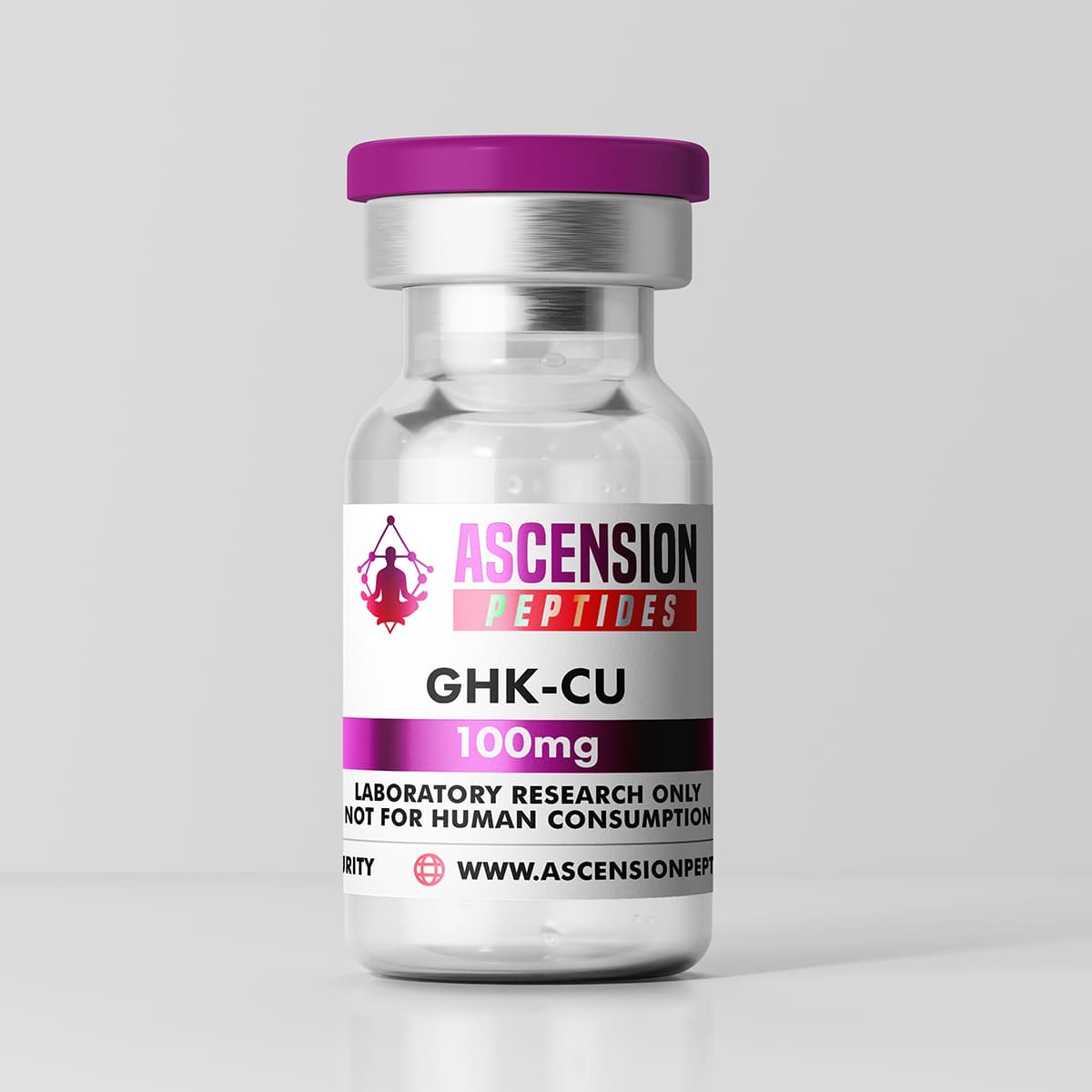
GHK-Cu is a copper peptide that promotes wound healing, collagen remodeling, and skin regeneration. It works through entirely different pathways (copper-dependent enzyme activation, gene expression modulation). GHK-Cu addresses skin quality broadly; Argireline/SNAP-8 specifically target expression lines. They're complementary, not competitive.
vs. Leuphasyl
Leuphasyl (Pentapeptide-18) works upstream of the SNARE complex, mimicking enkephalins to reduce nerve cell excitability. Some formulations combine it with Argireline for a "dual-level" approach — reducing nerve signaling AND blocking vesicle fusion. Early data suggests potential synergy, but independent clinical evidence is limited.
Best Practices for Using Either Peptide
Application Protocol
- Apply twice daily — morning and evening — for consistent receptor occupancy
- Clean, slightly damp skin improves penetration
- Target areas of dynamic expression: forehead lines, crow's feet, glabellar (frown) lines
- Allow 2–3 minutes before applying other products over it
- Results begin around day 14; optimal effects at 28–30 days of consistent use
What to Pair Them With
For a comprehensive skin-tightening protocol, consider layering with:
- Hyaluronic acid: Hydration supports penetration and overall skin quality
- Niacinamide (vitamin B3): Barrier support and anti-inflammatory effects
- Matrixyl: Collagen stimulation for structural wrinkle support
- Vitamin C (L-ascorbic acid): Antioxidant protection — apply first, let absorb, then peptide
- SPF: Non-negotiable. UV damage creates wrinkles faster than peptides can address them.
What NOT to Combine
Avoid using either peptide simultaneously with strong acids (glycolic acid, salicylic acid at high concentrations) or retinol in the same application. The pH shift and potential for degradation undermines the peptide. Use acids and retinol at night, peptides in the morning — or alternate nights.
Sourcing Quality Peptides
For research-grade material, prioritize vendors with third-party COA documentation, HPLC purity ≥98%, and clear labeling distinguishing solution concentration from pure peptide content. Whether you're using Argireline or SNAP-8, purity directly impacts reproducibility and results.
Ascension Peptides carries cosmetic research peptides with transparent documentation — worth checking if you're sourcing either compound for formulation or research purposes.