🔑 Key Takeaways
- LL-37 is the only human cathelicidin — it physically destroys pathogen membranes while coordinating immune responses
- KPV is a tripeptide that suppresses inflammation through NF-κB inhibition, with strong preclinical data in gut and skin conditions
- They work through completely different mechanisms: LL-37 kills microbes directly; KPV modulates the inflammatory response
- LL-37 shows anti-biofilm activity — significant because biofilms resist conventional antibiotics
- Both remain research compounds; neither is FDA-approved for clinical use
Your immune system has been fighting infections with peptides for roughly 500 million years. Long before antibiotics existed, long before anyone understood what bacteria even were, host defense peptides were punching holes in pathogen membranes and coordinating immune responses with a sophistication that synthetic drugs still can't fully replicate.
Among these ancient weapons, two have captured serious research attention in recent years: LL-37 and KPV. They work through completely different mechanisms — LL-37 kills pathogens directly by disrupting their membranes, while KPV shuts down inflammatory cascades through NF-κB inhibition. Together, they represent two complementary approaches to infection and inflammation that the pharmaceutical world is racing to understand and leverage.
Here's what the research actually shows — and why these peptides matter more now than ever, with antimicrobial resistance climbing and conventional antibiotics losing ground.
Why Antimicrobial Peptides Matter Now
The World Health Organization calls antimicrobial resistance one of the top ten global public health threats. And the numbers back that up — a 2022 Lancet analysis estimated 1.27 million deaths directly attributable to drug-resistant infections in 2019 alone. Conventional antibiotics target specific bacterial processes (cell wall synthesis, protein folding, DNA replication), and bacteria evolve around them through single-point mutations.
Host defense peptides work differently. They attack the membrane itself — the fundamental structural barrier that all bacteria need to survive. Evolving resistance to membrane-disrupting peptides would require wholesale changes to membrane composition, which is metabolically expensive and structurally constrained. That's why, after hundreds of millions of years of co-evolution, bacteria still haven't developed widespread resistance to cathelicidins.
The Four Classes of Human Antimicrobial Peptides
- Cathelicidins: LL-37 is the sole human member. Expressed by neutrophils, macrophages, and epithelial cells.
- Defensins: Alpha-defensins (from neutrophils) and beta-defensins (from epithelial surfaces). The most numerous class.
- Histatins: Salivary peptides with primary antifungal activity — why your mouth heals faster than your skin.
- Dermcidins: Produced by sweat glands. Broad-spectrum but relatively understudied.
LL-37 is unique among these because it bridges direct microbicidal activity with sophisticated immune signaling. It's not just a weapon — it's a coordinator.
LL-37: The Human Cathelicidin
LL-37 is a 37-amino-acid peptide cleaved from the precursor protein hCAP18. The name is literal: two leucine residues at positions 1 and 2, total length of 37. It adopts an amphipathic alpha-helical structure in membrane environments — one face hydrophobic, one face positively charged — which is essential for its antimicrobial function.
Where LL-37 Is Produced
The peptide isn't limited to immune cells. It's produced by neutrophils, monocytes, macrophages, dendritic cells, mast cells, and epithelial cells lining the skin, lungs, and GI tract. This broad expression pattern means LL-37 is present at virtually every surface where the body encounters pathogens.
And here's something interesting: vitamin D3 directly induces LL-37 expression. Liu et al. (2006) demonstrated in Science that vitamin D receptor activation upregulates the cathelicidin gene promoter. This may partially explain why vitamin D deficiency correlates with increased infection susceptibility — your body literally makes less of its own antimicrobial peptide when vitamin D is low.
How LL-37 Kills Pathogens
The primary mechanism is membrane disruption, and it works because of basic electrostatics.
Bacterial membranes are negatively charged (phosphatidylglycerol, cardiolipin, LPS). LL-37 carries a net positive charge (+6 at physiological pH). Opposites attract — the peptide is electrostatically drawn to bacterial surfaces while largely ignoring mammalian cell membranes, which are neutral (cholesterol-rich, zwitterionic phospholipids). This charge-based selectivity is the foundation of antimicrobial peptide safety.
Three Models of Membrane Disruption
The actual mechanism likely involves all three models depending on concentration, membrane composition, and environmental conditions. At lower concentrations, the carpet model predominates. At higher concentrations, pore formation becomes more significant.
Anti-Biofilm Activity
This is where LL-37 gets really interesting from a clinical perspective. Biofilms — structured bacterial communities encased in self-produced polymer matrices — cause an estimated 65–80% of chronic infections and are 100–1,000 times more resistant to antibiotics than free-floating bacteria.
Research published by Overhage et al. demonstrated that LL-37 disrupts biofilms through multiple mechanisms: inhibiting initial bacterial attachment, interfering with quorum sensing (the communication system bacteria use to coordinate biofilm formation), and destabilizing established biofilm architecture. Importantly, this activity occurs at sub-inhibitory concentrations — meaning LL-37 can disrupt biofilms at doses lower than those needed to kill planktonic bacteria.
Activity Against Drug-Resistant Organisms
LL-37 shows activity against several priority drug-resistant pathogens:
- MRSA (Methicillin-resistant S. aureus): Direct membrane disruption bypasses the mechanisms conferring methicillin resistance
- Multi-drug-resistant Pseudomonas aeruginosa: Significant activity including anti-biofilm effects
- Stationary-phase E. coli: Research in mSphere showed LL-37 retains potency against non-growing bacteria — the populations conventional antibiotics miss entirely
- Vancomycin-resistant Enterococcus: Membrane disruption is independent of cell wall synthesis targets
LL-37's Immune Coordination Role
Killing pathogens is only half of what LL-37 does. The other half is telling the rest of the immune system what's happening and what to do about it.
Immune Cell Recruitment
LL-37 acts as a chemoattractant for neutrophils, monocytes, mast cells, and T-cells. When epithelial cells detect an infection and release LL-37, it serves as a "come here" signal that directs immune cells to the site of invasion. This chemotactic function operates through the formyl peptide receptor-like 1 (FPRL1/FPR2).
Cytokine Modulation
Context-dependent cytokine modulation is one of LL-37's most sophisticated functions. It can suppress LPS-induced pro-inflammatory cytokines (TNF-α, IL-6) — preventing the runaway inflammation that leads to sepsis — while simultaneously promoting beneficial immune responses. This bidirectional modulation distinguishes it from simple anti-inflammatory agents.
Wound Healing and Tissue Repair
LL-37 promotes keratinocyte migration and proliferation, accelerating re-epithelialization of wounds. It also stimulates angiogenesis (new blood vessel formation) through VEGF receptor activation, ensuring wounded tissue receives adequate blood supply during repair. These properties make it relevant to immune system and healing research.
Antiviral Activity
The membrane-disrupting mechanism extends to enveloped viruses. Published research documents LL-37 activity against influenza A, HIV, herpes simplex virus, and respiratory syncytial virus. The peptide disrupts viral envelopes through the same electrostatic mechanism used against bacteria, while also modulating antiviral immune responses.
LL-37: Limitations and Challenges
LL-37 isn't perfect, and being honest about its limitations is important for understanding the research landscape.
- Serum instability: The peptide degrades quickly in blood and inflammatory environments, limiting systemic use
- Concentration-dependent effects: At high concentrations, LL-37 can become pro-inflammatory — a phenomenon observed in psoriasis, where elevated LL-37 perpetuates inflammation through DNA complex formation and TLR9 activation
- Cost of synthesis: A 37-amino-acid peptide is expensive to produce at scale
- Delivery challenges: Achieving therapeutic concentrations at infection sites without systemic toxicity remains a translational hurdle
Active research into truncated analogs, PEGylation, nanoparticle encapsulation, and D-amino acid substitutions aims to address these limitations while preserving the core antimicrobial and immunomodulatory functions.
KPV: The Anti-Inflammatory Tripeptide

KPV (Lysine-Proline-Valine) is about as small as a bioactive peptide can get. Three amino acids. Yet this tiny fragment packs genuine anti-inflammatory punch — enough to produce measurable effects in colitis and dermatitis models.
Origin and Design
KPV comes from the C-terminal sequence of alpha-melanocyte-stimulating hormone (α-MSH), a 13-amino-acid neuropeptide with well-documented anti-inflammatory properties. Researchers discovered that much of α-MSH's anti-inflammatory activity resides in just those last three residues. So they isolated it. The result is a peptide that retains the parent molecule's inflammation-suppressing ability at a fraction of the size — which matters enormously for oral bioavailability and tissue penetration.
The NF-κB Mechanism
NF-κB is the master switch for inflammatory gene expression. When activated, it moves to the cell nucleus and turns on genes for TNF-α, IL-1β, IL-6, IL-8, and dozens of other inflammatory mediators. In chronic conditions like IBD, NF-κB is stuck in an "always on" state.
Research by Brzoska et al. demonstrated that KPV blocks NF-κB activation by inhibiting IκB kinase (IKK) — the enzyme that tags IκB for degradation, allowing NF-κB to move to the nucleus. Block IKK, and NF-κB stays sequestered in the cytoplasm. The inflammatory gene program doesn't fire.
KPV and Gut Health: The IBD Connection
This is KPV's strongest research area, and the data is genuinely compelling for a tripeptide.
Colitis Model Results
In both chemically-induced (DSS) and genetic colitis models, KPV administration produces consistent improvements:
- Reduced pro-inflammatory cytokines: Colonic TNF-α, IL-1β, and IL-6 expression drops significantly
- Decreased immune cell infiltration: Fewer neutrophils and macrophages invading the mucosal lining
- Improved mucosal integrity: Better histological scores for tissue structure
- Tight junction protection: Preservation of ZO-1 and occludin — the proteins that hold the gut barrier together
That last point is particularly important. When tight junctions fail, you get "leaky gut" — uncontrolled passage of bacteria, toxins, and undigested food into the bloodstream, driving systemic inflammation. KPV's ability to protect these junctions suggests it addresses not just the symptoms of gut inflammation but a key structural driver of it.
Oral Delivery Potential
Most peptides are destroyed in the GI tract before they can do anything useful. KPV's tripeptide structure gives it partial resistance to digestive enzymes. Nanoparticle-based delivery systems have demonstrated effective colonic targeting in animal models, with KPV-loaded nanoparticles accumulating preferentially in inflamed mucosal tissue. This combination — inherent stability plus targeted delivery — makes KPV one of the more promising oral peptide candidates in gut inflammation research.
Researchers interested in gut-healing peptides should also look at BPC-157's gut health research — different mechanism (nitric oxide system, growth factor modulation) but overlapping therapeutic territory. The KLOW blend combines KPV with BPC-157 and other synergistic peptides for researchers interested in multi-pathway gut support.
KPV Beyond the Gut: Skin and Systemic Applications
Dermatological Research
KPV's NF-κB inhibition extends to skin applications. Topical KPV formulations have been studied in contact dermatitis and psoriasis models, showing reduced keratinocyte-derived inflammatory mediators and decreased immune cell infiltration. Given that both conditions involve NF-κB-driven inflammation in skin tissue, this is mechanistically consistent with the gut data.
Potential Systemic Applications
Any condition involving chronic NF-κB overactivation is theoretically within KPV's scope. Research directions being explored include:
- Chronic wound inflammation (diabetic ulcers, surgical wounds)
- Arthritis models (synovial inflammation involves NF-κB)
- Neuroinflammation (NF-κB drives many neuroinflammatory cascades)
- Post-surgical adhesion prevention
LL-37 vs KPV: Complete Comparison
The Complementary Potential
LL-37 and KPV address different parts of the infection/inflammation equation. LL-37 kills the pathogen and calls in immune reinforcements. KPV calms the inflammatory response that the infection triggers. In theory, combining both — pathogen elimination plus inflammation control — could address complex conditions where neither alone is sufficient.
Consider a chronic wound infection: LL-37 handles the biofilm-forming bacteria that resist conventional antibiotics. KPV suppresses the excessive NF-κB-driven inflammation that prevents healing. Together, they could address both the cause and the consequence of the infection.
This combination hypothesis remains largely theoretical — direct combination studies are limited. But the mechanistic rationale is strong enough that several research groups are actively exploring it.
Sourcing Research-Grade Antimicrobial Peptides
Both LL-37 and KPV are available from research peptide suppliers. Quality considerations differ between them due to their size difference:
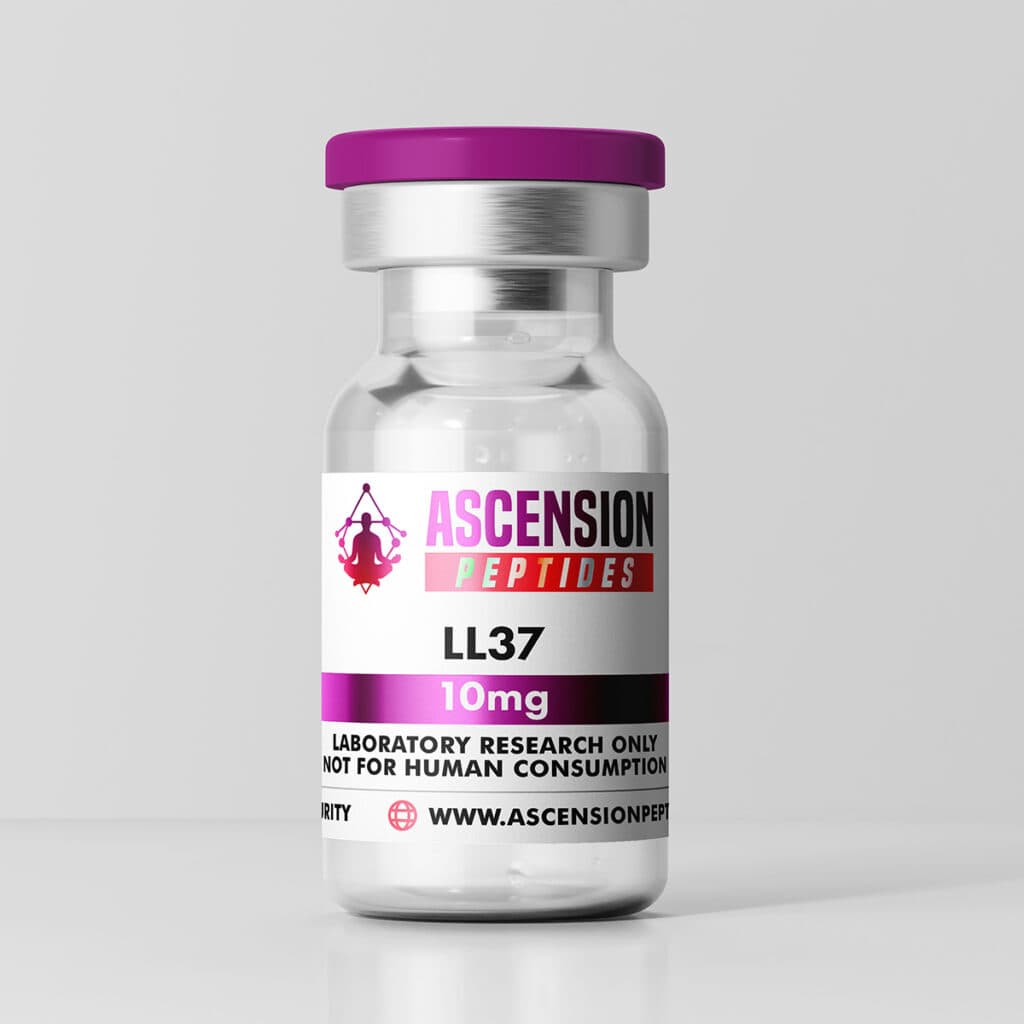
- LL-37: As a 37-amino-acid peptide, synthesis quality and purity verification (HPLC + mass spec) are critical. Folding into the correct amphipathic helix is essential for activity. Require ≥95% purity minimum, ideally ≥98%.
- KPV: As a tripeptide, synthesis is straightforward and purity is generally high. Still verify with batch-specific COA, but quality concerns are lower than with larger peptides.
LL-37 and KPV are usually encountered as part of a longer list of compounds studied for gastrointestinal health. For where they sit relative to the approved GI peptides and to BPC-157, see our breakdown of the wider gut health peptides landscape.