Melanocortin Research
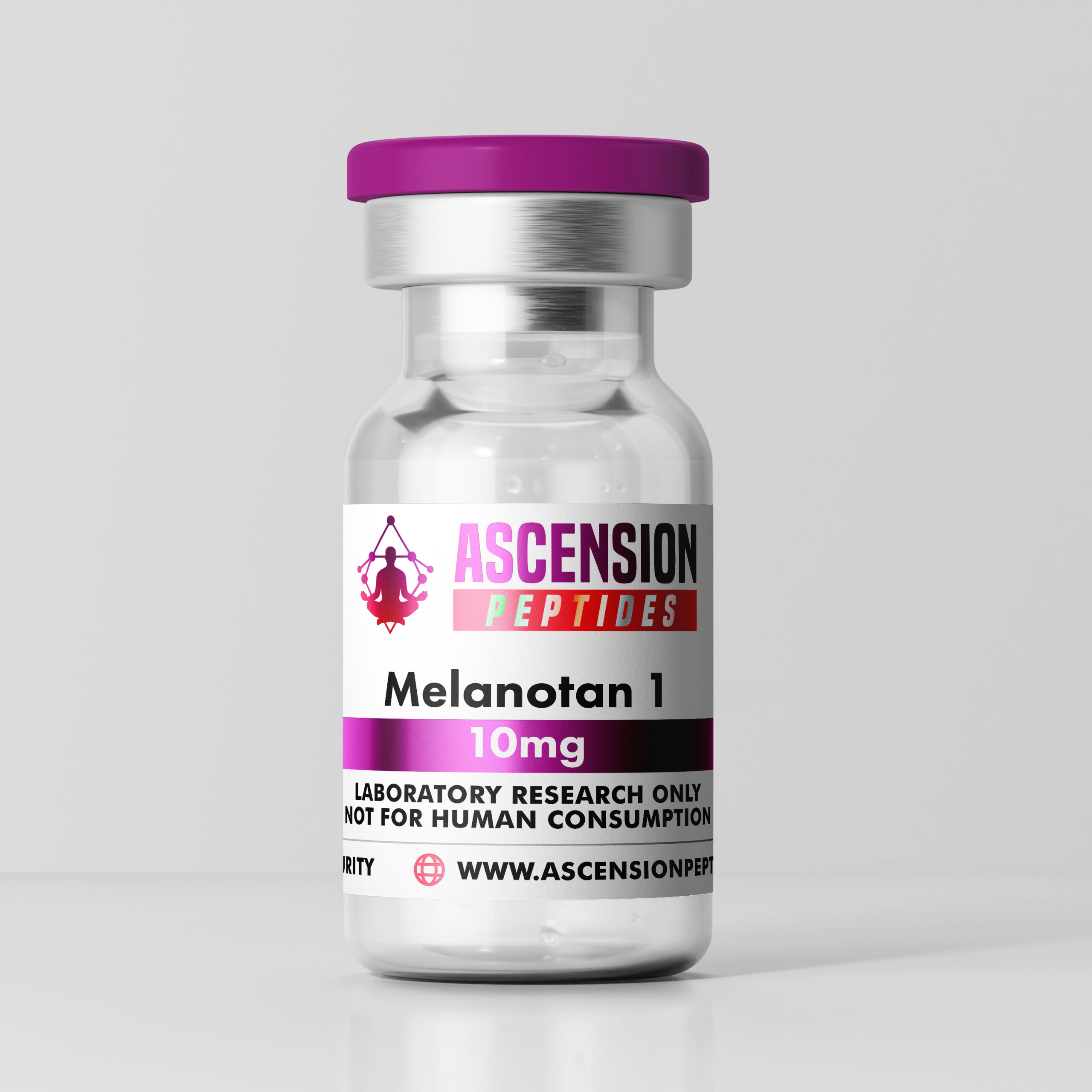
Melanotan I
with codePEPTIDEDECKat checkout· list $59.99
- Purity
- 99+% (HPLC verified)
- Vial
- 10mg
- Form
- Lyophilized powder, sealed vial
- Half-life
- Longer than native alpha-MSH due to Nle and D-Phe substitutions
Melanotan I for sale at PeptideDeck — also known as afamelanotide, a linear synthetic analogue of alpha-melanocyte-stimulating hormone with selective MC1 receptor affinity, studied for melanogenesis and photoprotection in preclinical models, supplied as 99+% pure lyophilized powder in a sealed 10mg research vial. If you are looking for where to buy Melanotan I online with verified purity, batch COA, and same-day US fulfillment, this is the listing we recommend.
About Melanotan I
Researchers searching for Melanotan I for sale will find this listing provides the primary linear alpha-MSH analogue research peptide in a sealed 10mg vial at 99+% purity. Buy Melanotan I here with confidence: every order ships same-day from a US warehouse through a vetted research supplier with HPLC-verified identity and an independent certificate of analysis. The Melanotan I price on this page reflects the current discounted rate with transparent checkout.
Melanotan I, also known by its international nonproprietary name afamelanotide, is a linear synthetic analogue of the endogenous tridecapeptide alpha-melanocyte-stimulating hormone (alpha-MSH). Alpha-MSH is a cleavage product of the proopiomelanocortin (POMC) precursor and acts as the primary endogenous ligand at the melanocortin-1 receptor (MC1R) expressed on epidermal melanocytes. Melanotan I was developed as a stabilized synthetic analogue of alpha-MSH to study melanogenesis and photoprotection biology; its linear structure differentiates it from the cyclic Melanotan II analogue and contributes to a receptor selectivity profile weighted toward MC1R relative to the broader melanocortin receptor family. Afamelanotide has been approved in several jurisdictions including the European Union and the United States under the brand name Scenesse for the rare photodermatosis erythropoietic protoporphyria (EPP), making it the most clinically advanced compound in the synthetic alpha-MSH analogue class. This Melanotan I 10mg vial provides a standard research quantity for in-vitro melanocyte biology, photobiology, and melanocortin pharmacology programs. Purchase Melanotan I here with documented purity and reliable domestic supply.
Where to Buy Melanotan I
Researchers looking for where to buy Melanotan I online should prioritize suppliers that provide HPLC purity documentation, mass-spectrometry identity confirmation of the norleucine substitution and D-Phe modification, and domestic US fulfillment. The norleucine-4 and D-phenylalanine-7 substitutions in Melanotan I are essential to its stability and MC1R binding potency; material synthesized without these modifications would present as native alpha-MSH or a less potent analogue and would not reproduce the expected pharmacological profile in melanogenesis research. Batch-level QC is therefore a minimum requirement.
PeptideDeck lists Melanotan I for sale from a vetted US research supplier meeting these documentation standards. The Melanotan I price on this page reflects 99+% HPLC-verified purity, third-party QC testing, and same-day shipping from a US warehouse. This listing provides the standard 10mg vial format appropriate for in-vitro melanocyte biology and melanocortin receptor pharmacology programs.
Click through to our partner to confirm live Melanotan I stock availability and complete checkout with encrypted secure payment.
Quality Assurance & COA
Each Melanotan I 10mg vial supplied through this listing is produced under cGMP-aligned synthesis conditions. HPLC analysis confirms purity at 99+% and identifies any detectable impurities above the reporting threshold. Mass spectrometry confirms molecular identity against the expected mass of Melanotan I (afamelanotide), verifying the norleucine and D-phenylalanine substitutions that distinguish it from native alpha-MSH and from other melanocortin analogues.
Independent third-party laboratory verification adds an additional quality layer beyond internal vendor testing. The batch-specific COA is available on request from our partner vendor; researchers should request the COA for their specific lot number at time of purchase. Only lots passing purity and identity thresholds are released for sale.
Mechanism of Action
Melanotan I acts as an agonist at the melanocortin-1 receptor (MC1R), a Gs-coupled G-protein coupled receptor expressed at high density on epidermal melanocytes, keratinocytes, and certain immune cell populations. MC1R activation by Melanotan I, as with the endogenous ligand alpha-MSH, stimulates adenylyl cyclase through the Gs/cAMP pathway. The resulting elevation of intracellular cyclic AMP activates protein kinase A, which phosphorylates and activates the transcription factor CREB. CREB-driven gene expression upregulates microphthalmia-associated transcription factor (MITF), the master regulator of the melanocyte differentiation and melanogenic program.
MITF activation drives transcription of the melanogenic enzyme cascade: tyrosinase (TYR), tyrosinase-related protein 1 (TYRP1), and dopachrome tautomerase (DCT/TYRP2). Tyrosinase catalyzes the rate-limiting step of melanin biosynthesis, converting tyrosine to DOPA and DOPA to dopaquinone. These enzymatic products feed into the melanin synthesis pathway, resulting in increased production of eumelanin (the brown-black form) in melanocytes. Eumelanin is the photoprotective pigment that constitutes the primary UV-shielding mechanism in skin.
The linear structure of Melanotan I confers relative selectivity for MC1R over the other melanocortin receptor subtypes (MC3R, MC4R, MC5R) compared with the cyclic Melanotan II, which has a broader multi-receptor binding profile due to structural features that increase receptor promiscuity. This MC1R selectivity makes Melanotan I a more specific pharmacological probe for studying MC1R-driven melanogenesis pathways in research models without the confounding activation of MC4R-mediated hypothalamic circuits or MC5R-mediated exocrine effects that occur with Melanotan II.
In addition to its melanogenic signaling, MC1R activation has been studied in research models of UV-induced DNA damage response and reactive oxygen species management. MC1R-driven cAMP signaling is associated with enhanced nucleotide excision repair activity and reduced UV-induced apoptosis in melanocytes in preclinical cell culture models, providing a molecular basis for investigating the photoprotective biology attributed to alpha-MSH analogues in the published dermatology research literature.
Chemical Profile
Melanotan I (afamelanotide) is a linear synthetic tridecapeptide analogue of alpha-MSH with specific amino acid modifications relative to the native endogenous sequence that improve metabolic stability and receptor binding affinity. The key stabilizing modification is substitution of the position 4 methionine with norleucine, which prevents oxidative degradation of the methionine sulfur and extends the effective half-life in biological matrices compared to native alpha-MSH.
The molecular formula of Melanotan I is C78H111N21O19 with a molecular weight of approximately 1646.9 g/mol. The IUPAC sequence is Ac-Ser-Tyr-Ser-Nle-Glu-His-D-Phe-Arg-Trp-Gly-Lys-Pro-Val-NH2, incorporating an N-terminal acetyl group and C-terminal amide. The D-phenylalanine substitution at position 7 (shared with Melanotan II) contributes to enhanced MC1R binding relative to native alpha-MSH. The compound is supplied as a lyophilized white to off-white powder in a sealed glass vial at 99+% purity as verified by HPLC. CAS number: 75921-69-6.
Research Applications
Melanotan I is studied for melanogenesis and photoprotection in preclinical models, reflecting its well-characterized MC1R pharmacology. The compound has been used across multiple domains of dermatology, photobiology, and melanocortin receptor biology research.
In melanogenesis research, Melanotan I is used as an MC1R agonist probe in cultured primary human melanocytes and melanocyte cell lines (B16, Mel-2a, normal human epidermal melanocytes). Investigators apply Melanotan I to characterize dose-response relationships for cAMP generation, MITF expression, tyrosinase activity, and melanin synthesis. These assays are used to map MC1R-driven melanogenic signaling at a molecular level and compare the efficacy of different synthetic alpha-MSH analogues.
In photoprotection research, Melanotan I is used in UV exposure models to study whether MC1R pre-activation modifies UV-induced DNA damage, cyclobutane pyrimidine dimer (CPD) formation, reactive oxygen species generation, and melanocyte apoptosis. Rodent models with implanted slow-release afamelanotide formulations have been used to study the relationship between MC1R agonism, skin pigmentation, and photocarcinogenesis endpoints. The approved clinical indication for afamelanotide in EPP (erythropoietic protoporphyria) arose from this research lineage; EPP patients are unable to tolerate normal sunlight exposure, and afamelanotide-driven melanogenesis provides a protective pigmentation buffer in the clinic.
In melanocortin receptor pharmacology research, Melanotan I serves as an MC1R-selective reference compound for comparing the receptor activation profiles of novel melanocortin analogues. Structure-activity relationship studies use Melanotan I alongside Melanotan II and receptor-selective alpha-MSH fragments to map the determinants of MC1R versus MC4R selectivity.
In immune research, MC1R expression on macrophages and dendritic cells has been studied in models of skin inflammation, UV immunosuppression, and contact hypersensitivity. Melanotan I is used in these models to probe the anti-inflammatory arm of MC1R signaling in immune cells.
All research applications described here refer to published preclinical and clinical literature contexts. Melanotan I is not FDA-approved for general research use and is supplied strictly for in-vitro laboratory investigation of melanocortin pharmacology.
Reconstitution & Dosing Reference
The following reconstitution guidance is provided as a research reference for in-vitro laboratory use only. Institutional SOPs and published preclinical literature should guide protocol-specific reconstitution decisions.
To reconstitute Melanotan I, inject bacteriostatic water along the vial wall using a 1 mL insulin syringe or reconstitution needle. Avoid direct injection onto the lyophilized cake. Do not shake; gently invert or roll the vial until the powder is fully dissolved. The reconstituted solution should be clear to slightly opalescent with no visible particulates. Melanotan I has good aqueous solubility and typically dissolves readily under standard conditions.
For the 10mg vial, adding 1 mL of bacteriostatic water yields a 10 mg/mL stock. Adding 2 mL yields 5 mg/mL. For melanocyte cell culture assays, working concentrations in the nanomolar range are typical for MC1R activation; researchers prepare serial dilutions from the stock in culture medium or phosphate-buffered saline. Published in-vivo rodent studies have used microgram-to-milligram per kilogram doses delivered subcutaneously; this information is cited strictly as published research literature context and does not constitute dosing guidance for any application.
Store reconstituted Melanotan I at 2-8 degrees Celsius. Use within 30 days of reconstitution. Do not freeze reconstituted solution.
Storage & Handling
Lyophilized Melanotan I powder should be stored at -20 degrees Celsius upon receipt. Short ambient-temperature transit during shipping does not meaningfully degrade the lyophilized peptide. Transfer to freezer storage immediately upon receipt for long-term stability.
Protect the vial from light. Tryptophan residues in the Melanotan I sequence are photosensitive, and UV or strong visible light exposure can generate oxidation products. Store in the original secondary packaging or an opaque container.
After reconstitution with bacteriostatic water, store the solution at 2-8 degrees Celsius and use within 30 days. Avoid multiple freeze-thaw cycles. For extended programs requiring use beyond 30 days, aliquot the reconstituted stock into single-use volumes before freezing at -20 degrees Celsius to minimize cumulative freeze-thaw degradation.
Research Benefits
99+% purity lyophilized Melanotan I (afamelanotide) verified by HPLC
10mg per vial, linear alpha-MSH analogue, MC1R-selective, research-grade
Studied for melanogenesis and photoprotection in preclinical models
Norleucine-4 and D-Phe-7 substitutions for enhanced stability and receptor affinity
Used in melanocyte biology and melanocortin pharmacology research
Clinically advanced class: afamelanotide approved for EPP (Scenesse) -- same INN, research format
Per-lot certificate of analysis with independent verification
Ships same-day from a US warehouse with tracked delivery
Product Specifications
| Molecular Weight | ~1646.9 g/mol |
| Sequence | Ac-Ser-Tyr-Ser-Nle-Glu-His-D-Phe-Arg-Trp-Gly-Lys-Pro-Val-NH2 (linear alpha-MSH analogue) |
| Half-Life | Longer than native alpha-MSH due to Nle and D-Phe substitutions |
| Purity | 99+% (HPLC verified) |
| Form | Lyophilized powder, sealed vial |
| Storage | Lyophilized at -20°C; reconstituted at 2-8°C, use within 30 days |
Frequently Asked Questions
You May Also Like
View all →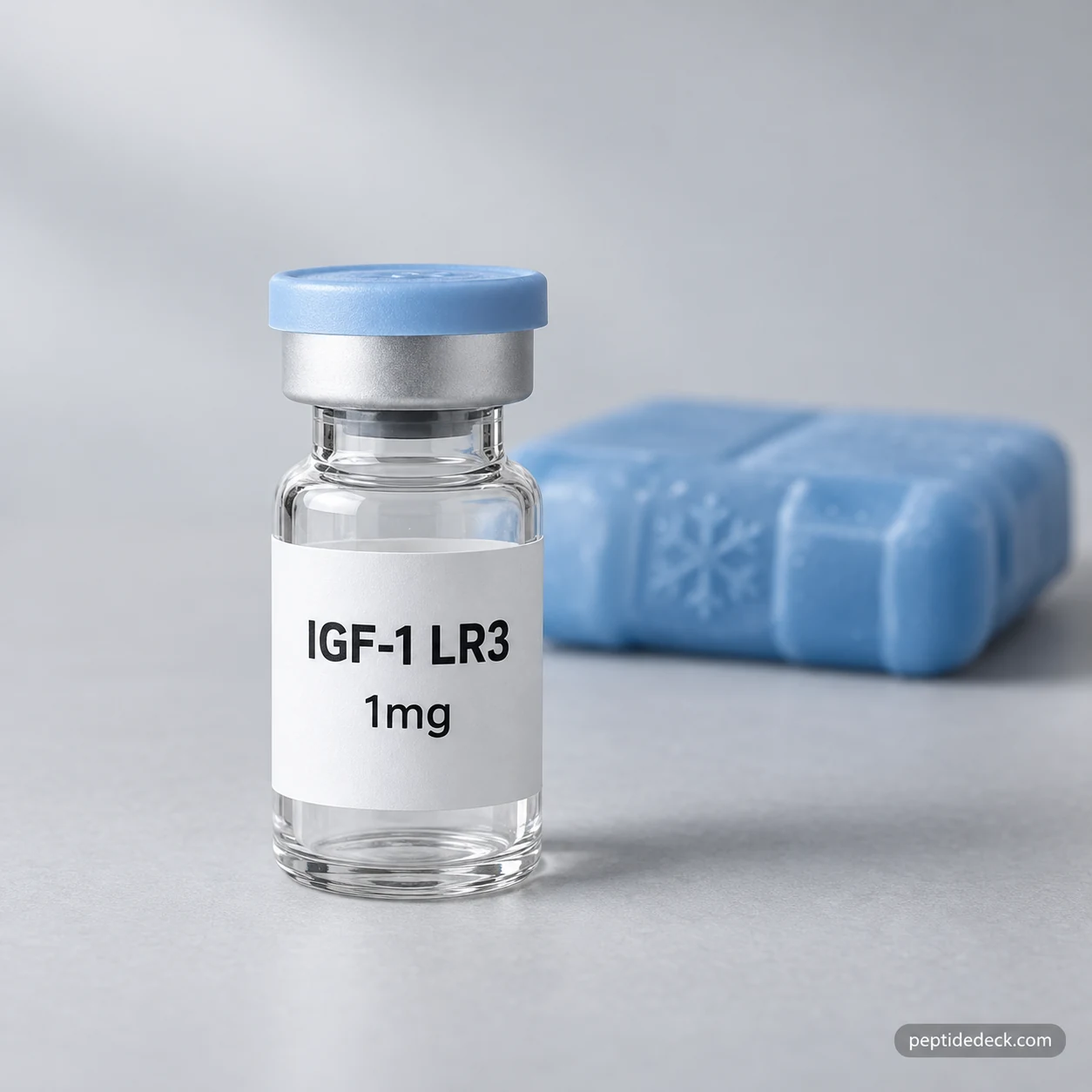
Growth Factor Peptides
IGF-1 LR3
Long R3 Insulin-like Growth Factor-1, 1mg vial
Growth Hormone Releasing Hormone (GHRH) Analogues
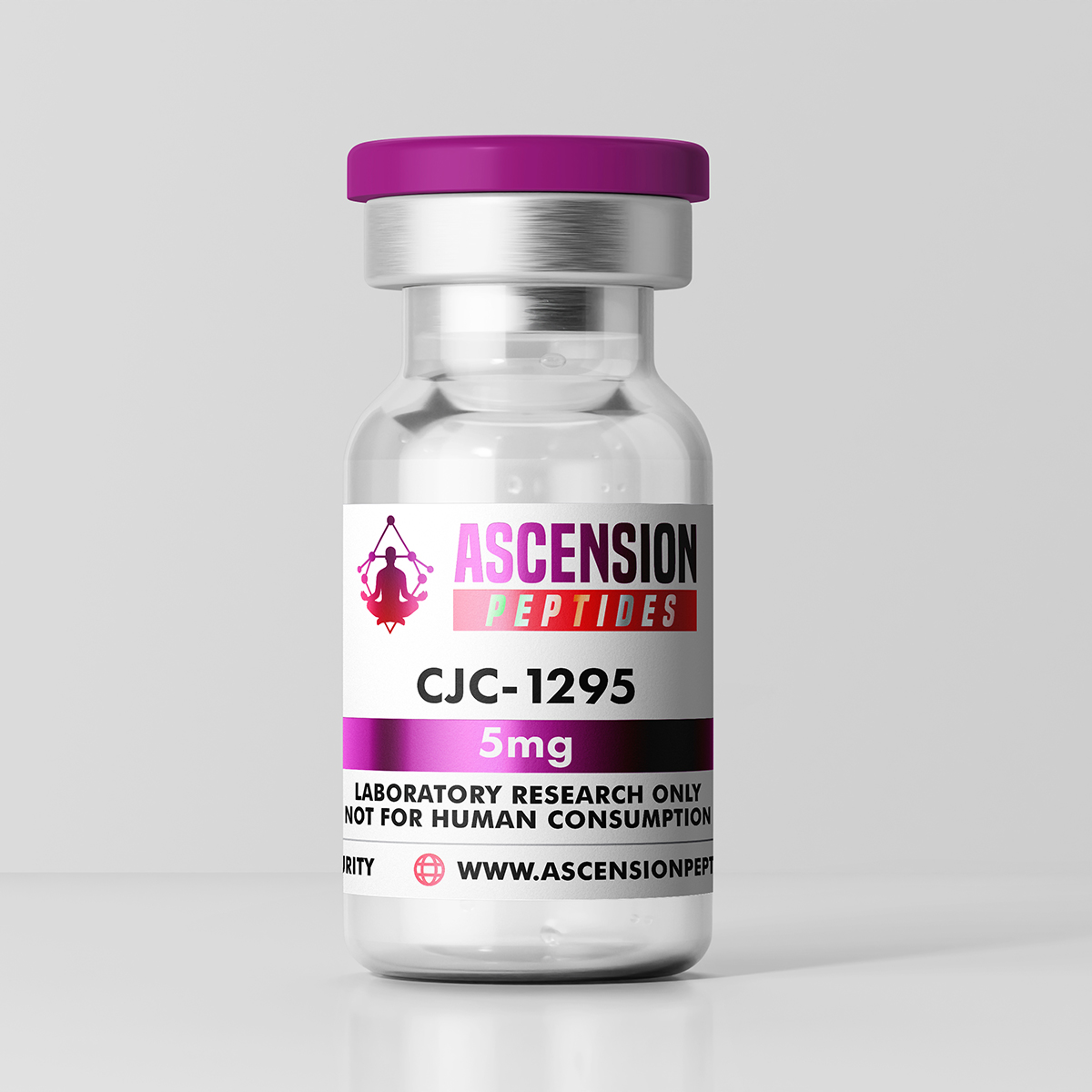
CJC-1295 (No DAC)
Modified GRF (1-29) GHRH Analogue, 5mg Lyophilized Vial
Copper Peptides
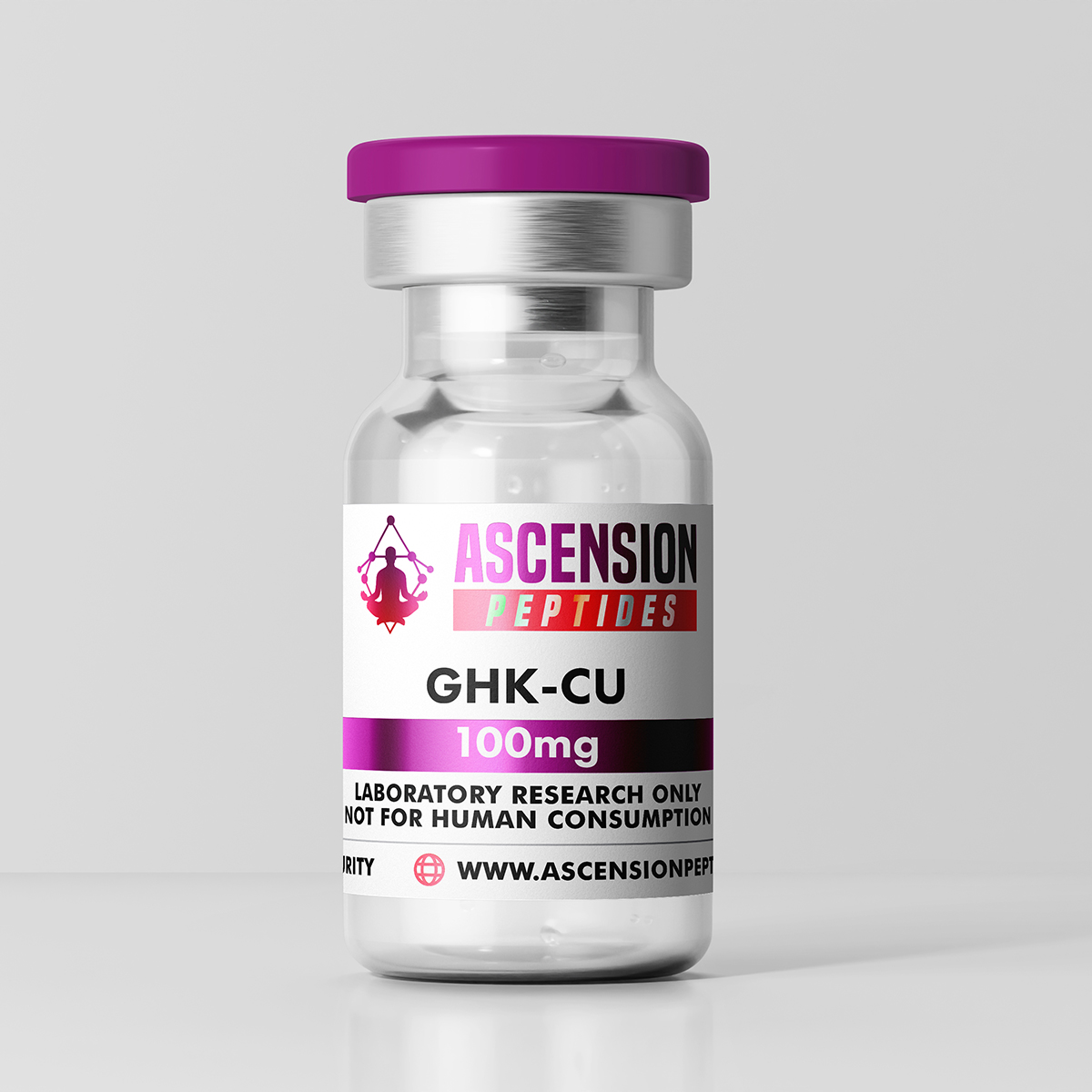
GHK-Cu
GHK-Cu For Sale: 50mg 99%+ Purity Copper Tripeptide

Healing & Recovery Peptides
BPC-157
Body Protection Compound 5mg: 99%+ Purity Research Vial
Research Use Only. All products sold by PeptideDeck are strictly for in-vitro laboratory research and are not intended for human or veterinary use, diagnosis, or treatment. Not for resale.