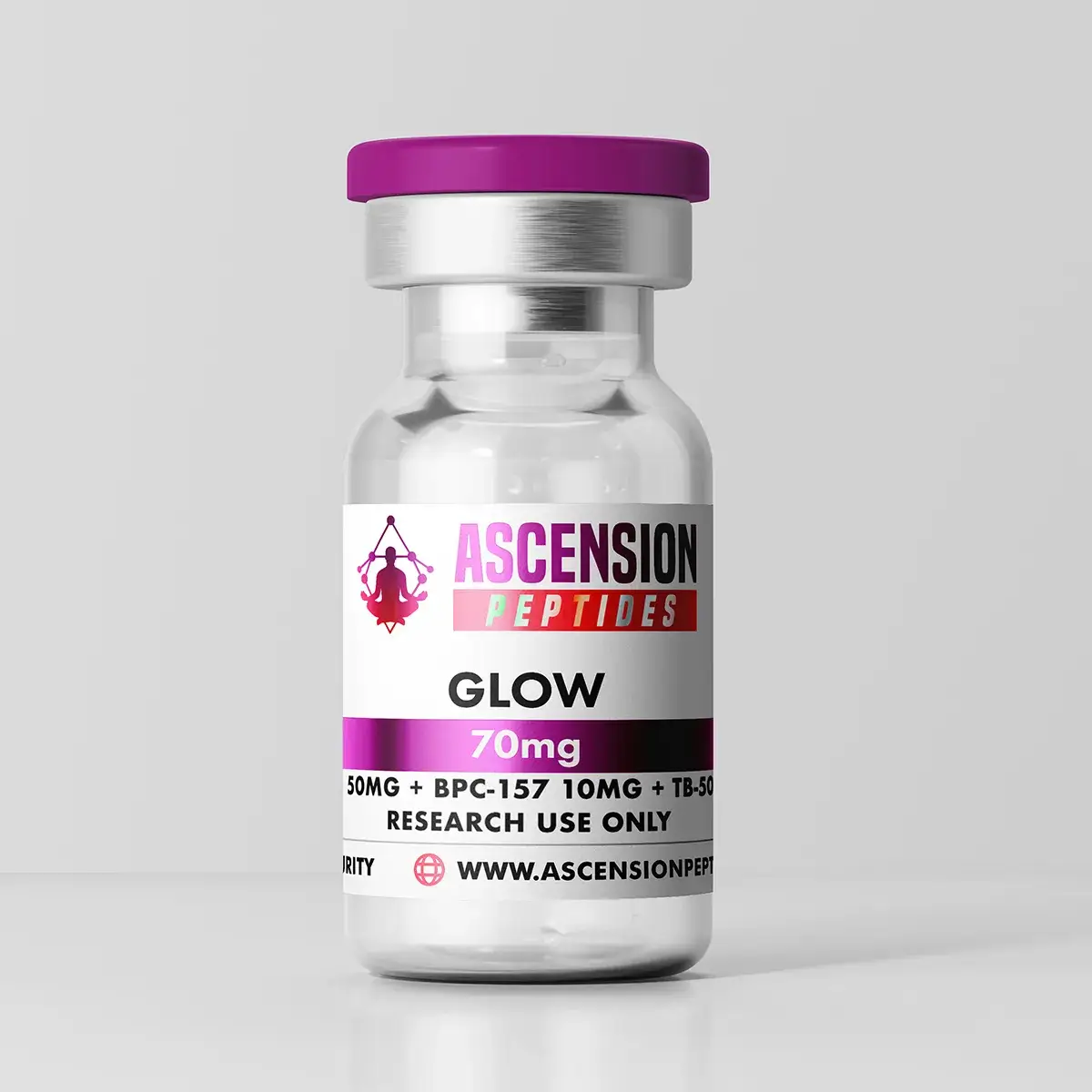
GLOW is built around one of the most studied skin peptides available — GHK-Cu — plus the two most used healing peptides, BPC-157 and TB-500. The results people share consistently fall into three categories: skin quality improvements (the most common), faster healing and recovery, and reduced inflammation. Here's what the before and afters actually look like, the timeline to expect, and what drives the results.
🔑 Key Takeaways
- GLOW = GHK-Cu (50mg) + BPC-157 (10mg) + TB-500 (10mg)
- Primary results: skin radiance and texture (weeks 3-6), collagen improvement (weeks 6-12), faster healing (weeks 1-3)
- GHK-Cu is the skin driver — 50mg per vial
- BPC-157 + TB-500 accelerate tissue repair and reduce recovery time
- Standard protocol: 0.1mL 3x per week subcutaneous
- One vial lasts 8-11 weeks at standard dose
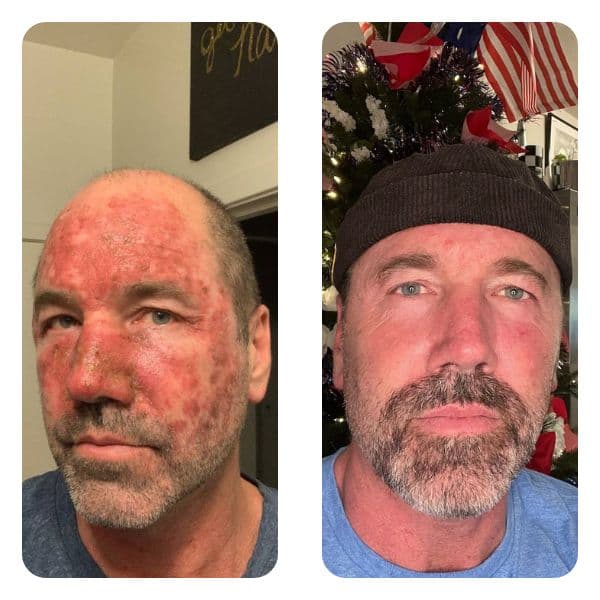
GLOW community results — skin transformation at different stages:
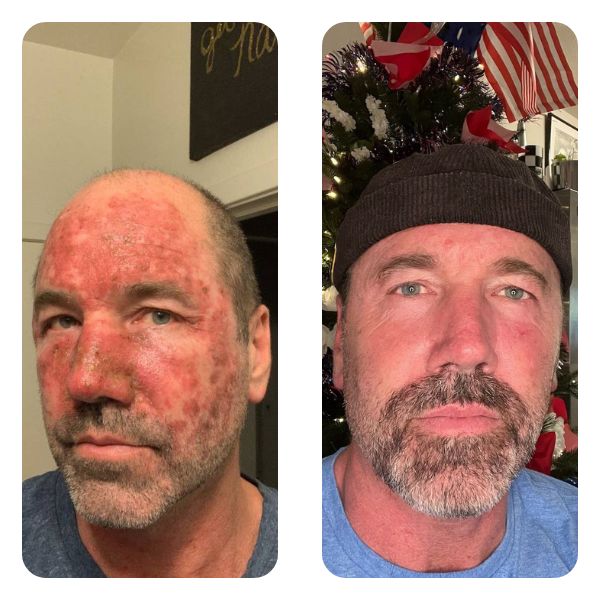
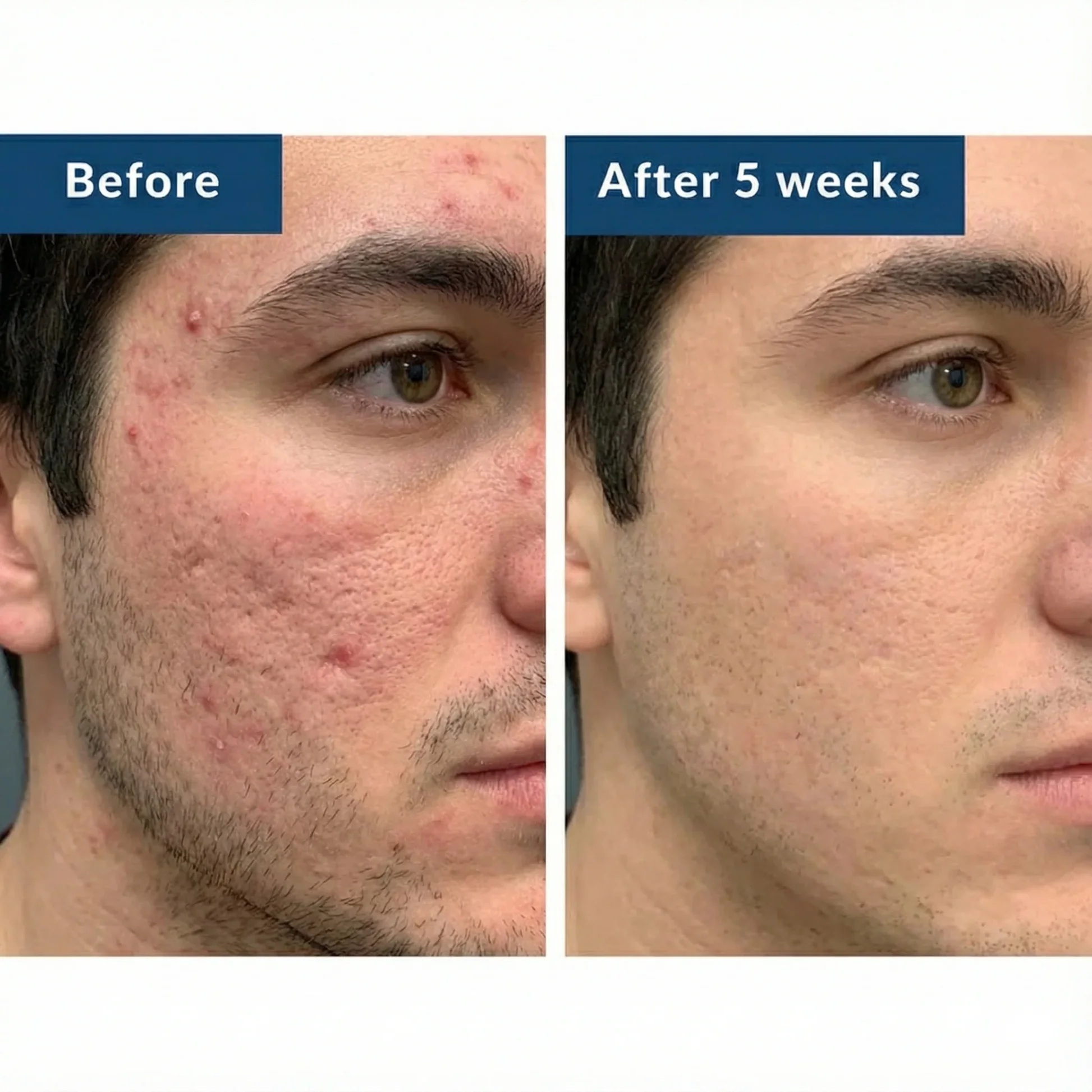
Results from community members using GHK-Cu-containing peptide blends. Individual results vary.
What Makes GLOW Work — The Three Peptides
Each ingredient has a specific role. None of them are filler.
- GHK-Cu (50mg): A naturally occurring copper peptide that declines significantly with age — by your 60s you have less than a third of the levels you had at 20. Stimulates collagen I, III, and elastin. Activates over 4,000 genes involved in skin repair. The "glow" peptide for a reason — GHK-Cu is behind most of the skin luminosity effects people attribute to the blend.
- BPC-157 (10mg): Accelerates wound healing, reduces inflammation throughout the body, and speeds post-procedure recovery noticeably. Gut health is a bonus effect — BPC-157 shows consistent benefits for intestinal healing alongside its skin and tissue effects.
- TB-500 (10mg): Promotes cell migration and tissue remodeling from a different angle than BPC-157. Works with BPC-157 to accelerate healing from multiple directions simultaneously — the two together consistently outperform either used alone.
The way these three interact: GHK-Cu rebuilds the structural proteins (collagen, elastin) that make skin look young. BPC-157 and TB-500 create and sustain the healing environment where that rebuilding happens faster. You could run GHK-Cu alone, but BPC-157 and TB-500 accelerate everything it does.
GLOW Results Timeline — What to Expect Week by Week
Weeks 1-2
Most people notice little visually in the first two weeks. That doesn't mean nothing is happening — existing wounds or skin irritation starts healing faster, which is often the first subtle signal the blend is working. Injection site may be slightly red for an hour or two; completely normal.
Weeks 3-4
Skin starts feeling different before it looks different. Slightly more hydrated, a bit firmer. Fine lines may appear softer — this is early collagen response. Many users at this stage describe it as "something is different but I can't quite place it." If you're using GLOW post-procedure (after laser or microneedling), healing time is noticeably shorter by now.
Weeks 5-8
This is where visible results start. Skin texture and tone improve measurably. Radiance is the word most users land on — skin looks more alive, more lit-from-within. Collagen remodeling is running at full effect. Pore appearance often improves. Acne-prone users tend to see reduction in active breakouts and faster clearing.
Weeks 8-12
The structural changes become real. Skin density measurably improves — you can feel it. Fine lines are visibly softer, not just slightly. Tone is more even. Users doing serial photos from week 1 to week 12 often describe this as the "wow" phase — the cumulative changes are suddenly obvious in comparison.
Month 3+
Cumulative gains continue as long as you're cycling. Most users run 8-12 weeks on, then 4 weeks off, then repeat. The structural improvements — collagen and elastin density — persist partially after cycling off, which means each cycle starts from a better baseline than the last.
GLOW Results by Use Case
Who Gets the Best Results with GLOW
Not everyone responds the same way — but certain groups see the clearest results:
- People dealing with aging skin (30s-60s): The collagen decline GHK-Cu addresses is most pronounced in this group. Younger skin has plenty of collagen; older skin is where GHK-Cu supplementation has the most visible impact.
- Post-procedure patients: GLOW is widely used by aesthetic medicine practitioners after laser resurfacing, microneedling, and chemical peels. Recovery time shortens noticeably and results of the procedures improve.
- Athletes wanting both recovery and skin benefits: BPC-157 and TB-500 cover muscle and tendon recovery while GHK-Cu handles skin. Two goals, one blend.
- Anyone with slow-healing skin: BPC-157 is particularly effective here — cuts, scrapes, and post-procedure sites that normally take weeks can close in days.
GLOW vs KLOW — Which Before and After Results Are Better?
For pure skin results: basically identical. Both contain 50mg GHK-Cu, 10mg BPC-157, and 10mg TB-500. The skin mechanisms are the same. The difference is that KLOW adds 10mg KPV — a potent anti-inflammatory that GLOW doesn't include.
- Price: GLOW $145 vs KLOW $165
- If your main goal is skin radiance and recovery with no gut or inflammatory issues: GLOW is the right choice
- If you have chronic inflammation, IBD, or want the extra anti-inflammatory effect: choose KLOW
- For before and after skin photos, you'd struggle to tell which blend produced which result at equivalent timepoints
See the full breakdown: KLOW Blend Review
Frequently Asked Questions
The information in this article is for educational purposes only and does not constitute medical advice. Always consult a healthcare professional before starting any new supplement or compound. Results vary by individual.