🔑 Key Takeaways
- Research vendors offer the lowest cost ($30–$50/vial) and no prescription required
- Injectable subcutaneous is the only form worth using — oral and nasal spray absorption is too unreliable
- Standard dose is 200mcg/day; at that rate a 5mg vial lasts about 25 days
- Half-life is ~2 hours — timing matters more than with most peptides
- Pre-bed dosing aligns with natural GH pulses; morning fasted works too
- Typical cycle: 3–6 months on, 1–2 months off
Ipamorelin has one of the cleanest safety profiles among GH secretagogues. It doesn't spike cortisol or prolactin the way GHRP-6 does (see our ipamorelin side effects breakdown for the full picture), it's selective enough to avoid the ghrelin-mediated hunger side effects, and the research behind it is solid. So naturally, a lot of people want to use it — and naturally, the market has gotten crowded with variable-quality products.
This guide covers everything: where to actually buy it, what a realistic monthly budget looks like, which forms are worth using (spoiler: just one), how to reconstitute a vial without screwing it up, and a full dosage chart. If you want the background on what ipamorelin does and how it works, check out our ipamorelin overview first.
Where to Buy Ipamorelin
There are three main routes. They differ a lot in cost, convenience, and what you're actually getting.
Route 1: Research Peptide Vendors (No Prescription)
Research vendors sell ipamorelin as a lyophilized powder in vials, intended for laboratory research. In practice, this is where most people buy it — the process is straightforward, pricing is transparent, and the better vendors publish third-party COAs for every batch.
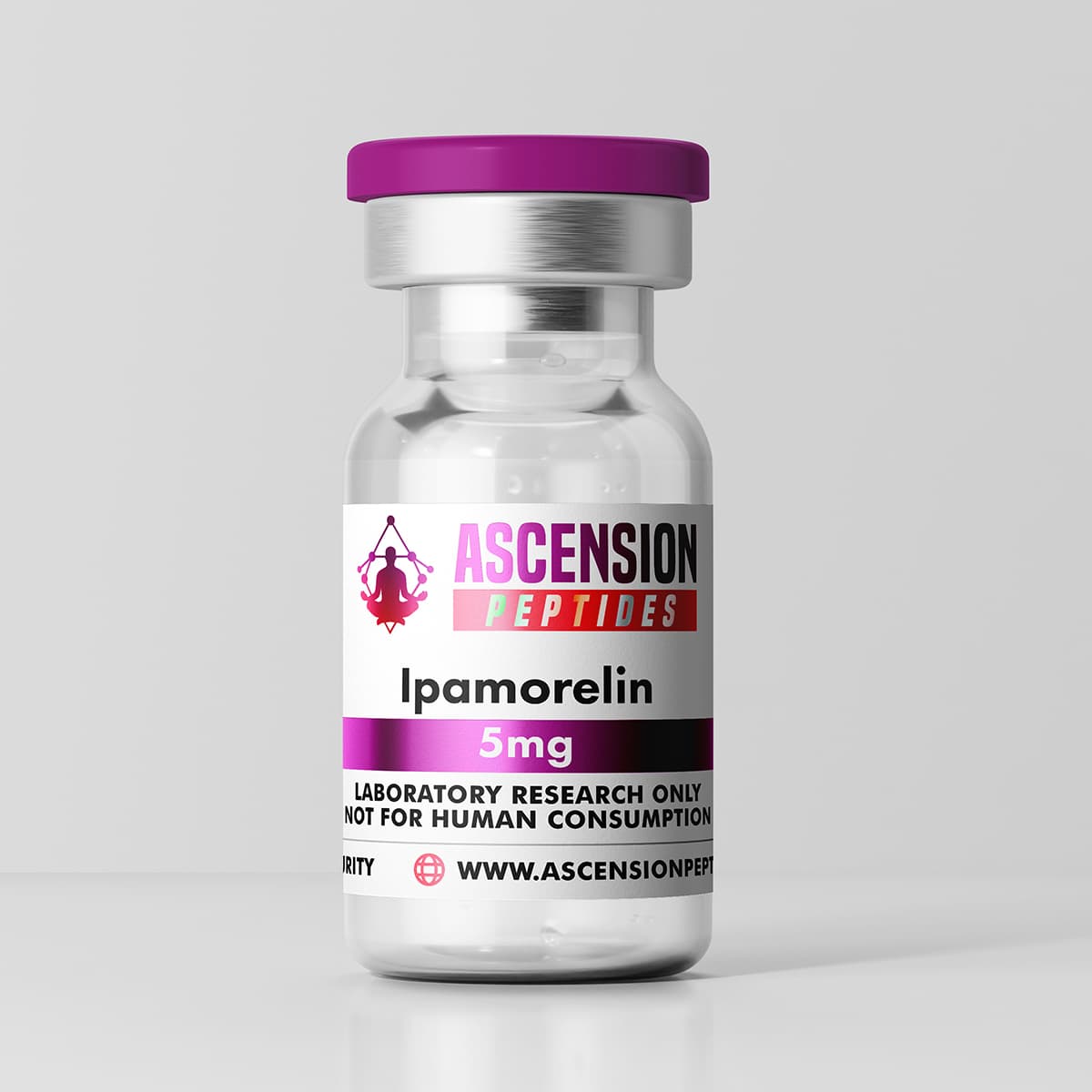
Ascension Peptides is one of the vendors we'd point to specifically. They test everything with independent labs, ship domestically in the US, and carry ipamorelin in both single vials and 10-vial kits. Cost runs around $40–$50 for a 5mg vial, or less per-vial when you buy the kit.
What to look for when evaluating any research vendor:
- Published COA (certificate of analysis) from a third-party lab — not just the vendor's internal testing
- HPLC purity data, ideally ≥98%
- Mass spectrometry to confirm the compound identity
- Clear labeling (lot number, storage instructions)
- Domestic shipping (avoids customs delays and potential degradation in transit)
Route 2: Compounding Pharmacy (Prescription Required)
Compounding pharmacies can prepare ipamorelin — sometimes as an injectable, sometimes combined with CJC-1295 — but you need a prescription from a prescribing physician first. The upside is you're getting pharmaceutical-grade preparation. The downside is cost and friction: a telehealth appointment, the prescription itself, and then the compounded product typically runs $150–$300 per month, sometimes more depending on the formulation and dosage.
This is worth considering if you want everything under medical supervision or if your insurance might cover part of it. Otherwise, a good research vendor with published COAs is a more practical route for most people.
Route 3: Peptide Clinics
Clinics that specialize in peptide therapy will prescribe, compound, and administer ipamorelin — often as part of a broader anti-aging or hormone optimization protocol. Convenient, supervised, but the most expensive by far. Monthly costs at clinics typically run $200–$500+ depending on your location, sometimes bundled with other treatments. For people who want hands-on guidance and don't want to manage their own protocol, this makes sense. For everyone else, it's a lot of overhead.
Route Comparison Table
Ipamorelin Cost: What to Budget Monthly
Let's do the math on a real-world usage scenario. Standard research dose is 200mcg/day — that's roughly 1mg every 5 days, or about 30mg per month. A single 5mg vial at 200mcg/day gets you 25 days of use. So in a calendar month, you're looking at roughly 1.2–1.5 vials.
At $40–$50 per 5mg vial from a quality research vendor, that's approximately $48–$75/month. Buy the 10-vial kit if your vendor offers one — per-vial cost usually drops by 15–25%.
At 300mcg/day (upper end of the standard range), you'd burn through about 9mg/month — closer to 2 vials, so budget $80–$100/month.
Red flags on pricing: vials under $20 should raise questions. Either the concentration is lower than labeled, purity is questionable, or the vendor is cutting corners on testing. Suspiciously cheap is not a deal — it's a risk.
Ipamorelin Forms: Injectable vs. Nasal Spray vs. Tablets
This section is worth spending time on because there's a lot of marketing noise around alternative delivery methods. The short version: injectable is the only form with reliable bioavailability. Here's why the others fall short.
Injectable (Subcutaneous) — The Standard
Lyophilized ipamorelin reconstituted in bacteriostatic water and administered subcutaneously is the delivery method used in all meaningful research. Bioavailability is high, onset is fast (peak GH release within ~60 minutes), and dosing is precise. This is what works.
Ipamorelin Nasal Spray — Convenient but Limited
Nasal spray formulations exist and are sold by some vendors. The appeal is obvious — no needles. The problem is absorption. Intranasal delivery of peptides is notoriously variable; depending on the formulation and individual nasal physiology, bioavailability ranges from roughly 15–30% of the injected equivalent. That means if you're aiming for a 200mcg effect, you'd theoretically need 600–1300mcg intranasally to get there — and that assumes the absorption is consistent, which it isn't.
Some people use nasal spray and report subjective effects. I'm not going to tell you it does nothing. But the data isn't there to support it as a reliable protocol, and dosing becomes guesswork. If you're trying to use ipamorelin seriously, injectable gives you what you're paying for.
Ipamorelin Tablets / Capsules — Not Recommended
Oral bioavailability for peptides is generally poor — the GI tract degrades them before they can be absorbed meaningfully. Ipamorelin is no exception. Tablets and capsules are not a viable delivery method for this compound. If someone is selling oral ipamorelin and claiming it works, that's a marketing claim without scientific backing. Skip it entirely.
How to Reconstitute Ipamorelin
Ipamorelin arrives as a lyophilized powder — essentially freeze-dried. You need to add bacteriostatic water to activate it. This is a simple process but a few details matter for stability and dosing accuracy.
Gather Your Supplies
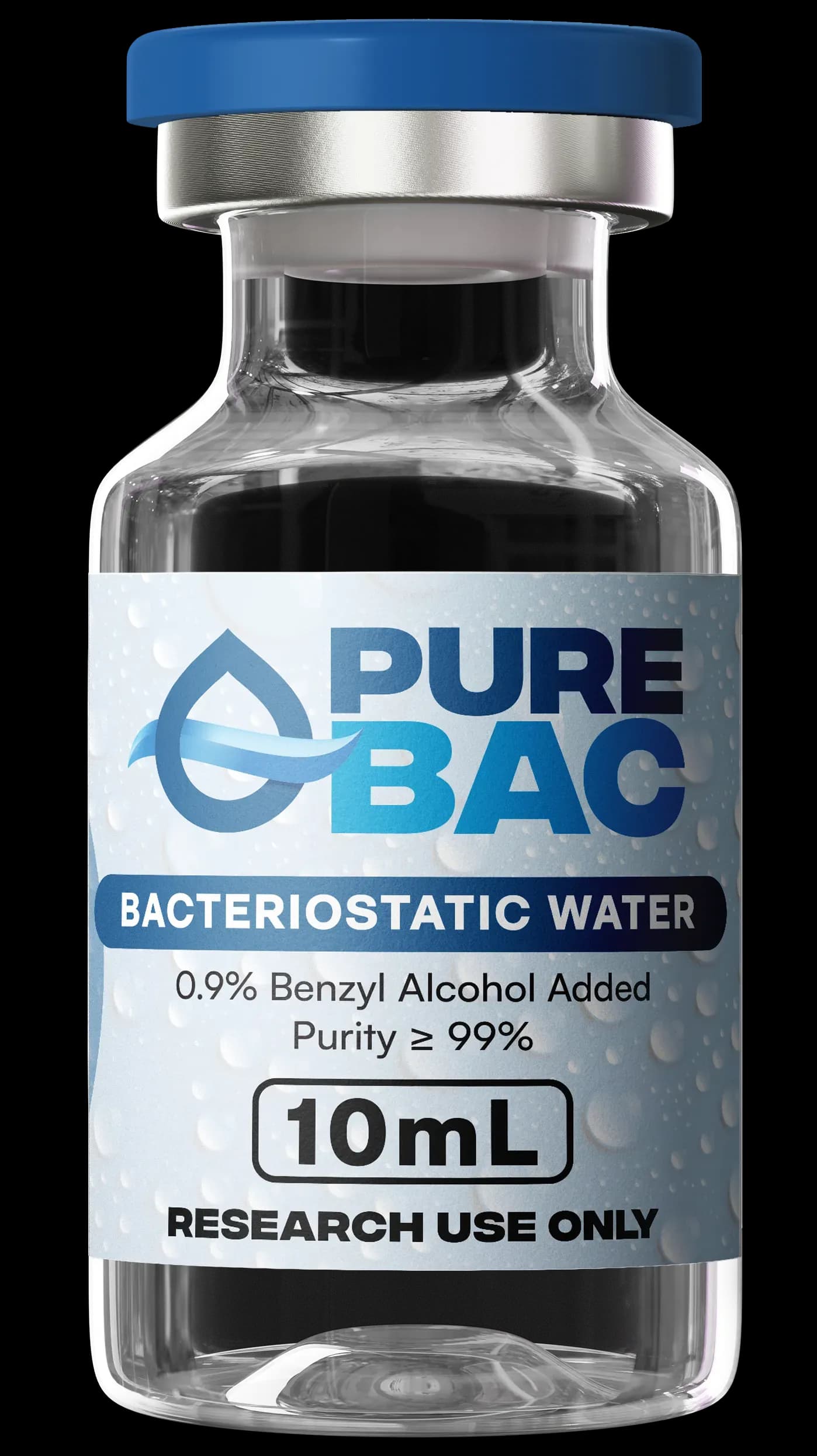
You'll need: the ipamorelin vial, bacteriostatic water (BW), a 1mL insulin syringe, alcohol wipes, and a clean surface. Use bacteriostatic water — not sterile water, not saline, not tap water. BW contains 0.9% benzyl alcohol which prevents bacterial growth and extends shelf life to 28–30 days.
Calculate How Much Bacteriostatic Water to Add
Standard reconstitution for a 5mg vial: add 2.5mL of bacteriostatic water. This gives you a concentration of 2mg/mL (2000mcg/mL). At this concentration, a 200mcg dose = 0.1mL = 10 units on an insulin syringe. Easy math. Some people use 1mL or 2mL — any amount works, you just adjust your draw volume accordingly. 2.5mL is convenient for common doses.
Add the Water Slowly
Wipe both the ipamorelin vial stopper and the BW vial stopper with an alcohol wipe. Draw the desired amount of BW into your syringe. Insert the needle into the ipamorelin vial at an angle, letting the water run slowly down the glass side — don't shoot it directly onto the powder. This prevents foaming and preserves the peptide structure.
Mix Gently
Gently swirl the vial — don't shake it. Shaking can break peptide bonds and degrade the compound. Swirl until the powder is fully dissolved and the solution is clear. It should go clear within 30–60 seconds.
Store Correctly
Reconstituted ipamorelin must be refrigerated at 2–8°C (standard fridge temperature). It's stable for approximately 28–30 days once mixed. Dry lyophilized powder (unreconstituted) is stable for much longer — typically 1–2 years if stored properly away from heat and light. Don't freeze reconstituted peptide; freeze-thaw cycles degrade it.
💡 Quick Reconstitution Reference
5mg vial + 2.5mL BW = 2000mcg/mL concentration
200mcg dose = 0.1mL = 10 IU on insulin syringe
Refrigerate after mixing. Use within 30 days.
Ipamorelin Dosage Chart
Ipamorelin dosing is relatively forgiving compared to some peptides, but there's still a sensible range. The chart below covers beginner through advanced protocols — see the full ipamorelin dosage guide for detailed breakdowns by goal.
A note on frequency: ipamorelin has a short half-life (~2 hours), so a single daily dose creates one GH pulse. Some protocols split the dose into 2× daily for more sustained elevation across the day. There's merit to both approaches — once daily pre-bed is the most common starting point and the easiest to maintain.
Doses above 300mcg per injection don't appear to add meaningfully to GH output — there's a ceiling effect. If you want more stimulation, the better move is adding CJC-1295 rather than pushing ipamorelin higher. Our CJC-1295 dosage guide covers how to pair them properly.
Ipamorelin Half-Life: Why Timing Matters
Ipamorelin's half-life is approximately 2 hours. It's absorbed quickly after subcutaneous injection, peaks within 60–90 minutes, and is largely cleared within 4–6 hours. This is one of the reasons timing actually matters here — unlike a compound that circulates all day, ipamorelin creates a discrete pulse of GH release right around the injection window.
That means what you do around dosing time matters too. Carbohydrates and high-fat meals spike insulin, which blunts GH release. To get the most out of a dose, you want to be in a fasted or low-insulin state — at least 2 hours after your last meal, ideally more.
Morning vs. Pre-Bed: Which Is Better?
Pre-bed dosing is generally considered optimal for a few reasons. First, your body's largest natural GH pulse happens during slow-wave sleep — dosing ipamorelin 30–60 minutes before sleep can amplify that pulse rather than just adding to daytime levels. Second, you're naturally fasted during sleep, so there's no food-insulin interference to worry about.
Morning dosing absolutely works. If you train in the morning and want to time GH elevation around exercise, fasted morning injection before your workout makes sense. Some people do both — a morning and a pre-bed dose at 100mcg each — which gets you to 200mcg/day with two smaller pulses.
Ipamorelin Cycle Length
Most protocols run ipamorelin for 3–6 months continuously, followed by a 4–8 week break. The reasoning behind the off-period is GH receptor desensitization — running a GH secretagogue indefinitely can downregulate receptor sensitivity over time, diminishing the response.
In practice, many users run 3 months on, 6 weeks off, then reassess. Shorter cycles (8–12 weeks) are also common for specific goals like injury recovery or pre-competition. There's no strong clinical data pinpointing the exact optimal cycle length for humans, so a conservative approach — run it, break, reassess — is reasonable.
If you're stacking ipamorelin with CJC-1295, the same cycle structure applies to both compounds since they're working the same axis.
Ipamorelin Injection Sites
Ipamorelin is administered subcutaneously — into the fatty tissue just under the skin, not into muscle. If you're new to self-injection, our peptide injection guide walks through the full process. This is a shallow injection, typically 45° angle with a short insulin needle (½ inch, 28–31 gauge).
Preferred Sites
- Abdomen — Most popular; easy to reach, consistent absorption, plenty of subcutaneous tissue. Avoid the immediate area around the navel (1–2 inch radius).
- Thigh (outer/lateral) — Good option if you find abdomen uncomfortable. Middle outer thigh, not the inner thigh.
- Upper arm (back/tricep area) — Less common but workable. Harder to self-inject; usually needs assistance.
Rotating Sites
Rotate injection sites consistently. Injecting the same spot every day causes localized tissue irritation and lipodystrophy over time — small lumps or indentations in the skin. A simple rotation pattern: abdomen left → abdomen right → thigh left → thigh right → repeat. Space injections at least 1 inch apart from the previous site in any given area.
Red Flags When Buying Ipamorelin
The research peptide market is largely unregulated, which means quality varies enormously. Here's what to watch for:
No Certificate of Analysis
Any legitimate vendor will have third-party lab testing available for every batch. If they can't provide an up-to-date COA with purity and identity confirmation, move on.
Suspiciously Low Prices
5mg ipamorelin under $20 is a red flag. Manufacturing and testing costs have a floor — prices well below market usually indicate cutting corners somewhere in the process.
No Third-Party Testing
In-house testing is easy to fake. Look for testing from recognized independent labs (Janoshik, Colmaric, etc.) with batch numbers that match the product you're buying.
Vague Labeling
Good products have clear labels: compound name, concentration, lot number, expiration date, storage instructions. Vague or incomplete labeling is a quality-control signal.
International Shipping Only
Peptides can degrade significantly during long international shipping, especially without proper cold chain management. Domestic vendors reduce that risk considerably.
Aggressive Health Claims
Vendors making bold therapeutic claims ("cures," "proven to increase muscle by X%") are often compensating for lack of product quality with marketing volume. Legitimate research vendors present their products honestly.
Ascension Peptides publishes COAs from independent labs and carries ipamorelin in 5mg vials and 10-vial kit formats. They ship domestically within the US. If you're looking for a starting point, that's a reasonable option to check out.
Ipamorelin Stacking Options: What Pairs Well
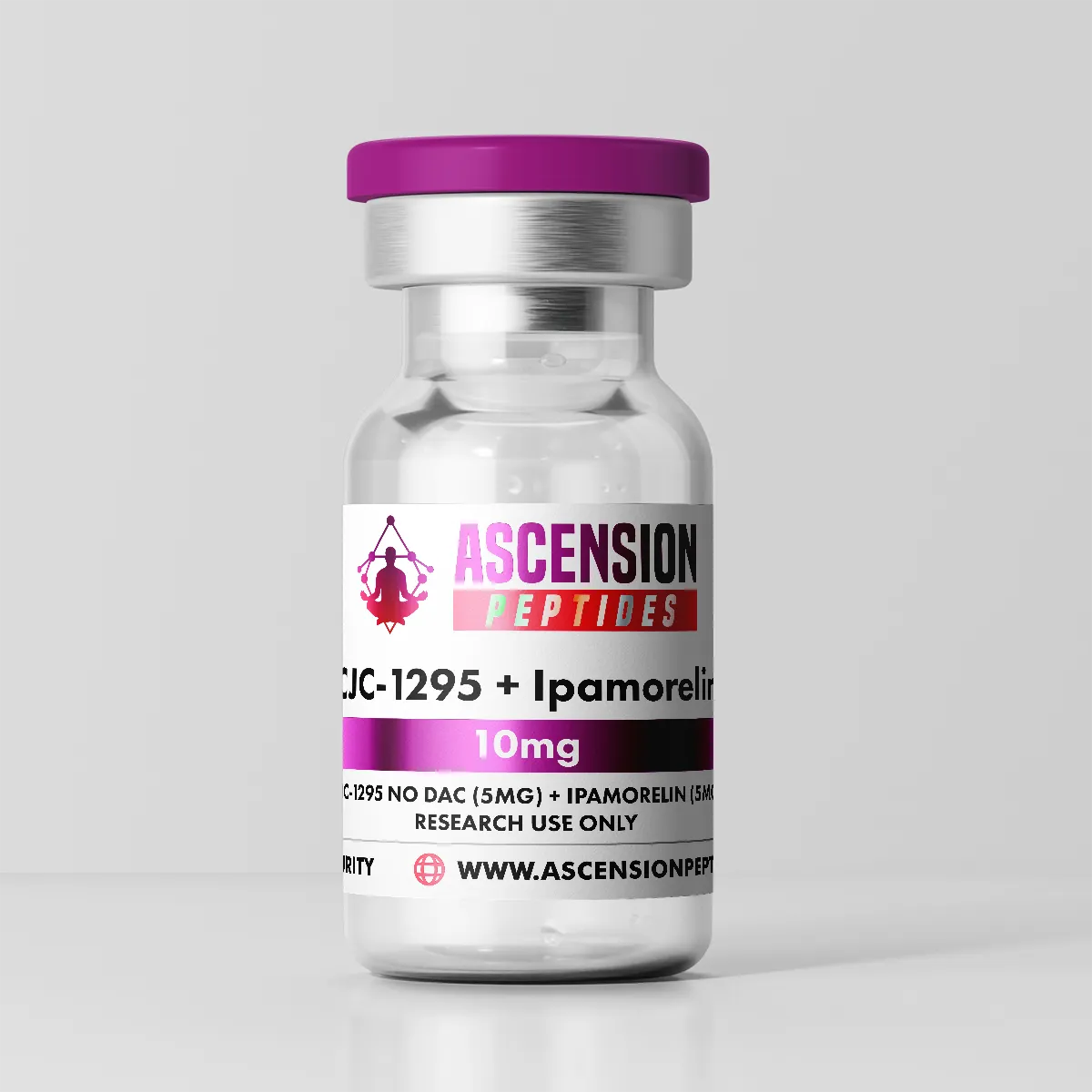
Ipamorelin works well on its own, but it's often stacked with other compounds to amplify GH output or target additional goals. The most well-established stack is with CJC-1295 (no DAC), and it's the combination used in the majority of clinical peptide therapy programs.
CJC-1295 + Ipamorelin (The Standard GH Stack)
CJC-1295 is a GHRH (growth hormone releasing hormone) analog that extends the duration of the GH pulse. Ipamorelin amplifies the pulse amplitude through the ghrelin receptor. Together, they produce a larger, longer GH release than either compound alone — this is the mechanism behind the synergy. Standard dosing is 100mcg CJC-1295 + 100–200mcg ipamorelin, injected together pre-bed. See our CJC-1295 dosage guide for the full protocol.
Ipamorelin + Sermorelin
Sermorelin is another GHRH analog, but shorter-acting than CJC-1295. Some practitioners prefer this combination for older patients or those who want a lighter touch on the GH axis. It's a gentler approach with a shorter half-life, which some view as a feature — less sustained stimulation means less risk of desensitization over long cycles.
Ipamorelin for Recovery Stacks
For injury recovery or post-surgical healing, ipamorelin is sometimes paired with BPC-157 or TB-500. The logic: ipamorelin drives systemic GH elevation (which supports tissue repair broadly), while BPC-157 and TB-500 act locally on specific injury sites. There's limited clinical data on the combination, but anecdotal reports from the peptide community are consistently positive.
Ipamorelin for Women: Dosing Differences
Ipamorelin isn't male-specific — women use it for many of the same goals: improved sleep, body composition, skin quality, and recovery. The dosing is typically the same or slightly lower: 100–200mcg/day, with 100mcg being a common female starting point.
Key Considerations for Women
Women tend to have higher baseline GH levels than men (estrogen stimulates GH secretion), so the relative boost from ipamorelin may differ. The side effect profile is essentially identical to men — mild water retention early on, occasionally vivid dreams, no androgenic effects (ipamorelin doesn't touch the androgen axis at all). Cycle lengths are the same: 3–6 months on, 4–8 weeks off.
Anti-Aging and Skin Benefits
Elevated GH and IGF-1 drive collagen synthesis, which is why many women (and men) report improved skin elasticity, reduced fine lines, and faster nail/hair growth on ipamorelin protocols. These aren't the primary clinical applications, but they're among the most consistently reported subjective benefits.
Storage and Shelf Life: Protecting Your Investment
Unreconstituted (Lyophilized Powder)
Dry ipamorelin powder is stable for 12–24 months when stored properly: in its sealed vial, away from direct light and heat, ideally refrigerated (though room temperature is acceptable for shorter periods). Freezer storage extends shelf life further. The key is avoiding temperature cycling — don't take it in and out of the fridge repeatedly.
Reconstituted (Mixed with Bacteriostatic Water)
Once mixed, ipamorelin should be refrigerated at 2–8°C and used within 28–30 days. The bacteriostatic water's benzyl alcohol prevents bacterial growth, but it won't preserve the peptide indefinitely. If the solution becomes cloudy, discolored, or develops particles, discard it — clarity is the quick visual check for integrity.
Travel Considerations
Traveling with reconstituted peptides requires a small insulated bag or cooler. Leaving reconstituted ipamorelin at room temperature for extended periods (8+ hours) accelerates degradation. If you're traveling for more than a day without refrigeration, bring unreconstituted vials and bacteriostatic water separately — mix on arrival.
Ipamorelin Results: What to Expect and When
Weeks 1–2: Sleep Improvement
The most common first-noticed effect. Users typically report deeper sleep, more vivid dreams, and waking up feeling more rested. This isn't placebo — GH pulses during slow-wave sleep are amplified, which measurably improves sleep architecture. If you're using a sleep tracker, you may see increased deep sleep percentage within the first week.
Weeks 3–6: Recovery and Energy
Training recovery improves noticeably — less soreness, faster bounce-back between sessions. Energy levels during the day tend to stabilize, with fewer afternoon crashes. Some users report improved morning alertness as the GH-mediated sleep quality compounds.
Weeks 8–12: Body Composition Changes
This is where the recomposition effects become visible. Subtle fat loss (particularly around the midsection) paired with improved muscle tone. The changes are gradual — you won't look dramatically different overnight — but side-by-side comparison at the 12-week mark typically shows meaningful change. IGF-1 blood work at this point usually confirms the GH axis is responding.
Month 3–6: Full Protocol Benefits
The cumulative effects at the 3–6 month mark include improved skin quality, continued body recomposition, sustained sleep improvements, and generally better hormonal balance across the board. This is also the point where follow-up blood work (IGF-1, metabolic panel) gives you objective data on whether the protocol is working as expected.
Frequently Asked Questions
📚 References
- Raun K et al. "Ipamorelin, the first selective growth hormone secretagogue." Eur J Endocrinol. 1998;139(5):552-561. PubMed
- Johansen PB et al. "Pharmacokinetic and pharmacodynamic profile of ipamorelin." Eur J Endocrinol. 1999;141(2):180-189. PubMed
- Veldhuis JD et al. "Joint mechanisms of impaired growth-hormone pulse renewal in aging men." J Clin Endocrinol Metab. 2009;94(1):234-245. PubMed
- Copinschi G et al. "Effects of a 7-day treatment with a novel, orally active, growth hormone secretagogue, MK-677, on 24-hour GH profiles." J Clin Endocrinol Metab. 1996;81(8):2776-2782. PubMed
- Anderson NB et al. "Pharmacological characterization of ipamorelin as a selective GH secretagogue." Growth Horm IGF Res. 2001. PubMed
- Nass R et al. "Effects of an oral ghrelin mimetic on body composition and clinical outcomes in healthy older adults." Ann Intern Med. 2008;149(9):601-611. PubMed