The fastest way to know your Zepbound price is to check three things first: insurance type, whether your plan covers Zepbound, and whether you can use LillyDirect or a telehealth alternative. The famous $25 Zepbound coupon only applies when commercial insurance covers the medication. If your plan denies coverage, the savings card usually puts the pen around $499 per month, while LillyDirect self-pay options sit around $299 to $449 depending on dose and format.
Quick answer: Use the official Lilly savings card if you have commercial insurance. Use LillyDirect if you want a cash-pay brand route. If neither route fits, compare compounded tirzepatide options through licensed telehealth providers.
Key Takeaways
- The $25 coupon is not universal. It usually requires commercial insurance and actual Zepbound coverage.
- Government insurance cannot use the manufacturer savings card. That includes Medicare, Medicaid, TRICARE, and VA coverage.
- LillyDirect is the cleanest cash-pay brand route. It is usually cheaper than walking into a pharmacy with only a discount card.
- Compounded tirzepatide is the main lower-cost alternative. Use licensed providers and pharmacies only, and compare total monthly pricing before signing up.
- For eligibility questions, start with our GLP-1 qualifications guide before comparing coupon or telehealth options.
Telehealth Comparison Table
If no Zepbound coupon fits your situation, here are the two telehealth providers our readers use most for compounded tirzepatide, the same molecule inside Zepbound, at a fraction of the brand price. For a full price comparison, see our cheapest tirzepatide guide.


What the Eli Lilly Zepbound savings card actually is
There is no promo code. Searches for a "Zepbound manufacturer coupon" all lead to the same single program: the Zepbound Savings Card, run directly by Eli Lilly at zepbound.lilly.com/savings. It is a copay assistance card, which means it works alongside your commercial insurance rather than replacing it. Your plan pays its share first, then Lilly pays down most of what is left of your copay, and you pay the remainder, as little as $25.
That word "alongside" is the part most coupon pages skip. The card is worthless without commercial insurance. It is not a discount code you hand a pharmacist instead of insurance, and it cannot be combined with GoodRx, SingleCare, or any other third-party discount. If you are still deciding whether the drug itself is right for you, start with our plain-language explainer on what Zepbound is and how it works.
The card's published terms matter more in 2026 than they used to, because Lilly quietly tightened them. Under the current terms on Lilly's savings page, card savings cap at $100 per 1-month fill, $200 per 2-month fill, or $300 per 3-month fill, with a separate annual maximum of $1,300 per calendar year and at most 13 fills per year. The 2025 version allowed up to $1,950 a year. The current card expires December 31, 2026, and savings do not roll over, so you re-enroll every January.
One more change worth knowing: enrollment requires a HIPAA authorization now, a quick electronic signature letting Lilly verify your fills. It costs nothing and there is no income requirement of any kind.
Zepbound savings card eligibility: which price is yours
Five situations, five very different prices. Find your row first, then read the matching section below.
To use the card at all, you must be 18 or older, a resident of the US or Puerto Rico, and hold a Zepbound prescription for a use consistent with its FDA label, which covers chronic weight management and moderate to severe obstructive sleep apnea in adults with obesity.
Two quiet disqualifiers catch people who appear to qualify. First, copay accumulator plans accept the card but stop counting its dollars toward your deductible, so your out-of-pocket total creeps up later in the year. Second, some employer plans use alternate funding programs, third-party vendors that push specialty drug costs onto manufacturer programs. Lilly's terms specifically bar patients enrolled in those programs. One call to your plan asking "do we use a copay accumulator or alternate funding program for Zepbound?" settles both.
How to get the Zepbound coupon, step by step
Enrollment takes about five minutes. Here is the exact path:
- Go to zepbound.lilly.com/savings. That Lilly page is the only official source of the Zepbound savings card. Any site charging money for "activation" is a scam; the card is free.
- Select your insurance type. The page routes commercial, Medicare, government, and uninsured visitors to different offers, which is exactly why the card confuses people.
- Confirm eligibility and sign the HIPAA authorization. No income documents, no credit check.
- Download or print the card. You get a BIN, PCN, Group, and ID number, the four fields your pharmacist needs to run it as secondary coverage.
- Hand it over with your insurance card at the pharmacy. Say "please run this manufacturer copay card as secondary to my insurance." If the screen still shows a high price, ask the pharmacist to reverse and reprocess the claim with the card attached.
- Sort prior authorization first if your plan requires it. Most commercial plans want a prior authorization on file before the card can do anything. Your prescriber's office files it; approval usually takes a few days.
If the card runs but your price lands between $25 and a few hundred dollars, you have not done anything wrong. You have hit the $100 monthly savings cap against a large copay, and the card is paying its maximum.
Zepbound KwikPen coupon vs vial vs single-dose pen
Zepbound now comes in three formats, and the coupon math is different for each. Knowing which one your prescription names will save you a pharmacy-counter headache.
The single-dose pen is the original auto-injector, four pens per month. This is the only format the $25 savings card tier applies to, and also the format priced at as low as $499 when your commercial plan refuses coverage.
The KwikPen is a multi-dose pen holding four weekly doses, launched into Lilly's self-pay program on February 23, 2026. The "Zepbound KwikPen coupon" people search for is really this self-pay pricing through LillyDirect: $299 a month for 2.5 mg, $399 for 5 mg, and $449 for 7.5 mg through 15 mg under Lilly's purchase offer.
The vials are the budget glass-bottle format, four single-dose vials per month, sold at the same self-pay prices as the KwikPen.
One trap inside the KwikPen and vial pricing: the $449 price on doses of 7.5 mg and up is a purchase offer, not a list price. Lilly's terms require you to complete each refill within 45 days of receiving your previous fill. Miss that window and the same dose reverts to its regular price of $499 to $699. Set a reminder for day 30 after every delivery.
LillyDirect self-pay: the official route without insurance
No commercial insurance does not mean no official discount. LillyDirect, Lilly's own telehealth and home-delivery pharmacy, sells Zepbound KwikPens and vials at the self-pay prices above to anyone with a valid prescription, including people on Medicare who pay cash. Against a list price of roughly $1,086 a month, $299 to $449 is a 59 to 72 percent cut, no card required.
The federal TrumpRx site (trumprx.gov) lists Zepbound vials at "up to 72% off" and routes every order to LillyDirect for fulfillment, so it is the same program wearing a government wrapper, not a separate coupon. If you want the full ordering walkthrough, including how prescriptions transfer, we cover it in how to buy Zepbound online.
GoodRx Zepbound coupon: a reality check
GoodRx works best on generics. Zepbound has no generic, so a GoodRx Zepbound coupon only trims the pharmacy's brand markup, typically landing between $995 and $1,050 a month against a list price near $1,086. SingleCare's posted price for a month of the 2.5 mg KwikPen runs around $409, better, but still above LillyDirect's $299 for the same supply.
Discount cards also cannot stack with the Lilly savings card; pharmacies will run one or the other. The honest hierarchy in 2026: savings card first if you have commercial insurance, LillyDirect self-pay second, discount cards a distant third. If even $299 is past your budget, compare every option side by side in our cheapest GLP-1 rundown.
Medicare, Medicaid, and government plans
Federal anti-kickback rules block manufacturer copay cards on any government-funded plan. Medicare Parts A through D, Medicare Advantage, Medigap, Medicaid, TRICARE, VA, and DoD coverage all disqualify you from the Zepbound savings card, full stop.
The 2026 news is the opening of a side door. Lilly's savings page announces that starting July 1, eligible Medicare Part D patients with a Zepbound KwikPen prescription for weight management will pay $50 a month under the Medicare GLP-1 Bridge, with eligibility determined by Medicare's criteria rather than Lilly's. Until then, Medicare patients can still buy through LillyDirect at the cash prices above. We track the moving pieces on our Medicare GLP-1 coverage page.
Medicaid is state-by-state: some programs cover Zepbound with prior authorization, many exclude weight-loss drugs entirely. Check your state's preferred drug list before assuming either way.
If you do not qualify for any Zepbound coupon
Plenty of people fall through every crack at once. No commercial insurance, a plan that refuses GLP-1s, a government plan that is not Part D, or a budget that cannot absorb $299 a month. For that group, the working route in 2026 is compounded tirzepatide through a licensed telehealth provider.
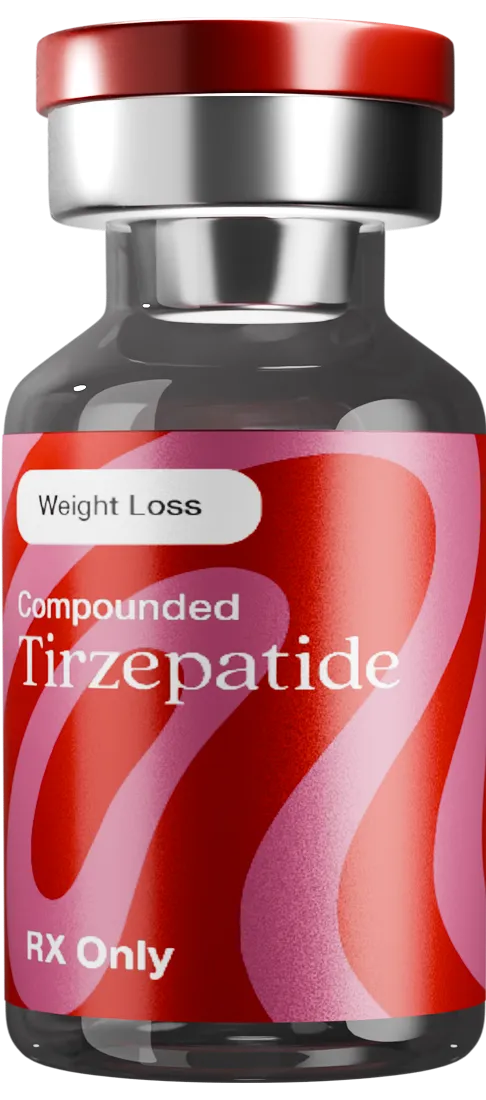
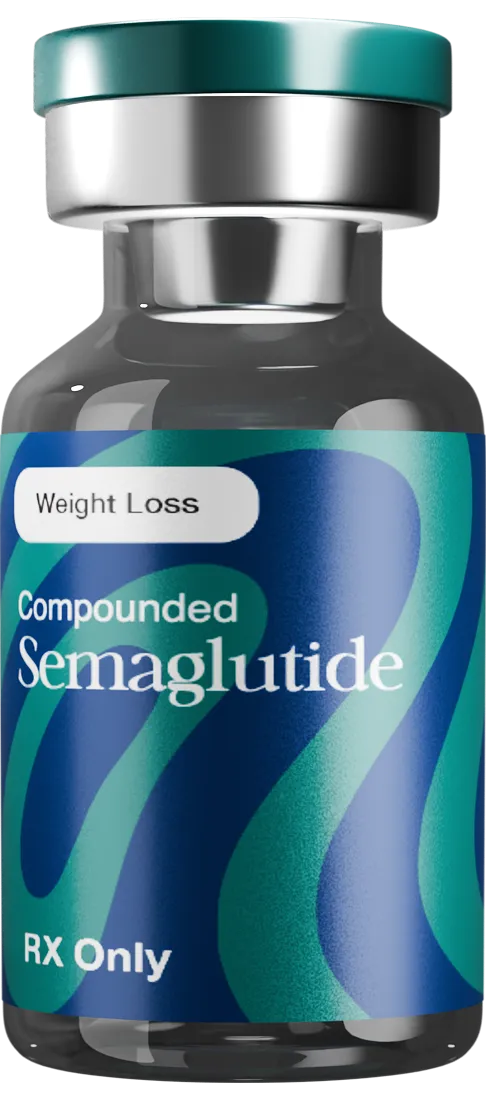
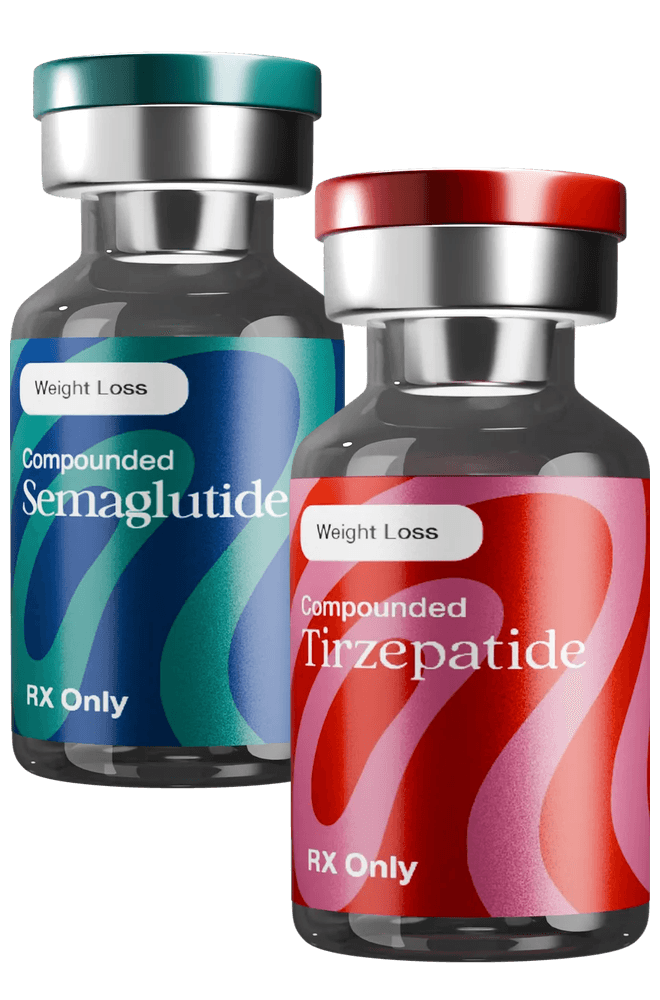
It is the same active molecule that produced 21 percent average body weight loss in Zepbound's SURMOUNT-1 trial, prescribed by US-licensed providers and dispensed by state-regulated 503A compounding pharmacies, typically as a vial you draw and inject yourself. Through Embody, compounded GLP-1 pricing starts at $69 a month for semaglutide and $119 for tirzepatide, well under LillyDirect's lowest cash price, with no insurance involved at any step.
Be clear-eyed about the tradeoff: you give up the brand-name auto-injector and the factory-sealed dosing convenience, and you must use a provider who works with a reputable pharmacy. For most self-pay patients, saving $150 to $300 every month outweighs drawing a dose from a vial once a week. If you want the eligibility details and the screening questions providers ask, read how to get tirzepatide, and if you are weighing brand against compounded across all three major drugs, our guide to Ozempic, Wegovy, and Zepbound without insurance runs the numbers.
Frequently Asked Questions
References
- Eli Lilly and Company. Zepbound Savings Options and Savings Card Terms and Conditions. zepbound.lilly.com/savings.
- Eli Lilly and Company. Zepbound Coverage and Savings. zepbound.lilly.com/coverage-savings.
- TrumpRx. Zepbound Vial, up to 72% off, fulfilled through LillyDirect. trumprx.gov.
- FDA. Zepbound (tirzepatide) Prescribing Information. accessdata.fda.gov.
- GoodRx. Zepbound Prices, Coupons and Savings Tips. goodrx.com.
- NiceRx. How to pay $25 using the Zepbound Savings Card. nicerx.com.
- The RX Index. Zepbound Savings Card 2026: Who Pays $25, Who Pays $499 or $299. therxindex.com.