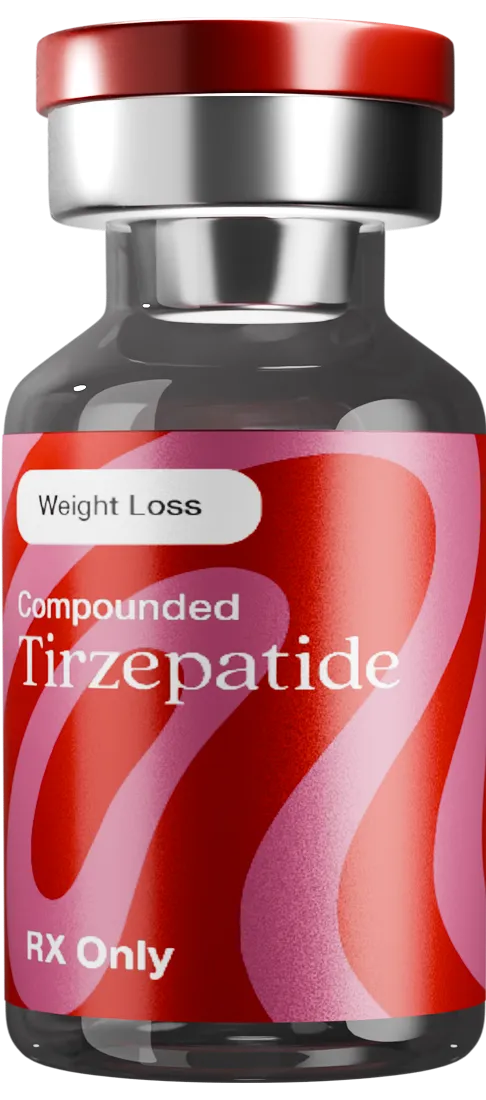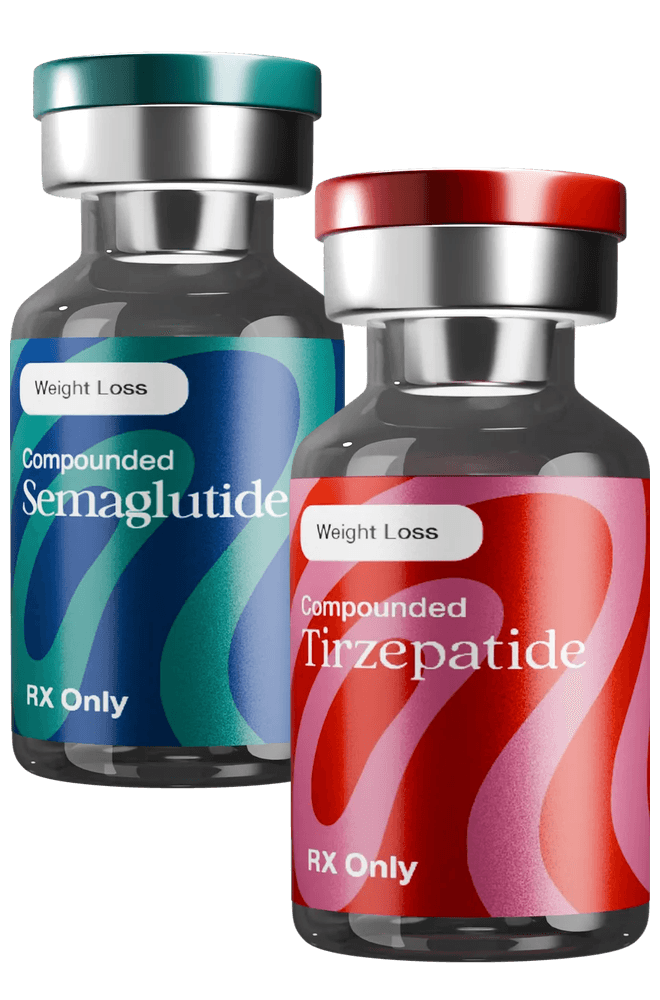
Zepbound is the weight-loss face of tirzepatide.
If you've been Googling "what is Zepbound" because your doctor mentioned it, your friend lost 40 pounds on it, or you saw a SURMOUNT trial headline, the short answer is this. Zepbound is Eli Lilly's brand name for tirzepatide, a weekly injection FDA approved in November 2023 for chronic weight management. It is the same molecule as Mounjaro, just sold under a different label for a different indication. There is no FDA-approved generic version in 2026, and there will not be one until at least 2036.
🔑 Key Takeaways
- Zepbound is brand-name tirzepatide, a dual GLP-1 and GIP receptor agonist made by Eli Lilly.
- FDA approved November 2023 for obesity, December 2024 for moderate to severe obstructive sleep apnea.
- SURMOUNT-1 showed 22.5% mean body weight loss at the 15 mg dose over 72 weeks, the highest seen in any approved weight-loss drug to date. See our weight loss injections ranking for the full leaderboard.
- There is no FDA-approved Zepbound generic. Eli Lilly patents block legal generic tirzepatide until roughly 2036, and full patent expiry pushes into 2039.
- Compounded tirzepatide is the closest legal cash-pay alternative if you cannot afford brand Zepbound, available through licensed telehealth providers from $146 to $258 per month.
- LillyDirect now sells brand Zepbound vials and KwikPens at $299 to $449 per month for self-pay patients, the cheapest brand option.
Telehealth Comparison Table
If you cannot wait until the 2030s for a true generic version, here are the two telehealth providers our readers use most for compounded tirzepatide and brand Zepbound today.


What Is Zepbound?
It's tirzepatide with a different label.
What is Zepbound, in one plain sentence. Zepbound is the brand name Eli Lilly uses to sell tirzepatide for chronic weight management. The active ingredient is identical to Mounjaro, which has been on the market since May 2022 for type 2 diabetes. Same molecule, same factory, same weekly injection. The only thing that changes is the FDA-approved indication on the box and the patient who gets prescribed it.
The FDA cleared Zepbound for obesity on November 8, 2023. In December 2024 it picked up a second approval for moderate to severe obstructive sleep apnea in adults with obesity, making it the first prescription drug ever approved for OSA. That second indication is part of why insurance coverage has expanded so quickly through 2025 and into 2026.
Zepbound is delivered as a once-weekly subcutaneous injection, available in single-dose pens and the multi-dose KwikPen. You can inject in your stomach, thigh, or upper arm. Most people inject the same day every week, with or without food.
How Zepbound Works
It hits two appetite hormones, not one.
Most GLP-1 drugs you've heard of, like Ozempic and Wegovy, mimic a single gut hormone called GLP-1. Zepbound is different. Tirzepatide is a dual agonist. It activates both the GLP-1 receptor and the GIP receptor, two of the body's main appetite-and-glucose hormones. That dual action is the reason Zepbound consistently outperforms semaglutide in head-to-head trials.
What you actually feel is simpler than the receptor chart. Hunger gets quieter. Food noise drops. You feel full faster and stay full longer. Sweet and salty cravings lose their grip. By week 4 to 6 most people notice they're picking smaller portions without trying. By month 3 the weight is moving.
If you want a deeper read on how the molecule compares to its main rival, our tirzepatide vs semaglutide breakdown covers the head-to-head data.
Zepbound Dose Schedule
Six dose strengths. One direction.
Zepbound titration follows a fixed protocol designed to minimize nausea while you climb to a therapeutic dose. You start low, increase every 4 weeks, and stop at the dose that gets you the result you want without intolerable side effects.
Most patients hold at 5 mg, 10 mg, or 15 mg long term. You don't have to climb to 15 mg to lose weight. Many people get the result they want at 7.5 or 10 mg with fewer side effects. For a more granular protocol, our tirzepatide dosing guide covers titration adjustments and missed-dose handling.
How Much Weight You'll Lose (SURMOUNT-1)
This is where Zepbound earned its reputation.
The SURMOUNT-1 trial enrolled 2,539 adults with obesity or overweight plus a comorbidity, and ran for 72 weeks. The results that put Zepbound on the map:
- 5 mg dose: 15.0% mean body weight loss
- 10 mg dose: 19.5% mean body weight loss
- 15 mg dose: 22.5% mean body weight loss
- Placebo: 2.4% mean body weight loss
For context, semaglutide (Wegovy) hit roughly 14.9% in the comparable STEP-1 trial. The 15 mg Zepbound result was the highest body-weight reduction ever recorded for an approved weight-loss medication, and that gap is the reason payers and patients keep choosing tirzepatide over semaglutide when both are options.
Inside SURMOUNT-1, more than one in three patients on the 15 mg dose lost at least 25% of their starting body weight. That's territory that used to belong only to bariatric surgery.
Zepbound Cost
The sticker shock is real.
Brand-name Zepbound's official list price is $1,086.37 per 28-day supply at every dose strength, set by Eli Lilly and posted on their pricing page. That's the number your pharmacy bills your insurance against. Without coverage, you'd pay roughly that much out of pocket at retail.
The good news is, almost nobody pays full list anymore. Three real cash-pay paths exist in 2026:
- LillyDirect (self-pay program). Eli Lilly sells Zepbound vials and KwikPens directly through their pharmacy partner at $299 per month for the 2.5 mg starter dose and $349 to $499 per month for higher doses, depending on the pen format. This is the cheapest brand option.
- Insurance with prior authorization. If your plan covers Zepbound and you meet the BMI criteria, copays usually run $25 to $250 per month. Lilly's commercial savings card can drop covered copays to $25 for up to 13 fills.
- Compounded tirzepatide via telehealth. Not the same as brand Zepbound, but the same active molecule. Pricing runs from $146 to $258 per month at licensed compounding pharmacies through telehealth providers.
If you're shopping on price alone, our guide to the cheapest tirzepatide options compares each path side by side, including total annual cost.
Is There a Zepbound Generic?
No. Not in 2026, and not soon.
Here's the honest answer most articles bury under three paragraphs of filler. There is no FDA-approved Zepbound generic in 2026. Anyone selling something they call "generic Zepbound" is either dispensing compounded tirzepatide (legal in some cases, see below) or pushing a counterfeit (illegal and unsafe). A bioequivalent generic, FDA approved under an Abbreviated New Drug Application, does not exist anywhere in the United States.
Why no generic version exists yet
Eli Lilly holds a stack of patents on tirzepatide covering the molecule itself, the formulation, and the delivery device. The earliest patents open to challenge in May 2026, but the meaningful protections that block a generic launch run through 2036, with formulation and device patents extending toward 2039. Even after patents fall, generic manufacturers need 2 to 4 years to develop, file, and get FDA approval for their version. Realistic earliest US launch is 2036, with most analysts pointing to 2039 as the safer estimate.
One generic application is already on file. Apotex submitted a tentative ANDA challenging some Lilly patents, but tentative approval doesn't mean a product on shelves. It just reserves a slot in line. Tentative ANDAs sit dormant until the underlying patents are invalidated or expire, and Lilly is litigating aggressively. There is also no generic Mounjaro, no generic Ozempic, and no generic Wegovy. Generic GLP-1 drugs are simply not a category yet.
The closest functional substitute that exists today is compounded tirzepatide. It is the same active ingredient, prepared by a state-licensed 503A pharmacy or an FDA-registered 503B outsourcing facility, and dispensed with a valid prescription. It is not a generic in the regulatory sense. It does not go through ANDA review, it is not bioequivalent on paper, and the FDA has not signed off on it. But the molecule is the same, the weekly dose schedule is the same, and the price is roughly 70 to 85 percent lower than brand Zepbound. For a complete framework on comparing generic-style options, see our analysis of GLP-1 generic availability.
Telehealth providers like Embody ($69 to $119 per month) and MEDVi ($99 to $399 per month) are the two most common cash-pay routes for compounded tirzepatide in 2026.
Zepbound vs Mounjaro
Same drug. Different door.
This is the question people search for the second they realize tirzepatide has two names. Zepbound and Mounjaro contain the exact same active ingredient at the exact same doses. Both are made by Eli Lilly. Both are weekly subcutaneous injections. The only meaningful difference is what's printed on the FDA label.
- Mounjaro: approved May 2022 for type 2 diabetes. Insurance covers it under diabetes benefits.
- Zepbound: approved November 2023 for obesity, December 2024 for OSA. Insurance covers it under weight-loss or sleep-apnea benefits.
Why two names? Coverage. Many insurance plans pay for diabetes drugs but not weight-loss drugs. By splitting the same molecule into two brands, Lilly made it clear which benefit category each patient falls into and avoided coverage fights at the pharmacy counter.
If you have type 2 diabetes plus obesity, your doctor might prescribe Mounjaro. If you have obesity without diabetes, you'll get Zepbound. Same vials, different sticker.
Compounded Tirzepatide as Generic Alternative
It's the closest legal thing to generic Zepbound today.
Compounded tirzepatide is custom-prepared by a licensed compounding pharmacy. It uses the same active ingredient, often sourced from FDA-registered API manufacturers, and is mixed to a prescriber-specified dose. During the FDA-declared tirzepatide shortage in 2024, mass compounding was explicitly allowed. After the shortage was resolved in late 2024, the rules tightened. Today, legal compounding requires a clinical justification on the prescription, which usually means a personalized dose strength or a documented allergy to a brand-formulation excipient.
That sounds restrictive, but legitimate telehealth providers handle the documentation routinely. Compounded tirzepatide is what 60 to 70 percent of cash-pay GLP-1 patients in the US actually use right now, simply because it costs a fraction of brand Zepbound and produces comparable weight loss when sourced from a reputable pharmacy.
Where to get compounded tirzepatide responsibly:
- Embody dispenses compounded tirzepatide at a flat $119 per month with a US-licensed prescriber and a 503A pharmacy. Best on grade.
- MEDVi sells compounded tirzepatide and brand Zepbound side by side, $99 to $399 per month depending on which you choose.
- Avoid any vendor selling tirzepatide without a prescription, without a US pharmacy license, or labeled "for laboratory use." That is not a legitimate substitute, and it is not safe.
Side Effects
The first month is the hardest.
Zepbound side effects are dose-dependent and almost always front-loaded into the first 4 to 8 weeks of each titration step. The most common in SURMOUNT-1:
- Nausea (29% of patients): worst in the first week of each new dose
- Diarrhea (21%)
- Constipation (17%)
- Vomiting (10%)
- Fatigue (7%)
- Injection-site reactions (5%)
Most resolve within 7 to 14 days as your gut adjusts. Smaller, slower meals help more than antiemetics for most people. Hydration matters more than people realize because dehydration amplifies nausea.
Serious risks are rare but real. Pancreatitis, gallbladder problems, hypoglycemia (mostly in patients also on insulin or sulfonylureas), and a boxed warning for medullary thyroid carcinoma based on early lab data. Anyone with a personal or family history of MTC or MEN-2 should not take Zepbound.
Who Qualifies for Zepbound
The FDA criteria are specific.
Zepbound is approved for adults with:
- BMI of 30 or higher (obesity), or
- BMI of 27 or higher (overweight) plus at least one weight-related comorbidity such as type 2 diabetes, hypertension, dyslipidemia, obstructive sleep apnea, or cardiovascular disease.
For OSA, the cut is slightly different. Zepbound is approved for adults with moderate to severe OSA and obesity, regardless of whether they use CPAP.
Insurance prior authorization usually layers on additional requirements: documented BMI history, prior failed lifestyle attempts, sometimes a 6-month diet-and-exercise log. Telehealth providers like licensed GLP-1 telehealth platforms handle the paperwork for you when going the cash-pay or compounded route.
Zepbound cost in 2026: every price in one table
What you pay for Zepbound swings wildly depending on how you buy it. Here is every route in a single view, from the full sticker price down to the cheapest legitimate options.
Medicare and Medicaid patients cannot use the savings card, and Medicare will not cover Zepbound for weight loss by law, though it may cover it for sleep apnea. For the full insurance picture, see our guide to Zepbound insurance coverage and prior authorization.
2026 pricing changes worth knowing about
Zepbound pricing is in motion this year, and most older guides have not caught up. In November 2025, Lilly and the US government announced a most-favored-nation pricing agreement. The headline points, framed as announced targets rather than settled retail prices:
- GLP-1 medicines for weight management are slated to sell through the new TrumpRx platform for around $350 a month for vials.
- A Medicare GLP-1 Bridge offers a $50 monthly copay on the Zepbound KwikPen for eligible Part D members, beginning July 1, 2026.
- LillyDirect self-pay vial prices were already cut in December 2025 to the $299 to $449 range shown above.
These are policy agreements and target prices, so confirm the current terms before counting on them. The direction, though, is clear: out-of-pocket Zepbound is getting cheaper through self-pay and government channels.
Zepbound pros and cons: is it worth it?
Zepbound is the most effective weight-loss medicine the FDA has approved, but it is not free of tradeoffs. Here is the honest balance.
The case for it
- The strongest results of any approved weight-loss drug: about 21% average body-weight loss at the top dose in SURMOUNT-1.
- It beat semaglutide head-to-head in SURMOUNT-5 (20.2% versus 13.7%) with fewer stomach side effects.
- It also treats moderate-to-severe obstructive sleep apnea, a second FDA-approved use.
- Once-weekly injection, and self-pay vials have made it far cheaper than two years ago.
The case against it
- Expensive without coverage, and many employer plans exclude weight-loss drugs.
- Stomach side effects (nausea, diarrhea, constipation) are common while titrating up.
- The weight tends to come back when you stop. In SURMOUNT-4, people who switched to placebo regained about 14% of body weight in a year.
- It carries a boxed warning and is off-limits for people with a history of medullary thyroid cancer or MEN 2.
Who it fits best: someone with obesity or significant excess weight, or with obesity plus sleep apnea, who can sustain access and treats it as a long-term tool. Who should think twice: anyone expecting a short course, or who cannot maintain access, since the regain is real. For real outcomes, read our tirzepatide reviews and the full Zepbound side effects breakdown.
Frequently Asked Questions
References
- U.S. FDA. Zepbound (tirzepatide) prescribing information. accessdata.fda.gov
- U.S. FDA. FDA Approves New Medication for Chronic Weight Management (Zepbound, Nov 2023). fda.gov
- U.S. FDA. FDA Approves First Medication for Obstructive Sleep Apnea (Dec 2024). fda.gov
- Jastreboff AM, et al. Tirzepatide Once Weekly for Obesity (SURMOUNT-1). NEJM. 2022. PubMed
- Aronne LJ, et al. Tirzepatide vs Semaglutide for Obesity (SURMOUNT-5). NEJM. 2025. PubMed
- Eli Lilly. Zepbound Coverage and Savings (savings card, self-pay vials). zepbound.lilly.com
- LillyDirect. Authentic Zepbound (tirzepatide), self-pay vials. lilly.com
- Eli Lilly. Lilly and U.S. Government Agree to Expand Access to Obesity Medicines (Nov 6, 2025). prnewswire.com
- KFF. What to Know About the BALANCE Model and the Medicare GLP-1 Bridge. kff.org
- Cleveland Clinic. Tirzepatide injection, uses and side effects. clevelandclinic.org
Medical disclaimer: This article is for informational purposes only and is not medical advice. Zepbound is a prescription medication with serious potential risks including a boxed warning for thyroid C-cell tumors. Do not start, stop, or change any medication without consulting a licensed healthcare provider. Compounded tirzepatide does not carry FDA approval and may carry quality risks if sourced from unverified pharmacies. Always work with a US-licensed clinician and a state-licensed pharmacy.