No. Semaglutide is not available over the counter anywhere in the United States, and neither is any other GLP-1 receptor agonist. Ozempic, Wegovy, Mounjaro and Zepbound are all prescription-only. Any product sold on a shelf or without a prescriber as “OTC Ozempic” or “natural semaglutide” contains none of the drug — and the labelling on several of these products has drawn FDA attention.
What does exist is a fully legal online route that takes about a week: a licensed telehealth clinician prescribes, and a US pharmacy dispenses. Compounded semaglutide through that route is where most cost-driven searches end up.
🔑 Key Takeaways
- Every GLP-1 in the US is prescription-only. There is no OTC version, no pharmacist-only version, and no pending change to that.
- “OTC semaglutide” supplements contain no semaglutide. They are typically berberine, chromium, fibre or amino-acid blends sold using GLP-1 branding.
- The FDA has acted against products marketed as OTC GLP-1s, both for unapproved drug claims and for containing undisclosed ingredients.
- Berberine is not “nature’s Ozempic.” It has modest glucose-metabolism data and no mechanism resembling a GLP-1 agonist. The nickname is marketing.
- The legal shortcut people actually want is telehealth, which is remote, fast, and involves a genuine prescriber.
Why GLP-1s are prescription-only
Semaglutide and tirzepatide are potent metabolic drugs with real contraindications. They carry boxed warnings regarding thyroid C-cell tumours observed in rodent studies, are contraindicated in people with a personal or family history of medullary thyroid carcinoma or MEN 2, and carry documented risks of pancreatitis, gallbladder disease and severe gastrointestinal effects. They also interact with insulin and sulfonylureas in ways that can cause dangerous hypoglycaemia.
Those are the reasons a prescriber is in the loop — not bureaucracy. The screening questions a clinician asks before prescribing are the mechanism by which the people who should not take these drugs are identified.
What “over the counter GLP-1” products actually are
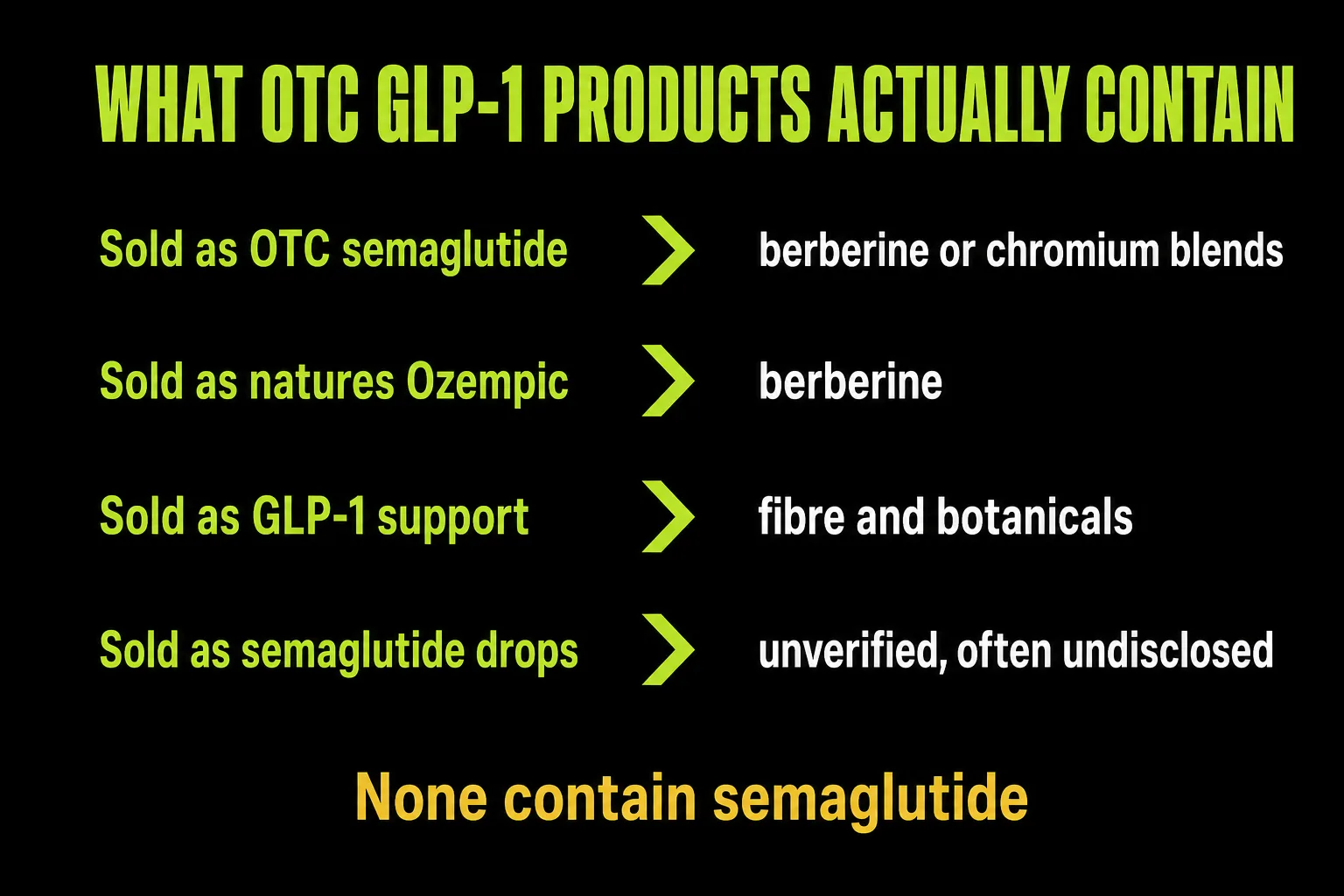
The last category is the one to avoid entirely. Sublingual “semaglutide drops” sold without a prescription are unregulated, and where products of this kind have been tested they have variously contained nothing active, the wrong compound, or undisclosed pharmaceutical ingredients.
The berberine comparison does not hold up
Berberine became “nature’s Ozempic” through social media, not pharmacology. It is a plant alkaloid with some evidence for modest improvements in glucose metabolism and lipids, likely via AMPK activation. A GLP-1 receptor agonist works by mimicking an incretin hormone — slowing gastric emptying, acting on hypothalamic appetite signalling and enhancing glucose-dependent insulin secretion. These are not the same mechanism operating at different strengths; they are different mechanisms. Berberine also interacts with a number of prescription drugs, so “natural” does not mean consequence-free.
The legal routes, in order of speed
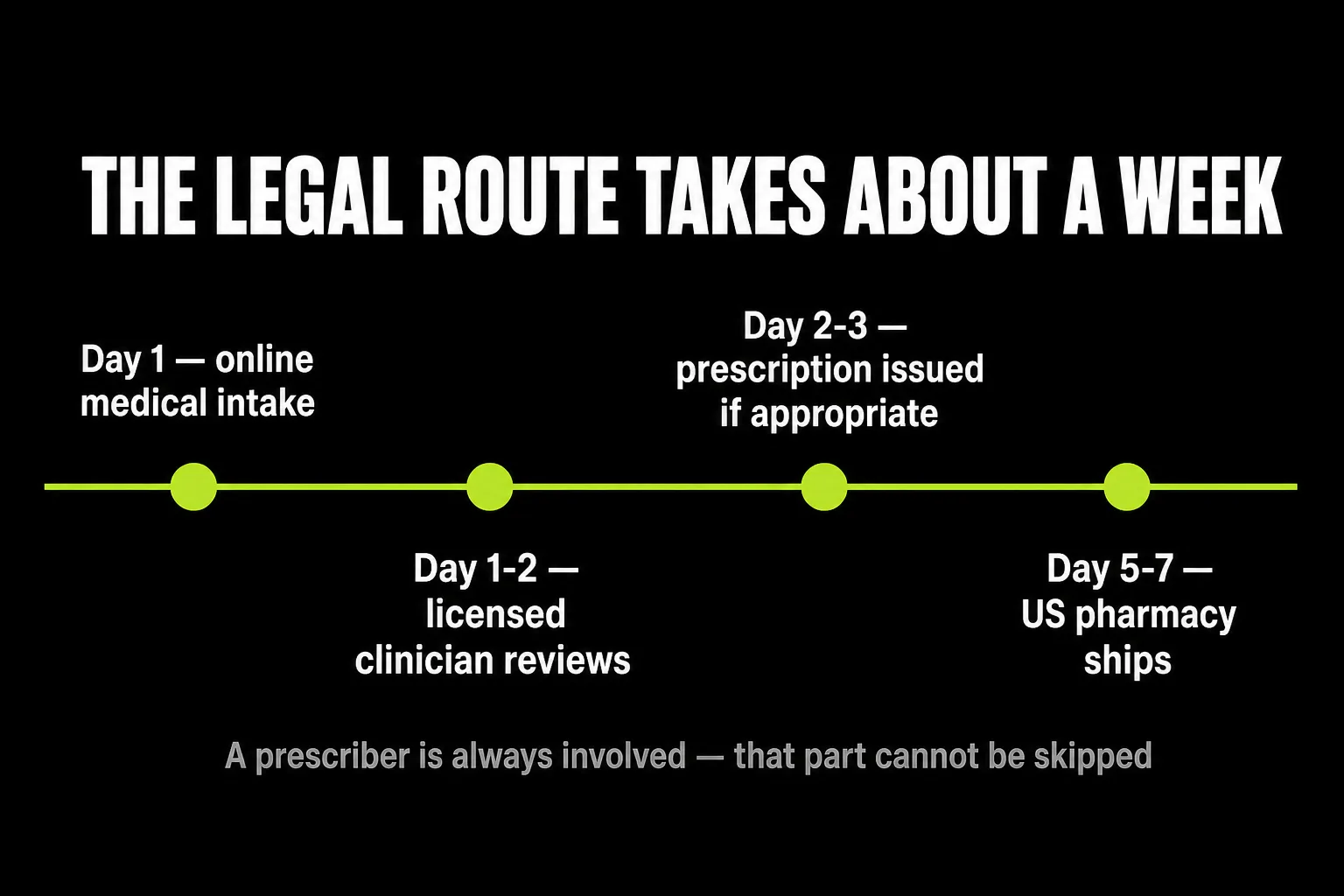
- Telehealth. Online assessment with a licensed clinician, prescription if appropriate, US pharmacy ships. Typically about a week. This is what most people mean when they wish GLP-1s were OTC.
- Your own physician. Standard route, often requires an appointment and may involve prior authorisation for coverage.
- Compounded semaglutide via telehealth. Same molecule, compounding pharmacy, from around $69 a month. Legal, but not an FDA-approved product — see our provider reviews before choosing.
References
- U.S. Food and Drug Administration. FDA warnings on unapproved semaglutide products. Accessed August 16, 2026.
- U.S. Food and Drug Administration. Drugs@FDA: semaglutide labeling, boxed warning and contraindications.
- National Center for Complementary and Integrative Health. Berberine: evidence and interactions.