The Mounjaro Savings Card can cut your cost to $25 a month. But only if you have commercial insurance and a type 2 diabetes diagnosis. Everyone else pays very differently: about $1,112 a month at list price, $499 with the card if your plan does not cover the drug, or roughly $1,000 to $1,200 with a GoodRx coupon. This page shows the real 2026 numbers, the annual caps most coupon pages hide, and the single cheapest path for your exact situation.
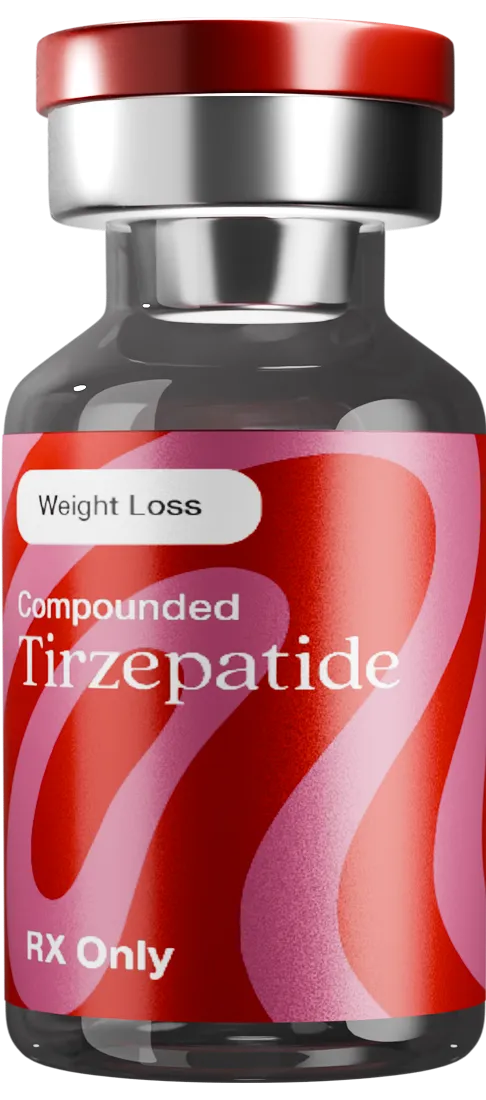
If you are using Mounjaro off-label for weight loss and the savings card will not work for you, many of our readers switch to compounded tirzepatide, the same active ingredient, through a licensed telehealth provider like Embody for a fraction of the brand price. The full breakdown of every legitimate savings route is below.
🔑 Key Takeaways
- The $25 price is real, but conditional. You need commercial or employer insurance, a type 2 diabetes prescription, and a plan that already covers Mounjaro. Get all three and you pay as little as $25 for a 1, 2, or 3 month fill.
- The card still works if your plan does not cover Mounjaro, but the price jumps to as low as $499 a month, capped at $8,411 in card help per year.
- Medicare, Medicaid, VA, and TRICARE patients are locked out of the savings card entirely. The card cannot be used with any government insurance.
- Off-label weight loss does not qualify. The Mounjaro card needs a diabetes diagnosis. If you take it for weight loss, look at Zepbound, LillyDirect self-pay, or compounded tirzepatide instead.
- A coupon, a savings card, and a discount card are three different things. You can only use one at a time, and using the wrong one can cost you hundreds.
Telehealth Comparison Table
If the savings card will not work for you, here are the two telehealth providers our readers use most for compounded tirzepatide, the same molecule found in Mounjaro and Zepbound.


How much does Mounjaro cost in 2026?
Start with the sticker price. Mounjaro (tirzepatide) has a list price of $1,112.16 per month, which covers one carton of four single-dose pens, a 28-day supply. That figure is Lilly's wholesale acquisition cost as published on the company's own pricing page and accessed January 1, 2026. It is the same price for every dose strength, from 2.5 mg up to 15 mg.
What you actually pay depends entirely on your insurance and which savings route you use. Here is the full 2026 picture in one table.
There is no generic version of Mounjaro. Tirzepatide is protected by patents that run for years, so a cheap generic is not coming soon. That single fact drives almost every savings strategy below. For a fuller breakdown of cash prices and where to find the lowest legitimate rate, see our guide to tirzepatide cost without insurance.
The Mounjaro Savings Card: how to pay as little as $25
This is the headline most people are chasing. The Mounjaro Savings Card is a manufacturer copay card from Eli Lilly. Used correctly, it can drop your out-of-pocket cost to as little as $25 for a 1, 2, or 3 month supply. Used in the wrong situation, it does nothing at all.
To qualify, you must meet all of these:
- Have a prescription for the Mounjaro single-dose pen for an FDA-approved use (type 2 diabetes).
- Be enrolled in commercial or employer drug insurance.
- NOT be enrolled in any government program (Medicaid, Medicare, Medicare Part D, Medicare Advantage, Medigap, the VA, DoD, or TRICARE).
- Be a resident of the US or Puerto Rico, age 18 or older.
Here is the part most coupon pages leave out: the card has hard caps, and they matter.
The card is good for up to 13 fills per calendar year and the current program expires December 31, 2026, with terms that renew annually. Once you hit the yearly cap, the discount stops and you pay the remaining cost yourself. That is why someone can pay $25 in January and suddenly face a much larger bill later in the year.
The copay accumulator trap (almost no coupon page warns about this)
Roughly 40 percent of commercial plans now run a copay accumulator or maximizer program. In plain English: the money the savings card pays on your behalf does not count toward your deductible or out-of-pocket maximum. You feel cheap mid-year, then your deductible resets as if you paid nothing. Call the number on the back of your insurance card and ask, "Does my plan have a copay accumulator or maximizer for specialty drugs?" before you budget around the $25 price.
To enroll, you can sign up through Lilly's official savings page or call Lilly Support Services. Always confirm current terms directly at the source, since manufacturer programs change each year.
Mounjaro manufacturer coupon, coupon card, savings card: same thing, three names
Search for a Mounjaro discount and you will be handed four different phrases for what is, in almost every case, one single programme. Knowing that saves you from hunting for a better offer that does not exist.
Only the last of those is a genuinely separate product. The first four are the same manufacturer programme reached by different search phrasings. There is no secret second Lilly coupon that pays better than the savings card.
The Mounjaro manufacturer coupon
“Manufacturer coupon” is simply the industry term for copay assistance issued by the drug company rather than by a pharmacy or discount broker. For Mounjaro that is the Mounjaro Savings Card, administered by Eli Lilly. It is not a printable voucher and there is no code to paste into a checkout box — it is a card with a BIN, PCN, group and member ID that the pharmacy processes alongside your insurance claim.
Because it works through your insurance, it is worth nothing without commercial coverage. That single fact is why so many people conclude the “coupon” is fake. It is not fake; it is a copay reducer, and if you have no copay to reduce it has nothing to work on.
Where the $25.00 figure comes from
The $25.00 price quoted everywhere is the floor of the savings card, not an average. You reach it only when commercial insurance already covers Mounjaro and the card absorbs the remainder of your copay. Miss either condition and the same card produces a completely different number.
Why you cannot find a “www.mounjaro.com coupon” page
A lot of searches point at www.mounjaro.com, but Lilly consolidated its product sites and Mounjaro now lives at mounjaro.lilly.com. The old address redirects. Enrolment for the savings card sits on Lilly’s official savings page, and the only legitimate places to activate it are that page or Lilly Support Services by phone. Any site charging you to “activate” a Mounjaro coupon, or asking for payment details before issuing one, is not Lilly. The card itself costs nothing.
How to get the coupon card, step by step
- Confirm you have commercial or employer drug insurance — not Medicare, Medicaid or any government plan.
- Confirm your prescription is for type 2 diabetes. Mounjaro is not approved for weight loss, and Zepbound is Lilly’s weight-loss product with its own separate card.
- Enrol on Lilly’s official Mounjaro savings page, or call Lilly Support Services.
- Take the card’s BIN, PCN, group and member ID to your pharmacy and ask them to run it with your insurance.
- Ask the pharmacist to also quote the cash price with a discount card, and take whichever is lower. They cannot be combined, so it is one or the other.
Re-enrolment is annual. Lilly reissues terms each January, so a card that worked in December can stop working in the new year until you renew it.
Coupon vs savings card vs discount card: they are not the same
People use these three words interchangeably. They should not. Picking the wrong one is the most common way patients overpay.
| Manufacturer Savings Card | Pharmacy Discount Card (GoodRx, SingleCare) | |
|---|---|---|
| What it is | Lilly copay card | Third-party cash coupon |
| Do you need insurance? | Yes, commercial only | No, it replaces insurance at checkout |
| Works with your insurance? | Yes, it lowers your copay | No, you use it instead of insurance |
| Typical best price | As little as $25 | About $1,000 or more |
| Counts toward your deductible? | Sometimes not (accumulator) | No, never |
| Medicare or Medicaid allowed? | No, excluded | Allowed, but not alongside the plan |
| Can you stack them? | No. You use one method per fill, never two at once. | |
GoodRx and pharmacy discount cards: when they actually help
Discount cards are not insurance. GoodRx, SingleCare, BuzzRx, and Optum Perks are coupons that give you a pre-negotiated cash price. For Mounjaro that price usually lands around $1,000 to $1,100 a month, sometimes a little less depending on the pharmacy and the week.
They help most in one specific case: you have no insurance, or your insurance flatly refuses Mounjaro and you do not have a commercial plan that the savings card can sit on top of. Two rules to remember:
- You cannot combine a discount card with your insurance. It is one or the other at the register.
- Money spent with a discount card does not count toward your insurance deductible or out-of-pocket maximum.
Prices swing by pharmacy, so it is worth checking the same coupon at three or four stores near you before filling.
Can you use the Mounjaro coupon for weight loss?
This is where most people get blindsided. The Mounjaro Savings Card requires a type 2 diabetes diagnosis, because that is the only use the FDA has approved for Mounjaro. If your doctor prescribes Mounjaro off-label for weight loss, the card will not apply and your pharmacy may quote you the full cash price.
One patient on Drugs.com described exactly this wall:
Jea, postmenopausal woman, down 65 lbs in 7 months
"I have been on Mounjaro for 7 months and am now a size 8, down 65 pounds. My blood sugars are perfect, and I feel like my old self again. I have now switched to Wegovy since insurance only covers Mounjaro if you are diabetic. I would stay on it forever, but cannot continue to pay almost $1,100.00 a month for it."
Verified Drugs.com review. Individual results are not typical and may vary.
If you are in Jea's position, you have better options than paying $1,100 a month:
- Zepbound is the exact same molecule (tirzepatide), approved for weight loss, with its own savings card and self-pay vials. See our breakdown of Zepbound vs Mounjaro and how to buy Zepbound online.
- Compounded tirzepatide from a licensed telehealth pharmacy often costs a fraction of the brand price. Read real outcomes in our tirzepatide reviews and the legality details in our compounded tirzepatide guide.
Does Medicare or Medicaid cover Mounjaro?
Yes, but with a sharp line through the middle. By federal law, Medicare Part D cannot cover any drug used for weight loss. So tirzepatide is coverable under Part D when it is prescribed as Mounjaro for type 2 diabetes, but the same molecule prescribed as Zepbound for obesity has historically been excluded. Nearly one million Part D enrollees were using Mounjaro by recent counts, up from about 54,000 in 2022.
The catch for Medicare and Medicaid patients is that the $25 savings card is completely off-limits to you. If you have government insurance, here is your real playbook:
- Medicare Prescription Payment Plan (M3P): spreads your yearly drug costs into smooth monthly payments instead of large upfront hits.
- Extra Help (Low-Income Subsidy): can dramatically lower Part D drug costs if you qualify by income.
- Lilly Cares Foundation: Lilly's patient assistance program can provide medication at no cost to lower-income patients who meet its criteria. Confirm current income limits and the application process directly with Lilly Cares, since the thresholds change.
- Cash and compounded routes: a GoodRx coupon or compounded tirzepatide through telehealth can beat an uncovered Part D tier in some cases.
2026 government pricing: TrumpRx, the most-favored-nation deal, and LillyDirect
Something genuinely new is happening to GLP-1 pricing in 2026, and most coupon pages have not caught up. On November 6, 2025, Lilly and the US government announced a most-favored-nation pricing agreement. The headline points, as stated in Lilly's release and the White House fact sheet:
- Lilly is adding Mounjaro to its LillyDirect self-pay pharmacy at 50 to 60 percent off current list prices. An exact Mounjaro self-pay dollar figure has not been published yet, so be cautious of any page quoting a precise number. The widely seen $299, $399, and $449 vial prices belong to Zepbound, not Mounjaro.
- GLP-1 medicines indicated for chronic weight management are slated to sell through the new TrumpRx platform for around $350 a month for vials.
- A negotiated Medicare net price of about $245 a month underpins these programs.
There is also a Medicare GLP-1 Bridge that offers a $50 monthly copay on weight-loss GLP-1s, running July 1, 2026 through December 31, 2027. Read the fine print carefully: the Bridge covers obesity-indicated drugs such as Wegovy and the Zepbound KwikPen. It does not cover Mounjaro, because Mounjaro is a diabetes drug already handled under standard Part D. These are policy agreements and target prices, so confirm the live terms before you count on them.
Real Mounjaro cost stories from patients
Numbers on a page are one thing. What people actually pay at the counter is another. These are verified reviews from Drugs.com and WebMD, where Mounjaro holds an aggregate rating of 8.4 out of 10 across 1,929 reviews and 4.1 out of 5 on WebMD. We picked the ones that talk about money.
Dot, switched from Ozempic, down 93 lbs
"I was weighing 263 lbs in November 2023, and I have lost 93 lbs. I am at 170 now. I went from size 18 and 20 to size 12. I am on the 7.5 dosage now, and I am so lucky that my insurance covers it, and my cost is $25.00."
Verified Drugs.com review. The best-case outcome: insurance coverage plus the savings card. Results may vary.
Mik, started at 404 lbs, down 59 lbs in under two months
"This has been an absolute game-changer for me. I did make the necessary changes though, working out 3-4 times a week and I have drastically changed my diet as well. I did not get the $25 coupon so I am roughly paying $525 a month. It is worth every single penny."
Verified Drugs.com review. Shows the gap between the $25 best case and a real out-of-pocket bill. Results may vary.
The coupon-coding gotcha (anonymous Drugs.com reviewer)
"I lost 29 lbs in the first month. I used the coupon, and only certain pharmacies know how to code it. I got lucky because my pharmacy worked with me."
Verified Drugs.com review. If your $25 card is not applying, ask the pharmacist to re-run it as a manufacturer copay card. Results may vary.
One more honest note. A 73-year-old reviewer who lost 103 pounds paying out of pocket summed up the whole topic in a single line: "This is a miracle drug. The only prohibitive factor for most people is the cost." Mounjaro is also not for everyone, and a small number of reviewers report serious side effects, so read our guide to tirzepatide side effects before starting.
Cheaper alternatives if Mounjaro is out of reach
If none of the above gets your price into a range you can live with, you are not stuck. The same active ingredient is available through other channels, often for far less.
- Compounded tirzepatide via telehealth. Licensed providers like Embody and MEDVi prescribe compounded tirzepatide, the identical molecule, frequently in the $119 to $400 a month range. Compare them in the table at the top of this page.
- Zepbound for weight loss. If your goal is weight loss, Zepbound is the on-label brand and has its own savings card (as little as $25 with coverage) and self-pay vials starting around $349.
- Ozempic or Wegovy (semaglutide). A different molecule, sometimes covered when tirzepatide is not. See Mounjaro vs Ozempic for the head-to-head.
For the full menu of every route, including LillyDirect and compounding pharmacies, our guide on how to get tirzepatide and the cheapest tirzepatide options breaks down each one.
How to get Mounjaro cheaper: step by step
- Confirm your use. Diabetes diagnosis means the Mounjaro card is in play. Weight loss only means you should pivot to Zepbound or compounded tirzepatide now.
- Check if your commercial plan covers it. Covered plus card equals as little as $25. Not covered plus card equals as low as $499.
- Ask about a copay accumulator. Find out whether the card help counts toward your deductible before you budget.
- If you have Medicare or Medicaid, skip the card and look at M3P, Extra Help, Lilly Cares, or a cash coupon.
- If you have no insurance, compare a GoodRx coupon against compounded tirzepatide telehealth pricing. The compounded route often wins.
- Ask for a 90-day supply once your dose is stable, which can lower your per-month cost and reduce pharmacy trips.
Frequently Asked Questions
The bottom line
The $25 Mounjaro price is real, but it is the best-case ending of a specific story: commercial insurance, a diabetes diagnosis, a plan that covers the drug, and no copay accumulator surprise. If that is you, enroll in the savings card today. If you are on Medicare, using it for weight loss, or paying cash, your cheapest legitimate path is usually a different one, whether that is Zepbound, LillyDirect, Lilly Cares, or compounded tirzepatide through a licensed telehealth provider. Match your situation to the table at the top, and you will not overpay.
References
- Eli Lilly and Company. Mounjaro Cost Information, With or Without Insurance. pricinginfo.lilly.com/mounjaro (WAC accessed January 1, 2026).
- Eli Lilly and Company. Mounjaro Savings and Support, Savings Card Terms and Conditions. mounjaro.lilly.com/savings-resources.
- Eli Lilly and Company. Zepbound Coverage and Savings (self-pay vial pricing). zepbound.lilly.com/coverage-savings.
- Eli Lilly and Company. Lilly and U.S. Government Agree to Expand Access to Obesity Medicines. PR Newswire, November 6, 2025. prnewswire.com.
- U.S. Food and Drug Administration. Mounjaro (tirzepatide) Prescribing Information, NDA 215866. accessdata.fda.gov.
- DailyMed (NLM/NIH). Mounjaro (tirzepatide) injection label. dailymed.nlm.nih.gov.
- Centers for Medicare and Medicaid Services. Prescription drugs (outpatient) coverage. medicare.gov.
- Centers for Medicare and Medicaid Services. Medicare GLP-1 Bridge. cms.gov.
- KFF. What to Know About the BALANCE Model for GLP-1s in Medicare and Medicaid and the Medicare GLP-1 Bridge (updated May 11, 2026). kff.org.
- KFF. Recent Trends in GLP-1 Use and Spending in Medicare. kff.org.
- The White House. Fact Sheet: Most-Favored-Nation Pricing for American Patients, November 2025. whitehouse.gov.
- NPR. A new Medicare option for weight loss drugs is coming. May 6, 2026. npr.org.
- GoodRx. The Cost of Mounjaro: How to Save With Coupons, Savings Cards, and Alternatives. goodrx.com.
- HHS ASPE. Medicare Coverage of Anti-Obesity Medications. aspe.hhs.gov.