Quick answer: GLP-1 diarrhea is a common gastrointestinal side effect, especially after starting treatment or increasing the dose. It often improves as the body adjusts, but persistent diarrhea, dehydration, severe abdominal pain, blood in stool, fever, fainting, or inability to keep fluids down should be handled with medical help.
GLP-1 diarrhea is frustrating because it can show up even when the medication is working well for appetite control. Some people get it in the first week. Others only notice it after a dose increase, a fatty meal, alcohol, sugar alcohols, or a sudden change in meal size.
This guide explains why GLP-1 medications can cause diarrhea, how long it tends to last, what food and dose patterns make it worse, and what to do before you decide the medication is not tolerable. For the broader GLP-1 basics, see our GLP-1 shots guide and weight loss injections guide.
Why GLP-1 medications can cause diarrhea
GLP-1 receptor agonists and related incretin drugs change digestion, appetite signaling, gastric emptying, and how the gut responds to food. Those changes can help with weight loss and glucose control, but they can also create gastrointestinal side effects.
Diarrhea can happen for a few overlapping reasons:
- Dose adjustment: the gut may need time to adapt after starting or increasing the dose.
- Meal composition: large, greasy, spicy, or very sweet meals can hit harder on GLP-1 therapy.
- Changed eating pattern: skipping meals and then eating a large dinner can trigger symptoms.
- Slower stomach emptying: food timing can feel different, and symptoms can overlap with nausea, reflux, or cramping.
- Other medications: metformin, magnesium, antibiotics, stool softeners, and some supplements can also cause loose stool.
Wegovy and Zepbound prescribing information both list diarrhea among common gastrointestinal adverse reactions. That does not mean it should be ignored. It means the symptom is common enough that a practical plan matters.
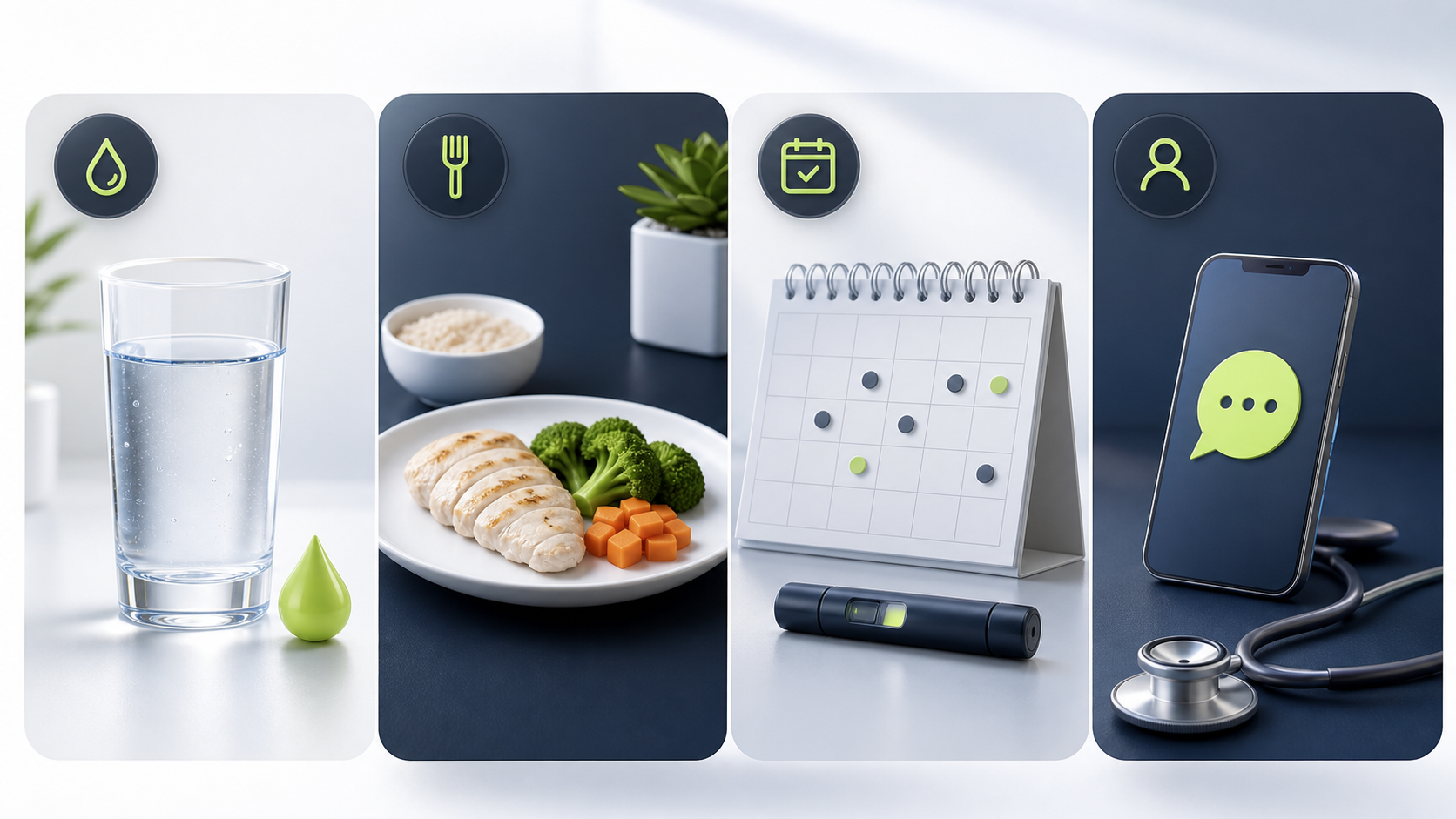
GLP-1 diarrhea: common triggers and fixes
How long does GLP-1 diarrhea last?
For many people, diarrhea is worst early in treatment or right after a dose increase, then improves over days to a few weeks. The timeline depends on the medication, dose, escalation speed, food choices, and whether another drug is contributing.
If diarrhea is mild and short-lived, the first step is usually supportive care: hydration, simpler meals, avoiding obvious triggers, and tracking whether it appears after certain foods or dose days. If it continues, gets worse, or causes dehydration, the plan should change with clinician input.
Do not keep escalating just because the calendar says it is time. Many people tolerate GLP-1 medication better when they stay at a dose longer before moving up. Weight loss does not require winning a race to the highest dose.
What to eat when GLP-1 diarrhea hits
The goal is to calm the gut without under-eating for days. Think small, simple, lower-fat, and steady.
- Fluids first: water, oral rehydration solution, broth, or electrolyte drinks can help replace fluid and sodium.
- Simple starches: rice, potatoes, toast, oats, crackers, bananas, or applesauce may be easier during a flare.
- Lean protein: chicken, turkey, eggs, Greek yogurt if tolerated, tofu, or white fish can help prevent under-eating.
- Lower-fat meals: keep oils, fried foods, cream sauces, and rich desserts low until symptoms settle.
- Smaller portions: a half-size meal every few hours often works better than one large meal.
Fiber can be tricky. Soluble fiber, such as oats or psyllium, may help some people, but adding too much too fast can worsen gas or cramping. If you use fiber, start low and increase slowly.
Hydration matters more than people think
Diarrhea can dehydrate you quickly, especially if appetite is low and you are eating less overall. Signs of dehydration include dizziness, dry mouth, headache, dark urine, reduced urination, fast heartbeat, and feeling weak when standing.
People with kidney disease, older adults, and people taking blood pressure medication or diuretics should be more cautious. Dehydration can affect kidney function and can make dizziness or fainting more likely.
If you have diabetes and use insulin or sulfonylureas, diarrhea plus reduced food intake can also raise low-blood-sugar risk. That situation deserves direct guidance from the prescriber managing your diabetes medications.
Should you use anti-diarrhea medicine?
Some people reach for loperamide or other over-the-counter options. That may be reasonable for occasional mild diarrhea, but it is not the right answer for every case. Avoid self-treating if you have fever, blood in stool, severe abdominal pain, suspected infection, or persistent symptoms.
It is also worth checking with a pharmacist if you take multiple medications. The safest fix may be adjusting dose timing, reducing a trigger food, changing metformin formulation, pausing magnesium, or slowing GLP-1 escalation rather than adding another medicine.
When to call a clinician
Call your clinician if GLP-1 diarrhea is more than mild, lasts more than a couple of days, returns after every injection, or affects your ability to eat, drink, work, or sleep. Do not wait if symptoms are severe.
Get urgent medical help for:
- Severe or worsening abdominal pain.
- Blood in stool or black stool.
- Persistent vomiting or inability to keep fluids down.
- Fever with diarrhea.
- Fainting, confusion, chest pain, or severe weakness.
- Very little urination or signs of dehydration.
- Symptoms of low blood sugar if you use diabetes medication.
Those symptoms can point to something more serious than routine medication adjustment. GLP-1 therapy should not make you push through dangerous dehydration or severe abdominal pain.
Dose escalation is often the key
Many GLP-1 side effects are dose-related. That is why starter doses are low and schedules increase gradually. If diarrhea appears after a dose jump, the best question is not only "what can I take for this?" It is also "did we increase too fast for my gut?"
Options a clinician may consider include staying at the same dose longer, stepping back to a prior dose, delaying the next increase, reviewing meal timing, or switching medication if side effects remain unacceptable. The right answer depends on your weight trend, glucose status, symptom severity, and treatment goal.
Diarrhea vs other GLP-1 side effects
GLP-1 diarrhea can overlap with nausea, reflux, constipation, burping, bloating, or abdominal cramping. The pattern matters. Loose stool after fatty meals is different from severe pain with vomiting. Mild morning nausea is different from dehydration. Constipation with overflow loose stool is also possible, especially if bowel habits have slowed.
Track the basics for one to two weeks if symptoms are not severe: injection day, dose, meals, alcohol, caffeine, protein bars, supplements, stool pattern, and hydration. That gives your clinician something useful instead of a vague "my stomach is bad."
Can switching GLP-1 medications help?
Sometimes. People can tolerate semaglutide, tirzepatide, liraglutide, or other incretin-based medications differently. But switching does not guarantee diarrhea disappears, and restarting at the wrong dose can recreate the problem.
If side effects are the main issue, make the switch plan specific: starting dose, escalation schedule, what foods to avoid early, when to call, and how long to wait before deciding whether it is working.
Frequently asked questions
References
- DailyMed: Wegovy prescribing information
- DailyMed: Zepbound prescribing information
- Clinical recommendations to manage gastrointestinal adverse events with GLP-1 receptor agonists
- NIDDK: Treatment for diarrhea
Medical disclaimer: This article is educational and does not replace care from a licensed clinician. GLP-1 medications can cause side effects and may interact with other conditions or medications. Contact your prescriber for personal guidance, especially if symptoms are severe or persistent.