🔑 Key Takeaways
- HCG mimics LH — it tells the testes to keep producing testosterone and sperm
- TRT alone suppresses the HPG axis, shutting down natural testosterone and sperm production
- HCG prevents testicular atrophy and maintains fertility during TRT
- Typical TRT protocol: 250–500 IU every 2–3 days alongside testosterone
- Also used for post-cycle therapy (PCT) and fertility stimulation in hypogonadal men
If you're on testosterone replacement therapy — or considering it — HCG is one of the most important companion compounds to understand. Exogenous testosterone works by replacing what your body isn't making. But there's a catch: the pituitary stops sending LH signals to the testes, so the testes atrophy and stop producing testosterone and sperm entirely. For men who care about testicular size, fertility, or simply maintaining intratesticular testosterone (which affects mood and libido in ways that exogenous T doesn't fully replicate), HCG is the solution.
What Is HCG?
Human Chorionic Gonadotropin is a glycoprotein hormone naturally produced by the placenta during pregnancy — it's the hormone that pregnancy tests detect. In men, its relevance is pharmacological: it binds to the same receptor as LH (luteinizing hormone), which is the pituitary signal that tells the testes to produce testosterone via Leydig cells.
When someone takes exogenous testosterone, the hypothalamic-pituitary-gonadal (HPG) axis detects sufficient androgens and shuts down LH and FSH secretion. Without LH stimulation, the Leydig cells stop functioning, the testes shrink, and intratesticular testosterone (ITT) collapses — even while serum testosterone from the injected compound is high. HCG bypasses the shutdown by going directly to the LH receptor on the testes.
Why HCG Matters on TRT
When you're on testosterone replacement, your natural production shuts down. That's where HCG comes in — and understanding the broader landscape of testosterone boosters vs peptides helps put HCG's role in context.
Prevents Testicular Atrophy
Without LH stimulation, testes shrink significantly on TRT — often visibly so within months. HCG keeps Leydig cells active, maintaining testicular volume.
Preserves Fertility
FSH drives sperm production; LH drives testosterone. HCG's LH mimicry maintains the intratesticular testosterone environment needed for spermatogenesis, preserving fertility options.
Maintains Intratesticular Testosterone
ITT is ~50–100x higher than serum testosterone. It plays a role in libido and mood that exogenous T alone doesn't fully replicate. HCG maintains this local environment.
Supports Post-Cycle Recovery
In PCT protocols after anabolic cycles, HCG is used to "wake up" dormant Leydig cells before transitioning to SERMs for full HPG axis recovery.
HCG Dosage Protocols
HCG and Estrogen
HCG stimulates the testes just like LH does. For a more upstream approach, kisspeptin works at the hypothalamic level to stimulate your own LH production — including the aromatase activity within Leydig cells. This means HCG can raise estrogen alongside testosterone. For men also exploring sermorelin or other GH peptides, understanding the estrogen management piece is critical.
HCG stimulates not just testosterone production but also aromatase activity in the testes — so increased HCG use means more testosterone being converted to estradiol. This is worth monitoring. Men already prone to high estrogen on TRT may see further increases when adding HCG.
Signs of excess estrogen: water retention, mood changes, sensitive nipples, libido changes. If estrogen climbs significantly, a low-dose aromatase inhibitor (AI) adjustment may be warranted.
Reconstitution and Storage
Proper handling preserves HCG potency. The overall cost of a protocol depends on where you access peptide therapy and whether you're getting pharmaceutical or research-grade compound.
Reconstitute with Bacteriostatic Water
HCG comes as a lyophilized powder. Add bacteriostatic water slowly — typically 1–2mL per 5000 IU vial. This gives you 5000 IU/mL or 2500 IU/mL respectively. Use an insulin syringe for dosing.
Store Reconstituted HCG at 4°C
Once mixed, store refrigerated at 2–8°C. HCG is more sensitive to heat than most peptides — don't leave it at room temperature. Use within 30 days of reconstitution.
Inject Subcutaneously
Subcutaneous injection (abdomen, thigh) is standard. Use 29–31 gauge insulin syringes. Rotate injection sites to avoid local irritation.
HCG for Women
While often discussed in male TRT contexts, HCG has important female applications too. Women exploring hormonal optimization may also want to look at peptides for libido and sexual health for complementary options.
HCG is also used in women for fertility protocols — specifically to trigger ovulation during IVF and IUI cycles. It mimics the LH surge that causes follicle rupture and egg release. Typical fertility trigger dose is 5000–10,000 IU as a single injection.
Where to Get HCG
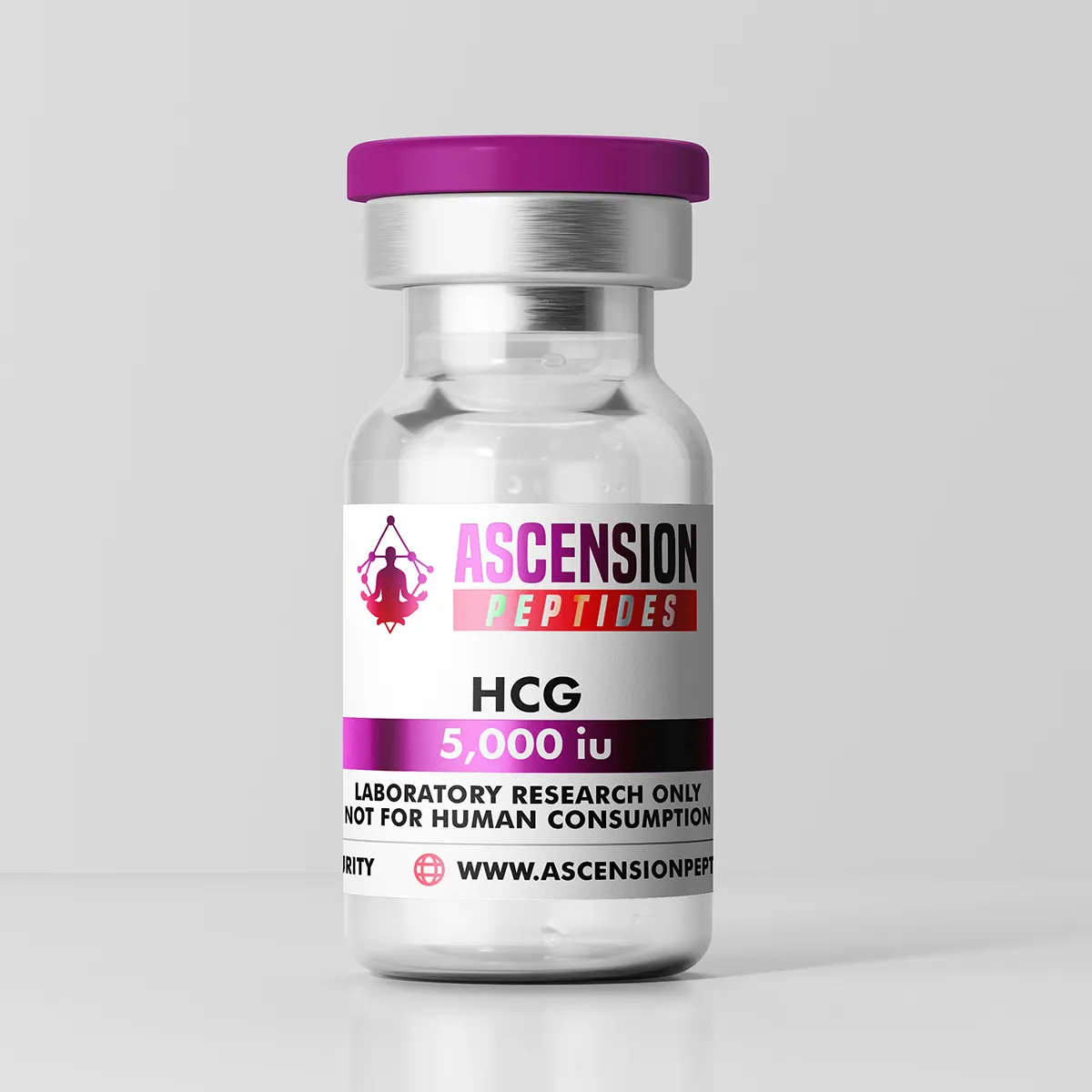
HCG is prescription-only in the US for human use. Research-grade HCG is available from peptide suppliers. Ascension Peptides carries HCG 5000 IU — lyophilized, third-party tested, with batch-specific certificates of analysis.
How HCG Works: The Full Mechanism
LH Mimicry at the Testicular Level
HCG shares roughly 80% structural homology with LH and binds to the same receptor on Leydig cells. When HCG binds to the LH/CG receptor, it triggers the same intracellular signaling cascade as natural LH: cAMP production increases, StAR protein translocates cholesterol into mitochondria, and steroidogenic enzymes convert cholesterol through pregnenolone, DHEA, androstenedione, and finally into testosterone. The practical result: HCG maintains intratesticular testosterone production even when the pituitary has stopped sending LH signals due to TRT suppression.
Why Intratesticular Testosterone Matters
Intratesticular testosterone (ITT) concentrations are 50-100x higher than serum levels. This extraordinarily high local concentration is required for normal spermatogenesis. When TRT suppresses LH and ITT drops, sperm production crashes — sometimes to zero (azoospermia). HCG maintains ITT at levels sufficient to preserve at least some degree of spermatogenesis in most men, which is why fertility-minded TRT clinicians consider it essential.
HCG vs Direct LH Supplementation
Why use HCG instead of LH itself? Primarily pharmacokinetics. LH has a half-life of about 20 minutes, making it impractical for clinical use. HCG has a half-life of approximately 24-36 hours, allowing every-other-day or twice-weekly dosing. The longer half-life comes from HCG's unique beta subunit with additional glycosylation that slows clearance.
Comprehensive HCG Dosing Protocols
Standard TRT Companion Protocol
The most common protocol: 250-500 IU HCG injected subcutaneously 2-3 times per week alongside TRT. This maintains testicular volume and function in most men without driving excessive estrogen. For men on standard TRT doses (100-200mg testosterone per week), 250 IU three times weekly is often sufficient.
Fertility Preservation Protocol
For men specifically concerned about maintaining fertility while on TRT, higher doses may be used: 500-1000 IU two to three times weekly. Some fertility specialists add FSH (either as recombinant FSH or hMG) alongside HCG for more robust spermatogenic support. Semen analysis at 3 and 6 months guides dose adjustments.
Post-TRT Recovery Protocol
When discontinuing TRT, HCG can serve as a bridge while the HPG axis recovers. A common approach: 1000-1500 IU every other day for 2-3 weeks, then taper to 500 IU three times weekly for another 2-4 weeks. This is often combined with a SERM (clomiphene or enclomiphene) to stimulate pituitary LH/FSH production as HCG is withdrawn.
Monotherapy Protocol
Some clinicians use HCG as monotherapy (without exogenous testosterone) for men with mild hypogonadism who want to raise testosterone while preserving fertility. Typical doses: 1500-3000 IU two to three times weekly. This can raise total testosterone by 200-400 ng/dL in many men. The advantage: natural testosterone production pathway is engaged (Leydig cell stimulation), and FSH is partially maintained since HCG doesn't fully suppress the pituitary the way exogenous T does.
HCG Side Effects and Management
Estrogen Elevation
The most clinically significant side effect. HCG stimulates aromatase in Leydig cells, converting testosterone to estradiol. At standard TRT companion doses (250-500 IU), this is usually manageable. At higher monotherapy doses (2000+ IU), estrogen can rise substantially — causing water retention, mood changes, gynecomastia, and nipple sensitivity. Monitoring estradiol (sensitive assay) every 6-8 weeks during HCG use is recommended. If estrogen runs high, options include reducing HCG dose, adding a low-dose aromatase inhibitor (AI), or adjusting injection frequency.
Desensitization Risk
Chronic high-dose HCG can desensitize Leydig cell LH receptors over time. This is dose-dependent — staying at or below 500 IU per injection minimizes the risk. At doses above 1500 IU, desensitization becomes a more serious concern with long-term use. Cycling HCG (using it for periods then taking breaks) is one approach to mitigate this, though clinical data on optimal cycling strategies is limited.
Injection Site Reactions
Mild pain, redness, or swelling at injection sites is common but usually transient. Subcutaneous injection in the abdominal fat is generally better tolerated than intramuscular. Rotate injection sites to minimize local tissue irritation.
Mood and Energy Effects
Many men report improved mood and energy on HCG — likely from the testosterone boost. However, if estrogen rises disproportionately, the opposite can occur: irritability, anxiety, water retention, and emotional flatness. Monitoring hormone levels (not just symptoms) is important because estrogen-mediated mood changes can be subtle and progressive.
HCG Reconstitution Guide
What You Need
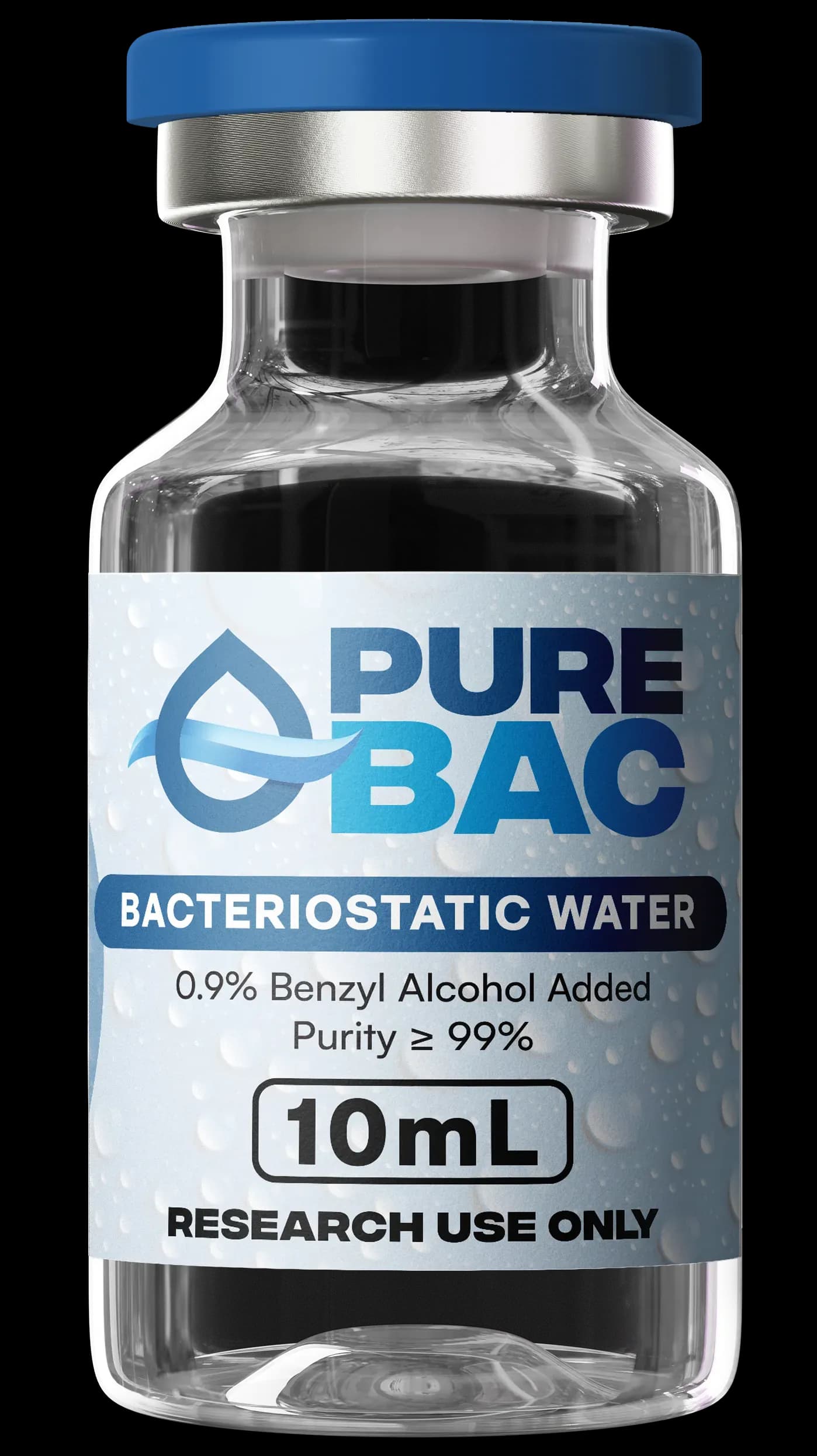
HCG typically comes as a lyophilized powder in vials of 5,000 IU or 10,000 IU. You'll need: bacteriostatic water, insulin syringes (1mL, 29-31 gauge), alcohol swabs, and a sharps container. Use bacteriostatic water (not sterile water) for the longer shelf life — the benzyl alcohol preservative prevents bacterial growth.
Mixing Instructions
For a 5,000 IU vial: add 2.5mL of bacteriostatic water. This gives you a concentration of 2,000 IU/mL. A 250 IU dose = 0.125mL = 12.5 units on an insulin syringe. For a 10,000 IU vial: add 5mL of BAC water for the same 2,000 IU/mL concentration, or 2.5mL for 4,000 IU/mL if you prefer smaller injection volumes. Inject the water slowly along the vial wall, swirl gently (never shake), and refrigerate immediately.
Storage
Reconstituted HCG should be refrigerated at 2-8°C and used within 30-60 days (depending on the formulation and water used). Unreconstituted HCG powder is stable at room temperature for the manufacturer's stated shelf life (typically 2 years). Once mixed, keep the vial upright, capped, and protected from light. Discard if the solution becomes cloudy.
The Regulatory Landscape: HCG Availability in 2026
FDA Classification Changes
In 2020, the FDA reclassified HCG as a biologic under the BPCIA (Biologics Price Competition and Innovation Act), removing it from the category of drugs that compounding pharmacies could prepare. This significantly disrupted access — compounded HCG had been the primary affordable source for TRT patients. While some compounding pharmacies continued under enforcement discretion, availability became inconsistent.
Current Access Options
Brand-name HCG (Pregnyl, Novarel) remains available by prescription but at higher cost ($100-$200+ per vial). Research-grade HCG is available from peptide suppliers for research purposes. Some compounding pharmacies have resumed production under revised guidelines. The situation varies by state and continues to evolve.
Alternatives to HCG
For men who can't access HCG, alternatives include enclomiphene (stimulates pituitary LH production), kisspeptin (stimulates hypothalamic GnRH), and low-dose HMG (human menopausal gonadotropin, which contains both LH and FSH activity). None are perfect HCG substitutes, but they provide options for maintaining testicular function during TRT.
HCG Blood Work: What to Monitor
Essential Labs
Total testosterone, free testosterone, estradiol (sensitive assay), LH, FSH, and CBC should be checked at baseline and every 8-12 weeks while on HCG. If using HCG for fertility, add semen analysis at 3 and 6 months. The estradiol check is particularly important — it's the most common reason for dose adjustments.
Interpreting Results
HCG and Body Composition
Fat Loss Claims: Separating Fact from Fiction
The "HCG diet" — combining very low calorie diets (500 kcal/day) with HCG injections — was popularized in the 1950s and experienced a resurgence in the 2010s. The claim: HCG mobilizes stored fat, particularly from problem areas, making extreme caloric restriction more tolerable. The reality: controlled studies have consistently shown no difference in weight loss or body composition between HCG and placebo when combined with the same caloric restriction. The FDA has explicitly warned against HCG diet products sold over the counter. Any weight loss observed is attributable to the extreme caloric restriction, not the HCG itself.
HCG's Actual Effect on Body Composition
Where HCG does legitimately affect body composition is through testosterone elevation. In hypogonadal men, HCG-driven testosterone increases improve lean mass retention, support fat oxidation, and enhance exercise capacity. This is a meaningful benefit — but it works through the testosterone pathway, not through some direct fat-mobilizing mechanism. Men on HCG who train and eat adequately often report improved body composition, but this correlates with their testosterone improvement, not HCG per se.
Combining HCG with Other Peptides
HCG + GH Peptides
A common combination in male optimization protocols: HCG to maintain testicular function and testosterone, plus CJC-1295/Ipamorelin for GH and sleep benefits. The two work on completely independent axes (gonadal vs somatotropic) with no known interactions. This combination addresses both testosterone maintenance and GH decline — the two major hormonal shifts in aging men.
HCG + Kisspeptin
An emerging area of interest. Kisspeptin stimulates the HPG axis at the hypothalamic level (GnRH → LH), while HCG directly stimulates the testes. In theory, combining both could produce more robust testosterone elevation and fuller HPG axis engagement than either alone. Clinical data on this combination is limited but the pharmacological rationale is sound.
HCG + Enclomiphene
Enclomiphene (a selective estrogen receptor modulator) blocks estrogen's negative feedback at the hypothalamus and pituitary, increasing LH production. Combined with HCG, you get both increased endogenous LH drive (from enclomiphene) and direct testicular stimulation (from HCG). This combination is used in some post-TRT recovery protocols and by men seeking maximum testosterone production without exogenous T.
Practical HCG Protocol Timeline
Month 1: Baseline and Initiation
Get comprehensive blood work before starting: total testosterone, free testosterone, estradiol (sensitive), LH, FSH, SHBG, CBC, and metabolic panel. If using for fertility, add semen analysis. Start HCG at 250 IU three times weekly if using as TRT companion, or 1500 IU three times weekly for monotherapy. Take note of testicular volume and consistency as a subjective baseline.
Month 2-3: Assessment
Repeat blood work at 6-8 weeks. Key metrics: testosterone response, estradiol levels, and hematocrit. If estrogen is elevated (>40 pg/mL on sensitive assay) with symptoms, consider reducing HCG dose before adding an AI. Most men stabilize well at standard doses. Energy, mood, and libido changes should be apparent by this point.
Month 3-6: Optimization
Fine-tune dosing based on blood work and symptoms. If using for fertility, check semen analysis at 3 months. Sperm parameters may take 3-6 months to show meaningful improvement since the spermatogenic cycle takes approximately 74 days. Continue monitoring estradiol and hematocrit every 8-12 weeks.
Ongoing: Maintenance
Once dialed in, HCG protocols are generally stable. Continue monitoring blood work every 3-6 months. Watch for signs of Leydig cell desensitization if using higher doses — declining testosterone response despite consistent HCG dosing may indicate receptor downregulation. If this occurs, a temporary HCG break (4-6 weeks) followed by resumption at a lower dose usually restores sensitivity.
For how HCG stacks up against the main oral alternative, see enclomiphene vs HCG.
Related comparison: gonadorelin vs HCG.
Frequently Asked Questions
📚 References
- Coviello AD et al. "Low-dose human chorionic gonadotropin maintains intratesticular testosterone in normal men with testosterone-induced gonadotropin suppression." J Clin Endocrinol Metab. 2005;90(5):2595-2602. PubMed
- Hsieh TC et al. "Concomitant intramuscular human chorionic gonadotropin preserves spermatogenesis in men undergoing testosterone replacement therapy." J Urol. 2013;189(2):647-650. PubMed
- Lee JA, Ramasamy R. "Indications for the use of human chorionic gonadotropic hormone for the management of infertility in hypogonadal men." Transl Androl Urol. 2018;7(Suppl 3):S348-S352. PubMed
- Katz DJ et al. "Male infertility – the other side of the equation." Aust Fam Physician. 2017;46(9):641-646. PubMed
- Bhasin S et al. "Testosterone therapy in men with hypogonadism: an Endocrine Society clinical practice guideline." J Clin Endocrinol Metab. 2018;103(5):1715-1744. PubMed