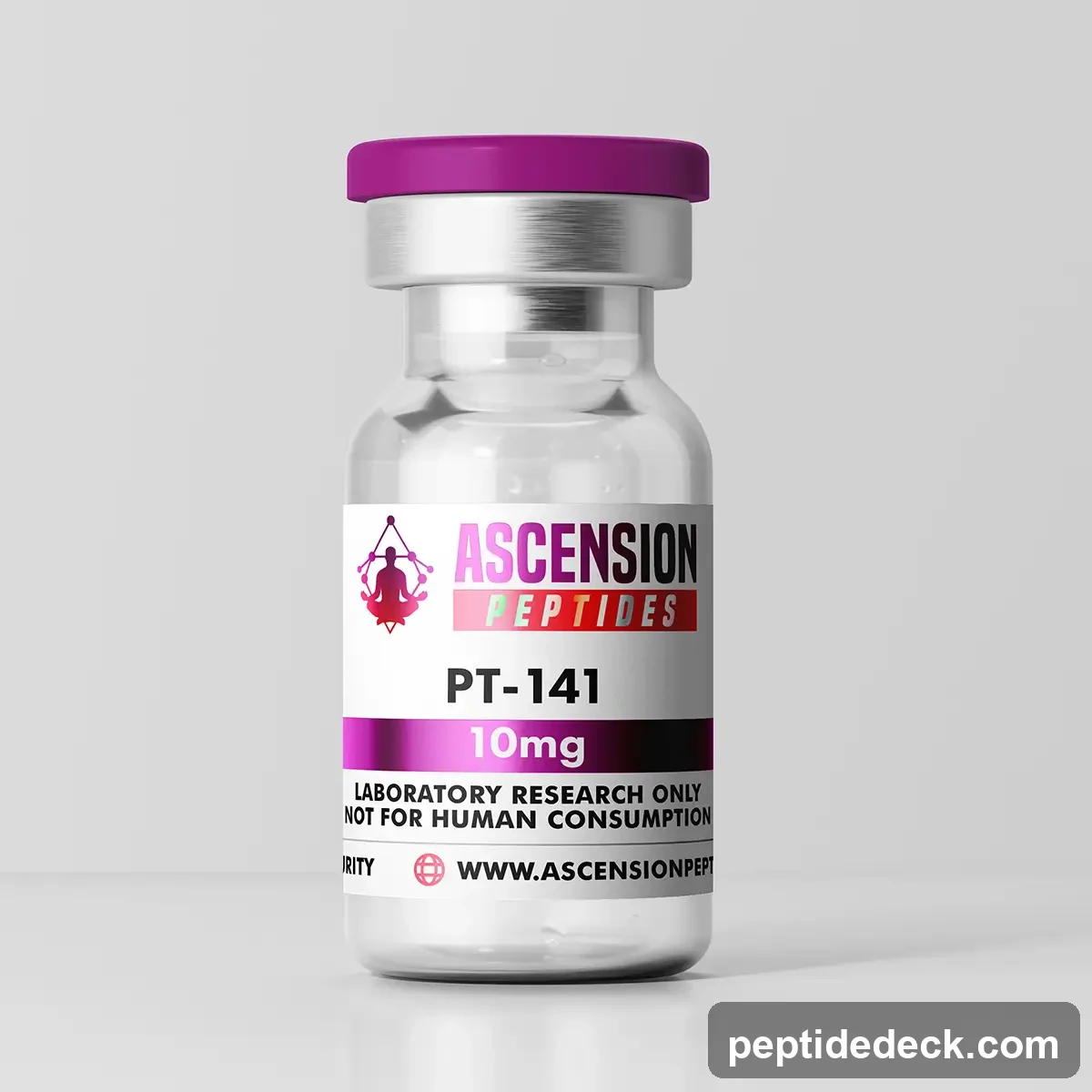

PT-141 (bremelanotide) works through a completely different mechanism than most sexual health drugs — it targets melanocortin receptors in the brain rather than blood flow in the genitals. That's what makes it effective across a broader range of arousal issues. It's also why the PT-141 side effects profile looks nothing like Viagra or Cialis.
Most people tolerate PT-141 just fine at lower doses — consistent with the general finding that peptides are safe when used responsibly. But about 40% experience nausea at some point, and a handful of less-common effects — including some that are genuinely worth monitoring — can catch people off guard. This breakdown covers everything so you know what you're actually getting into.
🔑 Key Takeaways
- Nausea is the #1 PT-141 side effect, affecting roughly 40% of users — usually mild and peaking 1–2 hours after injection
- Facial flushing, headache, and spontaneous erections in men are common at doses above 1mg
- PT-141 acts on melanocortin receptors in the brain — the same pathway that controls skin pigmentation — worth understanding in the broader context of peptide therapy — which can darken moles and freckles over time
- Blood pressure can spike temporarily; people with hypertension should be cautious
- Starting at 0.5mg and injecting at night — as detailed in our PT-141 dosage guide — dramatically reduces PT-141 side effects intensity
- Most pt-141 side effects resolve within 4–6 hours; the blood pressure effect can persist up to 12 hours
How PT-141 Works: The Melanocortin Pathway
To understand pt-141 side effects, you need to understand how PT-141 actually works — because the mechanism is genuinely unusual compared to every other sexual health compound on the market.
PT-141 is a melanocortin receptor agonist — a unique entry among peptides for erectile dysfunction. Specifically, it binds primarily to MC3R and MC4R receptors — receptors distributed throughout the brain, particularly in the hypothalamus and limbic system. These aren't the receptors that Viagra targets (those are in penile smooth muscle). These are receptors deep in the brain's reward and arousal circuitry.
When PT-141 activates MC4R in the hypothalamus (a related mechanism to Melanotan II), it triggers a cascade that increases sexual desire and arousal independently of vascular mechanisms. The effect is on desire — on wanting — not just on the physical mechanics of erection or lubrication. This is why PT-141 works for women as well as men — earning its place among the best peptides for libido and sexual health — and why it can address desire disorders that PDE5 inhibitors simply can't touch.
But the melanocortin receptor family regulates more than just arousal. The same system controls appetite, energy balance, immune function, and — critically — skin pigmentation. This is why pt 141 side effects include things like nausea (MC3R in the gut and brain), blood pressure changes, and the unique effect of darkening existing moles and freckles. Every PT-141 side effect can be traced back to these receptor interactions.
Most tolerability complaints trace back to a bad vial rather than the peptide. See where to buy PT-141 for the batch COA and purity figures on the vial shipping now.
Who Is More Likely to Experience PT-141 Side Effects?
Not everyone experiences pt 141 side effects equally. Several factors increase the likelihood and severity:
- Higher doses (2mg+): The dose-response relationship is steep. Going from 1mg to 2mg roughly doubles nausea risk and significantly increases blood pressure effects.
- First-time users: The melanocortin system hasn't been exposed to this stimulus before. First uses tend to produce the strongest side effects; they typically diminish with repeated exposure.
- Women: In clinical trials, women reported nausea at slightly higher rates than men. The FDA-approved Vyleesi dose (1.75mg) was associated with nausea in about 40% of female subjects.
- People who inject on an empty stomach: GI side effects are consistently worse when PT-141 is administered fasted.
- People with existing hypertension: The blood pressure spike has more clinical significance when your baseline is already elevated.
- Lighter body weight: Effective dose per kg of bodyweight is higher in lighter individuals, so standard doses hit harder.
- People taking medications that affect blood pressure or cardiovascular function
Who Should Avoid PT-141
- Have uncontrolled hypertension (BP consistently above 140/90)
- Have a history of cardiovascular disease, heart attack, or stroke
- Are taking nitrate-based medications (nitroglycerin, isosorbide) — the blood pressure interaction is dangerous
- Are pregnant or trying to conceive — PT-141 caused fetal harm in animal studies
- Have a history of melanoma or other skin cancers — the melanocyte stimulation effect is a contraindication
- Are taking antihypertensive medications without medical clearance
- Have a known allergy to bremelanotide or any component of the formulation
The Full PT-141 Side Effects Breakdown
Nausea — The #1 PT-141 Side Effect
Around 40% of people who take PT-141 experience some degree of nausea. It's the most common pt-141 side effect and the one that ends most early experiments with the compound. The good news: it's almost never severe enough to require medical attention, and it tends to ease up with repeated use as the body adjusts.
The nausea typically kicks in 30–60 minutes after injection and peaks somewhere between 1–2 hours. It rarely lasts beyond 4 hours. Eating something before injecting and using a lower dose both significantly reduce the odds of it being a problem.
At 2mg, nausea becomes quite likely. A lot of experienced users find 1mg to be the sweet spot — effective without the stomach issues. Some people drop further to 0.5mg and still get solid results, especially with repeated use.
Why does PT-141 cause nausea? MC3R receptors are expressed in the area postrema — the brain's "vomiting center" — as well as in the GI tract itself. PT-141 activates both sites. At lower doses, this is a mild, tolerable effect. At higher doses, it can become genuinely unpleasant.
Managing nausea from pt-141 side effects:
- Eat a light meal 30–60 minutes before injecting — not a heavy meal, just enough to buffer the GI effect
- Start at 0.5mg rather than jumping to 1–2mg
- Inject in the evening and lie down — horizontal positioning reduces nausea severity for most people
- Ginger (tea, capsules, or ginger candy) has solid evidence for reducing nausea and works well as a pretreatment
- Stay hydrated — dehydration worsens nausea significantly
Facial Flushing — Mechanism and Duration
The warm, flushed feeling in the face and neck is probably the second most reported pt 141 side effect. It can come with visible reddening of the skin and, occasionally, a feeling of warmth spreading through the chest.
Why does it happen? Melanocortin receptor activation causes vasodilation — blood vessels dilate in response to MC1R and MC4R stimulation, particularly in the face and superficial skin layers. This is the same mechanism behind the flushing seen with niacin and some other vasoactive compounds, though the receptor pathway is different.
The flushing typically appears within 30–60 minutes of injection and resolves within 1–2 hours for most users. At higher doses (2mg), it can be more pronounced and last longer. It's not dangerous — just noticeable. Most users find it passes before the intended effects peak.
Spontaneous Erections in Men — Expected, Not Dangerous
This PT-141 side effect tends to show up at doses of 1mg and above. Men report unsolicited erections unrelated to sexual stimulation — which sounds amusing but can genuinely be inconvenient if the timing is off. The clinical term is "non-on-demand erection."
This is a central nervous system effect driven by MC4R activation in the hypothalamus — not a vascular effect. It doesn't carry the same risks as drug-induced priapism (prolonged painful erection requiring medical treatment). Spontaneous erections from PT-141 resolve on their own as plasma levels drop, typically within 2–4 hours. They're a feature of how the compound works, not a sign something is wrong.
If spontaneous erections are a logistical problem, dosing in the evening (1–2 hours before intended activity) helps manage timing. Some men deliberately dose in the afternoon specifically to use this effect predictably.
Blood Pressure Increases — When to Worry
PT-141 causes a measurable, temporary rise in blood pressure. In the Vyleesi clinical trials, the 1.75mg dose raised systolic pressure by an average of 6 mmHg and held it elevated for up to 12 hours after injection.
For context: a 6 mmHg increase in systolic pressure is clinically significant but generally tolerable in healthy adults. What matters is your starting point and how the compound's effects interact with it.
When to worry about the blood pressure effect of pt 141 side effects:
- If your baseline blood pressure is already elevated (120–139/80–89 = prehypertensive; above 140/90 = hypertensive) — the same increase from a higher baseline carries more risk
- If you're taking antihypertensive medications — PT-141 can partially oppose their effect
- If you experience headache alongside the flushing — this combination can indicate a more significant BP spike than average
- If you have a history of cardiovascular events, stroke, or aneurysm
For healthy adults with normal blood pressure, the transient systolic increase from PT-141 is not clinically concerning in the literature. But "average is fine" doesn't mean "fine for everyone."
Headache — Management Strategies
Moderate headaches appear in a meaningful subset of users — most commonly at doses of 1mg and above. They're typically tension-style (a feeling of pressure rather than throbbing migraine pain) and correlate with the flushing and blood pressure effects, suggesting a vascular component.
Headache management for pt-141 side effects:
- Stay well-hydrated before and after injection — dehydration is a headache amplifier
- OTC analgesics (ibuprofen, acetaminophen) work fine if needed and have no known interaction with PT-141
- Lower the dose — headache frequency drops substantially at 0.5mg vs. 2mg
- Don't use PT-141 if you're already dealing with a tension headache — it will likely get worse
Severe or migraine-level headache from PT-141 is unusual and would warrant stopping use and reassessing.
Darkening of Moles and Freckles
This is the most mechanistically unique pt-141 side effect. Because bremelanotide stimulates melanocortin receptors — the same receptors that regulate skin pigmentation — regular use can cause visible darkening of existing moles, freckles, or hyperpigmented spots.
It doesn't create new moles, and in most cases the darkening is minor and reversible after stopping use. But it's worth paying attention to. People who use PT-141 frequently should monitor their skin and check in with a dermatologist annually. Any mole that changes shape, size, or bleeds warrants a dermatologist visit regardless of PT-141 use — that's standard skin cancer screening advice — but regular PT-141 users have extra reason to stay on top of it.
Fatigue
Some users report feeling tired or mildly sedated in the hours following injection. This seems to happen more often at higher doses and tends to make evening or nighttime dosing a natural fit — which, given the intended use, usually isn't a problem.
PT-141 Side Effects by Dose
How Long Do PT-141 Side Effects Last?
This is one of the most practical questions about pt-141 side effects, and the answer varies by effect:
The blood pressure effect has the longest tail — up to 12 hours. This is the main reason PT-141 should not be combined with cardiovascular medications without medical clearance, and why monitoring BP for several hours after a first dose is wise for anyone with cardiovascular risk factors.
For most users, the main pt 141 side effects (nausea, flushing, headache) resolve within 4–6 hours. Planning your dosing timing around this window — injecting in the evening, letting effects peak during a time you can rest — makes the experience considerably more manageable.
PT-141 Side Effects vs Viagra and Cialis
Understanding how pt-141 side effects compare to PDE5 inhibitors helps contextualize both the risks and the advantages of each.
The key practical difference: Viagra and Cialis work on physical mechanics. PT-141 works on desire. A man with normal vascular function but low libido won't benefit much from sildenafil. PT-141 addresses that directly. Conversely, someone who has desire but mechanical/vascular dysfunction may do better with a PDE5 inhibitor.
Neither is "safer" in a general sense — the risk profiles are just different. Viagra's most dangerous interaction (with nitrates) can cause severe blood pressure drops. PT-141's blood pressure increase is the relevant risk. The practical warning for both: know your baseline cardiovascular health before using either.
How to Minimize PT-141 Side Effects
Start at 0.5mg
The clinical dose used in Vyleesi trials was 1.75mg. But the research peptide community has largely converged on starting much lower — 0.5mg — because the melanocortin system is highly dose-sensitive. A lot of people find they only need 1mg or even less once they've established how they respond.
Going in at 2mg as a first dose is a reliable way to have a bad night. Don't do it. The pt-141 side effects at that dose for a first-timer can be severe enough to put people off the compound entirely — and that's a shame, because many of those same people do great at 0.5–1mg.
Inject at Night
Timing PT-141 for the evening has two advantages: any fatigue or drowsiness works in your favor rather than against you, and the blood pressure bump happens while you're at rest rather than upright and active. Most experienced users prefer an evening subcutaneous injection 1–2 hours before intended use.
Eat Before Injecting
An empty stomach makes nausea significantly worse. A light meal 30–60 minutes before injecting can cut nausea risk substantially. Not a heavy meal — just enough to buffer the GI effects.
💡 Pro Tip
Ginger (tea, capsule, or candy) has solid evidence for reducing nausea and works well as a PT-141 pre-treatment. Some users take an antiemetic like ondansetron for more stubborn nausea — though that's a bigger intervention than most situations require. Start with ginger, light food, and a lower dose first.
Don't Stack with Nitrates
PT-141 doesn't interact with PDE5 inhibitors the same way other sexual health compounds do — but if you're also taking any nitrate-based medications, combining them can cause significant blood pressure drops. This is a hard stop. Do not combine PT-141 with nitrates under any circumstances without medical supervision.
Serious Concerns Worth Understanding
Melanocyte Stimulation and Skin Changes
This is the side effect that's most specific to PT-141 and least discussed. The melanocortin pathway — which PT-141 activates to produce its effects on arousal — is also responsible for regulating melanin production in skin cells.
Over weeks and months of use, some people notice their existing moles becoming slightly darker or larger. In the clinical literature this is called "melanocyte-stimulating hormone effect." It's considered low-risk, but that comes with a caveat: it hasn't been studied with the kind of long-term follow-up that would give high confidence about very prolonged use.
If you're using PT-141 more than a few times per month for extended periods, baseline dermatological photos and annual skin checks are a reasonable precaution.
Blood Pressure Spikes
The blood pressure effect from PT-141 is real and measurable — not theoretical. In the Vyleesi clinical trials, the 1.75mg dose raised systolic pressure by an average of 6 mmHg and held it elevated for about 12 hours.
That's clinically acceptable for healthy adults. But "acceptable on average" doesn't mean "fine for everyone." If your baseline blood pressure is already elevated, if you have a history of cardiovascular events, or if you're on medications that affect blood pressure, this is something you need to evaluate with a doctor rather than ignore.
When to Stop Using PT-141
Stop using it and get checked out if you experience any of the following:
- Chest pain or pressure during or after injection
- Severe or persistent headache (not mild tension-type)
- A mole that changes shape, bleeds, or grows rapidly — see a dermatologist, not a peptide forum
- Blood pressure that stays elevated hours after expected peak effect time
- Allergic symptoms: hives, significant skin reaction, difficulty breathing
Minor nausea, mild flushing, or brief headache are not red flags — they're expected pt 141 side effects at the lower end of severity. But the above symptoms are different in character and warrant actual medical attention.
Related comparison: PT-141 vs Melanotan 2.
Frequently Asked Questions
📚 References
- Kingsberg SA et al. "Bremelanotide for the treatment of hypoactive sexual desire disorder: two randomized phase 3 trials." Obstet Gynecol. 2019;134(5):899-908. PubMed
- Clayton AH et al. "Bremelanotide for female sexual dysfunctions in premenopausal women: a randomized, placebo-controlled dose-finding trial." Womens Health (Lond). 2016;12(3):325-337. PubMed
- Diamond LE et al. "An effect on the subjective sexual response in premenopausal women with sexual arousal disorder by bremelanotide (PT-141), a melanocortin receptor agonist." J Sex Med. 2006;3(4):628-638. PubMed
- Safarinejad MR. "Evaluation of the safety and efficacy of bremelanotide, a melanocortin receptor agonist, in female subjects with arousal disorder." J Sex Med. 2008;5(5):1074-1085. PubMed
- Molinoff PB et al. "PT-141: a melanocortin agonist for the treatment of sexual dysfunction." Ann N Y Acad Sci. 2003;994:96-102. PubMed
- FDA. "Vyleesi (bremelanotide injection) prescribing information." US Food and Drug Administration. 2019. FDA Label