🔑 Key Takeaways
- Sermorelin is a synthetic GHRH analogue — it stimulates your pituitary to release growth hormone naturally
- Unlike exogenous HGH, sermorelin preserves pulsatile GH release and doesn't suppress your own production
- Benefits include fat loss, muscle preservation, better sleep, and improved recovery
- Half-life is very short (~10-20 min), which is actually a feature — it mimics natural GH pulses
- Typical dosing: 200-500mcg subcutaneous injection before bed
Most people looking into growth hormone therapy have heard of HGH injections. Fewer have heard of sermorelin — which is a shame, because for a lot of people, it's the smarter starting point.
Sermorelin doesn't give you exogenous growth hormone. It tells your own pituitary gland to produce more of it. That distinction matters more than most people realize.
What Is Sermorelin?
Sermorelin is a synthetic analogue of growth hormone-releasing hormone (GHRH). It consists of 29 amino acids — specifically the first 29 amino acids of endogenous GHRH, which is all you need to activate the GHRH receptor on pituitary somatotroph cells.
It was originally developed as Geref (sermorelin acetate) by Serono, approved by the FDA in 1997 for diagnosing and treating growth hormone deficiency in children. That pharmaceutical product was discontinued in 2008 — not because of safety issues, but because of manufacturing economics. The molecule itself remains well-studied and is widely used in research and off-label clinical settings.
💡 Note
Sermorelin was FDA-approved and used clinically for years. Its discontinuation was a business decision, not a safety withdrawal. The underlying research base is solid.
Today, sermorelin is primarily used in research contexts and by compounding pharmacies for anti-aging and hormone optimization protocols. Interest has grown significantly as GH-related research has expanded.
How Sermorelin Works: The GHRH Mechanism
To understand sermorelin, you need to understand the GH axis — specifically how growth hormone is normally released.
Under normal physiology:
- The hypothalamus releases GHRH in pulses
- GHRH binds to receptors on pituitary somatotrophs
- The pituitary releases GH in pulses (primarily at night, during deep sleep)
- GH travels through the bloodstream, stimulating IGF-1 production in the liver
- IGF-1 mediates most of GH's anabolic and metabolic effects
Sermorelin steps in at step 1 — it mimics endogenous GHRH. When you inject sermorelin, it binds to pituitary GHRH receptors and triggers a pulse of GH release. Because it works through the pituitary (not by bypassing it), the GH release remains pulsatile and physiologically regulated.
Pituitary-Mediated
Works through your own pituitary gland, preserving natural feedback loops. The body can still regulate total GH output.
Short Half-Life by Design
Sermorelin's ~10-20 minute half-life means it stimulates a pulse and clears quickly — just like endogenous GHRH. This is a feature, not a bug.
Preserves Natural Rhythms
Pulsatile GH release is important for receptor sensitivity. Continuous GH exposure (as with exogenous HGH) can desensitize receptors over time.
Somatostatin Braking
Your hypothalamus can still release somatostatin to brake GH if levels get too high. This safety mechanism remains intact with sermorelin; it's absent with exogenous HGH.
Sermorelin Benefits
The benefits of sermorelin are largely the benefits of optimized GH levels — but approached more gently and sustainably than with direct HGH administration.
Fat Loss & Body Composition
Growth hormone is lipolytic — it drives the breakdown of stored fat for energy, particularly visceral fat. Studies on GHRH analogues have consistently shown reductions in body fat percentage alongside preservation of lean mass. This isn't dramatic overnight fat loss; it's a gradual, sustained shift in body composition over months.
Muscle Preservation
GH promotes protein synthesis and inhibits protein breakdown. For aging adults experiencing sarcopenia (age-related muscle loss), optimizing GH levels can meaningfully slow the process. Sermorelin isn't a mass builder like anabolic steroids — it's more about maintaining what you have.
Sleep Quality
This one surprises a lot of people. GH is primarily released during slow-wave (deep) sleep, and the relationship goes both ways: improving GH pulsatility can improve sleep architecture, and better sleep promotes more GH release. Many people report deeper, more restorative sleep as one of the first noticeable effects.
Recovery & Tissue Repair
GH and IGF-1 promote collagen synthesis and soft tissue repair. Researchers studying injury recovery, tendon health, and wound healing have explored GHRH signaling as a potential mechanism. Some athletes use GHRH peptides specifically for faster recovery from training stress.
Skin & Connective Tissue
Collagen degradation is a primary driver of skin aging. Higher GH/IGF-1 levels are associated with better collagen maintenance, improved skin elasticity, and reduced appearance of aging. It's why "anti-aging" clinics often include GH optimization in their protocols.
Cognitive Function
GH receptors are found throughout the brain. Some research suggests GH signaling plays a role in memory consolidation and mood regulation. The evidence here is less robust than for body composition, but GH-deficient adults often report cognitive improvements when GH is restored to normal levels.
Sermorelin vs HGH: Key Differences
This comparison matters a lot. Many people reach for sermorelin as an alternative to direct HGH — and there are real reasons to prefer it, especially early on.
The key conceptual difference: HGH replaces. Sermorelin stimulates. For people whose pituitary is still functional, sermorelin tends to be a more physiological approach — you're working with your biology, not overriding it.
Sermorelin vs Ipamorelin: Which Is Better?

Ipamorelin is a GHRP (growth hormone-releasing peptide) — a different class of compound that works on the ghrelin receptor (GHS-R1a) rather than the GHRH receptor. Both stimulate GH release, but through different pathways.
The two compounds are complementary rather than competing. Sermorelin + ipamorelin is a popular research combination because they hit different receptors and produce synergistic GH release — the GHRH + GHRP combination typically produces more GH than either alone.
If you had to pick one: ipamorelin is cleaner (less hunger stimulation, less cortisol) but sermorelin has a longer research history and more established pharmacology for the GHRH pathway.
Sermorelin Dosage Protocol
These are the dosing parameters commonly used in research settings. Not medical advice — always work with a qualified physician for clinical use.
The before-bed timing is important. GH is naturally released most strongly during slow-wave sleep, in the first half of the night. Administering sermorelin 30-60 minutes before sleep positions the GH pulse to coincide with — and potentially amplify — the natural nocturnal peak.
What to Expect: Timeline of Results
Sermorelin isn't fast. People who expect dramatic results in two weeks will be disappointed. Those who give it 3-6 months tend to notice real, sustainable changes.
IGF-1 levels are the standard lab marker for monitoring GH axis activity. If running sermorelin in a research or clinical context, IGF-1 measurements at baseline and 3-month intervals provide objective data on response.
Side Effects & Safety
Sermorelin has a well-established safety profile from its years as an FDA-approved drug. Common side effects are generally mild:
- Injection site reactions: Redness, swelling, or mild pain at the injection site. Common and usually resolves quickly.
- Flushing: A warm sensation shortly after injection. Typically brief.
- Headache: Reported by some users, usually mild and transient.
- Dizziness: Occasional, especially if injected while standing.
- Vivid dreams: Very common due to changes in sleep architecture. Most people don't mind this one.
Serious side effects are rare. Unlike exogenous HGH, sermorelin's physiological mechanism means you're unlikely to see the fluid retention, joint pain, carpal tunnel syndrome, or insulin resistance that can accompany high-dose HGH use.
One thing worth monitoring: sermorelin can increase cortisol slightly in some individuals. This is usually not clinically significant, but it's worth noting for anyone with adrenal concerns.
Where to Get Sermorelin for Research
For researchers, compounding pharmacies (with a prescription) and licensed research chemical suppliers are the two main routes.
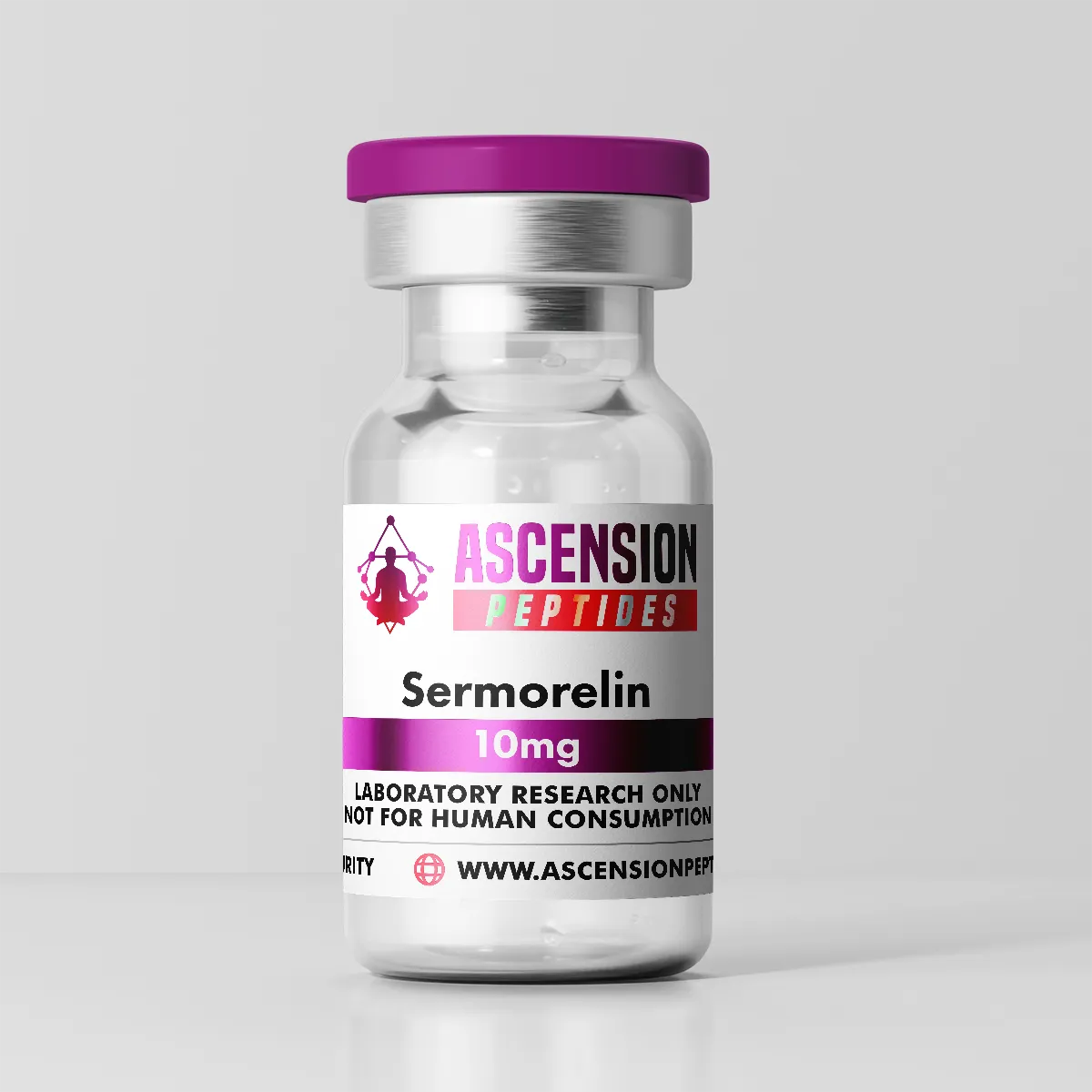
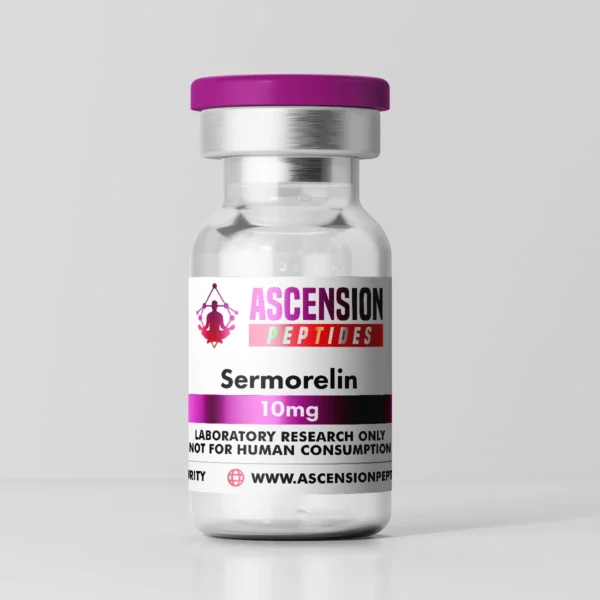
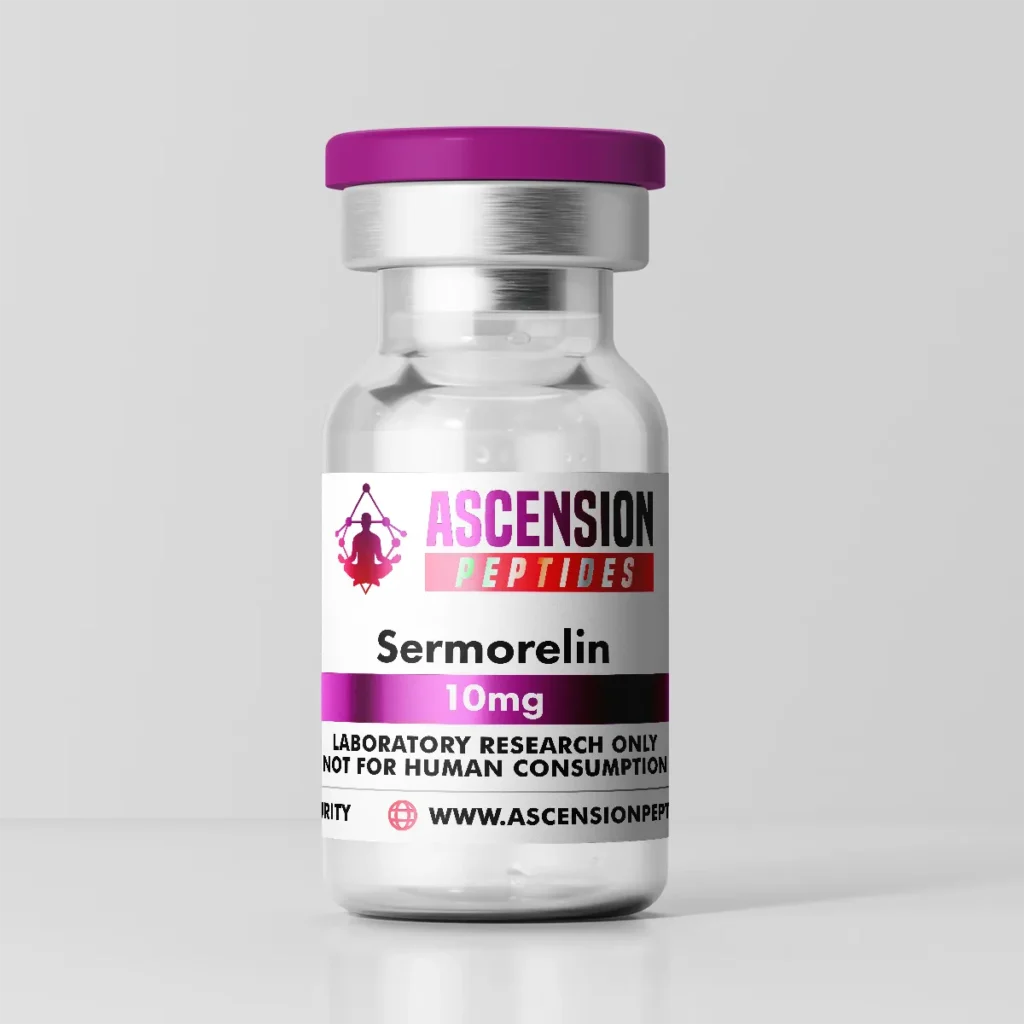
Ascension Peptides carries high-purity sermorelin for research purposes. Their Sermorelin 10mg is manufactured with quality controls appropriate for laboratory use.
View Sermorelin 10mg on Ascension Peptides →
💡 Note
Research peptides are for laboratory research only. They are not pharmaceutical-grade medications, are not FDA-approved for human use in this form, and should not be used as substitutes for prescribed medications. For clinical use, work with a licensed compounding pharmacy and prescribing physician.
When evaluating suppliers, key things to look for: third-party purity testing (HPLC), clear labeling, proper storage and shipping conditions, and responsive customer support. Peptide purity matters significantly for research validity.