Semaglutide changed what people expect from a weight loss drug. It now anchors our weight loss injections comparison. Before it, losing 5% of your body weight on medication was considered a success. Semaglutide doubled and tripled that number in clinical trials, and it hasn't stopped being the benchmark since.
🔑 Key Takeaways
- Semaglutide for weight loss works by mimicking the GLP-1 hormone: suppressing appetite, slowing digestion, and reducing the constant mental drive to eat ("food noise")
- The STEP 1 trial showed average weight loss of 14.9% of body weight (roughly 34 lbs for a 220 lb person) over 68 weeks at the 2.4mg Wegovy dose. One-third of participants lost 20% or more
- Semaglutide is sold as Ozempic (for diabetes, up to 2mg), Wegovy (for weight loss, 2.4mg injection), Wegovy pill (25mg daily), and Rybelsus (oral, for diabetes). Same molecule, different doses and approvals
- The SELECT trial proved semaglutide reduces heart attacks and strokes by 20% in people with obesity and cardiovascular disease. No other weight loss drug has this level of cardiac outcome data
- Semaglutide is no longer the strongest option. Tirzepatide produces 47% more weight loss in head-to-head trials. But semaglutide has the longest safety record, the strongest heart data, and the cheapest compounded option ($99/month)
- Weight regain after stopping is the main limitation. Most people regain significant weight within 1 to 2 years without continued treatment
This page covers how semaglutide works for weight loss, what the trial data actually shows, every version available, dosing, side effects, cost, and when to consider switching to something stronger.
How Semaglutide Works for Weight Loss
It rewires how your brain talks to your gut.
Semaglutide is a GLP-1 receptor agonist. GLP-1 (glucagon-like peptide-1) is a hormone your small intestine releases after eating. It does four things naturally: signals insulin release, slows gastric emptying, suppresses glucagon, and tells the brain you're full. Semaglutide amplifies all four at sustained therapeutic levels.
For weight loss specifically, the appetite effect is what matters most. GLP-1 receptors in the hypothalamus and brainstem directly reduce hunger signaling. People describe it as the disappearance of "food noise," the persistent background mental chatter about meals, snacks, and cravings. You stop thinking about food between meals. You eat less at each meal because you feel full sooner. The caloric deficit happens without the willpower fight that derails most diets.
Slowed gastric emptying extends this further: food sits in your stomach longer, so you feel full for hours after eating what would previously have been a small meal.
How Much Weight Do You Lose on Semaglutide?
The dose determines the outcome.
For context: the placebo groups in these trials lost about 2-3% of their body weight from lifestyle changes alone. The semaglutide effect is 4 to 6 times that, depending on dose.
Every Version of Semaglutide for Weight Loss
Same molecule, five products.
Wegovy (Injection) - The Weight Loss Version
Once-weekly injection at 2.4mg. FDA-approved for weight loss in adults and adolescents 12+, for MACE risk reduction in adults with heart disease, and for MASH (liver disease). This is the version specifically designed and approved for weight loss. Comes as a pre-filled pen.
Wegovy HD - Higher Dose
An enhanced version producing approximately 19% average weight loss. For adults who need additional loss beyond standard Wegovy. Same injection format.
Wegovy Pill - Oral Option
Daily semaglutide pill (25mg) for weight loss. Average loss of 14% (17% for completers). Must be taken on an empty stomach with minimal water, then wait 30 minutes. Approved for adults only. Also approved for MACE reduction.
Ozempic - The Diabetes Version (Used Off-Label)
Once-weekly injection up to 2mg. FDA-approved for type 2 diabetes and cardiovascular risk reduction in T2D. Not approved for weight loss, but widely prescribed off-label for it. Lower dose means less weight loss than Wegovy, but insurance coverage is often better with a diabetes diagnosis.
Compounded Semaglutide - The Affordable Version
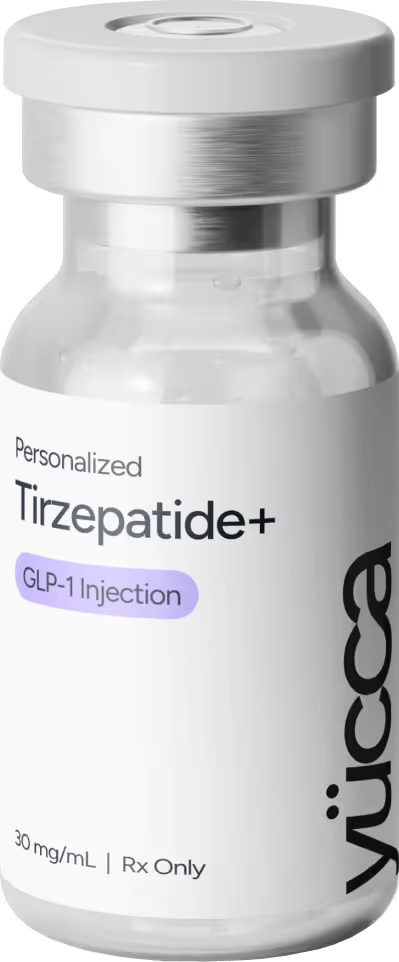
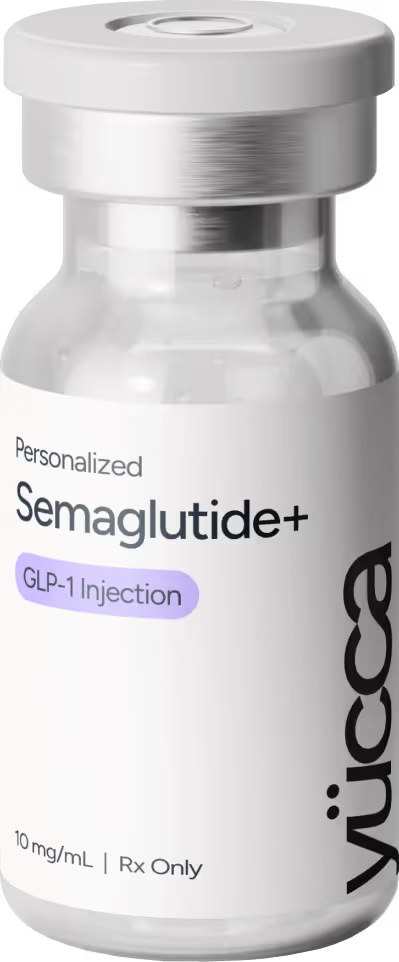
Same semaglutide molecule, compounded by licensed pharmacies at $99 to $269/month. Comes as a vial with syringes instead of a pre-filled pen. The most affordable route for people without insurance coverage. Quality varies by source. The compounded semaglutide page covers what to verify.
Semaglutide for Weight Loss: Week-by-Week Timeline
Beyond Weight Loss: The Heart Data
This is what separates semaglutide from everything else.
The SELECT trial (17,604 participants, 39.8 months) showed semaglutide 2.4mg reduced major adverse cardiovascular events, heart attack, stroke, and cardiovascular death, by 20% in people with obesity and established heart disease. No other weight loss drug has produced this level of cardiovascular outcome data.
Additional proven benefits beyond weight:
- Kidney protection: The FLOW trial showed a 24% reduction in kidney failure and kidney-related death
- Liver disease (MASH): Wegovy injection is approved for metabolic liver disease with fibrosis
- Blood pressure: Consistent systolic BP reductions across trials
- Sleep apnea: Weight loss improves OSA severity (though tirzepatide has the specific OSA approval)
If you have cardiovascular disease and need weight loss, semaglutide has stronger evidence than any alternative, including tirzepatide.
Side Effects of Semaglutide for Weight Loss
GI-heavy during dose escalation, then it fades.
Slow dose escalation is the single most effective strategy. If nausea is significant at any dose level, hold for an extra 4 weeks before increasing. There's no medical requirement to follow the exact titration schedule. Full breakdown on the semaglutide side effects page.
Semaglutide vs Tirzepatide for Weight Loss
Tirzepatide wins on weight loss. Semaglutide wins on heart data and cost.
Choose semaglutide if: cost matters most, you have cardiovascular disease, or you want the longest safety track record. Choose tirzepatide if: maximum weight loss is the priority or you've plateaued on semaglutide. Full comparison on the tirzepatide vs semaglutide page.
Cost of Semaglutide for Weight Loss
For detailed access routes without insurance, see the GLP-1 without insurance page.
What Happens When You Stop Semaglutide
The hunger comes back.
Semaglutide has a half-life of about one week. After your last dose, it takes roughly 5 weeks to fully clear. During that window: appetite returns, food noise resumes, metabolic adaptations reverse. Studies show weight regain of approximately 0.4 kg per month, with most people regaining significant weight within 1 to 2 years.
This is the primary limitation of semaglutide for weight loss. The drug treats the biology of obesity while you're on it. When you stop, the biology that drove the weight gain in the first place is still there. Some people maintain through sustained lifestyle changes. Most don't without continued medication.
Frequently Asked Questions
Medical Disclaimer: This article is for informational purposes only and does not constitute medical advice. Semaglutide is a prescription medication. Consult a licensed healthcare provider to determine if it's appropriate for your individual health profile.