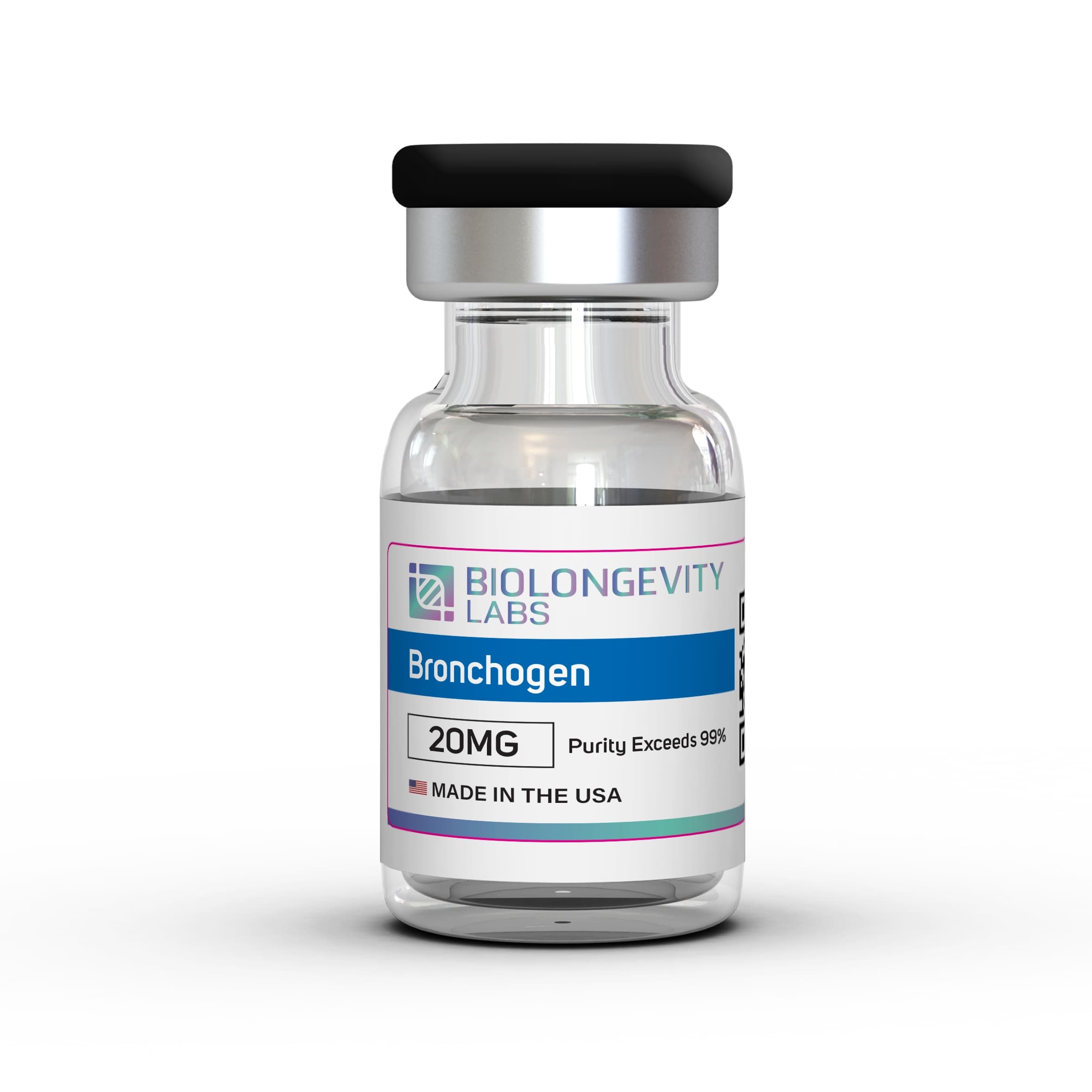
Your lungs are aging silently. Every respiratory infection, every exposure to pollution, every decade of cumulative oxidative stress leaves its mark on fragile bronchial tissue — long before a diagnosis ever appears. Bronchogen is the peptide researchers developed to address exactly this problem: a four-amino-acid bioregulator designed to signal aging lung cells to repair and regenerate themselves.
In this complete guide, we break down what Bronchogen is, how it works at the cellular level, what the research actually shows, and what researchers need to know about dosage protocols and usage considerations.
- Type: Peptide bioregulator (tetrapeptide)
- Sequence: Ala-Glu-Asp-Leu (AEDL)
- Target tissue: Bronchial epithelium, lung parenchyma
- Primary research focus: Respiratory health, COPD, age-related lung decline
- Origin: Developed by the St. Petersburg Institute of Bioregulation and Gerontology
- Purity standard (research grade): ≥99%
What Is Bronchogen? The Respiratory Bioregulator Explained
Bronchogen is a tetrapeptide — meaning it is composed of exactly four amino acids — with the sequence Alanine-Glutamic Acid-Aspartic Acid-Leucine (AEDL). It belongs to a broader class of compounds called peptide bioregulators, a category of short-chain signaling molecules developed through decades of Soviet and Russian military and gerontological research.
The foundational concept behind peptide bioregulators is tissue-specific gene regulation. Rather than acting as a receptor agonist or antagonist in the traditional pharmacological sense, Bronchogen is theorized to interact directly with DNA in bronchial epithelial cells — influencing transcriptional activity in ways that may restore youthful gene expression patterns and encourage cellular repair.
This research originated under Professor Vladimir Khavinson at the St. Petersburg Institute of Bioregulation and Gerontology. Over roughly three decades, his team and associated researchers developed organ-specific peptide bioregulators for everything from thymic tissue to cardiovascular function. Bronchogen was specifically developed for the lungs and bronchial tree.
Its small molecular weight gives Bronchogen notable practical advantages in research settings: it can be administered both by subcutaneous injection and, crucially, via oral route — a rarity among bioactive peptides, which are typically degraded in the gastrointestinal tract before reaching systemic circulation.
How Bronchogen Works: Cellular and Molecular Mechanisms
Understanding how Bronchogen works requires stepping outside the conventional drug-receptor model. Peptide bioregulators like Bronchogen are not thought to work by binding to a single receptor and triggering a downstream cascade. Instead, research suggests they operate at the level of gene expression — specifically by binding to short complementary sequences within the regulatory regions of DNA.
DNA-Binding and Chromatin Interaction
Studies have shown that tetrapeptides of this class are capable of intercalating with double-stranded DNA and interacting with histone proteins. In bronchial epithelial cells, this may selectively activate genes associated with:
- Mucociliary clearance and ciliated cell differentiation
- Epithelial integrity and tight junction maintenance
- Anti-inflammatory cytokine expression
- Antioxidant enzyme upregulation
- Surfactant production in alveolar type II cells
Epigenetic Modulation
Newer research frames Bronchogen's mechanism within epigenetics. As bronchial cells age, certain protective gene promoters become hypermethylated — effectively silenced. Short peptides with complementary charge and structure to histone tails may act as epigenetic reset signals, demethylating these promoters and restoring transcriptional activity. This hypothesis aligns with observations that Bronchogen appears most potent in aged or damaged tissue rather than in healthy young cells.
Cytoprotective Effects
At the cellular level, in vitro studies using bronchial epithelial cell lines have documented that Bronchogen exposure is associated with reduced markers of oxidative stress, decreased apoptosis rates under hypoxic conditions, and improved cell survival following inflammatory insults. These findings are consistent with a cytoprotective bioregulator profile rather than a direct anti-inflammatory drug.
Bronchogen appears to work not by blocking or activating a single receptor, but by modulating gene expression in bronchial tissue — potentially restoring cellular function that has been silenced by aging, inflammation, or environmental damage.
Bronchogen Research: What the Studies Show
Because Bronchogen is a research compound, understanding its benefits requires careful reading of the available preclinical and clinical data. The following represents a synthesis of findings to date.
COPD and Chronic Bronchitis Research
Some of the most compelling data on Bronchogen comes from Russian clinical research involving patients with chronic obstructive pulmonary disease and chronic bronchitis. In one published investigation, subjects receiving Bronchogen as part of a broader peptide bioregulator protocol showed improvements in spirometric measures — specifically FEV1 (forced expiratory volume in one second) and FVC (forced vital capacity) — compared to controls. Researchers noted reductions in exacerbation frequency and improvements in mucociliary function as secondary endpoints.
It is important to note that much of this research was conducted in Russia and has not yet been replicated in large-scale, blinded, Western-style randomized controlled trials. Independent replication remains an ongoing need in this field.
Aging Lung and Geroprotection
In aged animal models, Bronchogen administration was associated with measurable improvements in bronchial tissue histology — including thicker, better-organized epithelial layers and reduced fibrotic infiltration. This geroprotective angle is central to the compound's development rationale: the idea that delivering the right peptide signal to aging lung tissue can slow structural decline.
Immune Modulation in Respiratory Tissue
Several studies have assessed Bronchogen's effects on local immune markers in bronchial lavage samples. Findings suggest a shift toward a more balanced immune environment — reduced pro-inflammatory cytokine expression (particularly IL-6 and TNF-α) while preserving innate immune surveillance activity. This profile could be relevant for research into conditions like asthma, where excessive inflammatory signaling drives pathology.
Combination Research with Other Peptide Bioregulators
Bronchogen is often studied alongside other peptide bioregulators. Researchers have examined it in combination with Epithalon (learn more about Epithalon) — a telomere-supporting tetrapeptide — as part of systemic anti-aging protocols. Early data suggests that multi-peptide regimens targeting different organ systems may produce additive effects without significant interaction concerns, though this area requires more rigorous study.

Bronchogen Dosage and Usage Protocols in Research Settings
Bronchogen is available in both injectable (subcutaneous) and oral enteric-coated capsule forms. The following information reflects protocols used in documented research settings and is provided for educational purposes only.
Injectable Protocol
- Dose range: 0.1–0.5 mg per injection, subcutaneous
- Frequency: Once daily or every other day
- Cycle length: 10–20 day courses, typically repeated 2–3 times per year in research protocols
- Reconstitution: Bacteriostatic water; standard peptide handling protocols apply
Oral Protocol
- Dose range: 1–2 mg orally, enteric-coated formulation
- Frequency: Once daily, taken before meals
- Cycle length: 30-day courses are most commonly referenced in the literature
- Bioavailability note: Oral bioavailability is lower than injectable; higher doses compensate, but direct comparison data is limited
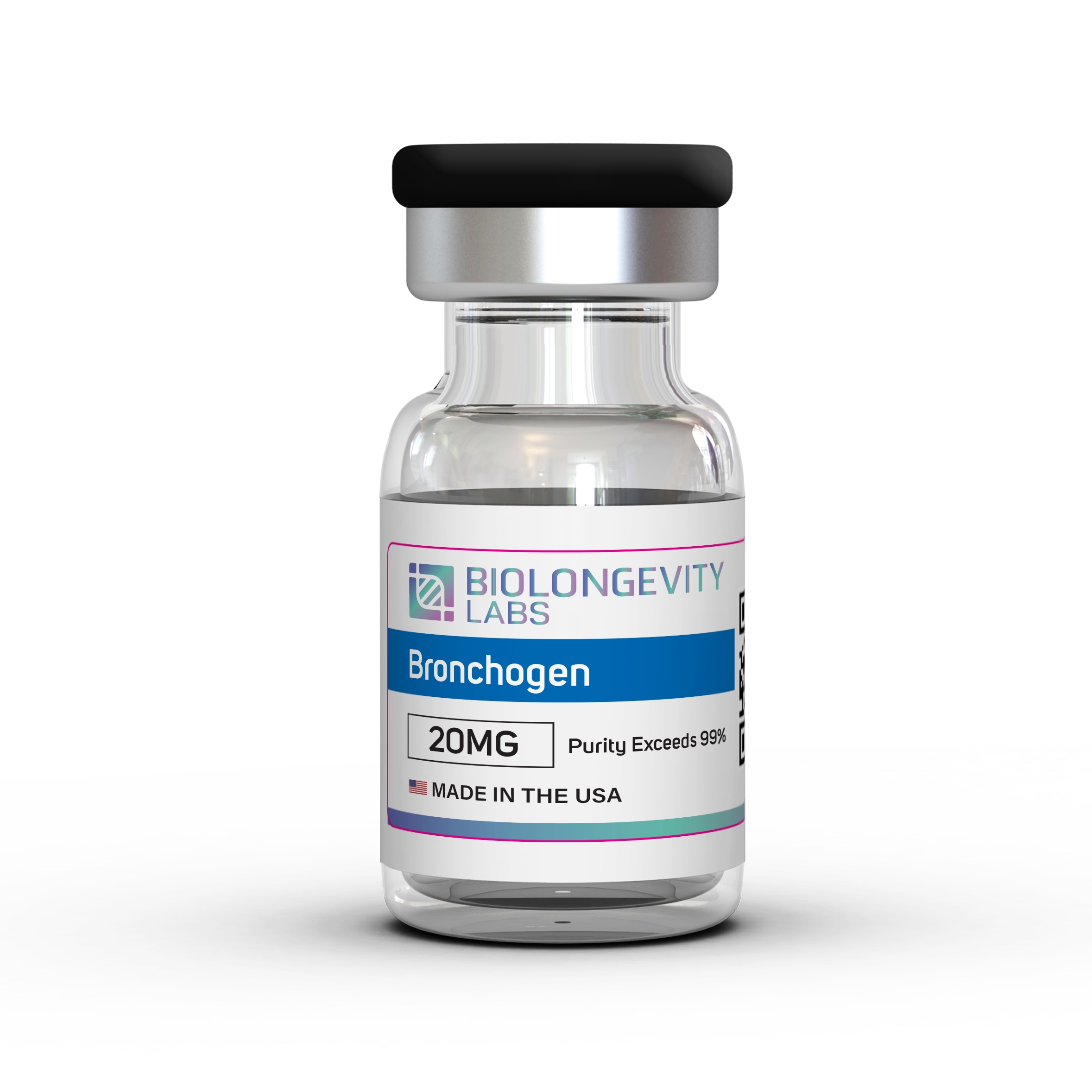
For valid research outcomes, Bronchogen should be sourced at ≥99% purity with a Certificate of Analysis (COA) from third-party independent testing. Mass spectrometry confirmation of the correct AEDL sequence is essential to ensure research integrity.
What to Look For When Sourcing Bronchogen
For researchers sourcing Bronchogen, the following quality markers are non-negotiable:
- Third-party HPLC and mass spectrometry COA confirming ≥99% purity
- Correct amino acid sequence (AEDL) verified by MS
- US-based manufacturing under sterile, validated conditions
- Transparent batch-specific testing — not generic or lot-wide averages
- No proprietary blends or undisclosed excipients in injectable formulations
Bronchogen Safety Profile and Research Considerations
Bronchogen's safety profile in research settings is generally regarded as favorable, which is consistent with its endogenous-like tetrapeptide structure. Because it is composed of naturally occurring amino acids in a short chain, it does not carry the immunogenicity risks associated with larger exogenous proteins.
Reported side effects in the literature are minimal and largely confined to injection-site reactions (mild erythema, transient discomfort) with subcutaneous administration. No systemic toxicity signals have emerged in available studies at research-relevant doses.
However, several important caveats apply:
- Long-term safety data in humans is limited; most robust studies are of 10–30 day duration
- Drug interaction data is sparse — concurrent use with immunosuppressants, corticosteroids, or biologics has not been well characterized
- Reproductive and developmental safety data is absent; Bronchogen should not be used in pregnancy or lactation contexts
- All research use should occur within an appropriate ethical and regulatory framework
Researchers interested in broader respiratory peptide research may also find value in reviewing compounds like BPC-157 for its tissue repair profile, or GHK-Cu for its well-documented anti-inflammatory and regenerative mechanisms — both of which have overlapping areas of study with Bronchogen in the context of tissue cytoprotection.
Frequently Asked Questions About Bronchogen Peptide
Bronchogen in 2026: Where the Research Stands
Bronchogen represents one of the more compelling — and underexplored — peptide bioregulators in the current research landscape. Its three-decade research foundation, tissue-specific mechanism, and favorable safety signal make it a legitimately interesting compound for researchers focused on respiratory aging, COPD-related decline, and the broader field of epigenetic geroprotection.
What it is not, at this stage, is a validated human therapeutic. The clinical evidence base, while promising, consists largely of single-center Russian studies that have not yet been independently replicated in Western trial infrastructure. That gap represents both a limitation for current research interpretation and an opportunity for the scientific community.
For researchers pursuing this compound, sourcing quality is paramount. Third-party verified purity at ≥99%, confirmed AEDL sequence, and transparent COA documentation are the minimum standards for valid research. Vendors like Ascension Peptides maintain these standards for US-based researchers requiring consistent, high-purity research compounds.
As the peptide bioregulator field continues to mature, Bronchogen sits at an interesting intersection of respiratory medicine, epigenetics, and longevity research — a small molecule with potentially large implications for how we think about age-related organ decline.