
Abaloparatide builds bone fast, and then you stop. That is the whole shape of treatment with Tymlos: one 80 mcg injection a day for up to 18 months, a 9.2% gain in spine density and 86% fewer new spine fractures in the trial that got it approved (PMID 27533157), and then a different drug to keep what you built. This guide is for the person holding the pen, or deciding whether to: what the trial actually showed, what it costs, how it differs from teriparatide in the fridge and at the hip, and what to do in month 19.
🔑 Key Takeaways
- The one bone site where abaloparatide beat teriparatide in a head-to-head arm, and the one where it did not.
- Why 58% of women had a red injection site in month one, and what the label says about it.
- What happened to the women who switched to a cheap weekly tablet after 18 months (and to the ones who did not).
- The two-year rule that still applies to this drug but no longer applies to Forteo.
- What a month really costs with a coupon, with the copay card, and on Medicare.
If a fracture has already happened, or a DEXA number has put you in the "high risk" bracket, you already know the usual advice slows loss rather than reversing it. An anabolic drug is the other category: it adds bone. Abaloparatide is the newer of the two daily anabolic injections, and most of what is written about it online is either a label summary or a sales page. What follows is the trial record, the label, and the price, with the sources attached.
What abaloparatide is and how it builds bone
It is a 34-amino-acid analogue of parathyroid hormone-related protein, PTHrP(1-34). Like teriparatide, it binds the PTH1 receptor on bone-forming cells, and like teriparatide it only builds bone when the signal arrives as a short daily pulse; a continuous PTH signal does the opposite and strips calcium from the skeleton. The practical consequence is that the drug has to be injected once a day, every day, and cannot be given as a slow-release form.
Abaloparatide was engineered to prefer a particular receptor conformation that produces a briefer signal than teriparatide's. Whether that matters clinically is exactly what the ACTIVE trial was designed to show, and the honest answer from the data below is: a little, at the hip, and in the calcium numbers.
Who it is approved for
The FDA approved Tymlos on April 28, 2017 for postmenopausal women with osteoporosis at high risk for fracture, defined as a history of osteoporotic fracture, multiple risk factors, or failure of or intolerance to other osteoporosis therapy (FDA approval letter). On December 19, 2022 it added men with osteoporosis at high risk for fracture, on a density-only trial, so the men's indication reads "to increase bone density" and makes no fracture claim (FDA letter S-013; PMID 36190391).
Europe refused it first. The EMA's committee gave a negative opinion in March 2018, confirmed on re-examination that July, and only authorised the drug as Eladynos on December 12, 2022, for postmenopausal women (EMA, Eladynos). Japan approved it in 2021 under Teijin. In the US the maker, Radius Health, went private in August 2022 and was folded into Paratek Pharmaceuticals on March 18, 2026, so the company behind the copay card is now Paratek (Paratek release).
The ACTIVE trial: what 2,463 women showed in 18 months
ACTIVE randomised 2,463 postmenopausal women with osteoporosis at 28 sites in 10 countries to daily abaloparatide 80 mcg (824), placebo (821) or open-label teriparatide 20 mcg (818) for 18 months; 1,901 completed (PMID 27533157; NCT01343004). Radius funded it. The primary endpoint was new vertebral fractures on X-ray.
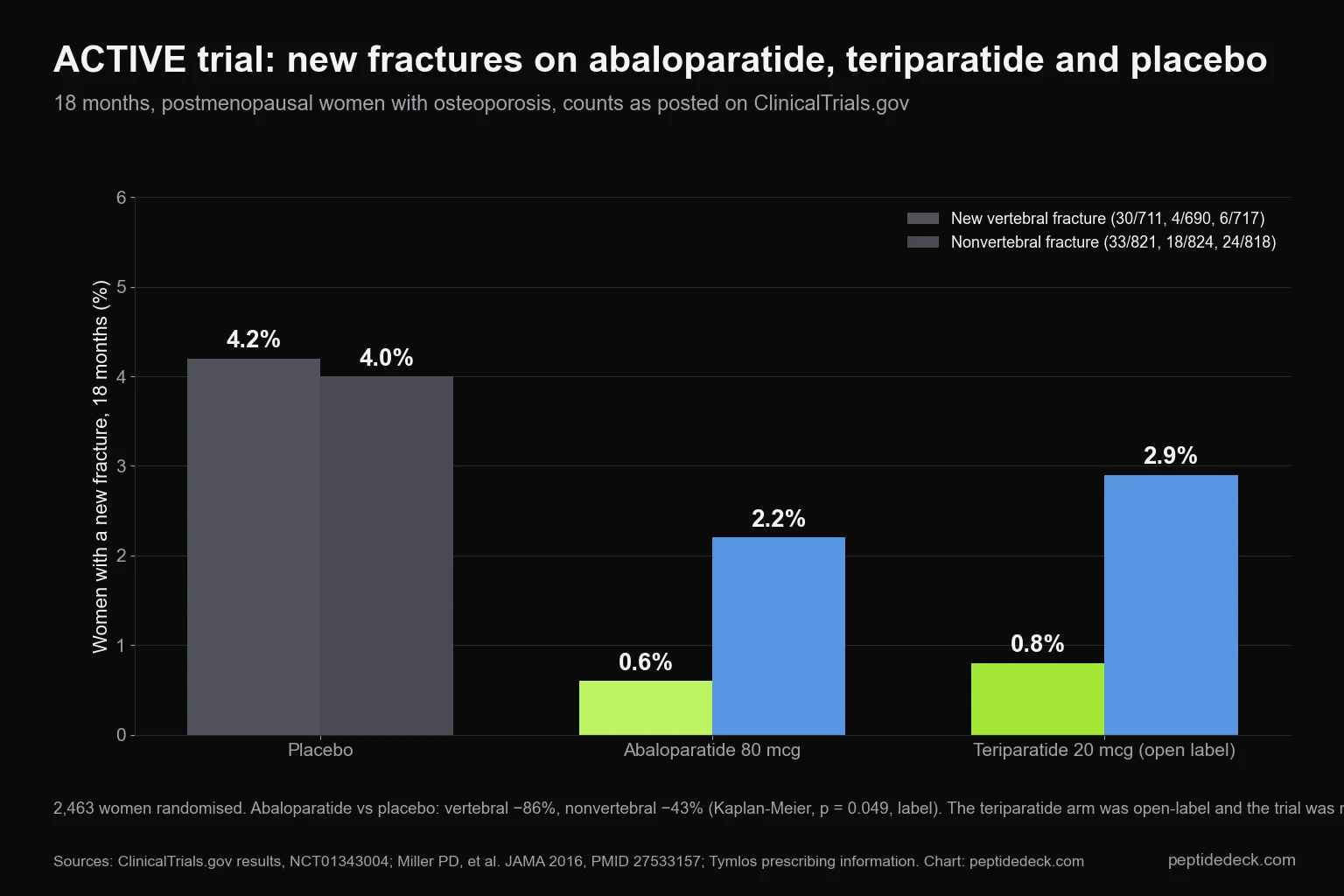
New vertebral fractures: 4 of 690 women on abaloparatide (0.6%) against 30 of 711 on placebo (4.2%), an 86% relative reduction and a 3.6-point absolute one. Nonvertebral fractures: 18 of 824 against 33 of 821, which the label reports as 2.7% vs 4.7% by Kaplan-Meier at 19 months, a 43% reduction with a p-value of 0.049, as close to the line as a positive result gets (Tymlos PI, section 14). The teriparatide arm landed at 0.8% vertebral and 2.9% nonvertebral. Abaloparatide versus teriparatide on nonvertebral fractures was not significant (p = 0.34), and the trial was never powered for that comparison.
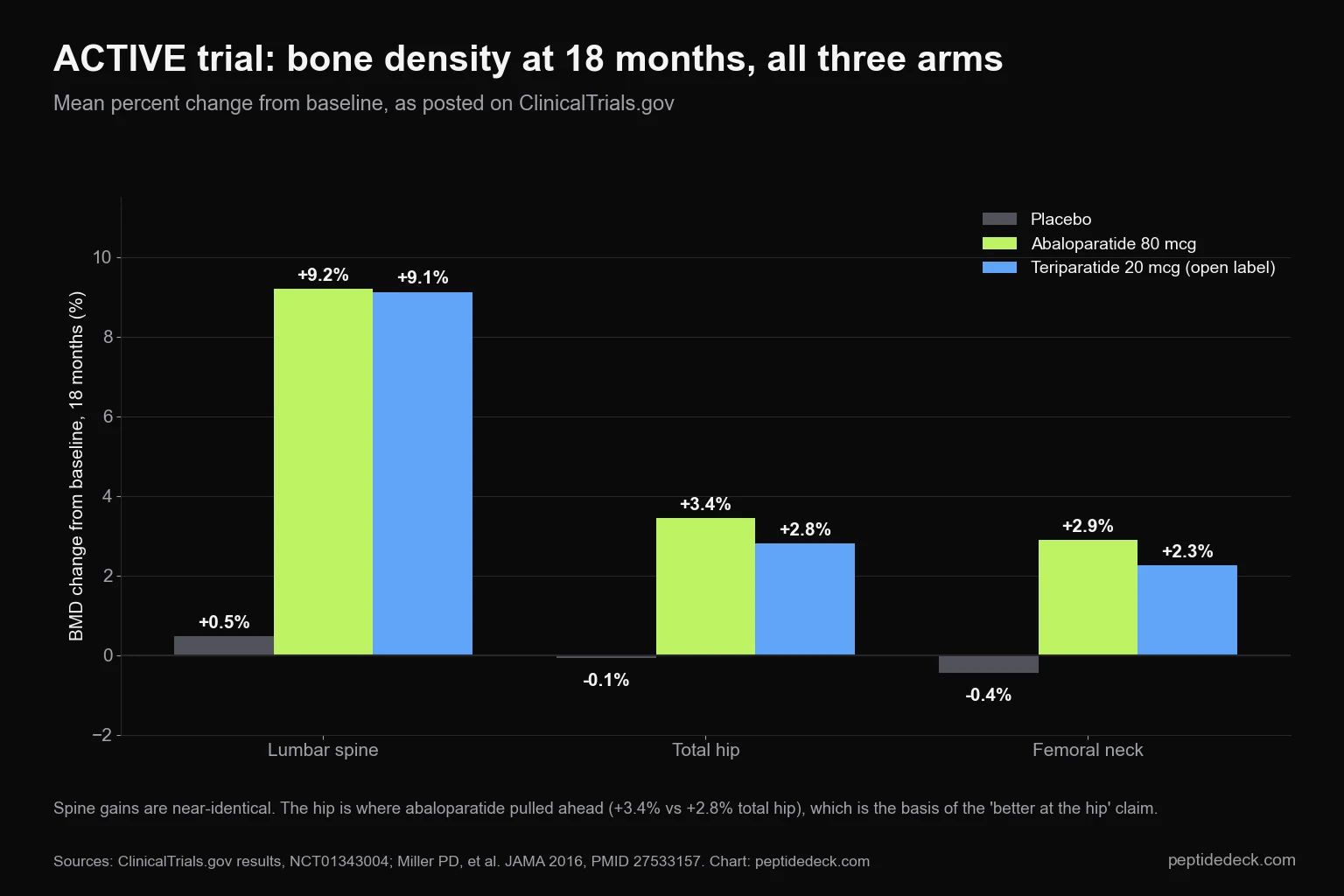
Bone density is where the two drugs separate. At the spine they were identical: +9.2% on abaloparatide, +9.1% on teriparatide (p = 0.82). At the total hip abaloparatide gained 3.4% against 2.8% (p < 0.0001) and at the femoral neck 2.9% against 2.3% (p = 0.0004). That hip advantage is the entire basis of the "better than Forteo" claim, and it is real but modest. The other difference was calcium: high blood calcium after a dose occurred in 3.4% of abaloparatide patients against 6.4% on teriparatide (15 vs 34 events), which is the number endocrinologists tend to quote when they choose it.
Dose, pen and the 30-day rule
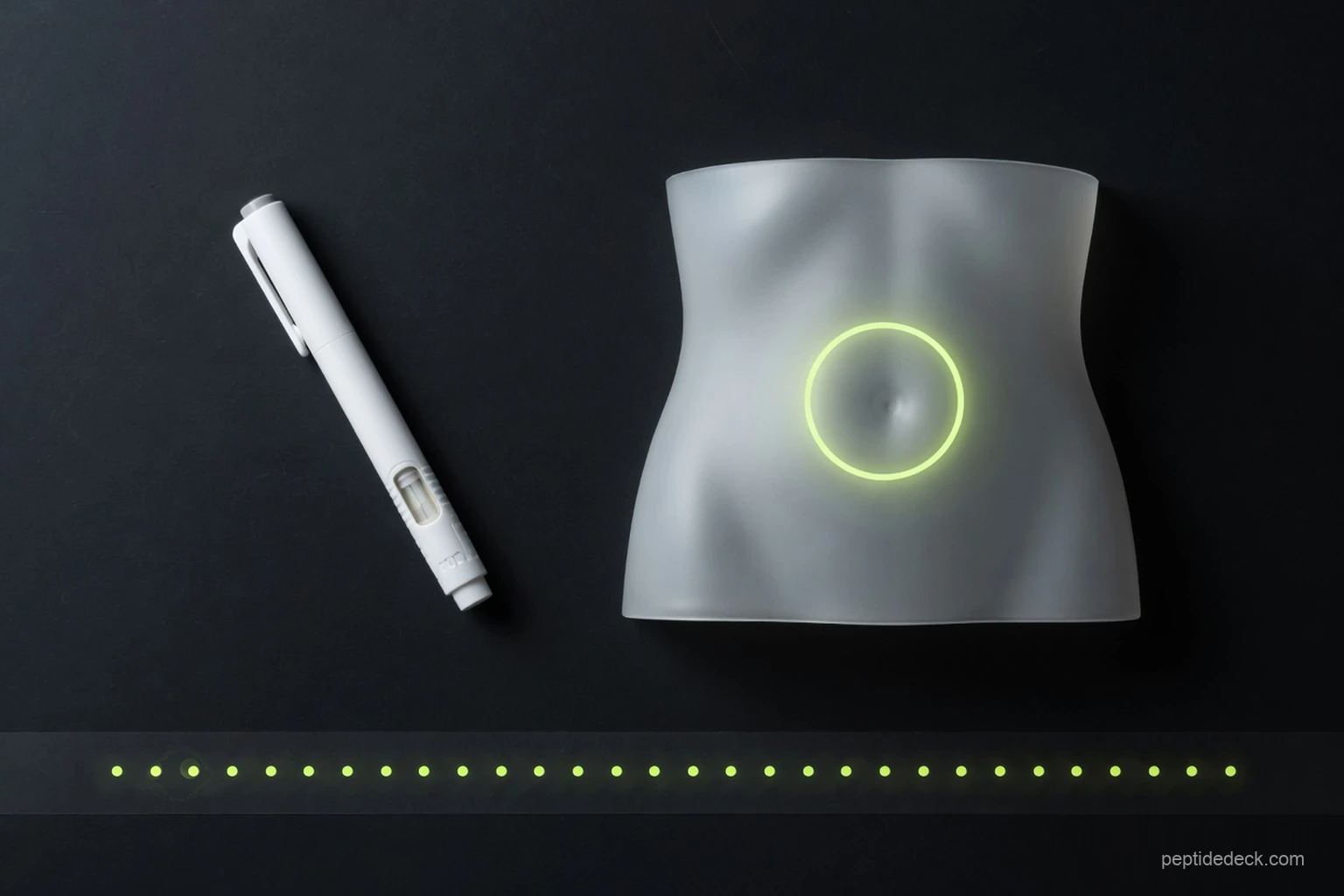
The dose is 80 mcg once a day under the skin of the abdomen around the navel, rotating the spot and keeping the same time each day. The pen holds 3,120 mcg in 1.56 mL, enough for 30 doses; needles are sold separately. Before the first dose it stays in the fridge at 2 to 8 °C. After the first dose it can live at room temperature, 20 to 25 °C, for up to 30 days, cap on, no needle attached. Then it is discarded even if drug is left in it (Tymlos PI, sections 2 and 16).
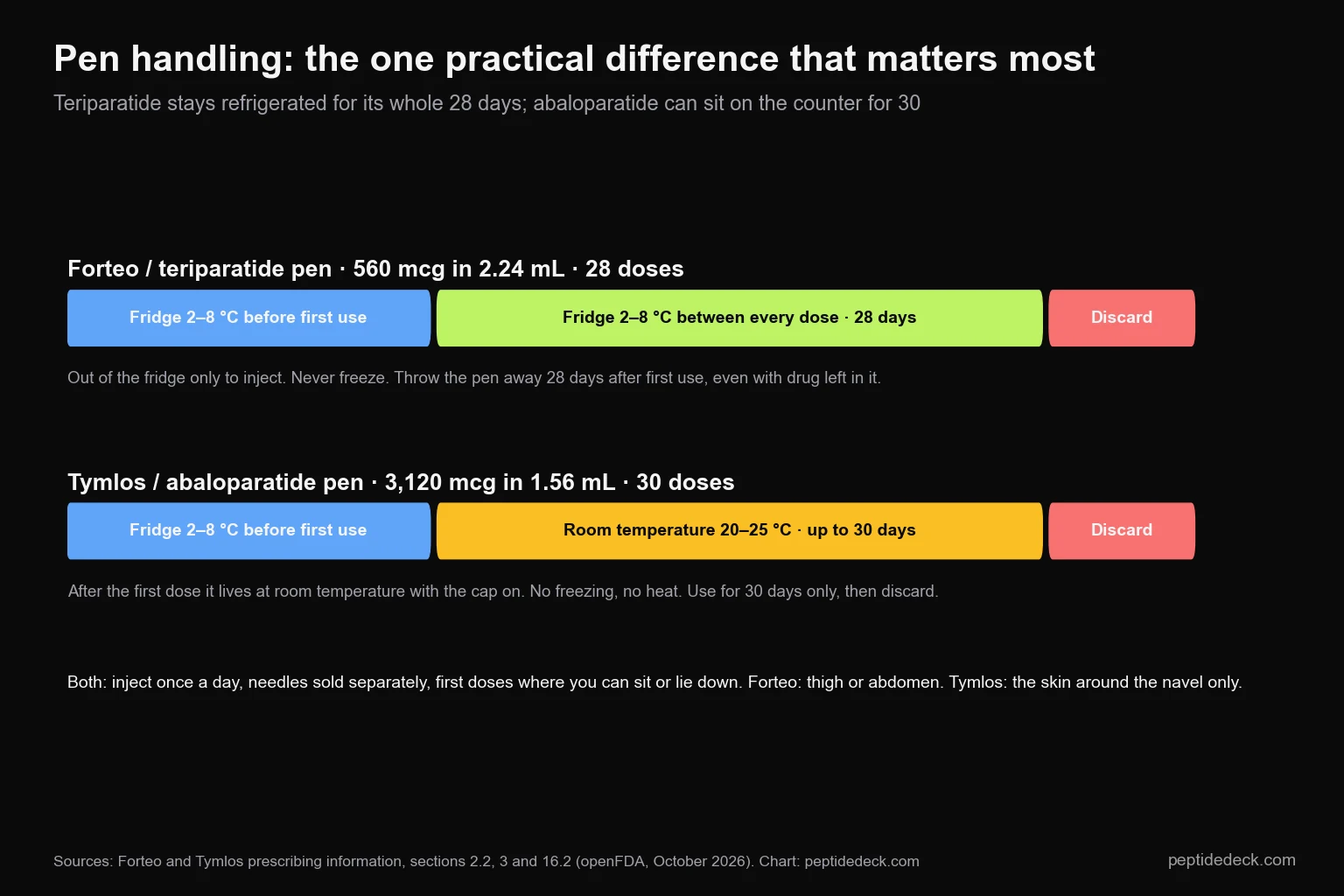
Two rules from the label are worth memorising. Take the first several doses somewhere you can sit or lie down, because a drop in blood pressure on standing can happen within four hours. And if you miss a dose, take it as soon as you can that day, never two in one day. The label also asks for calcium and vitamin D if your diet is short of them.
Side effects: what the label table actually shows
The reaction most people get is a red injection site. In the first month of ACTIVE, 58% of women on abaloparatide had redness at the site against 28% on placebo, 11% had swelling and 10% pain; severe reactions were under 3%. After that the commonest complaints were dizziness (10% vs 6%), nausea (8% vs 3%), headache (8% vs 6%) and palpitations (5% vs 0.4%). Abaloparatide raises heart rate within 15 minutes of a dose and the effect lasts about six hours; tachycardia was reported by 2% (Tymlos PI, section 6).
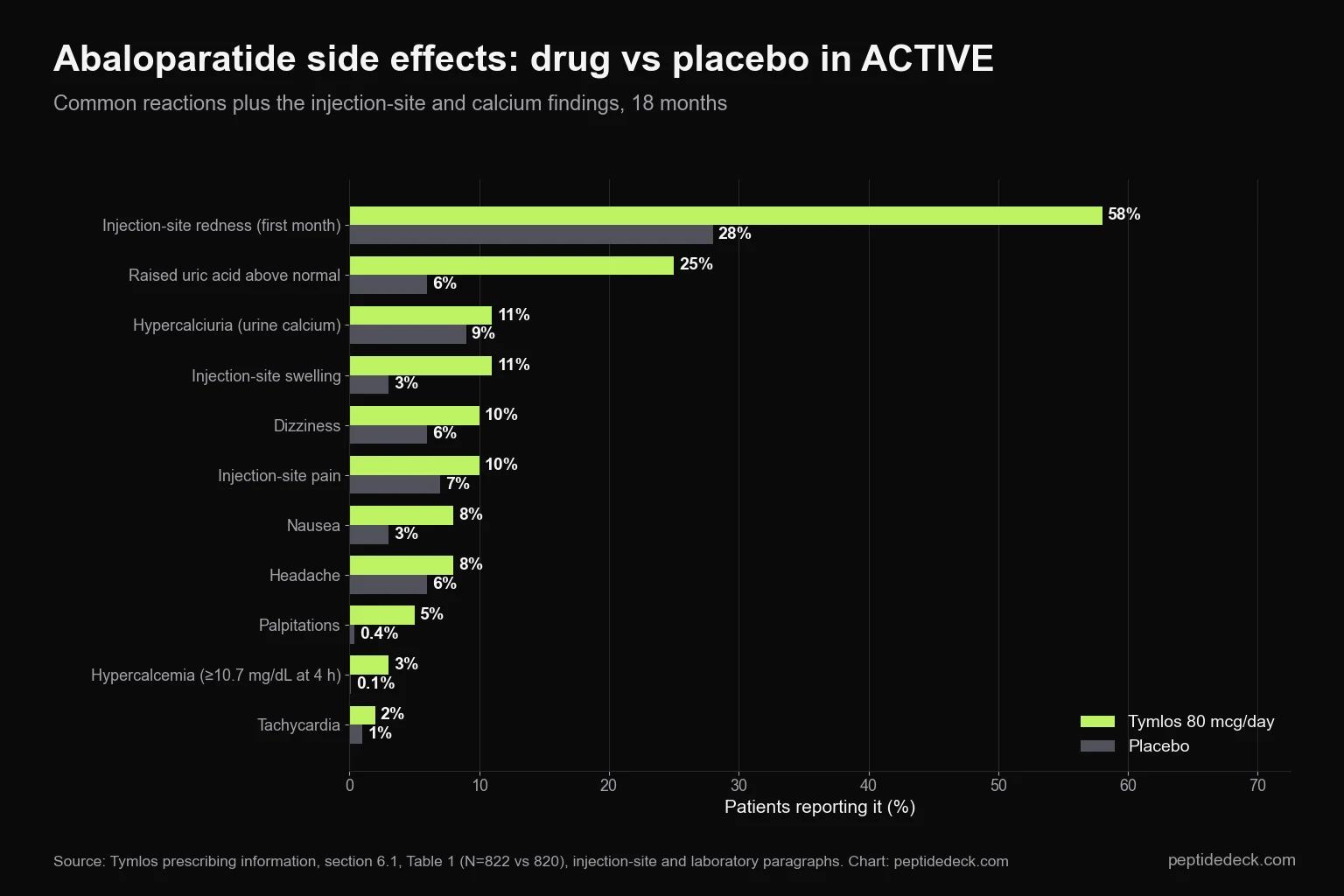
The laboratory findings matter more than the symptoms. Blood calcium at 4 hours after a dose was high (10.7 mg/dL or more) in 3% of women against 0.1% on placebo, and 4% of those with mildly reduced kidney function. Urine calcium was high in 11% vs 9%, and uric acid went above normal in 25% vs 6%, without a rise in gout or kidney stones (2.1% vs 1.7%). About 10% stopped the drug for side effects against 6% on placebo. Antibodies to abaloparatide developed in 41% of women and neutralising antibodies in 26%, with no effect on efficacy or safety that the trial could detect.
Who should not take it: anyone at higher baseline risk of osteosarcoma (open growth plates, Paget's disease, unexplained raised alkaline phosphatase, bone metastases or a history of skeletal cancer, prior radiation to the skeleton, hereditary osteosarcoma syndromes), anyone with existing high blood calcium or primary hyperparathyroidism, and anyone with a history of serious allergic reaction to it. It is not for women who can become pregnant. Kidney stones or hypercalciuria call for urine calcium monitoring, not automatic exclusion.
The osteosarcoma warning, and why it was removed
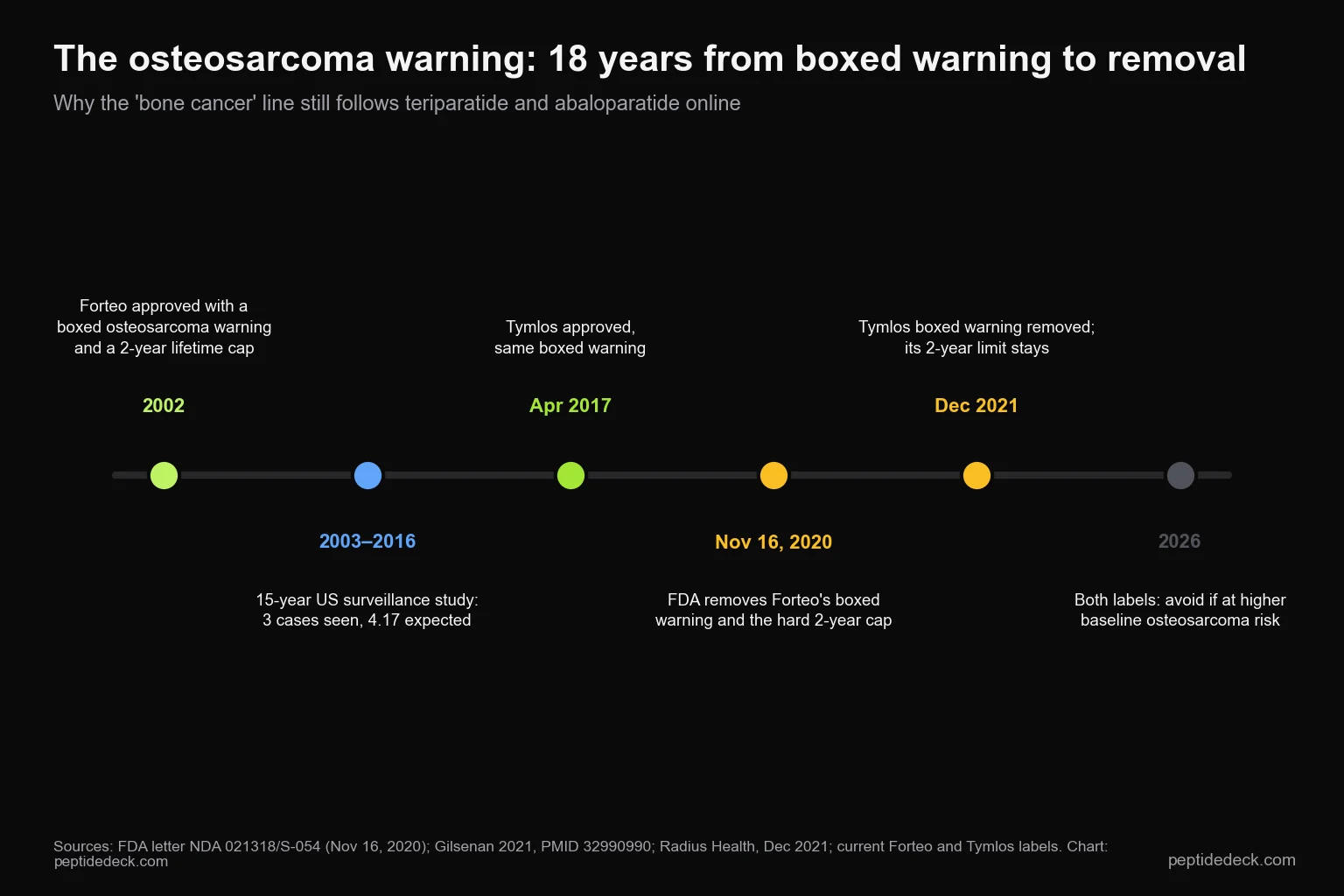
Both PTH-receptor drugs launched with a boxed warning about osteosarcoma because laboratory animals dosed for most of their lives developed bone tumours. Forteo's was removed on November 16, 2020 after a 15-year surveillance study found three teriparatide-exposed cases where 4.17 were expected (PMID 32990990). Tymlos followed: the FDA approved removal of its boxed warning effective December 22, 2021 (Radius, Dec 2021). The current label keeps the warning in the ordinary warnings section and keeps the exclusion list above.
How long you can take it: the two-year rule

Here the two drugs now differ. The Forteo label was softened in 2020 to say use beyond two years "should only be considered if a patient remains at or has returned to having a high risk for fracture". The Tymlos label still says: "The safety and efficacy of TYMLOS have not been evaluated beyond 2 years of treatment. Use of the drug for more than 2 years during a patient's lifetime is not recommended" (Tymlos PI, section 2.3). In practice the approved course is 18 months, which is how long ACTIVE ran.
What happens in month 19: the ACTIVExtend answer
Anabolic gains do not keep themselves. In ACTIVExtend, 558 women who had taken abaloparatide and 581 who had taken placebo went straight onto alendronate 70 mg once a week for 24 months, so the whole course ran 43 months (PMID 29800372). Over those 43 months, new vertebral fractures were 0.9% in the abaloparatide-first group against 5.6% in the placebo-first group, an 84% reduction; nonvertebral fractures fell 39%, major osteoporotic fractures 50%, and there were no hip fractures against five. At 25 months, six months into alendronate, spine density stood at +12.8% from baseline against +3.5% (Tymlos PI, section 14).
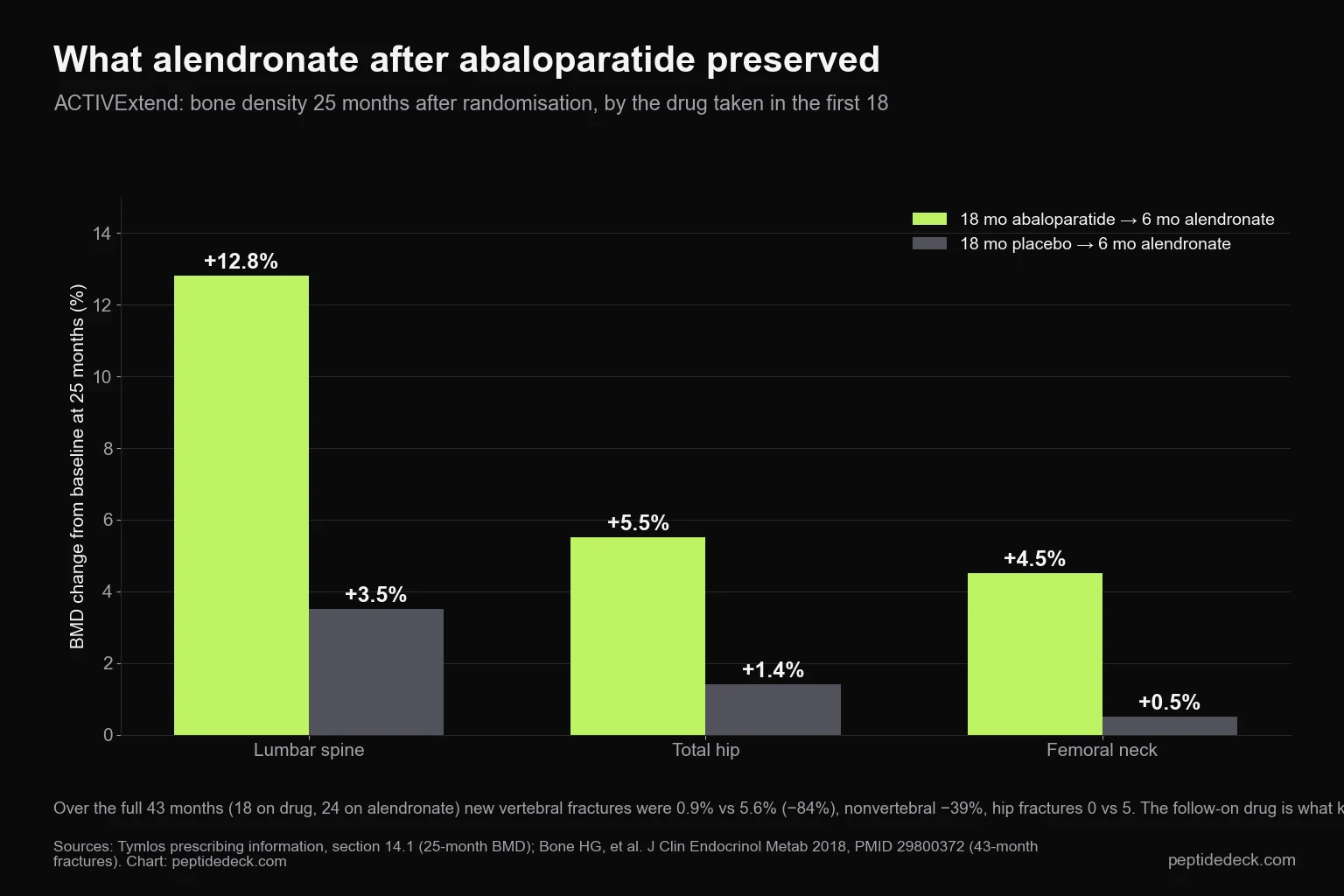
The reverse order is weaker. Build-then-lock is the sequence with the data behind it, which is why guidelines put the anabolic first in people at very high risk and an antiresorptive (alendronate, zoledronic acid or denosumab) straight after. Ending an abaloparatide course with no follow-on drug in hand is the single most common way to waste it.
Abaloparatide vs teriparatide: the honest comparison
Read the table and the choice is usually made by three things that have nothing to do with the molecule: whether your insurance covers the brand, whether you want the pen out of the fridge, and whether you need the glucocorticoid or men's fracture indication only teriparatide carries. A 2019 network meta-analysis of 16 trials ranked abaloparatide first for vertebral and nonvertebral fractures but found no anabolic significantly reduced nonvertebral fractures in the pooled analysis (PMID 31547908). Our teriparatide guide covers the older drug in the same depth, and an oral teriparatide tablet, EB613, is due to start Phase 3 in late 2026. For how both drugs rank against every other peptide sold for bone, see our evidence-graded guide to peptides for osteoporosis.
What Tymlos costs, and how to get it far below $100 a day
GoodRx blocks visitors from outside the US, so we read its newest archived Tymlos page, captured April 19, 2026: $3,029.67 for the 30-dose pen with a coupon against $3,911.74 retail, which is $100.99 a day without insurance, roughly two and a half times the daily cost of a coupon-price teriparatide pen (GoodRx, Apr 19 2026 capture). The same page says 88% of insurance plans cover it, typically at a $32.50 to $82.50 copay. The maker's own site, now run by Paratek, says eligible commercially insured patients "may pay as little as $0 a month" with the Tymlos Savings Card, that 92% of commercial plans cover it, and that its Radius Assist program supplies the drug free to qualifying patients for a lifetime maximum of 24 months (tymlos.com, read Oct 10 2026). Medicare and other government plans are excluded from copay cards by law, so a Part D patient pays the plan's specialty tier until the annual out-of-pocket cap, $2,100 in 2026 (CMS). If you are weighing abaloparatide cost against the generic alternative, the cost-per-day chart below is the comparison to show your prescriber, and our teriparatide guide has the savings-card detail for the cheaper pen.
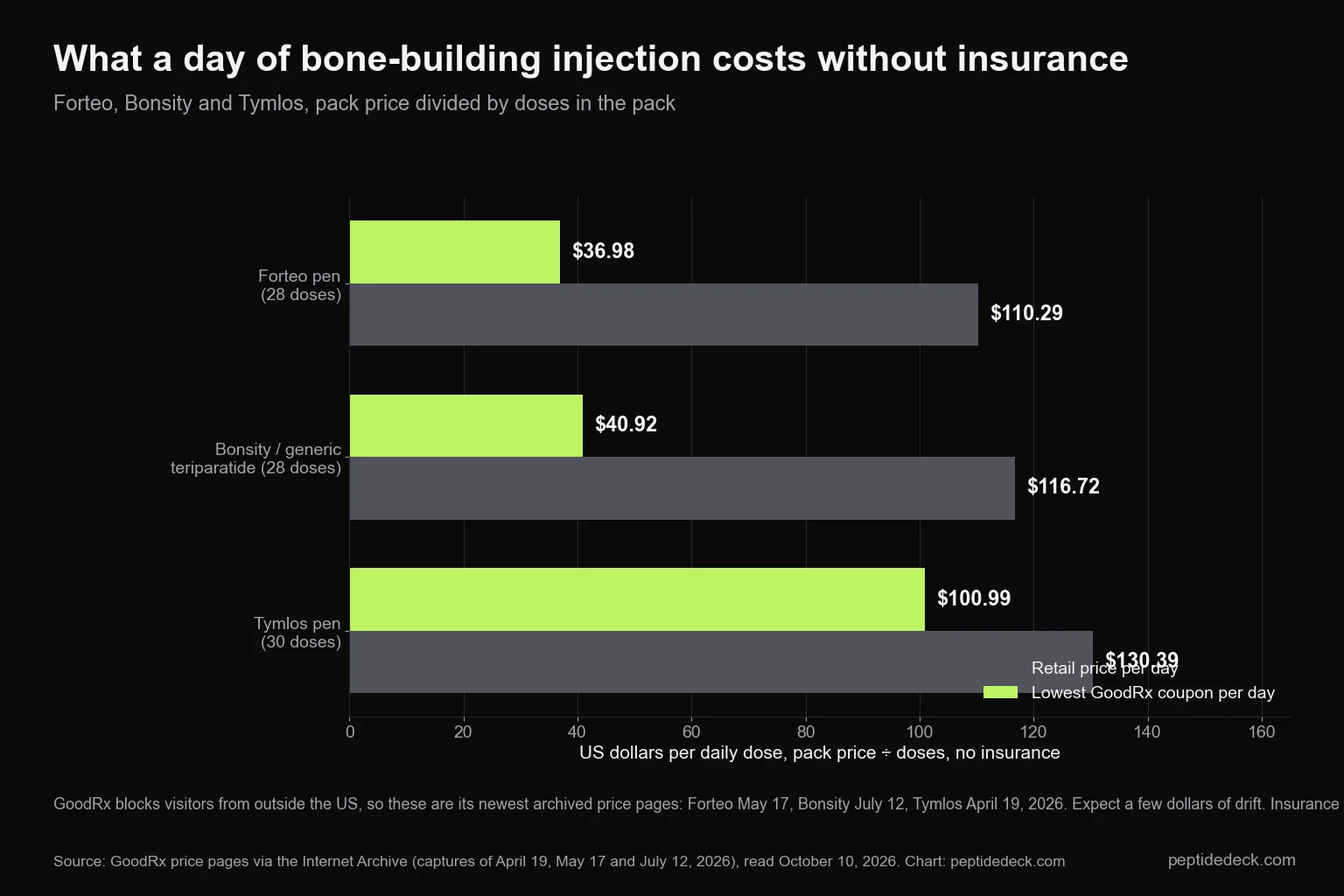
Prior authorisation is the norm, and the criteria are public. Mass General Brigham Health Plan's commercial policy, effective July 1, 2026, approves Tymlos for 12 months with a T-score of −2.5 or lower plus a low-trauma fracture of the hip, spine, humerus, pelvis or forearm, or plus failure of one osteoporosis drug; with a T-score between −1.0 and −2.5 plus a fracture or a failed drug and a FRAX risk of 20% or more; or with any fragility fracture regardless of density. One pen per 30 days, and a second year only if risk is still high (MGB policy PDF). Some Medicaid plans go further and require a failed teriparatide course before Tymlos. Ask the prescriber's office to submit the DEXA report and fracture history with the request; most denials are missing paperwork, not medical.
Can you buy abaloparatide online? What we found
Yes, and you should not. On October 10, 2026 we found three gray-market sites listing "abaloparatide" as a 3 mg powder vial at $120 to $135, sold with the usual not-for-people disclaimer and no certificate of analysis on the page. On paper 3 mg is 37 doses of 80 mcg; in practice it is an unlabelled powder of unverified identity and purity that you would have to weigh, reconstitute and inject into yourself daily, with none of the sterility, dose accuracy or pharmacovigilance behind the pen, for a drug whose own label still carries a two-year limit and a tumour warning. The pen comes from a pharmacy with a prescription, and the savings programs above exist precisely so that the price is not the reason to look elsewhere. For what else is sold online for bone and how little evidence sits behind it, see our guide to peptides for osteoporosis.
Sticking with it: what real patients did
A daily injection for a year and a half is a commitment, and the data on how people manage it are mixed. In a US chart review of 173 women, 64.8% completed the course as prescribed, with cost (31.2%) and tolerability (22.8%) the main reasons for stopping, and half moved to a follow-on drug with a median gap of 21 days (PMID 38653862). In a claims study of patients after a fragility fracture, only 19.6% were still on abaloparatide at 12 months, the lowest of any osteoporosis drug in the dataset (PMID 36730766). The difference between those two numbers is mostly whether anyone was helping the patient stay on it.
What to ask your doctor
- Am I in the "very high risk" group where an anabolic comes first, or should I start with a bisphosphonate?
- Which follow-on drug will I take at month 19, and can the prescription be ready before I finish?
- Does my insurance cover Tymlos, and does a generic teriparatide pen change the answer?
- Do I need a blood calcium or urine calcium check, given my kidney function and stone history?
- Do not stop a prescribed osteoporosis drug because of something you read online, including this page.
Frequently Asked Questions
Sources
- Miller PD, et al. Effect of abaloparatide vs placebo on new vertebral fractures in postmenopausal women with osteoporosis: a randomized clinical trial (ACTIVE). JAMA. 2016;316:722-733. PMID 27533157
- ACTIVE trial posted results. ClinicalTrials.gov NCT01343004
- Bone HG, et al. ACTIVExtend: 24 months of alendronate after 18 months of abaloparatide or placebo for postmenopausal osteoporosis. J Clin Endocrinol Metab. 2018;103:2949-2957. PMID 29800372
- Czerwinski E, et al. The efficacy and safety of abaloparatide-SC in men with osteoporosis: a randomized clinical trial (ATOM). J Bone Miner Res. 2022;37:2435-2442. PMID 36190391
- Hernandez AV, et al. Comparative efficacy of bone anabolic therapies in women with postmenopausal osteoporosis: a systematic review and network meta-analysis of randomized controlled trials. Maturitas. 2019;129:12-22. PMID 31547908
- Gilsenan A, et al. Teriparatide did not increase adult osteosarcoma incidence in a 15-year US postmarketing surveillance study. J Bone Miner Res. 2021;36:244-251. PMID 32990990
- Gold DT, et al. Real-world abaloparatide treatment patterns and outcomes in US women: a retrospective chart review. Osteoporos Int. 2024. PMID 38653862
- Singer AJ, et al. Treatment patterns and persistence after fragility fracture in US claims data. J Orthop Trauma. 2023. PMID 36730766
- Mass General Brigham Health Plan. Parathyroid hormone analogs prior authorization policy, commercial and exchange, effective July 1, 2026. policy PDF
- Tymlos (abaloparatide) injection prescribing information, current label via DailyMed (effective August 2026). dailymed.nlm.nih.gov
- FDA approval letter, NDA 208743, April 28, 2017. accessdata.fda.gov
- FDA approval letter, NDA 208743/S-013 (men), December 19, 2022. accessdata.fda.gov
- Radius Health. Update on TYMLOS label: removal of the boxed warning, December 2021. biospace.com
- European Medicines Agency. Eladynos (abaloparatide) EPAR. ema.europa.eu
- Paratek Pharmaceuticals completes combination with Radius Health, March 18, 2026. biospace.com
- GoodRx price page for Tymlos, Internet Archive capture of April 19, 2026 (GoodRx is not reachable from outside the US). goodrx.com/tymlos · Tymlos access and savings page, read October 10, 2026. tymlos.com
Medical Disclaimer: This article is for educational purposes only and is not medical advice. Abaloparatide is a prescription medicine that requires a diagnosis, a fracture-risk assessment and monitoring by a qualified clinician. Do not start, stop or change any osteoporosis treatment because of this page.