🔑 Key Takeaways
- Survodutide = dual GLP-1 + glucagon receptor agonist — not GIP like tirzepatide
- Phase 2 trials: up to 18.7% average body weight loss at 46 weeks (4.8mg dose)
- Developed by Boehringer Ingelheim in partnership with Zealand Pharma — Phase 3 as of 2026
- Mechanism differs from tirzepatide (GLP-1+GIP) — survodutide activates glucagon instead of GIP
- Not yet available through major US peptide vendors
- Best available alternative: retatrutide — triple agonist covering GLP-1 + GIP + glucagon
Survodutide is one of the newer dual agonists in the GLP-1 pipeline — and it's generating serious attention in weight loss research. Developed by Boehringer Ingelheim, it targets both the GLP-1 receptor and the glucagon receptor. Phase 2 data showed up to 18.7% body weight reduction over 46 weeks — stronger than semaglutide, though trailing retatrutide's ~24%. Here's what you need to know.
What makes survodutide interesting isn't just the weight loss numbers. It's the mechanism. While tirzepatide grabbed headlines by pairing GLP-1 with GIP, survodutide took a different route: pairing GLP-1 with glucagon. These are very different second targets — and the downstream effects on metabolism, thermogenesis, and liver fat are meaningfully distinct.
What Is Survodutide?
Survodutide (also called BI 456906) is a synthetic peptide developed by Boehringer Ingelheim in partnership with Zealand Pharma. It's a dual agonist — meaning it simultaneously activates two hormone receptors:
- GLP-1 receptor (glucagon-like peptide-1): suppresses appetite, slows gastric emptying, improves insulin secretion
- Glucagon receptor: increases energy expenditure, promotes fat oxidation in the liver, reduces food intake through a separate central nervous system pathway
The comparison to tirzepatide comes up constantly — and it matters. Tirzepatide combines GLP-1 + GIP. Survodutide combines GLP-1 + glucagon. These are fundamentally different second receptors with different downstream effects. Glucagon isn't just "another appetite suppressant" — it has a direct thermogenic role and a particularly strong effect on liver fat metabolism.
That liver effect is probably the most clinically interesting thing about survodutide. Glucagon receptor activation drives:
- Higher thermogenesis — more calories burned at rest
- Direct liver fat reduction — especially relevant for NAFLD and NASH
- Additional appetite suppression via central nervous system pathways, separate from GLP-1
Survodutide Clinical Trial Data
The Phase 2 data on survodutide is genuinely impressive. The landmark trial enrolled 387 adults with obesity and ran for 46 weeks — long enough to get a real picture of what the compound does.
Key findings from the highest dose group (4.8mg weekly):
- 18.7% mean body weight reduction at 46 weeks
- Statistically significant liver fat reduction across all dose groups
- Placebo group: 1.4% reduction — so the drug effect is real and large
The dose-response curve is clean. More drug = more weight loss. That's a good sign for Phase 3 — it suggests there's likely still room above 4.8mg if tolerability allows.
The NASH/Liver Disease Trial
A separate Phase 2 trial enrolled patients with metabolic-associated steatohepatitis (MASH/NASH) — a more serious liver condition than general fatty liver disease. Survodutide showed significant liver histology improvements in this population.
That's a big deal. Most GLP-1-class drugs show moderate liver fat reduction as a side effect of weight loss. Survodutide appears to have a more direct effect — driven specifically by the glucagon receptor component. This has Boehringer Ingelheim running a dedicated MASH Phase 3 trial, not just measuring liver markers as a secondary endpoint.
Survodutide vs Other Weight Loss Peptides
This is what most people actually want to know. So here's the honest breakdown:
Survodutide vs Tirzepatide
Both are dual agonists. That's where the similarity ends. Tirzepatide's second target — GIP (glucose-dependent insulinotropic polypeptide) — primarily improves insulin sensitivity and modulates fat storage. Survodutide's second target — glucagon — is more directly thermogenic. Different energy system, different metabolic effects.
Weight loss numbers are similar (~18-22% range), but survodutide's liver fat data is stronger. If you have fatty liver disease, survodutide's mechanism looks more targeted. If you're primarily focused on insulin regulation, tirzepatide's GIP component has advantages.
Survodutide vs Retatrutide
Retatrutide is essentially survodutide plus GIP. It activates all three receptors: GLP-1 + GIP + glucagon. The additional GIP component likely explains the higher weight loss numbers (~24% vs ~18.7%). So retatrutide covers everything survodutide does — and more.
That's the honest answer for anyone asking which is "better." Retatrutide has the numbers. And it's actually available right now.
Survodutide's Edge
Of all the GLP-1-class compounds in clinical trials, survodutide has the strongest direct liver fat reduction data. If MASH ends up being a primary indication (and it might — Boehringer Ingelheim is treating it as one), survodutide could carve out a real niche separate from the pure weight loss competition.
Survodutide Side Effects
The side effect profile is broadly similar to other GLP-1-class drugs, which is good and bad. Good because we know how to manage it. Bad because nausea in the early weeks is real.
Common (similar to semaglutide/tirzepatide):
- Nausea — most common, peaks in the first 4-8 weeks then typically fades
- Diarrhea
- Vomiting
- Constipation
- Decreased appetite — this is the intended effect, but worth mentioning
Where it differs from tirzepatide/semaglutide:
The glucagon receptor activation introduces a specific consideration — glucagon raises blood sugar. The GLP-1 component largely counterbalances this, but the interplay is relevant for people with diabetes. Some trial participants also reported more pronounced early fatigue compared to tirzepatide cohorts, though this evened out after the initial titration phase.
Phase 2 discontinuation rates due to side effects were ~7-10% — comparable to semaglutide at similar timeframes. The profile is considered manageable with standard slow titration, which is why the trial protocol escalated dose gradually over months rather than weeks.
Survodutide Dosage (From Clinical Trials)
Since survodutide isn't widely available, the dosing below reflects what Boehringer Ingelheim actually used in Phase 2 trials. This is the most reliable reference point we have.
- Starting dose: 0.3mg weekly subcutaneous injection
- Titration: Escalated every 4-8 weeks
- Titration steps: 0.3 → 0.6 → 1.2 → 2.4 → 3.6 → 4.8mg
- Target maintenance dose: 2.4-4.8mg weekly
- Route: Subcutaneous injection (abdomen, thigh)
- Frequency: Once weekly
Where Is Survodutide Available?
Short answer: it isn't. Not yet, anyway.
Survodutide is in Phase 3 trials. Unlike retatrutide, semaglutide, and tirzepatide — all of which have made their way into the research peptide market — survodutide hasn't reached widespread availability through US vendors. You'll find occasional listings, but nothing consistent from established suppliers.
This will likely change as Phase 3 progresses and the compound gets more attention. For now, there's a practical alternative worth knowing about.
The Closest Available Option: Retatrutide
Retatrutide covers all of survodutide's receptor targets — GLP-1, GIP, and glucagon — plus the additional GIP component that likely explains its higher weight loss numbers. Phase 2 data showed ~24% body weight reduction at 48 weeks, vs survodutide's 18.7% at 46 weeks.
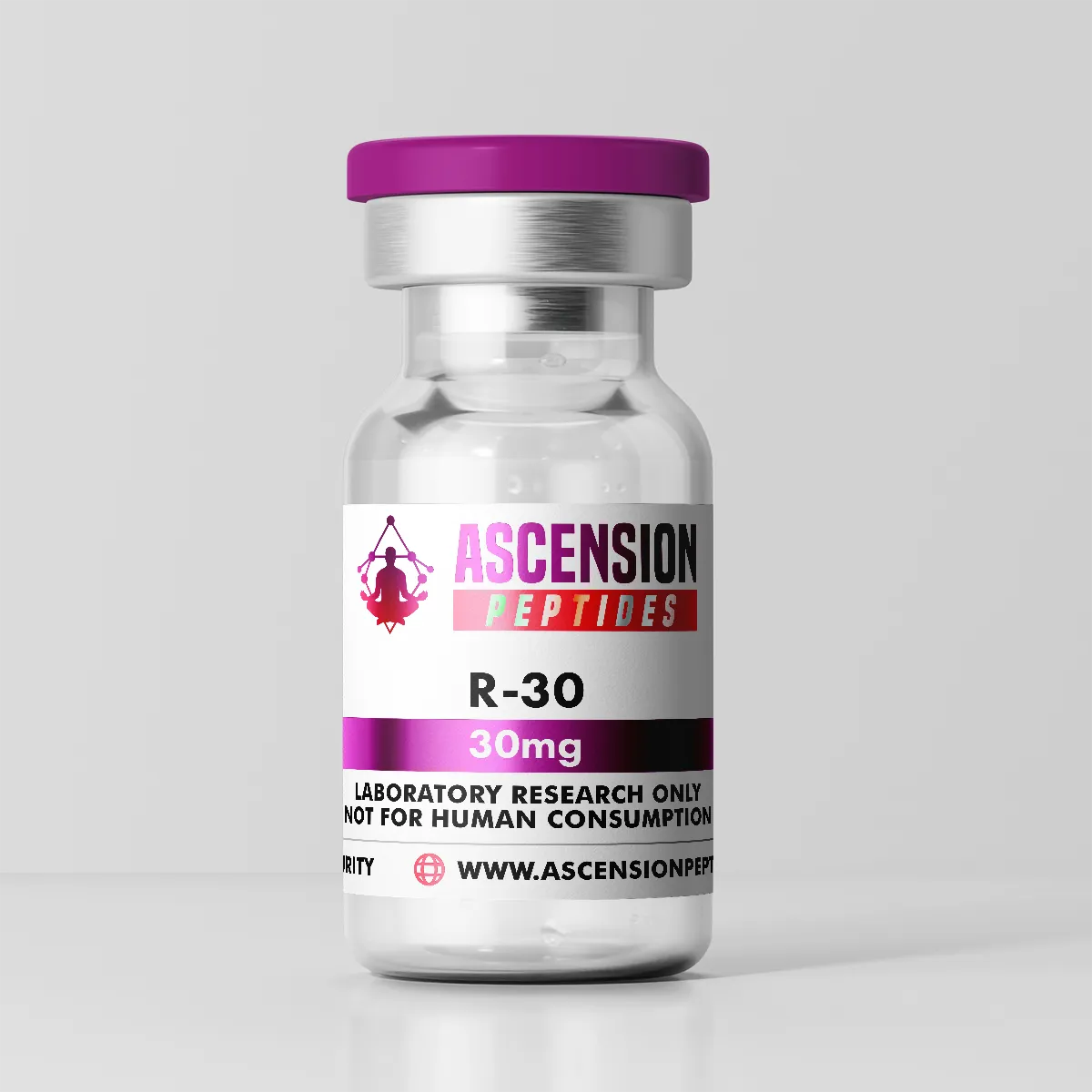
Ascension Peptides carries it under the designations:
- R-10 — 10mg vial, $120
- R-30 — 30mg vial, $200
💡 If You're Interested in Survodutide-Like Effects
Retatrutide (R-30) from Ascension Peptides activates GLP-1 + GIP + glucagon receptors — a superset of survodutide's mechanism. It's available now, and the weight loss data is stronger. Check current R-30 availability and pricing →
For a deep breakdown of retatrutide dosing and protocols: Retatrutide Dosage Chart — Full Protocol Guide
Survodutide Phase 3 — What's Expected
Boehringer Ingelheim launched Phase 3 trials across multiple indications starting 2024-2025:
- Obesity — primary indication, largest trial
- Type 2 diabetes — metabolic indication
- MASH/NASH — liver disease indication (the unique one)
Expected FDA submission timeline: 2026-2027, pending trial completion. If Phase 3 results hold up against Phase 2 — and there's no particular reason to expect they won't — FDA approval for obesity could come 2027-2028.
The MASH indication is the wild card. There's currently no GLP-1-class drug with formal FDA approval specifically for liver disease. If survodutide gets there first, it creates a distinct market position — separate from the crowded obesity drug space. That's why Boehringer Ingelheim is running it as a dedicated Phase 3 arm rather than just measuring liver markers as a secondary endpoint.
Another dual-agonist in Phase 3 worth comparing against: VK2735, which pairs GLP-1 with GIP and has an oral tablet formulation alongside the injection.
Frequently Asked Questions
The information in this article is for educational purposes only and does not constitute medical advice. Always consult a healthcare professional before starting any new supplement or compound. Results vary by individual.