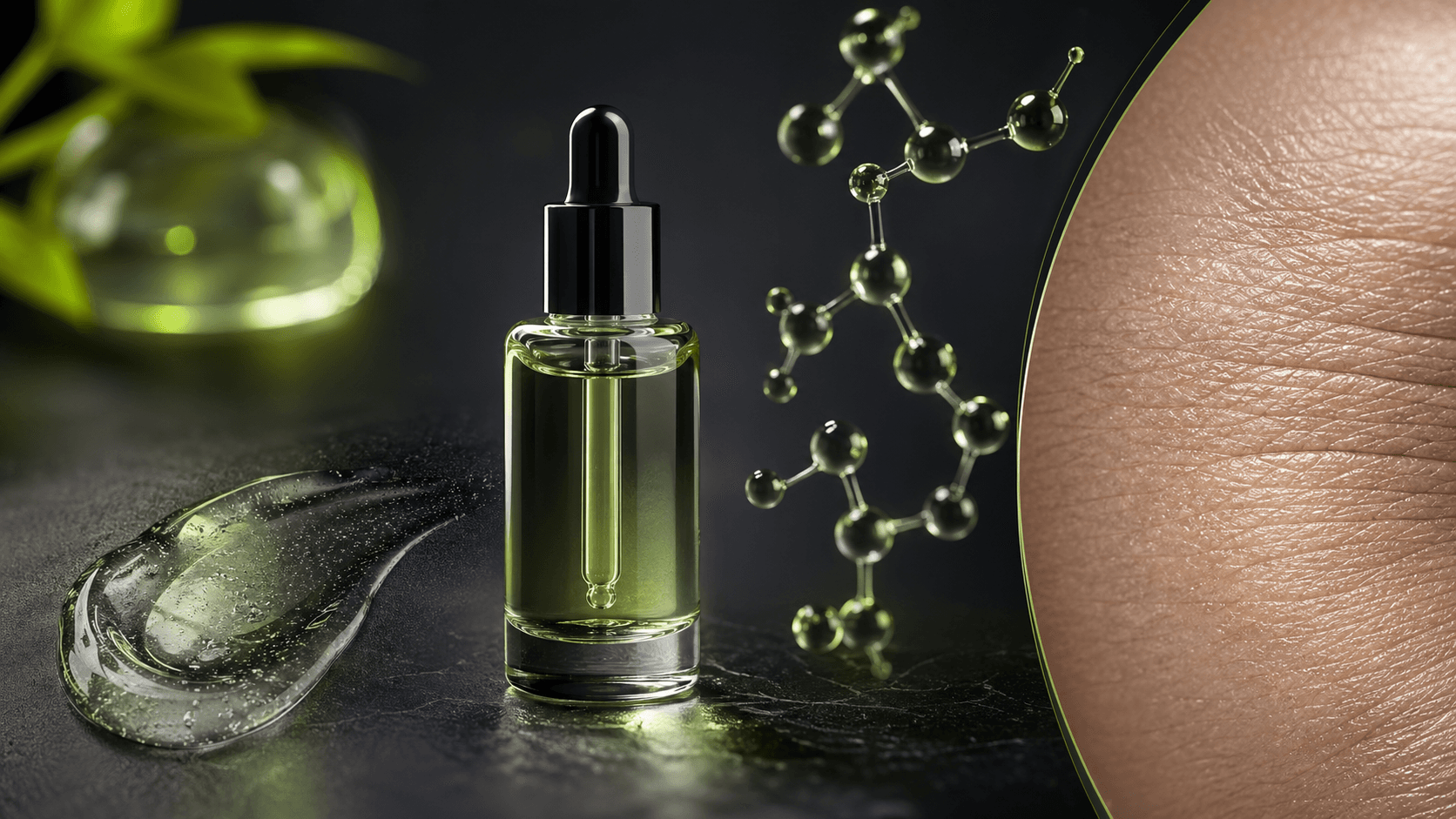
Argireline gets hyped fast.
The pitch is easy to understand: put an Argireline peptide serum on expression lines, soften the look of repeated movement, and get a smoother forehead or eye area without an injection. The real answer is more grounded. Argireline can help the look of dynamic wrinkles for some people, but it is subtle, formulation-dependent, and not a replacement for Botox.
🔑 Key Takeaways
- Argireline is the cosmetic name for acetyl hexapeptide-8, the topical Argireline peptide used for expression lines.
- It is often called "Botox in a bottle," but that nickname oversells it. The effect is milder, shorter-lived, and depends heavily on the formula.
- The best fit is forehead lines, crow's feet, between-brow lines, and other wrinkles caused by repeated facial movement.
- Small clinical studies show promise, but newer objective imaging work has found weaker results. Expect smoothing, not a frozen look.
- Side effects are usually mild: temporary redness, stinging, dryness, or irritation from the full product formula.
This is the all-in-one version: what Argireline is, what it can realistically do, how to use it, what to avoid mixing it with, how it compares with other cosmetic peptides, and when side effects deserve attention.
Argireline at a Glance
Argireline is a brand-style name for one specific molecule: acetyl hexapeptide-8.
You will see it sold as a 10% Argireline solution, a peptide serum, or as one ingredient inside a larger anti-aging formula. In every case, the active is the same short synthetic peptide, and the goal is the same: soften the look of expression lines without an injection. When people search "Argireline" or "Argireline peptide," they usually mean a topical product, not an injectable.
What Is Argireline Peptide?
Argireline is acetyl hexapeptide-8 in skincare.
You may also see older labels call it acetyl hexapeptide-3. In skincare, those names usually point to the same cosmetic peptide family: a short synthetic peptide designed to target the look of expression lines.
The Argireline peptide is different from collagen peptides in a supplement and different from skin remodeling peptides such as GHK-Cu copper peptide. It is usually described as a signal-blocking peptide because it is meant to reduce the visible effect of repeated facial movement.
Simple version
Argireline is a topical wrinkle-smoothing peptide. It is best for expression lines, not deep folds, loose skin, or volume loss.
How Argireline Works
The mechanism sounds more dramatic than it feels.
Facial expression lines form when the same small muscles contract over and over. Argireline is modeled around part of SNAP-25, a protein involved in the nerve signal that helps release acetylcholine. That signal is part of the chain that tells a muscle to contract.
In theory, the Argireline peptide can interfere with that signaling chain enough to soften the look of movement-related wrinkles. But topical skincare has one major obstacle: the skin barrier.
That is why results vary. A good formula may make forehead lines or crow's feet look smoother. A weak formula, a low concentration, or poor penetration may do very little.
Argireline Benefits for Skin
The benefit is targeted smoothing.
Argireline is most useful when the wrinkle is tied to repeated movement rather than sagging, sun damage, or volume loss. That makes it a better match for dynamic lines than for every sign of aging.
The biggest advantage is tolerability. Many people who cannot handle frequent retinoids or strong acids can still use a simple Argireline peptide serum. That makes it appealing for sensitive skin routines.
Does Argireline Actually Work?
The evidence is promising but mixed.
The best-known early study reported that a 10% Argireline cream reduced wrinkle depth by up to 30% after 30 days. A later human trial with 60 subjects found a 48.9% total anti-wrinkle efficiency score after twice-daily use for 4 weeks, with wrinkle depth reduced versus placebo.
That sounds strong. But the newer picture is less clean. A 2023 split-face study using a serum with hyaluronic acids and objective Visia imaging included 19 women and found no statistically significant difference between the side with Argireline and the side without it after 4 weeks.
The honest read
Argireline can be worth trying if you want a gentle topical for expression lines. It is not the product to choose if you expect a dramatic Botox-level change.
A 2025 review also highlights the core limitation: penetration. Some delivery systems appear to improve movement through the outer skin barrier, while other testing found that only 0.22% entered the stratum corneum after 24 hours and 99.7% was washed off the surface.
That is the whole story in one sentence: the Argireline peptide is plausible, but the formula has to get it where it matters.
Argireline vs Botox
They are not the same thing.
Botox is an injected neuromodulator used by licensed professionals. Argireline is a topical cosmetic ingredient. Both are discussed around facial movement, but the strength, delivery, duration, and expected result are completely different.
If your lines disappear when your face is relaxed, Argireline may be useful. If the line is etched in even when you are not moving, you may need a broader plan: sunscreen, retinoid tolerance, collagen-supporting actives, procedures, or a clinician-guided option.
How to Use Argireline
Keep the routine simple and steady.
Most Argireline products are lightweight serums. Apply them after cleansing and before heavier creams or oils. Use the Argireline peptide on areas where expression lines show up: forehead, between brows, crow's feet, and around the mouth.
Once daily is a reasonable start for sensitive skin. If the formula is well tolerated, many people use it morning and evening. The important part is consistency for at least 4 weeks before judging it.
What Concentration of Argireline Works Best?
Ten percent is common, not magic.
Many popular serums use 10% Argireline or a 10% Argireline solution. Some formulas use lower levels inside a larger peptide blend. That can still make sense if the product combines Argireline with humectants, Matrixyl-style peptides, SNAP-8, or copper peptides.
Concentration matters, but it is not the only variable. A 10% formula that dries out your skin or pills under moisturizer may be less useful than a lower-strength formula you can use every day.
Argireline Side Effects
Most reactions are mild and local.
Argireline itself is generally considered gentle in topical skincare. When people react, the issue may come from the full product: preservatives, fragrance, solvents, acids, or stacking too many actives at once.
Stop using the product if you develop swelling, hives, worsening rash, or persistent burning. If you have eczema, rosacea, open skin, recent procedures, pregnancy, breastfeeding, or a known skin allergy history, ask a clinician before adding new actives.
Can Argireline Cause Sagging?
This fear is mostly overblown.
The online worry is that Argireline might relax facial muscles too much and make skin droop. That is not what topical Argireline usually does. Its effect is limited by skin penetration and regular cosmetic-use concentrations.
A more likely problem is simpler: if a product irritates your barrier, your skin may look worse temporarily. Dry, inflamed skin makes lines look sharper. That is irritation, not muscle collapse.
What Can You Mix With Argireline?
It layers well with basics.
Argireline is often easiest to use with hydrating and barrier-supporting products. Hyaluronic acid, glycerin, ceramides, niacinamide, and simple moisturizers are usually good companions.
Retinoids can also fit in the same routine, but sensitive skin may prefer Argireline in the morning and retinoid at night. Strong acids are the main caution. Very low-pH exfoliants can make irritation more likely and may not be the best same-step partner for the Argireline peptide.
Easy routine
Morning: cleanse, Argireline serum, moisturizer, sunscreen. Night: cleanse, Argireline or retinoid, moisturizer.

Argireline vs Matrixyl, SNAP-8, and Copper Peptides
Different peptides do different jobs.
Argireline is usually framed around expression-line smoothing. Matrixyl-style peptides are usually framed around firmness and collagen support. SNAP-8 is another topical peptide often compared with Argireline, which is why we have a separate Argireline vs SNAP-8 comparison.
Copper peptides are different again. They are more often discussed around skin repair, texture, and hair or skin quality. For a deeper skin-focused peptide overview, read our anti-wrinkle peptides guide.
How to Choose an Argireline Product
The ingredient label matters most.
Look for "acetyl hexapeptide-8" in the ingredient list. If the brand lists the concentration, 5-10% is the range most shoppers look for. If the brand does not list concentration, judge the formula by the full routine: peptide blend, hydration, fragrance level, packaging, and whether it works under sunscreen or makeup.
- Choose serum texture if you want targeted forehead or eye-area use.
- Choose fragrance-free if your skin reacts easily.
- Choose a blend if you want expression-line support plus firmness or hydration.
- Avoid miracle claims that promise injectable-level results from a topical serum.
The best Argireline product is the one you can use consistently without irritation. A dramatic product page does not matter if your skin barrier hates the formula.
Who Should Try Argireline?
It suits patient, realistic skincare users.
Argireline makes the most sense for someone noticing early expression lines, especially on the forehead or around the eyes, who wants a gentle topical layer before considering stronger options.
It is less compelling if you want fast correction, have deep static folds, or expect one serum to replace a complete skin routine. Sunscreen still matters more for preventing lines from getting worse, and a well-tolerated retinoid often has broader long-term value.
Frequently Asked Questions
Sources
- Blanes-Mira et al., International Journal of Cosmetic Science, 2002
- Wang et al., Journal of Cosmetic and Laser Therapy, 2013
- Henseler, GMS Interdisciplinary Plastic and Reconstructive Surgery DGPW, 2023
- Acetyl Hexapeptide-8 in Cosmeceuticals, 2025 review