Afamelanotide is a real prescription drug.
It is sold under the brand name Scenesse and is approved by the FDA and the European Medicines Agency to prevent pain from light exposure in adults with erythropoietic protoporphyria (EPP). Most people searching for afamelanotide are confused about three things: how it differs from melanotan-1, what it actually treats, and why a 16 mg implant costs what it costs.
🔑 Key Takeaways
- Afamelanotide is the first FDA-approved melanocortin-1 receptor agonist, sold as Scenesse by Clinuvel.
- The only on-label use is reducing phototoxic pain in adults with erythropoietic protoporphyria, a rare genetic disease.
- It is a 16 mg bioresorbable pellet placed under the skin of the upper hip, repeated every 60 days.
- Cost in the United States runs roughly $200,000 per year. EPP patients usually access it through specialty centers.
- It is the same molecule as melanotan-1 (NDP-MSH), but the gray-market injectable peptide and the regulated implant are not the same product.
- Off-label vitiligo studies, paired with narrowband UVB, have shown promising repigmentation in darker skin types.
If you are reading this because you saw the word on a peptide vendor site, that page is almost certainly selling melanotan-1 and using the regulatory name to add credibility. The two are pharmacologically identical at the peptide level, but only the implant has clinical safety data behind it.
What is afamelanotide?
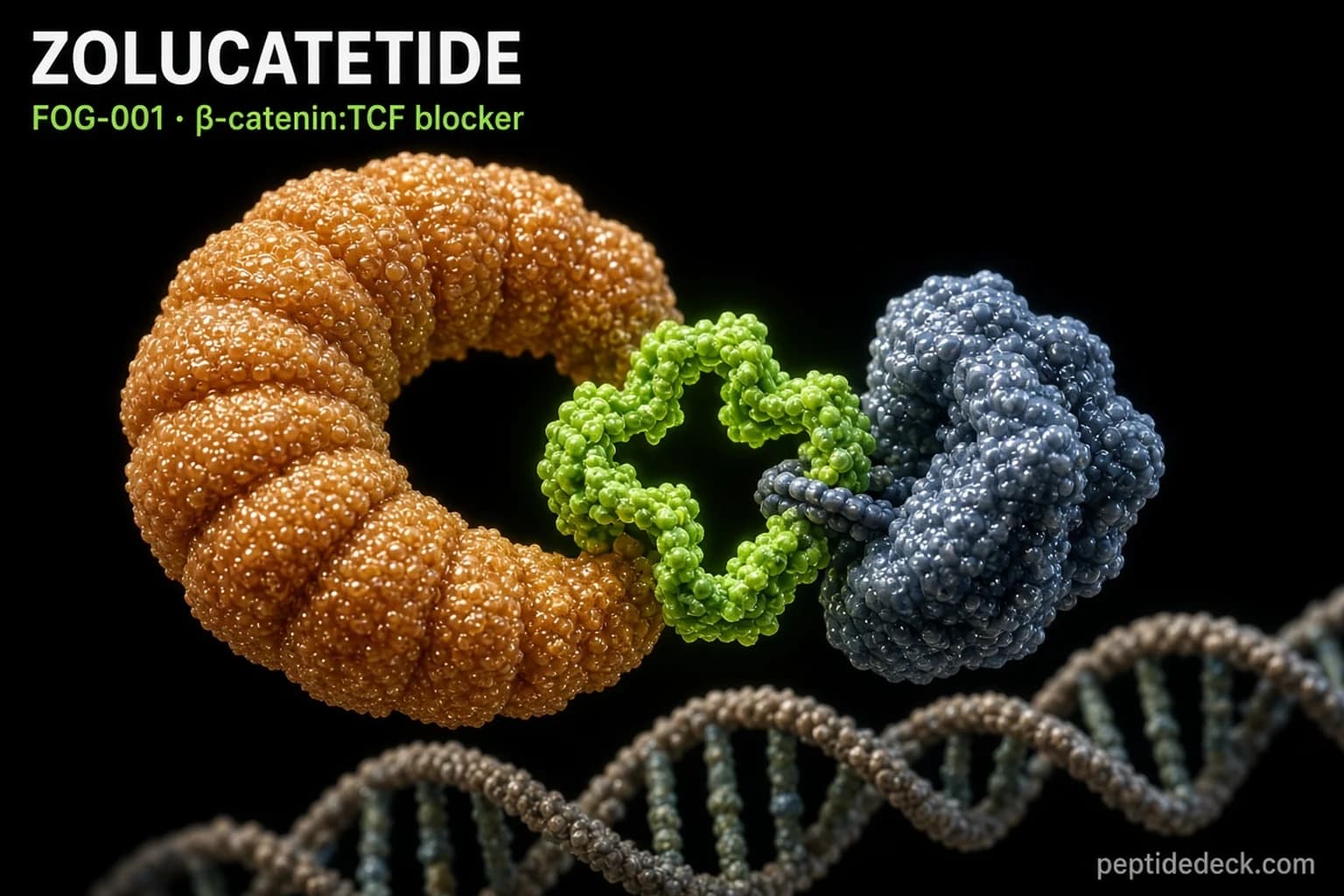
It is a 13-amino-acid synthetic peptide.
The chemical name is [Nle4, D-Phe7]-α-melanocyte-stimulating hormone, often shortened to NDP-MSH. By swapping two amino acids in natural alpha-MSH, scientists at the University of Arizona made a version that resists enzymatic breakdown and binds the melanocortin-1 receptor (MC1R) far longer than the body's own hormone. That single change is why this drug works at all.
The MC1R sits on melanocytes, the pigment cells in your skin. When the receptor activates, it tells those cells to make more eumelanin, the brown-black pigment that absorbs UV radiation and quenches free radicals. Sunburn and the slow tan that follows is the natural version of this signal. The drug drives the same pathway harder and for longer, even without sunlight.
What is afamelanotide approved for?
One condition. Erythropoietic protoporphyria.
EPP is a rare inherited disorder where a missing enzyme causes the body to build up a chemical called protoporphyrin IX in red blood cells and skin. When light hits the skin, that chemical reacts and produces severe burning pain within minutes. Patients describe it as feeling like their skin is on fire, often without any visible redness. Most spend their lives indoors during daylight.
The FDA approved Scenesse in October 2019 based on three trials in 244 adults across the US and Europe. Patients on the implant gained meaningful pain-free hours in sunlight compared with placebo. That single quality-of-life shift, the difference between leaving the house and not, is why this drug exists at all. The European Medicines Agency had already approved it in 2014, and the Italian medicines agency had cleared it as early as 2010 under orphan drug status.
How the 16 mg implant is given
The dose form is unusual.
Scenesse is not an injection in the typical sense. A clinician numbs a small spot on the upper hip with local anesthetic, then uses a wide-bore needle to place a single rod-shaped pellet about the size of a grain of rice under the skin. The pellet is bioresorbable. It releases the drug over the first few days and is fully absorbed within ten. By the second day the majority of the dose has been delivered. By day five, around ninety percent. By day ten, blood levels are undetectable.
The schedule is one implant every two months during high-light seasons, up to a maximum of four per year. The half-life of the peptide itself is short, roughly thirty minutes, but the implant matrix stretches that into a useful clinical window.
Side effects to know about
- Very common (over 10% of patients): nausea and headache.
- Common (1 to 10%): implant site reactions, back pain, fatigue, dizziness, hot flushes, decreased appetite, abdominal pain, new freckles or moles, darker skin overall.
- Less common: mood changes, insomnia, palpitations, mild blood pressure rise.
- Watch for: any new or changing mole. Because the drug stimulates melanocytes, regular skin checks are part of the protocol.
Patients are observed for thirty minutes after each implant for hypersensitivity reactions, then sent home with a small dressing over the site.
Afamelanotide vs melanotan-1: the part most people get wrong
Same molecule. Different worlds.
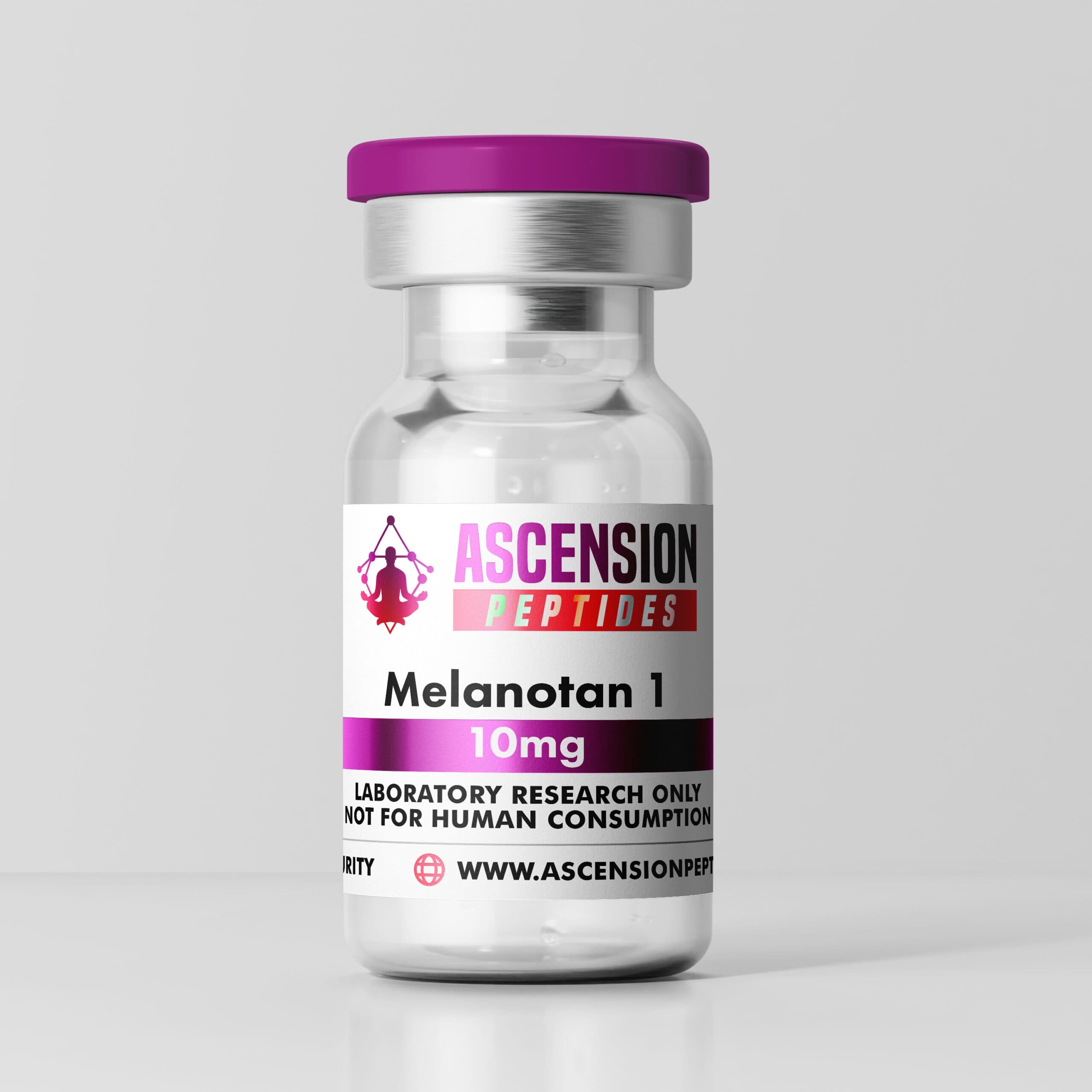
Both names refer to [Nle4, D-Phe7]-α-MSH. Chemically, it is the same thirteen-amino-acid sequence. The difference is regulatory and practical. Afamelanotide refers to the licensed, sterile, dose-controlled implant manufactured by Clinuvel under good manufacturing practice. Melanotan-1, when sold as a powder for subcutaneous injection on peptide sites, is an unregulated copy with no oversight on purity, sterility, or dose.
The pharmacology is identical, but the safety case is not. With the implant, you know exactly how much drug enters the body and over what window. With injectable melanotan-1, dose, frequency, and purity are all variable, which is why side effects like new dark moles, GI upset, and flushing are reported more often. If you are weighing options, the deeper breakdown lives in our melanotan 1 vs melanotan 2 guide and our afamelanotide vs melanotan-1 comparison.
What does Scenesse cost?
Around $50,000 per implant.
List price in the United States lands near $200,000 per year for a typical four-implant schedule. Specialty pharmacies handle distribution, and almost no patient pays out of pocket. Insurance coverage is usually negotiated through a specialty EPP center, and Clinuvel runs patient access programs to bridge gaps. Outside the US, single-payer systems in Germany, Italy, the Netherlands, and Switzerland reimburse it directly.
For context, the gray-market melanotan-1 vials that share the same active sequence sell for under $100. The price gap is paying for sterility, controlled release, clinical trial data, and the regulatory pathway, not for a different molecule.

Off-label and investigational uses
Vitiligo is the most studied.
The strongest off-label data is in non-segmental vitiligo, where the implant combined with narrowband UVB phototherapy outperformed UVB alone for repigmentation, especially in patients with darker skin (Fitzpatrick IV to VI). Two randomized trials run by Clinuvel showed faster onset of repigmentation and better total response on the face and upper body. It is not approved for vitiligo, but specialty dermatology centers in Europe sometimes use it on a named-patient basis.
Other indications under active investigation include:
- Polymorphic light eruption (PLE), a common photodermatosis that flares in spring.
- Solar urticaria.
- Xeroderma pigmentosum, a genetic disorder of UV-damage repair.
- Variegate porphyria.
- Acne vulgaris (early-phase trial).
- Skin cancer prevention in organ transplant recipients on immunosuppression.
- Stroke and ischemia-reperfusion injury, where MC1R activation may dampen inflammation.
None of these are approved indications. If you read marketing that suggests otherwise, treat it as marketing.
Who should not use it
Several groups should avoid it.
- Anyone with a history of melanoma or non-melanoma skin cancer.
- People with significant liver impairment (the drug is hepatically cleared).
- Pregnancy and breastfeeding (no human safety data).
- Patients younger than 18 (safety not established).
- Anyone with a high mole count or atypical nevi without prior dermatology workup.
Even with the implant, full-body skin checks every six months are part of standard care. The drug pushes melanocytes to do more work, and any cell that is already abnormal can change in ways that need monitoring.
What afamelanotide is not
It is not a tanning shortcut, it is not a libido drug, and it is not interchangeable with the peptides sold online as "Melanotan." If you are searching for cosmetic skin darkening, the relevant compound is melanotan-2, not Scenesse. If you have EPP and want access to the drug, the route is a porphyria specialist, not a peptide site.
How it compares to other melanocortin peptides
The melanocortin family is small.
Three peptides in this class get the most attention: afamelanotide (MC1R-selective, long-acting), melanotan-2 (MC1R, MC3R, MC4R, broader activity, used cosmetically and recreationally), and bremelanotide, marketed as Vyleesi (MC4R-selective, approved for hypoactive sexual desire disorder). They share an alpha-MSH backbone but differ in receptor selectivity and clinical use. For sexual function specifically, the relevant comparison is PT-141 (bremelanotide), not the EPP implant.
What the implant feels like in practice
Patients describe a predictable cycle.
In the first week after implantation, skin starts to darken globally, most visibly on the face, neck, and forearms. By week two, the change is obvious to others. Pain-free time outdoors typically improves within ten to fourteen days, and most EPP patients report being able to walk to work, sit on a patio, or attend an outdoor event without triggering a reaction. By week eight, the effect fades and the next implant is due. The tan is uneven if sun exposure is uneven, which is one reason patients sometimes look patchier on covered areas like the chest.
Frequently asked questions
Bottom line
It is a narrow drug doing a hard job.
For people with erythropoietic protoporphyria, the Scenesse implant turned a life lived indoors into something closer to normal. For everyone else, the molecule is more interesting in theory than in practice. The injectable peptides marketed as melanotan-1 are pharmacologically the same compound, but they are not the same product, and the gap in quality control is the part that matters when something is going under your skin.
If you came here trying to tan faster, the honest answer is that this is not the drug for that. If you came here because someone in your family has EPP, talk to a porphyria specialist. The path to access exists, and it is well worn.
Medical disclaimer: This article is for educational purposes only and does not replace medical advice. Scenesse is a prescription medication for a specific rare disease. Anyone considering it should be under the care of a porphyria specialist or dermatologist. Information about gray-market peptides is included for context, not as a recommendation. Always consult a licensed clinician before starting any medication or peptide.