sciencePeptideDeck
PeptidesBlogToolsAboutAI Coach
search
Database Access
Home/Blog/Peptide comparison/Afamelanotide vs Melanotan-1: Which Is Better in 2026?
Peptide comparison

Afamelanotide vs Melanotan-1: Which Is Better in 2026?

Afamelanotide and Melanotan-1 are the same molecule — but worlds apart. Compare regulatory status, safety, cost, and which is right for you in 2026.

March 6, 2026
9

If you've spent any time researching melanocortin peptides, you've probably encountered a confusing reality: afamelanotide and Melanotan-1 are chemically the same peptide — yet they exist in completely different worlds. One is a rigorously tested FDA-approved pharmaceutical; the other is a widely circulated research compound with no regulatory oversight. Understanding the difference isn't just academic — it affects safety, legality, cost, and outcomes.

This guide breaks down everything you need to know about Melanotan-1 and afamelanotide: their shared biology, their critical differences, and how to think about each one depending on your situation.

Quick Answer: Afamelanotide (brand name Scenesse) is the pharmaceutical-grade, FDA-approved version of Melanotan-1, delivered via subcutaneous implant for a rare light sensitivity condition called erythropoietic protoporphyria (EPP). Melanotan-1 as a research peptide is the same base molecule sold in lyophilized powder form without regulatory oversight. The chemistry is nearly identical — the context, quality control, and legal status are not.
The Shared Science: What Both Peptides Are

What Are Afamelanotide and Melanotan-1?

Both afamelanotide and Melanotan-1 are synthetic analogs of alpha-melanocyte-stimulating hormone (α-MSH), a naturally occurring tridecapeptide produced in the pituitary gland. α-MSH plays a central role in regulating pigmentation, inflammation, and energy balance by binding to melanocortin receptors — particularly MC1R, which is predominantly expressed on melanocytes in the skin.

The key modification shared by both peptides is the substitution of Nle4 (norleucine) and D-Phe7 (D-phenylalanine) into the native α-MSH sequence. This swap significantly improves the peptide's resistance to enzymatic degradation, extending its biological half-life compared to endogenous α-MSH. The result is a more potent and longer-acting MC1R agonist that drives melanocytes to produce more eumelanin — the dark, UV-protective pigment responsible for a tan.

In short: melanotan-1 is the research peptide name; afamelanotide is the International Nonproprietary Name (INN) used in pharmaceutical and clinical contexts. Same molecule — different naming conventions.

Key Biological Mechanism: Both peptides bind primarily to MC1R on melanocytes, triggering the cAMP signaling cascade, which stimulates tyrosinase activity and increases eumelanin production — a darker, UV-protective pigmentation response with or without direct UV exposure.
The Critical Differences
Trusted by 10,000+ Researchers

Get 99%+ Purity Peptides — Ships Today

Third-party tested. COA included with every order. Free shipping on orders over $150.

Ascension Peptides
✓ 3rd-Party Tested ✓ COA Included ✓ Same-Day Shipping

Afamelanotide vs Melanotan-1: Side-by-Side Comparison

While the base molecule is the same, the practical differences between pharmaceutical afamelanotide and research peptide Melanotan-1 are substantial. Here's a structured breakdown:

Category Afamelanotide (Scenesse) Melanotan-1 (Research)
Chemical Identity Nle4-D-Phe7-α-MSH tridecapeptide Nle4-D-Phe7-α-MSH tridecapeptide
Regulatory Status FDA-approved (2019), EMA-approved (2014) Unregulated research compound
Approved Indication Erythropoietic protoporphyria (EPP) None — not approved for any use
Delivery Method 16 mg subcutaneous implant (slow-release rod) Lyophilized powder, reconstituted for subcutaneous injection
Dosing Control Controlled-release over ~2 months Manual injection (dose accuracy varies)
Purity Assurance Pharmaceutical-grade, GMP-manufactured Varies by supplier; third-party COA required
Cost ~$40,000–$50,000 per implant (US) $30–$100 per vial (research market)
MC2R/MC3R/MC4R Activity Primarily MC1R; minimal off-target receptor binding Same selectivity profile as afamelanotide
Sexual Side Effects None reported (unlike Melanotan-2) None expected (same receptor profile)
Cardiovascular Risk Not observed in clinical trials Not expected; unconfirmed due to lack of oversight
Regulatory Background

Afamelanotide: From University Lab to FDA Approval

The story of afamelanotide begins at the University of Arizona, where researchers developed a series of synthetic α-MSH analogs in the 1980s. Originally designated MT-1 (later distinguished from MT-2), the compound was selected for pharmaceutical development based on its potent MC1R selectivity and improved half-life compared to native α-MSH.

After decades of clinical research — including pivotal Phase 3 trials published in the New England Journal of Medicine and The Lancet — afamelanotide received:

  • EMA approval in 2014 for erythropoietic protoporphyria (EPP) in the EU under the brand name Scenesse
  • FDA approval in October 2019 for EPP in the United States — making it the first and only FDA-approved MC1R agonist
  • Orphan drug designation in both the US and EU due to EPP's rarity

EPP is a rare metabolic disorder where a deficiency in ferrochelatase causes toxic protoporphyrin accumulation in the skin, leading to severe, debilitating pain upon sun exposure. Clinical trials demonstrated that afamelanotide implants significantly increased the amount of pain-free time patients could spend in sunlight — a transformative outcome for a condition with almost no prior treatment options.

Research has also explored afamelanotide for other photodermatoses including vitiligo, solar urticaria, and polymorphous light eruption, with promising early results. The peptide's role in regulating neuroinflammation and oxidative stress adds further research directions beyond pigmentation.

Research Peptide Market Reality

Melanotan-1 as a Research Peptide: What You're Actually Getting

You

How do I reconstitute Retatrutide 5mg with 2ml BAC water for 250mcg doses?

PeptideCoach

Add 2 mL BAC water to the 5 mg vial, swirl gently. Concentration = 2.5 mg/mL. For 250 µg, draw 0.1 mL (≈10 IU).

Reconstitution Calculator
Concentration
2.50mg/mL
Volume
0.100mL
Doses
20per vial
10 IU
draw line
How much to draw? Dosing schedule Side effects
Try our AI

Personalized protocols & interactive calculators

Try PeptideCoach

When someone searches for "Melanotan-1" online, they find research peptide suppliers offering lyophilized vials typically ranging from 10 mg to 20 mg. The appeal is obvious: a fraction of the pharmaceutical cost, no prescription required, and easy access. But the gap between pharmaceutical-grade afamelanotide and research peptide Melanotan-1 is significant in practice.

The core issues with unregulated Melanotan-1 are:

1

Variable Purity

Without GMP manufacturing standards, purity levels across different suppliers vary widely. Some research vendors provide HPLC-verified third-party Certificates of Analysis (COA) showing ≥98% purity; others do not. Always verify a COA before purchasing any research peptide.

2

Dosing Accuracy

Pharmaceutical afamelanotide delivers a precise 16 mg controlled-release dose over approximately two months via a slow-release implant rod. Self-injection with a reconstituted research peptide introduces significant variability in dosing — both in concentration accuracy and injection technique.

3

Contamination Risk

Unregulated products may contain residual solvents, bacterial endotoxins, or misidentified peptides. There are documented cases in the research peptide industry of vials labeled as one compound actually containing a different or adulterated substance.

4

No Medical Oversight

Pharmaceutical afamelanotide is administered by a healthcare provider under monitored conditions. Research peptide use is self-directed, which removes the safety net of professional supervision — particularly important when managing injection technique, dose escalation, and adverse event recognition.

5

Legal Gray Zone

Research peptides are legally sold for non-human research purposes only. Purchasing Melanotan-1 for personal use occupies a legal gray area in most jurisdictions. This is not equivalent to pharmaceutical access and does not provide the consumer protections associated with approved medications.

Important Distinction — MT-1 vs MT-2: Melanotan-1 (afamelanotide) is NOT the same as Melanotan-2. MT-2 is a shorter analog that also engages MC3R and MC4R, producing additional effects including libido enhancement, appetite suppression, and spontaneous erections. These effects are NOT associated with Melanotan-1 / afamelanotide, which is far more MC1R-selective. Confusing the two is a common and potentially serious mistake.
Safety Profile Deep Dive
Trusted by 10,000+ Researchers

Get 99%+ Purity Peptides — Ships Today

Third-party tested. COA included with every order. Free shipping on orders over $150.

Ascension Peptides
✓ 3rd-Party Tested ✓ COA Included ✓ Same-Day Shipping

Side Effects and Safety: What the Clinical Data Shows

Because afamelanotide and Melanotan-1 are the same molecule, the clinical safety data from afamelanotide trials is the most relevant reference point for understanding the peptide's biological effects. Here's what peer-reviewed research has established:

Common side effects in clinical trials (afamelanotide):

  • Nausea (most common, typically transient and dose-related)
  • Headache
  • Fatigue
  • Injection/implant site reactions (bruising, mild pain)
  • Skin darkening (expected, mechanism-driven effect)
  • Increased pigmentation of existing nevi (moles) — monitoring recommended

Notably absent from afamelanotide's profile:

  • Sexual side effects (no MC4R engagement)
  • Cardiovascular events
  • Blood pressure changes
  • Spontaneous erections (unlike Melanotan-2)

The controlled-release implant used in pharmaceutical afamelanotide provides a significant pharmacokinetic advantage: by avoiding the sharp plasma concentration peaks of bolus injection, it reduces the intensity of nausea and other peak-related side effects. Research peptide Melanotan-1 administered via injection does not benefit from this buffering effect, meaning users may experience more pronounced nausea particularly at higher doses.

Long-term data from EPP patients treated with afamelanotide over multiple years has not revealed cumulative toxicity signals, though ongoing monitoring of melanocytic lesions is recommended by prescribing guidelines.

Who Should Consider Each Option

Which Is Right for You: Afamelanotide or Melanotan-1?

Given the shared molecular identity but radically different access pathways, the decision largely comes down to your situation:

Afamelanotide (Scenesse) is appropriate if:

  • You have a confirmed diagnosis of erythropoietic protoporphyria (EPP)
  • You are working with a dermatologist or specialist familiar with the indication
  • You have insurance coverage or access to the patient assistance program
  • You need the safety guarantees of pharmaceutical-grade manufacturing

Melanotan-1 as a research peptide is evaluated by researchers and investigators who:

  • Are conducting in vitro or preclinical research on MC1R agonism
  • Require third-party verified, high-purity peptide samples for laboratory use
  • Understand the regulatory limitations and do not intend human administration
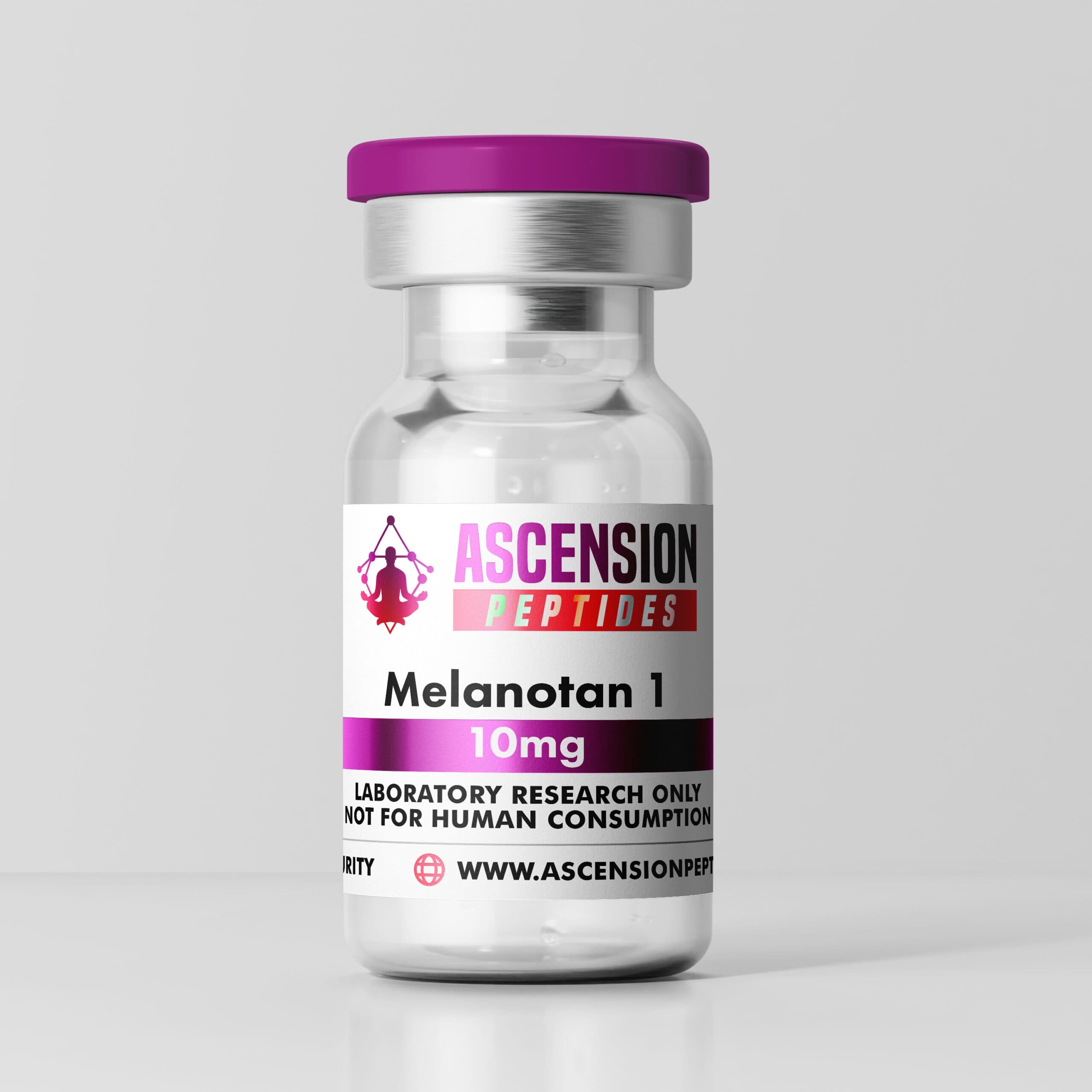
Vendor Selection Matters: If you are sourcing Melanotan-1 for legitimate research purposes, only work with suppliers who provide independent third-party HPLC and mass spectrometry COAs, verifiable purity of ≥98%, and clear documentation of peptide identity. Ascension Peptides is one supplier known for rigorous third-party testing and transparent documentation standards in the research peptide space.
Frequently Asked Questions

Afamelanotide vs Melanotan-1 FAQ

Are afamelanotide and Melanotan-1 the same peptide?
Yes, they share the same amino acid sequence: a synthetic tridecapeptide analog of alpha-MSH with Nle4 and D-Phe7 substitutions. "Afamelanotide" is the International Nonproprietary Name (INN) used in pharmaceutical and clinical contexts. "Melanotan-1" is the name used in the research peptide market. The molecules are chemically identical; the difference lies in manufacturing standards, delivery mechanism, and regulatory status.
Is Melanotan-1 the same as Melanotan-2?
No — this is a critical distinction. Melanotan-1 (afamelanotide) is a full-length 13-amino acid analog that is highly selective for MC1R. Melanotan-2 is a shorter cyclic heptapeptide that engages MC1R, MC3R, and MC4R, producing additional effects including sexual arousal, appetite suppression, and spontaneous erections. These effects are not associated with Melanotan-1. They are related but distinct compounds with different receptor profiles and side effect spectrums.
What condition is afamelanotide (Scenesse) FDA-approved to treat?
Afamelanotide is FDA-approved (since 2019) and EMA-approved (since 2014) exclusively for erythropoietic protoporphyria (EPP) — a rare hereditary metabolic disorder characterized by severe, burning pain upon sun exposure due to toxic accumulation of protoporphyrin in the skin. It is not approved for cosmetic tanning or any other dermatological condition in the US.
Does Melanotan-1 cause the sexual side effects associated with Melanotan-2?
No. Melanotan-1 / afamelanotide acts primarily on MC1R and does not have meaningful activity at MC4R — the receptor responsible for the pro-erectile and libido-enhancing effects of Melanotan-2. Clinical trials of afamelanotide have not reported sexual side effects. This makes Melanotan-1 pharmacologically cleaner in this regard, though it also means it lacks the MC4R-mediated benefits some researchers explore with MT-2.
How does afamelanotide differ from Melanotan-1 in terms of delivery?
Pharmaceutical afamelanotide is delivered as a 16 mg bioresorbable subcutaneous implant rod, inserted under the skin by a healthcare provider. It releases the peptide slowly over approximately two months, maintaining consistent plasma levels and reducing peak-associated side effects like nausea. Research peptide Melanotan-1 is typically reconstituted from lyophilized powder and administered via subcutaneous injection, which creates sharper plasma peaks and more variable dosing.
How much does afamelanotide (Scenesse) cost?
In the United States, each afamelanotide implant costs approximately $40,000–$50,000. Given the need for multiple implants per year for EPP patients, annual costs can be extremely high. Most insured EPP patients access it through specialty pharmacies and patient assistance programs. Research peptide Melanotan-1 is available from suppliers at a fraction of this cost — typically $30–$100 per vial — though without pharmaceutical-grade quality assurance.
Is Melanotan-1 legal to buy?
In the United States, Melanotan-1 exists in a legal gray area. It is not a DEA-scheduled substance, and research peptide vendors sell it legally for non-human research purposes only. Purchasing it with intent for human use may violate FDA regulations. In some countries, it is more explicitly regulated or outright banned. Always research the specific laws in your jurisdiction before purchasing any research peptide.
What should I look for in a Melanotan-1 vendor for research purposes?
For legitimate research, look for vendors who provide independent third-party COAs from accredited labs showing HPLC purity ≥98% and mass spectrometry confirmation of peptide identity. Avoid vendors without verifiable COAs, those selling at unusually low prices, or those who make medical claims about their products. US-based vendors operating under legitimate research chemical frameworks with transparent testing documentation are generally more reliable.
Has afamelanotide been studied beyond EPP?
Yes. Clinical and preclinical research has investigated afamelanotide for vitiligo (with promising results in repigmentation studies), solar urticaria, polymorphous light eruption, and actinic keratosis. Researchers have also explored its anti-inflammatory and neuroprotective properties related to MC1R's role in regulating the NF-κB pathway. However, none of these uses have reached FDA approval, and afamelanotide remains indicated only for EPP in approved settings.
Final Verdict

Afamelanotide vs Melanotan-1: The Bottom Line

The comparison between afamelanotide and Melanotan-1 is unique in the peptide world: you're comparing two versions of the same molecule that exist in completely different regulatory universes. The chemistry is shared; nearly everything else differs.

Afamelanotide (Scenesse) represents decades of clinical investment, rigorous safety evaluation, and a hard-won approval for a condition — EPP — that had essentially no prior treatment. Its controlled-release delivery, pharmaceutical-grade purity, and medical supervision make it the gold standard for anyone who qualifies for and can access it. The cost is a significant barrier for most.

Research peptide Melanotan-1 occupies a different space: accessible, affordable, and chemically related to its pharmaceutical counterpart, but without the safeguards that make afamelanotide's safety profile meaningful. The quality of the clinical evidence for afamelanotide does not automatically transfer to an unverified lyophilized vial from an online vendor.

For researchers investigating MC1R biology, Melanotan-1 from a reputable, third-party-tested supplier like Ascension Peptides can serve as a legitimate research tool. For anyone with EPP seeking treatment, afamelanotide through a qualified prescriber is the appropriate path.

Whatever your research interest, understanding how Melanotan-1 is typically dosed and how it compares to related compounds like Melanotan-2 will help you make better-informed decisions.
⚠️ Medical Disclaimer: This content is for informational and educational purposes only. Afamelanotide (Scenesse) is an FDA-approved prescription drug available only through licensed healthcare providers for erythropoietic protoporphyria. Melanotan-1 as discussed in a research peptide context is a research compound not approved by the FDA for human use. Nothing in this article constitutes medical advice, diagnosis, or treatment recommendations. Always consult a licensed medical professional before using any peptide, supplement, or pharmaceutical product.
Trusted by 10,000+ Researchers

Get 99%+ Purity Peptides — Ships Today

Third-party tested. COA included with every order. Free shipping on orders over $150.

Ascension Peptides
✓ 3rd-Party Tested✓ COA Included✓ Same-Day Shipping

Related Topics

afamelanotidemelanotan-1melanocortinmc1rscenessepeptide-comparisontanning-peptidesalpha-msh

Table of Contents8 sections

What Are Afamelanotide and Melanotan-1?Afamelanotide vs Melanotan-1: Side-by-Side ComparisonAfamelanotide: From University Lab to FDA ApprovalMelanotan-1 as a Research Peptide: What You're Actually GettingSide Effects and Safety: What the Clinical Data ShowsWhich Is Right for You: Afamelanotide or Melanotan-1?Afamelanotide vs Melanotan-1 FAQAfamelanotide vs Melanotan-1: The Bottom Line

Related Articles

Aavant Peptides Review: Is This Vendor Worth It in 2026?
9
Advanced Bionutritionals GLP-1 Plus: Complete Guide (2026)
8
Abaloparatide: Mechanism, Benefits, Dosage & Research Guide (2026)
8

More Articles

View All
Peptide Guides

Aavant Peptides Review: Is This Vendor Worth It in 2026?

Mar 69
Peptide Guides

Advanced Bionutritionals GLP-1 Plus: Complete Guide (2026)

Mar 68
Peptide Guides

Abaloparatide: Mechanism, Benefits, Dosage & Research Guide (2026)

Mar 68
Back to Blog
sciencePeptideDeck
Contact© 2026 PeptideDeck. Research Purposes Only. Not for human consumption.