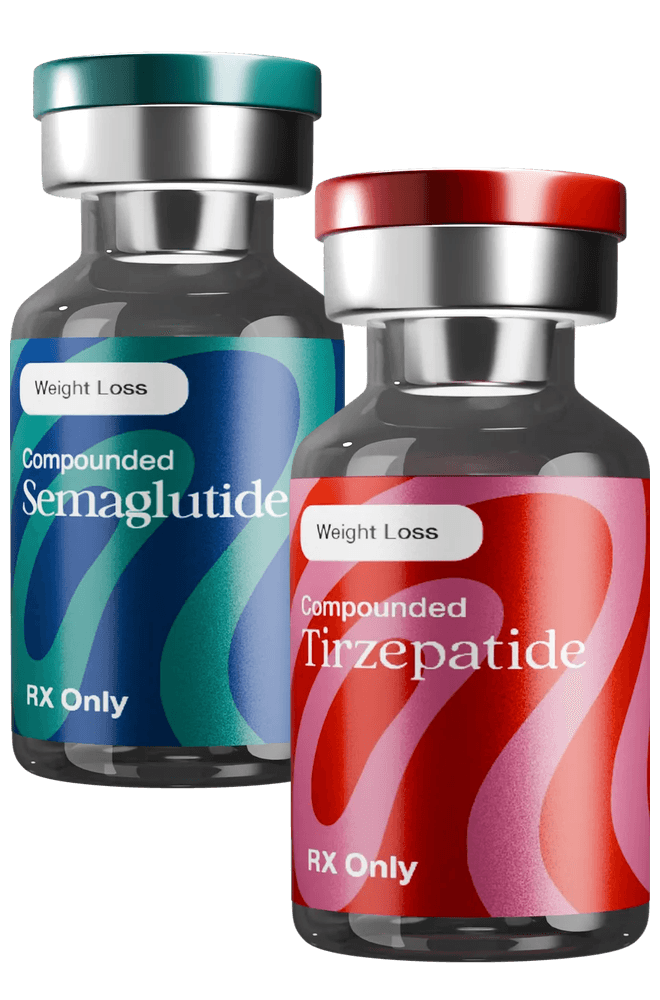
Tirzepatide storage is strict and unforgiving.
The drug is a protein, not a small molecule, which means heat, light, freezing, and time all degrade it. This is the practical-use FAQ for everyone running compounded or brand-name tirzepatide: how long it lasts in the fridge, whether you can freeze the powder, whether you can prefill syringes, what happens when it's left out, what happens if you double-dose, how to count units to mg, and what every other common timing or handling question actually means in practice.
The single most important factor in tirzepatide actually working is keeping the molecule intact from manufacturer to injection site. Both Lilly's brand-name pens (Mounjaro and Zepbound) and compounded vials follow the same physics: heat denatures the protein, freezing shears the molecular structure, light degrades it over time.
Format
Refrigerated
Room temperature (≤86°F)
Frozen
Brand-name pen (Mounjaro, Zepbound, sealed)
Until expiration date on label
Up to 21 days, then discard
Never (discard if frozen)
Brand-name pen (in use)
Continue refrigerating between doses
Up to 21 days from first use
Never
Compounded vial (lyophilized powder, unreconstituted)
Up to 3 years per pharmacy compound
Up to 60 days (varies; check pharmacy label)
Acceptable as last resort, but minimize freeze-thaw cycles
Compounded vial (reconstituted with bacteriostatic water)
21-30 days, refrigerated only
Avoid; degrades quickly above 50°F
Never freeze reconstituted solution
Prefilled syringe (from reconstituted vial)
Up to 24 hours refrigerated
Up to 30 minutes only
Never
Brand-name pen (Mounjaro, Zepbound, sealed)
RefrigeratedUntil expiration date on label
Room temperature (≤86°F)Up to 21 days, then discard
FrozenNever (discard if frozen)
Brand-name pen (in use)
RefrigeratedContinue refrigerating between doses
Room temperature (≤86°F)Up to 21 days from first use
Compounded vial (lyophilized powder, unreconstituted)
RefrigeratedUp to 3 years per pharmacy compound
Room temperature (≤86°F)Up to 60 days (varies; check pharmacy label)
FrozenAcceptable as last resort, but minimize freeze-thaw cycles
Compounded vial (reconstituted with bacteriostatic water)
Refrigerated21-30 days, refrigerated only
Room temperature (≤86°F)Avoid; degrades quickly above 50°F
FrozenNever freeze reconstituted solution
Prefilled syringe (from reconstituted vial)
RefrigeratedUp to 24 hours refrigerated
Room temperature (≤86°F)Up to 30 minutes only
Compounded tirzepatide ships as lyophilized powder that you reconstitute with bacteriostatic water. The most common concentration is 40 mg of tirzepatide per vial, reconstituted with 2 mL of bacteriostatic water, giving you 20 mg/mL working concentration. From there:
Does tirzepatide need to be refrigerated?
Yes. Brand-name pens (Mounjaro, Zepbound) must be refrigerated at 36-46°F until first use. After first use, the pen can stay at room temperature up to 86°F for 21 days but refrigerating between doses is the safest practice. Compounded tirzepatide vials must be refrigerated both before and after reconstitution.
How long does tirzepatide last in the fridge?
Brand-name pens last until the printed expiration date when stored refrigerated and sealed. Once you start using a pen, the manufacturer allows continued refrigeration for up to 21 days. Compounded reconstituted tirzepatide lasts 21-30 days refrigerated, depending on the pharmacy's specific formulation. Always check the label.
How long can compounded tirzepatide be out of the fridge?
Lyophilized (powder) compounded tirzepatide can be at room temperature for 60 days per most compounding pharmacy labels. Reconstituted (mixed with bacteriostatic water) compounded tirzepatide should not be at room temperature for more than a few hours. If reconstituted vials sit out overnight, discard and don't use.
Can you freeze tirzepatide powder?
Lyophilized tirzepatide powder is more freeze-tolerant than reconstituted solution, but freezing isn't recommended because thawing introduces moisture and freeze-thaw cycles can affect potency. If accidentally frozen and quickly returned to refrigeration with no condensation, the powder is likely still usable. Reconstituted tirzepatide must never be frozen, freezing the liquid destroys the molecule.
What happens if compounded tirzepatide freezes?
If reconstituted (liquid) tirzepatide froze, throw it out. The protein structure is permanently damaged and the drug will not work properly. If only the lyophilized powder vial froze before reconstitution and stays dry with no visible water condensation, it's probably fine, but contact your compounding pharmacy to confirm.
What happens if compounded tirzepatide gets warm?
Brief exposure to room temperature (under 86°F) for hours to a day or two is generally fine for sealed lyophilized vials. Reconstituted solution at room temperature degrades faster, refrigerate within a few hours. Sustained exposure above 90°F (left in a hot car, near a heater, in direct sun) damages tirzepatide irreversibly. If in doubt, discard and replace.
What happens if compounded tirzepatide is not refrigerated?
If a reconstituted vial sits at room temperature for less than 4-6 hours, it's typically still safe to use. Beyond that, peptide degradation accelerates and you can't trust the dose. Lyophilized (unmixed) powder is more forgiving and can usually handle days at room temperature, but compounded pharmacy labels are specific to that batch, check yours.
What happens if I use expired tirzepatide?
Reduced potency, not poisoning. Expired tirzepatide can deliver less than the labeled dose, which feels like the drug "stopped working." For compounded reconstituted vials past their 30-day refrigerated window, discard. For brand-name pens past expiration, contact your pharmacy for replacement; insurance often replaces expired specialty medication.
Can I prefill tirzepatide syringes ahead of time?
Yes, but with limits. Prefilled syringes from a reconstituted compounded vial last up to 24 hours refrigerated. Beyond 24 hours, both the peptide stability and your dose accuracy drop. Don't prefill a week's worth of injections at once. Best practice: prefill the night before injection day, store refrigerated in a sealed bag, inject within 24 hours.
Can I take tirzepatide every 4 days instead of weekly?
Possible but not standard. Tirzepatide's ~5-day half-life means weekly dosing is the FDA-approved schedule that produces stable plasma levels. Some users microdose every 3-4 days at a lower per-injection dose to smooth side effects, see our
microdosing tirzepatide guide for the protocol. Don't shorten the interval without lowering the dose; you'll just stack up side effects.
What happens if you double dose tirzepatide?
A single double dose isn't usually catastrophic but will significantly amplify GI side effects (nausea, vomiting, diarrhea) over the following 24-72 hours and increase hypoglycemia risk if you're diabetic. Stay hydrated, eat small bland meals, and use antiemetics as needed. Don't do it again; if you've missed a dose, take it within 4 days and resume the normal weekly schedule (or skip it entirely if you're past 4 days).
What happens if you take tirzepatide twice a week?
Twice-weekly dosing at full weekly dose levels isn't a standard protocol and will likely cause severe GI side effects from drug accumulation. Some users split the weekly dose into two smaller half-doses 3-4 days apart, which is a microdosing strategy that some find smoother. Talk to your prescriber before doing this; it's off-label.
What is 40 units of tirzepatide in mg?
It depends on your concentration. At the standard compounded concentration of 20 mg/mL (40 mg vial reconstituted with 2 mL of bacteriostatic water), 40 units on a U-100 insulin syringe equals 0.40 mL, which delivers 8 mg of tirzepatide. At a different concentration (e.g., 10 mg/mL), 40 units would deliver 4 mg. Always check your specific vial's mg/mL before injecting.
How fast does tirzepatide work?
Appetite suppression usually appears within 24-72 hours of the first injection. Visible weight loss starts within 2-3 weeks. Peak weekly weight loss happens between weeks 8 and 24 of consistent dosing. Most users hit their plateau by month 6-9. Our tirzepatide weight loss results guide covers the full timeline.
How long for tirzepatide to suppress appetite?
Most users notice reduced food noise, smaller portion satisfaction, or active food aversion within 24-72 hours of the first injection. The effect intensifies over the first 2 weeks. If you don't feel appetite suppression by day 7, talk to your prescriber, it usually means dose escalation is appropriate.
What happens if you drink alcohol on tirzepatide?
Two main issues. First, tirzepatide can reduce alcohol tolerance dramatically, you'll feel drunk faster and may stay drunk longer because of delayed gastric emptying. Second, alcohol worsens nausea and dehydration, which compounds tirzepatide GI side effects. Hypoglycemia risk also rises in diabetic users. Most users naturally reduce alcohol consumption on tirzepatide because the reward signal disappears.
What happens if you get pregnant on tirzepatide?
Stop tirzepatide immediately and contact your OB. Tirzepatide is contraindicated in pregnancy because early toxicology data showed adverse developmental outcomes. The drug's long half-life (~5 days) means full clearance takes 4-5 weeks. Don't panic; many women have had healthy pregnancies after unplanned tirzepatide exposure, but ongoing use during pregnancy isn't safe.
What happens if you inject tirzepatide into muscle?
Tirzepatide is designed for subcutaneous (under-the-skin) injection. Accidental intramuscular injection causes faster absorption, which usually means more intense early-onset side effects (stronger nausea, faster drug peak) but doesn't damage tissue or harm you long-term. The dose itself is delivered fully, just on a different timing curve. Switch back to subcutaneous on your next injection.
What is sublingual tirzepatide?
Sublingual (under-the-tongue) tirzepatide is a non-injectable formulation marketed by some compounding pharmacies and online vendors. The clinical evidence for sublingual peptide absorption is weak, peptides are large molecules that poorly cross the oral mucosa. Most "sublingual tirzepatide" products either don't deliver effective doses or rely on creative dosing claims. Subcutaneous injection remains the only clinically validated route.
How do I counteract tirzepatide side effects?
For nausea: ondansetron 4-8 mg or ginger 30-60 minutes before injection. For constipation: increase water, fiber (psyllium husk), and magnesium citrate at bedtime. For fatigue: ensure adequate protein (1.2-1.6 g/kg goal body weight) and electrolytes. For excessive weight loss: stop dose escalation or lower current dose under prescriber guidance. To stop tirzepatide entirely: discontinue the drug; effects fade over 4-6 weeks as it clears.