Three amino acids. Forty years of Russian geroprotector research behind it. And one of the few peptides small enough to cross the blood-brain barrier and talk to your DNA directly.
🔑 Key Takeaways
- Pinealon is a synthetic tripeptide with the sequence Glu-Asp-Arg (also called the EDR peptide) developed by Professor Vladimir Khavinson and colleagues at the St. Petersburg Institute of Bioregulation and Gerontology as part of the Russian bioregulator peptide class
- It is classified as a geroprotector, a compound intended to slow age-related decline. The primary applications in community use are cognitive support, sleep quality, jet lag recovery, and neuroprotection
- Mechanism research suggests it binds directly to DNA regulatory regions to influence gene expression, supports serotonin pathways, and reduces oxidative stress in brain tissue
- It crosses the blood-brain barrier through the PEPT2 peptide transporter, which is what allows a small oral peptide to actually reach the central nervous system
- Standard community dosing is 20 mg daily orally for 20 to 30 days, cycled 2 to 3 times per year. Injectable protocols (5 to 10 mg subcutaneously) are also reported
- Side effects are rare and mild in published research and user reports: occasional headache, sleep disturbance, mild gastrointestinal effects, or injection-site reaction with subcut use
- Not FDA approved for any indication. Classified and used as a bioregulator in Russia but sold as a lab-use compound in most Western markets
- Most closely related to other Khavinson bioregulators: Epitalon (pineal/telomerase), Thymalin (thymus/immune), Vilon (immune/anti-aging)
This page is the full 2026 reference on Pinealon peptide: chemistry, mechanism, every documented benefit, oral and injectable dosing protocols, side effects, contraindications, how it compares to the rest of the bioregulator family, where the research comes from, and what to look for when sourcing it.
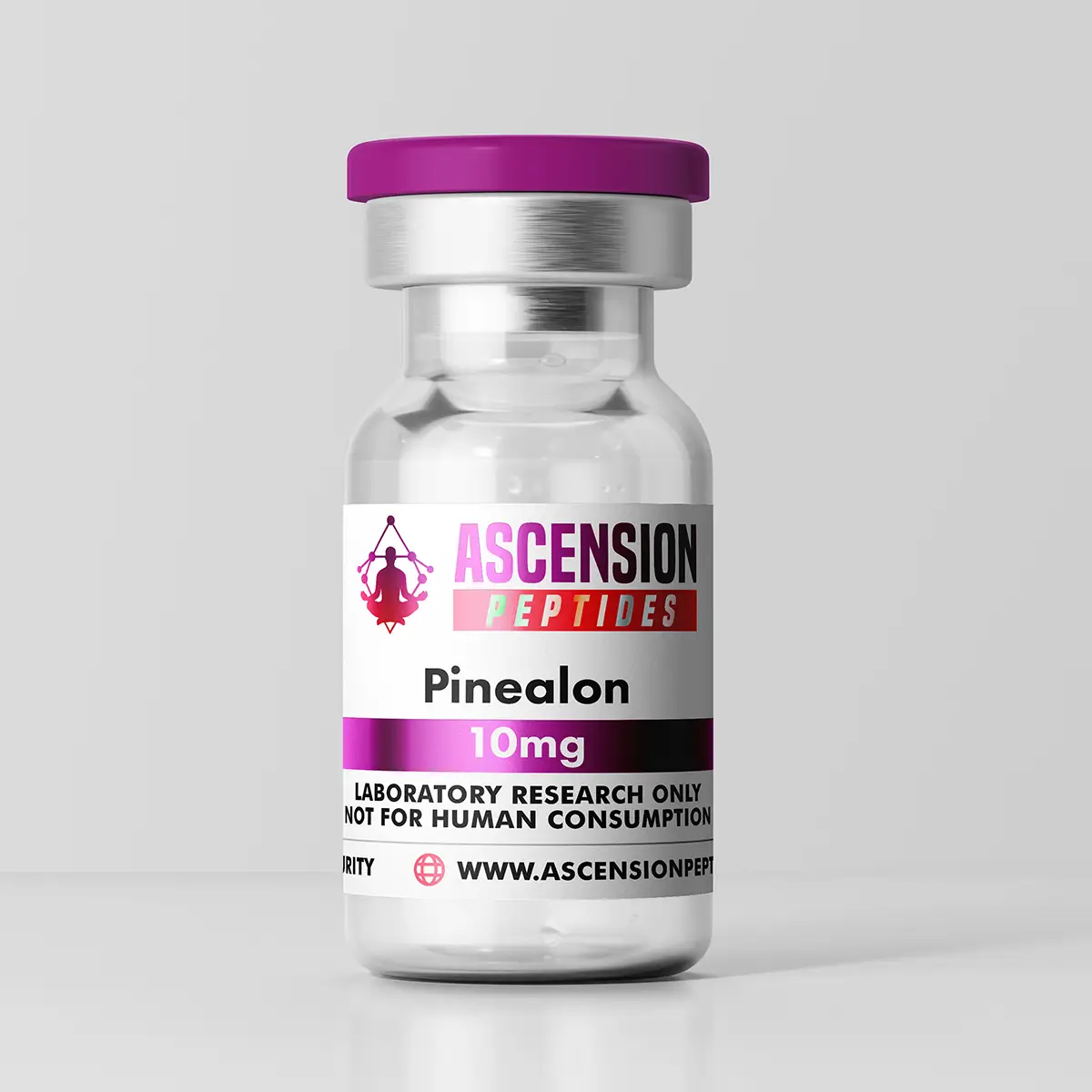
Pinealon is sold as a lyophilised research peptide; Ascension's 10mg vial is US-made and batch-numbered with an independent COA.
What Is Pinealon?
A synthetic tripeptide with an unusually long research paper trail.
Pinealon is a three-amino-acid peptide composed of L-glutamic acid, L-aspartic acid, and L-arginine, strung together in that order. The shorthand is EDR (the single-letter codes for the three amino acids: E for glutamate, D for aspartate, R for arginine). Its molecular formula is C15H26N6O8 and its molar mass is 418.41 g/mol. CAS number: 175175-23-2.
Pinealon at a Glance
- Chemical name: L-glutamyl-L-aspartyl-L-arginine (Glu-Asp-Arg, EDR peptide)
- Molecular formula: C15H26N6O8
- Molar mass: 418.41 g/mol
- CAS: 175175-23-2
- Developer: Professor Vladimir Khavinson, St. Petersburg Institute of Bioregulation and Gerontology (Russia)
- Classification: Synthetic peptide bioregulator, geroprotector
- Primary use: Cognitive support, neuroprotection, sleep regulation, anti-aging
- Research status: Extensive Russian research literature, no completed large-scale human trials outside Russia
Pinealon is part of the broader Khavinson bioregulator family developed over the past four decades in Russia. These are short peptides derived from or designed to mimic peptides found in specific tissues, intended to regulate gene expression in those tissues. Pinealon is the brain cortex bioregulator. Epitalon targets the pineal gland. Thymalin targets the thymus. Vilon targets the immune system. Each peptide is paired with the organ or system it was isolated from or designed to modulate.
How Pinealon Works
The mechanism sits at the level of gene regulation.
Three things make Pinealon biologically interesting:
Crosses the blood-brain barrier
Most peptides cannot reach the central nervous system orally because the gut digests them and the blood-brain barrier blocks what survives. Pinealon is small enough (418 g/mol) and structured so that it can be transported across cell membranes via the PEPT2 (peptide transporter 2) system, which is expressed throughout the intestinal lining, kidneys, and brain tissue. This transporter pathway is how Pinealon reaches brain cortex cells after oral dosing.
Direct DNA interaction
Research by Khavinson and colleagues has proposed that Pinealon (like other short peptide bioregulators) binds to specific DNA regulatory regions in cell nuclei and influences gene transcription. A 2020 paper (Molecules, Khavinson et al., December 2020) documented this chromatin-level activity. The model is that EDR, as a physiologically small peptide, can penetrate the nucleus and contact DNA directly, modulating gene expression patterns associated with aging and cognitive function.
Antioxidant and serotonin effects
In addition to the gene regulation mechanism, Pinealon has been shown in animal studies to reduce oxidative stress by suppressing free radical accumulation in neurons, and to stimulate serotonin expression in brain cortex cells. Both effects are thought to contribute to its cognitive and mood benefits.
Pinealon Benefits
The documented uses span cognition, sleep, and anti-aging.
Cognitive support and memory
The most frequently cited benefit. Animal research has shown Pinealon improves learning retention and maintains cognitive function in animals with experimentally-induced cognitive deficits (diabetes-induced, hyperhomocysteinemia-induced, aging-related). The Khavinson et al. 2011 paper in Rejuvenation Research and the Arutjunyan et al. 2012 paper in the International Journal of Clinical and Experimental Medicine both documented this effect in animal models. Community users report improved memory recall, faster mental processing, and clearer thinking within 2 to 4 weeks of daily use.
Neuroprotection
Pinealon has been studied as a neuroprotective agent against hypoxia, oxidative stress, and metabolic insult in brain tissue. Khavinson et al. 2014 in Bulletin of Experimental Biology and Medicine documented protective effects at the cellular level. Karantysh et al. 2020 in Neurochemical Journal extended this to diabetic neuropathy models.
Sleep regulation
Pinealon's name references its original development context as a peptide designed to support pineal-axis function, though mechanistically it acts on brain cortex cells rather than the pineal gland directly. Users consistently report improved sleep quality, reduced nighttime awakenings, and faster sleep onset, particularly when dosed in the evening. The mechanism is likely a combination of serotonin pathway support and general neural tone modulation.
Jet lag reduction
One of the more specific use cases in the community. Taking Pinealon for 5 to 10 days around a major time-zone shift is reported to shorten jet-lag adjustment time. This is anecdotal but widely reported across user communities.
Anti-aging and geroprotection
This is the broader category that contains all the Khavinson bioregulator research. Pinealon is classified as a geroprotector, meaning a compound that slows the progression of biological aging markers. The research focus has been on cognitive decline, cellular senescence, and age-related gene expression changes.
Mood support
Serotonin-pathway effects translate into reported improvements in mood and motivation. Some community users report reduced anxiety and depressive symptoms during use. This is not a primary indication and not supported by large controlled trials, but the mechanism plausibly connects to observed effects.
Physical strength and exercise performance (investigational)
Less well documented. Some community reports and early Russian research suggest Pinealon may support muscle function and exercise recovery through general anti-oxidative and neural-efficiency effects, but this is a secondary use case at best.
Pinealon Dosage
Two standard delivery routes, both cycled rather than continuous.
Oral Pinealon dosage
Standard Oral Protocol
- Daily dose: 20 mg (typically 2 capsules of 10 mg each, or 1 capsule of 20 mg)
- Cycle length: 20 to 30 consecutive days
- Frequency: 2 to 3 cycles per year
- Timing: Morning on an empty stomach, or split morning and evening
- Duration of effect: Benefits reported to persist 2 to 3 months after completing a cycle
Oral capsules are the most common form because of Pinealon's unusually good oral bioavailability for a peptide. The PEPT2 transporter system allows meaningful absorption from the GI tract, unlike most peptides that require injection.
Injectable Pinealon dosage
Standard Injectable Protocol
- Daily dose: 5 to 10 mg subcutaneously
- Cycle length: 10 to 20 consecutive days
- Frequency: 2 to 3 cycles per year
- Timing: Morning injection into abdomen, thigh, or upper arm. Rotate sites.
- Reconstitution: A 20 mg vial with 2 mL bacteriostatic water gives 10 mg/mL. A 10 mg dose is 100 units on a U-100 insulin syringe. Use our reconstitution calculator for other vial sizes
- Storage: Lyophilized vial at room temperature before reconstitution. After reconstitution, refrigerate at 2 to 8°C and use within 4 to 6 weeks.
Injectable Pinealon produces faster onset and more consistent blood levels than oral, but with the trade-off of injection logistics. Most users pick oral for simplicity unless they are stacking multiple peptides where subcutaneous is already part of their protocol.
Cycling rationale
Pinealon is cycled rather than taken continuously for two reasons. First, the claimed mechanism involves gene expression modulation that continues producing effects after the peptide itself has cleared. Second, there is no long-term human safety data for continuous use, so cycling conservatively limits exposure while still capturing the benefit. Community protocols typically run 2 to 3 cycles per year with 2 to 4 months between cycles.
Pinealon Side Effects
Mild and uncommon in published research and community reports.
No serious adverse events have been reported in published Russian clinical research across more than a decade of study. Long-term human safety data from Western controlled trials does not exist. Acute toxicity studies in animals have shown no significant toxicity at doses many times the human-equivalent therapeutic range.
Who Should Not Use Pinealon
Do NOT Use Pinealon If You Have:
- Pregnancy or active breastfeeding (no safety data)
- Age under 18 (developing brain, no pediatric data)
- Known hypersensitivity to Pinealon or any component of the formulation
- Active seizure disorder (theoretical concern, limited data, proceed only with physician supervision)
- Serious psychiatric conditions requiring active pharmacologic treatment (interaction potential unclear)
- Active cancer (precautionary, though Pinealon itself has not been linked to tumor promotion)
People on MAOIs, SSRIs, or other serotonergic medications should discuss Pinealon with a physician before starting, since Pinealon has been documented to influence serotonin pathways in brain tissue.
Pinealon vs Other Bioregulators
Each Khavinson bioregulator targets a different organ or system.
Pinealon and Cortexin are both brain-cortex targeted but differ in composition: Pinealon is a defined synthetic tripeptide while Cortexin is a complex mixture derived from cattle brain tissue. Pinealon and Epitalon are both in the same bioregulator family but target different organs, and many users stack them for combined cognitive and systemic anti-aging effects.
For a complete breakdown of how these compounds fit together, see our bioregulator peptides guide.
Pinealon Stacks
Pinealon pairs cleanly with several other nootropic and bioregulator compounds.
- Pinealon + Epitalon: The classic Khavinson bioregulator stack. Pinealon for brain cortex, Epitalon for pineal and systemic aging. Often run on similar 20-day cycles.
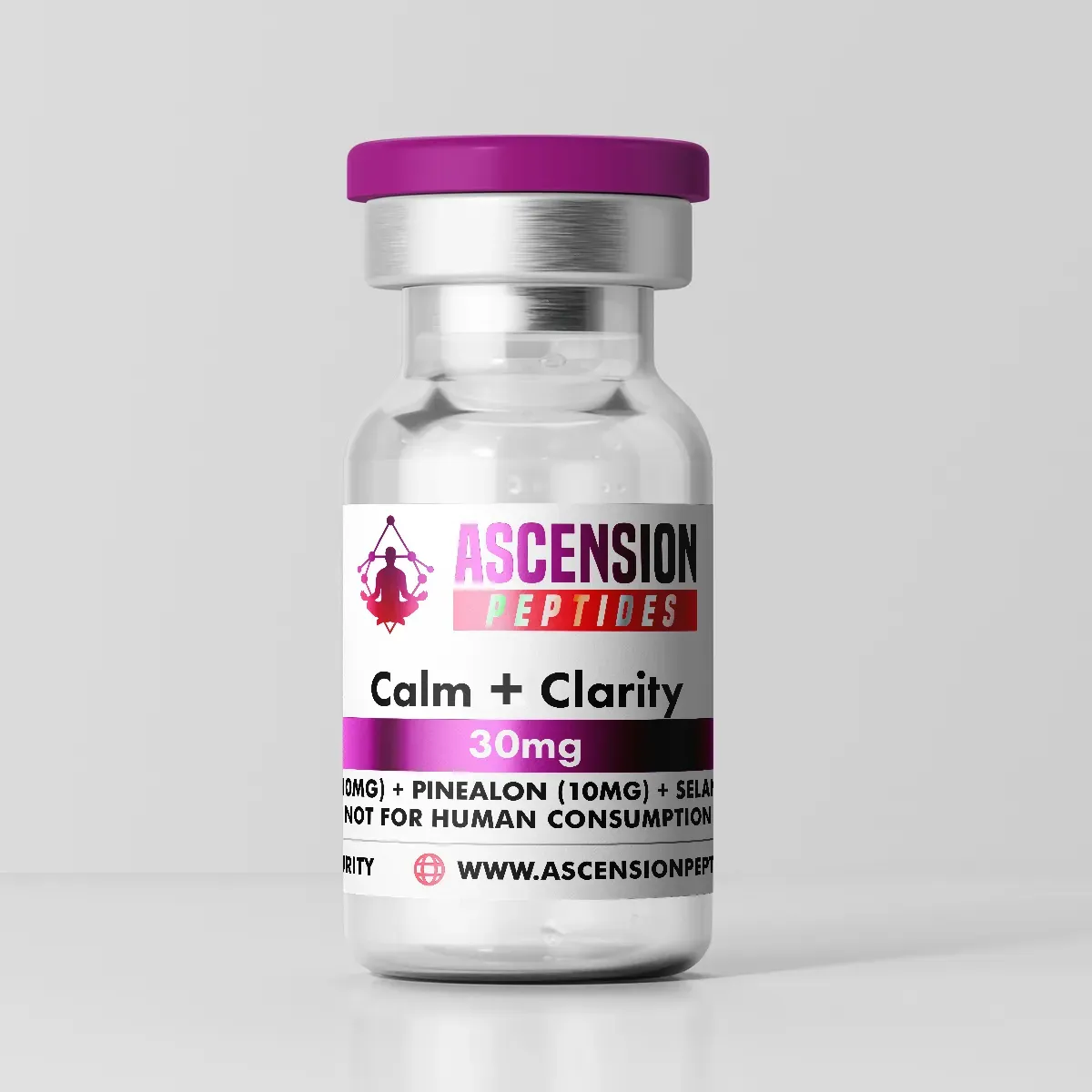
- Pinealon + Selank: Pinealon for structural cognitive support, Selank for acute calm focus and anxiolysis. This is the foundation of the Calm + Clarity peptide blend.
- Pinealon + Semax: Pinealon for gene expression level support, Semax for BDNF and neurotransmitter modulation. Both cross the blood-brain barrier, both target cognition.
- Pinealon + PE 22-28: Both nootropic peptides with complementary mechanisms. Used together in several commercial blends.
- Pinealon + NAD+ precursors (NMN or NR 250 to 500 mg daily): Mitochondrial cellular energy plus cortical cognitive support.
The Calm + Clarity blend (PE 22-28 + Pinealon + Selank) is one of the most popular pre-formulated options because it combines three mechanisms in a single vial. See our Calm + Clarity review for the full breakdown.
Pinealon Results Timeline

Gradual, steady, with a tail.
- Week 1: Subtle effects. Some users report improved sleep quality or reduced jet-lag recovery time if dosed around travel. Cognitive effects are not usually noticeable yet.
- Weeks 2-3: Memory recall and mental clarity improvements become apparent. Sleep quality gains typically stabilize.
- Weeks 3-4: Peak subjective effect. Most users describe noticeably clearer thinking, faster mental processing, and improved working memory.
- After the cycle ends: Benefits persist for 2 to 3 months due to the gene expression mechanism, then gradually fade toward baseline. This is why cycling 2 to 3 times per year maintains continuous benefit.
- Multi-cycle use: Repeated cycles over years are reported to produce compounding effects on baseline cognitive function, consistent with the geroprotector framing.
Pinealon is not a stimulant. There is no "feel it immediately" experience. The benefit shows in how easily new information sticks and how clear your thinking feels at week 3, not in how sharp a single day feels.
Where to Buy Pinealon
Quality markers matter, and bioregulator peptides are a gray-zone market.
What to look for:
- ≥98% purity verified by independent HPLC and mass spectrometry
- Third-party Certificate of Analysis (COA) for each batch
- US-based manufacturing with proper cold-chain handling for injectable product
- Lyophilized vials for injectable form, sealed capsules for oral
- Clear batch numbers and lot documentation
- Khavinson research citations or references on the product label or documentation (signals a serious vendor versus a generic reseller)
Avoid any source that cannot provide independent lab verification, sells loose "bulk powder" without batch testing, or lacks cold-chain documentation for injectable product. For a broader vendor vetting walkthrough, see our best legit peptide vendors guide.
Frequently Asked Questions
References
- Khavinson, V. K., et al. (October 2011). Peptide Pinealon and cognitive deficits in offspring of hyperhomocysteinemic mothers. Rejuvenation Research, 14(5), 535-541.
- Arutjunyan, A., et al. (April 2012). Pinealon protects offspring from prenatal hyperhomocysteinemia. International Journal of Clinical and Experimental Medicine, 5(2), 179-185.
- Khavinson, V. K., et al. (May 2014). Short Peptides Stimulate Cell Renovation and Cell Proliferation. Bulletin of Experimental Biology and Medicine, 157(1), 77-80.
- Karantysh, G. V., et al. (July 2020). Effect of Pinealon on learning and glutamatergic gene expression in the hippocampus of aged animals with diabetes mellitus. Neurochemical Journal, 14(3), 314-320.
- Khavinson, V. K., et al. (December 2020). Peptide Regulation of Gene Expression and Protein Synthesis in Bronchial Epithelium. Molecules, 26(1), 159.
- Wikipedia contributors. Pinealon. General reference for chemistry and research overview.