GLP-1 Receptor Agonists: Complete Drug List (2026)
Published May 1, 2026Updated July 1, 2026
Quick Brief
A complete GLP-1 receptor agonist drug list: every GLP-1 agonist medicine for type 2 diabetes and weight loss, including semaglutide, tirzepatide, liraglutide, dulaglutide, and exenatide.
GLP-1 Receptor Agonists: Complete Drug List (2026)
GLP-1 receptor agonists are a class of GLP-1 agonist drugs, and this drug list covers every approved option for type 2 diabetes and weight loss.
A GLP-1 receptor agonist is a medicine that turns on the glucagon-like peptide-1 receptor, also called the GLP-1 receptor. These medicines help the body release insulin when glucose is high, reduce glucagon, slow stomach emptying, and send stronger fullness signals to the brain.
Last UpdatedMay 1, 2026
2005First FDA approval in the class: exenatide
6+Core GLP-1 agonist active ingredients used clinically
T2DOriginal use: type 2 diabetes glucose control
WeeklyCommon schedule for newer injectable options
🔑 Key Takeaways
GLP-1 receptor agonists are prescription medicines that mimic the incretin hormone GLP-1 at the GLP-1 receptor.
The main GLP-1 agonist drug list includes exenatide, liraglutide, lixisenatide, dulaglutide, semaglutide, and newer oral or dual-agonist medicines that activate the GLP-1 receptor.
GLP-1 receptor agonists for type 2 diabetes help lower A1C with a low standalone risk of hypoglycemia because insulin release is glucose-dependent.
GLP-1 receptor agonists for weight loss work mostly through appetite, satiety, food noise, and delayed gastric emptying.
Tirzepatide is often included in GLP-1 agonist lists, but it is more precise to call it a dual GIP and GLP-1 receptor agonist.
GLP-1 receptor agonist medicines are now used across type 2 diabetes, obesity, cardiovascular risk, and kidney-related care.
This page is the plain-English GLP-1 agonist drug list: what the receptor does, which medicines are in the class, how they differ, and why the same drug names keep showing up in both type 2 diabetes and weight-loss conversations.
GLP-1 Receptor Agonist List
Start with the names.
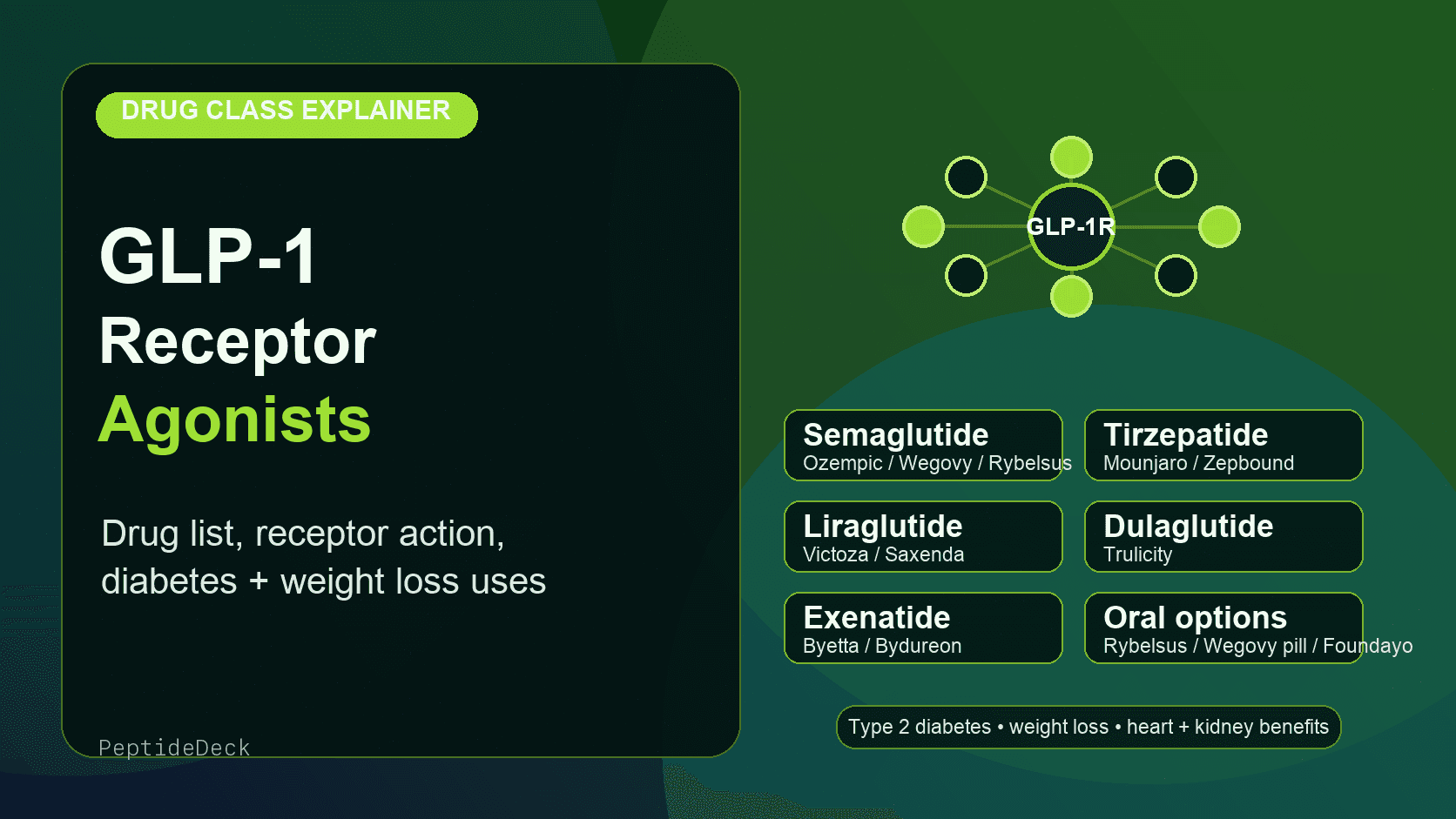
The table below keeps the class organized by active ingredient first, then brand name. That matters because Ozempic, Wegovy, and Rybelsus are all semaglutide, while Mounjaro and Zepbound are both tirzepatide.
Active Ingredient
Common Brand Names
Route / Frequency
Main Use
What To Know
Exenatide
Byetta, Bydureon BCise
Twice daily or weekly injection, depending on product
Type 2 diabetes
Older GLP-1 agonist; first in class
Liraglutide
Victoza, Saxenda
Daily injection
Type 2 diabetes or weight management, depending on brand
Strong history, but daily dosing is less convenient
Lixisenatide
Adlyxin
Daily injection
Type 2 diabetes
Shorter-acting option, often discussed less than newer weekly drugs
Dulaglutide
Trulicity
Weekly injection
Type 2 diabetes
Common diabetes-focused weekly GLP-1 receptor agonist medicine
Semaglutide
Ozempic, Wegovy, Rybelsus, Wegovy pill
Weekly injection or daily oral tablet
Type 2 diabetes, weight management, cardiovascular risk reduction in specific groups
Most searched true GLP-1 receptor agonist
Tirzepatide
Mounjaro, Zepbound
Weekly injection
Type 2 diabetes or weight management, depending on brand
Dual GIP and GLP-1 receptor agonist; included because it activates GLP-1 receptor signaling
Orforglipron
Foundayo
Daily oral tablet
Weight management
Small-molecule oral GLP-1 receptor agonist; simpler routine than oral semaglutide
Exenatide
Common Brand Names
Byetta, Bydureon BCise
Route / Frequency
Twice daily or weekly injection, depending on product
Main Use
Type 2 diabetes
What To Know
Older GLP-1 agonist; first in class
Liraglutide
Common Brand Names
Victoza, Saxenda
Route / Frequency
Daily injection
Main Use
Type 2 diabetes or weight management, depending on brand
What To Know
Strong history, but daily dosing is less convenient
Lixisenatide
Common Brand Names
Adlyxin
Route / Frequency
Daily injection
Main Use
Type 2 diabetes
What To Know
Shorter-acting option, often discussed less than newer weekly drugs
Dulaglutide
Common Brand Names
Trulicity
Route / Frequency
Weekly injection
Main Use
Type 2 diabetes
What To Know
Common diabetes-focused weekly GLP-1 receptor agonist medicine
Semaglutide
Common Brand Names
Ozempic, Wegovy, Rybelsus, Wegovy pill
Route / Frequency
Weekly injection or daily oral tablet
Main Use
Type 2 diabetes, weight management, cardiovascular risk reduction in specific groups
What To Know
Most searched true GLP-1 receptor agonist
Tirzepatide
Common Brand Names
Mounjaro, Zepbound
Route / Frequency
Weekly injection
Main Use
Type 2 diabetes or weight management, depending on brand
What To Know
Dual GIP and GLP-1 receptor agonist; included because it activates GLP-1 receptor signaling
Orforglipron
Common Brand Names
Foundayo
Route / Frequency
Daily oral tablet
Main Use
Weight management
What To Know
Small-molecule oral GLP-1 receptor agonist; simpler routine than oral semaglutide
This is the practical GLP-1 agonist list most readers need. Some older or non-U.S. agents also appear in medical literature, including albiglutide and peg-loxenatide, but they are not the names most U.S. readers are deciding between today.
What Is a GLP-1 Receptor Agonist?
It is a receptor activator.
GLP-1 stands for glucagon-like peptide-1. Natural GLP-1 is an incretin hormone released after eating. A glucagon-like peptide-1 (GLP-1) agonist is built to mimic enough of that hormone’s signal to activate the GLP-1 receptor.
An agonist is not just something that “binds.” It binds and turns the receptor on. That is why the phrase GLP-1 receptor agonist is more exact than “GLP-1 drug.” These medicines are trying to make the receptor behave as if the body’s own GLP-1 signal is stronger or longer-lasting.
Simple version
A GLP-1 agonist is a medicine that presses the GLP-1 receptor button. That button helps regulate blood sugar, appetite, fullness, and gastric emptying.
What the GLP-1 Receptor Does
The receptor connects several systems.
The GLP-1 receptor is found in places that matter for metabolism: the pancreas, gut, brain, heart, kidney, and nervous-system signaling pathways. That is why one class of medicines can affect glucose, appetite, weight, and cardiometabolic risk at the same time.
Location / System
GLP-1 Receptor Effect
What Users Notice
Pancreas
Increases insulin release when glucose is elevated
Lower post-meal glucose and A1C
Alpha cells
Reduces glucagon when it is too high
Less liver glucose output after meals
Stomach
Slows gastric emptying
Fullness lasts longer, large meals feel harder
Brain appetite circuits
Increases satiety and reduces food reward for many people
Less hunger and less food noise
Heart and blood vessels
May improve cardiovascular outcomes in selected patients and drugs
Risk reduction becomes part of drug selection
Kidney-metabolic pathways
May support kidney outcomes in selected populations
Important for people with diabetes and kidney risk
This is why GLP-1 receptor agonist medicines are no longer only “diabetes shots.” The same receptor biology now shows up in obesity, cardiovascular-risk, kidney-risk, sleep apnea, and liver-health discussions.
GLP-1 Agonists for Type 2 Diabetes
Diabetes came first.
GLP-1 receptor agonists for type 2 diabetes were developed to improve glucose control without forcing insulin release when glucose is already low. That glucose-dependent insulin effect is one reason the class is useful: by itself, a GLP-1 receptor agonist has a low risk of causing hypoglycemia compared with insulin or sulfonylureas.
The main goals in type 2 diabetes are usually A1C reduction, post-meal glucose control, weight support, and lower cardiometabolic risk in patients who have heart, kidney, or obesity-related complications.
Diabetes-Focused Medicine
Active Ingredient
Typical Role
Why It Gets Picked
Ozempic
Semaglutide
Weekly glucose control with weight-loss effect
Strong A1C and weight profile
Rybelsus
Oral semaglutide
Needle-free diabetes GLP-1 option
Oral route, but strict administration routine
Trulicity
Dulaglutide
Weekly type 2 diabetes treatment
Familiar diabetes option with cardiovascular-outcome data
Victoza
Liraglutide
Daily GLP-1 treatment
Older option with long clinical history
Byetta / Bydureon
Exenatide
Older GLP-1 agonist options
First-generation class history
Mounjaro
Tirzepatide
Diabetes treatment with strong weight loss
Dual GIP and GLP-1 activity
Ozempic
Active Ingredient
Semaglutide
Typical Role
Weekly glucose control with weight-loss effect
Why It Gets Picked
Strong A1C and weight profile
Rybelsus
Active Ingredient
Oral semaglutide
Typical Role
Needle-free diabetes GLP-1 option
Why It Gets Picked
Oral route, but strict administration routine
Trulicity
Active Ingredient
Dulaglutide
Typical Role
Weekly type 2 diabetes treatment
Why It Gets Picked
Familiar diabetes option with cardiovascular-outcome data
GLP-1 receptor agonists for weight loss are prescribed at obesity-focused doses and labels, not just diabetes doses. The best-known examples are Wegovy, Saxenda, Zepbound, and newer oral weight-management options.
Weight-Loss Brand
Active Ingredient
Class Precision
Main Advantage
Main Limitation
Wegovy
Semaglutide
True GLP-1 receptor agonist
Established weekly obesity treatment
Less average weight loss than tirzepatide in direct comparison
Wegovy HD
Semaglutide 7.2 mg
Higher-dose true GLP-1 receptor agonist
Stronger semaglutide weight-loss option
Newer dose, higher tolerability demands
Wegovy pill
Oral semaglutide
Oral GLP-1 receptor agonist
Needle-free semaglutide
Daily dosing and food/water timing rules
Saxenda
Liraglutide
True GLP-1 receptor agonist
Older daily obesity option
Daily injections and lower average loss
Zepbound
Tirzepatide
Dual GIP and GLP-1 receptor agonist
Highest practical weight-loss ranking among available options
Injection, GI effects, cost, and supply friction
Foundayo
Orforglipron
Oral GLP-1 receptor agonist
No food or water timing restrictions
Lower average loss than top injections
Wegovy
Active Ingredient
Semaglutide
Class Precision
True GLP-1 receptor agonist
Main Advantage
Established weekly obesity treatment
Main Limitation
Less average weight loss than tirzepatide in direct comparison
Wegovy HD
Active Ingredient
Semaglutide 7.2 mg
Class Precision
Higher-dose true GLP-1 receptor agonist
Main Advantage
Stronger semaglutide weight-loss option
Main Limitation
Newer dose, higher tolerability demands
Wegovy pill
Active Ingredient
Oral semaglutide
Class Precision
Oral GLP-1 receptor agonist
Main Advantage
Needle-free semaglutide
Main Limitation
Daily dosing and food/water timing rules
Saxenda
Active Ingredient
Liraglutide
Class Precision
True GLP-1 receptor agonist
Main Advantage
Older daily obesity option
Main Limitation
Daily injections and lower average loss
Zepbound
Active Ingredient
Tirzepatide
Class Precision
Dual GIP and GLP-1 receptor agonist
Main Advantage
Highest practical weight-loss ranking among available options
Most early GLP-1 agonist drugs were injections. Newer oral options matter because some people simply will not start a weekly GLP-1 shots regimen, even when the data are strong.
Route
Examples
Best Fit
Tradeoff
Weekly injection
Ozempic, Wegovy, Trulicity, Mounjaro, Zepbound
People who want simple weekly dosing
Injection comfort, shortages, and dose escalation
Daily injection
Victoza, Saxenda, Byetta, Adlyxin
People who fit older products or specific coverage rules
More frequent dosing
Oral tablet
Rybelsus, Wegovy pill, Foundayo
People who want needle-free treatment
Daily adherence; oral semaglutide has strict administration rules
Future / pipeline
Retatrutide and other multi-agonists
Not routine first-line choices today
Availability and long-term safety data determine future use
Weekly injection
Examples
Ozempic, Wegovy, Trulicity, Mounjaro, Zepbound
Best Fit
People who want simple weekly dosing
Tradeoff
Injection comfort, shortages, and dose escalation
Daily injection
Examples
Victoza, Saxenda, Byetta, Adlyxin
Best Fit
People who fit older products or specific coverage rules
Tradeoff
More frequent dosing
Oral tablet
Examples
Rybelsus, Wegovy pill, Foundayo
Best Fit
People who want needle-free treatment
Tradeoff
Daily adherence; oral semaglutide has strict administration rules
Future / pipeline
Examples
Retatrutide and other multi-agonists
Best Fit
Not routine first-line choices today
Tradeoff
Availability and long-term safety data determine future use
Semaglutide, liraglutide, dulaglutide, exenatide, and lixisenatide are classic GLP-1 receptor agonists. Tirzepatide activates the GLP-1 receptor too, but it also activates the GIP receptor. That makes it a dual agonist, not a pure GLP-1-only drug.
In everyday search language, people still call tirzepatide a GLP-1. That is understandable because the GLP-1 receptor is part of its effect. But if you are comparing mechanisms, it is more accurate to separate:
Single GLP-1 receptor agonists: semaglutide, liraglutide, dulaglutide, exenatide, lixisenatide.
Dual GIP and GLP-1 receptor agonists: tirzepatide.
Triple agonists: retatrutide, which targets GIP, GLP-1, and glucagon receptors and remains a next-generation comparison topic.
Amylin plus GLP-1 combinations: CagriSema-style approaches, where a different satiety pathway is added to semaglutide.
The strongest original use was type 2 diabetes. Then obesity became the public story. Now the class is also being evaluated and used around cardiovascular risk, kidney outcomes, sleep apnea, liver disease, and broader metabolic health.
Potential Benefit Area
Why GLP-1 Receptor Agonists Matter
Important Caveat
Blood glucose
Increase glucose-dependent insulin and lower glucagon
Still part of a full diabetes plan, not a substitute for monitoring
Weight management
Reduce appetite, food noise, and meal size
Lean-mass protection requires protein and resistance training
Cardiovascular risk
Some GLP-1 medicines have outcome data in selected high-risk groups
Benefit depends on drug, population, and indication
Kidney outcomes
Semaglutide and other incretin therapies are increasingly discussed in kidney-risk care
Kidney disease needs individualized supervision
Sleep apnea and liver health
Weight loss and direct metabolic effects may improve related conditions
Still depends on diagnosis and medical follow-up
Side Effects and Risks
Most problems start in digestion.
The most common side effects are nausea, constipation, diarrhea, vomiting, reflux, burping, appetite dropping too far, and injection-site reactions. These usually appear during dose escalation or after a dose increase.
More serious concerns are less common but important: pancreatitis symptoms, gallbladder disease, dehydration-related kidney problems, severe allergic reactions, worsening retinopathy in some diabetes contexts, and severe stomach-emptying problems. Many GLP-1 labels also carry warnings around medullary thyroid carcinoma risk and multiple endocrine neoplasia type 2.
When to slow down
If nausea, vomiting, constipation, reflux, or low food intake becomes the main story, chasing the next dose is usually the wrong move. Tolerability is what keeps people on treatment long enough to benefit.
GLP-1 receptor agonist medicines require clinician review, especially if you have a history of pancreatitis, gallbladder disease, gastroparesis, severe reflux, kidney disease, diabetic retinopathy, pregnancy plans, breastfeeding, eating-disorder history, or use insulin or sulfonylureas.
They also should not be layered casually. Combining a GLP-1 agonist with another GLP-1 agonist or a DPP-4 inhibitor is usually not the intended treatment strategy. The point is to choose a coherent plan, not stack overlapping incretin signals without medical reason.
How to Read a GLP-1 Drug List
Use three filters.
When you see a GLP-1 agonist drug list online, do not compare brand names only. Compare active ingredient, receptor mechanism, and labeled use.
Active ingredient: semaglutide, tirzepatide, liraglutide, dulaglutide, exenatide, lixisenatide, orforglipron.
A GLP-1 agonist is a medicine that activates the glucagon-like peptide-1 receptor. It mimics part of the body’s natural GLP-1 signal to support glucose control, appetite regulation, satiety, and slower stomach emptying.
What is the difference between GLP-1 agonist and GLP-1 receptor agonist?
They usually mean the same thing in everyday use. “GLP-1 receptor agonist” is more precise because the medicine works by activating the GLP-1 receptor.
What are common GLP-1 receptor agonist medicines?
Common GLP-1 receptor agonist medicines include semaglutide, liraglutide, dulaglutide, exenatide, lixisenatide, and orforglipron. Tirzepatide is often grouped with them but is technically a dual GIP and GLP-1 receptor agonist.
What is a GLP-1 receptor agonist list?
A GLP-1 receptor agonist list is a list of drugs that activate the GLP-1 receptor, usually organized by active ingredient and brand name, such as semaglutide with Ozempic, Wegovy, and Rybelsus.
Are GLP-1 agonists used for type 2 diabetes?
Yes. GLP-1 agonists for type 2 diabetes help lower A1C, reduce post-meal glucose, support weight loss, and may provide heart or kidney benefits depending on the drug and patient profile.
Are GLP-1 receptor agonists used for weight loss?
Yes. GLP-1 receptor agonists for weight loss include Wegovy, Saxenda, Wegovy pill, and other options. Zepbound is also used for weight management, though it is a dual GIP and GLP-1 receptor agonist rather than GLP-1-only.
Is Ozempic a GLP-1 receptor agonist?
Yes. Ozempic is semaglutide, a GLP-1 receptor agonist used for type 2 diabetes and cardiovascular-risk reduction in selected patients.
Is Mounjaro a GLP-1 agonist?
Mounjaro activates the GLP-1 receptor, but it also activates the GIP receptor. It is more precise to call Mounjaro a dual GIP and GLP-1 receptor agonist.
Which GLP-1 receptor agonist is oral?
Rybelsus is oral semaglutide for type 2 diabetes. Wegovy pill is oral semaglutide for weight management, and Foundayo is oral orforglipron for weight management.
Can GLP-1 agonist drugs cause low blood sugar?
By themselves, GLP-1 agonist drugs have a low risk of hypoglycemia because their insulin effect is glucose-dependent. Risk rises when combined with insulin or sulfonylureas.
⚠️ Medical Disclaimer: This content is for informational purposes only and is not medical advice. GLP-1 receptor agonists, dual incretin agonists, and related medicines require medical evaluation, prescription oversight, and monitoring. Talk with a licensed medical professional before starting, stopping, switching, or combining any medication, especially if you have diabetes, kidney disease, gallbladder disease, pancreatitis history, gastroparesis, severe gastrointestinal symptoms, thyroid cancer history, pregnancy plans, breastfeeding, or use insulin or sulfonylureas.