💡 Quick Answer
PEG-MGF peptide (Pegylated Mechano Growth Factor) is a modified fragment of IGF-1 that activates satellite cells and drives localized muscle repair and growth. Unlike IGF-1, which has systemic effects throughout the body, PEG-MGF works preferentially at the site of mechanical stress or injury. The pegylation extends its half-life from under 30 minutes to several days — which is what makes it practically useful.
You've probably heard of IGF-1 — insulin-like growth factor 1, the downstream mediator of growth hormone that drives muscle protein synthesis and tissue repair. MGF is its lesser-known cousin, and in some ways it's more targeted and interesting. PEG-MGF peptide is the version of MGF that actually has a long enough half-life to be worth using in practice.
This guide covers the mechanism, the research, how PEG-MGF peptide compares to IGF-1 and IGF-1 LR3, practical dosing, and who actually uses it.
🔑 Key Takeaways
- PEG-MGF peptide is derived from IGF-1 but has a distinct mechanism focused on satellite cell activation and local muscle repair
- The pegylation modification extends half-life from ~30 minutes (native MGF) to several days, making it actually viable for research use
- PEG-MGF works best at the site of mechanical damage — it's less of a systemic growth agent and more of a localized repair trigger
- Compared to IGF-1 LR3, PEG-MGF is more targeted but less potent for overall anabolism
- Typical dosing: 200–400mcg 2–3x per week, subcutaneous or intramuscular
- Most useful during injury recovery and post-workout repair — less useful as a standalone muscle-building agent
What Is PEG-MGF?
MGF — Mechano Growth Factor — is a splice variant of IGF-1 produced locally in muscle tissue in response to mechanical strain. When you lift weights, run, or otherwise stress your muscles, damaged fibers produce MGF as part of the acute repair signal. It's one of the earliest molecular responses to exercise-induced muscle damage.
The problem with native MGF is its half-life. In the bloodstream, it degrades within 30 minutes or less. By the time you'd inject it and have it circulate to target tissues, most of it would already be broken down. Not useful.
PEGylation — the process of attaching polyethylene glycol (PEG) chains to a peptide — extends half-life dramatically by shielding the compound from enzymatic degradation. Applied to MGF, this creates PEG-MGF peptide: the same core mechanism, but now with a half-life measured in days rather than minutes. That's the whole story of why PEG-MGF exists and why it's used instead of native MGF.
How PEG-MGF Works
The mechanism is distinct from IGF-1 in a few important ways. MGF (and by extension PEG-MGF) doesn't primarily work through the IGF-1 receptor. Its C-terminal peptide — the tail end of the molecule — has its own receptor interactions that drive satellite cell activation independently of the standard IGF-1 pathway.
Satellite cells are the resident stem cells of skeletal muscle. Normally dormant, they activate in response to muscle damage and differentiate into new muscle fibers or fuse with damaged ones, contributing new nuclei for repair and growth. MGF is one of the primary signals that wakes them up.
So the mechanism in practice: you create mechanical stress (exercise, injury) → local MGF production spikes → satellite cells activate → muscle repair and growth. PEG-MGF peptide essentially extends and amplifies this natural signal, particularly useful when the natural response is insufficient (injury, aging, high training volume).
What PEG-MGF Does That IGF-1 Doesn't
- Localized action: PEG-MGF preferentially acts at the site of mechanical damage — it doesn't have the systemic distribution that makes IGF-1 potentially problematic for unwanted growth in other tissues
- Satellite cell focus: The satellite cell activation pathway is more pronounced with MGF than with IGF-1, making PEG-MGF better specifically for muscle stem cell activation
- Repair vs. growth: IGF-1 is primarily anabolic; PEG-MGF is more accurately described as repair-focused — it restores damaged tissue and adds nuclei, rather than driving systemic protein synthesis
PEG-MGF vs IGF-1 vs IGF-1 LR3
These three compounds get lumped together frequently, but they're meaningfully different. Here's where they actually stand:
If you want systemic anabolic effects — more muscle mass across the whole body — IGF-1 LR3 is generally considered the more powerful tool. PEG-MGF peptide is better positioned as a targeted repair compound. Many users run both in sequence: IGF-1 LR3 for general anabolic drive, PEG-MGF peptide during the recovery window right after training or injury.
Benefits for Muscle Growth and Recovery
Satellite Cell Activation
PEG-MGF peptide's primary advantage — activating the muscle stem cells that contribute new nuclei to repaired fibers, potentially resulting in more myonuclei and a higher ceiling for muscle growth long-term.
Accelerated Injury Recovery
Particularly relevant for connective tissue injuries at the muscle-tendon junction. PEG-MGF can be layered into a BPC-157/TB-500 tendon protocol during the remodeling phase to improve tissue quality.
Localized Action
Because MGF is produced locally in response to mechanical stress, PEG-MGF's effects are more site-specific than systemic IGF-1. This reduces the concern about growth effects in unwanted tissues.
Aging Muscle Preservation
Satellite cell numbers and responsiveness decline with age. Preclinical evidence suggests MGF supplementation can partially restore satellite cell activation in aged muscle — relevant for anyone dealing with age-related muscle loss.
What the Research Actually Shows
The human data on PEG-MGF peptide is thin. Most of what we know comes from in vitro cell studies and rodent models. Key findings from the preclinical literature:
- MGF promoted satellite cell proliferation significantly more than IGF-1 in isolated muscle fiber studies (Yang & Goldspink, 2002)
- In rodent models of muscle injury, PEG-MGF administration accelerated functional recovery and reduced fibrosis in the healing tissue
- Aged mice treated with MGF showed restoration of satellite cell activation capacity comparable to younger animals in one study
- Local injection of PEG-MGF in rodent hindlimb models produced localized hypertrophy without the systemic effects seen with equivalent IGF-1 doses
Worth being honest: the human extrapolation here is speculative. The mechanisms make biological sense, the animal data is interesting, but clinical trials haven't confirmed these effects in people under controlled conditions. That's the nature of most peptide research — the science is real, the translation is uncertain.
Dosage Protocol
PEG-MGF peptide dosing protocols in the research community have converged on a fairly consistent range, though "consistent" in peptide circles means within a 2–3x range depending on who you ask.
Cycle Length
Most users run PEG-MGF peptide for 4–6 weeks. Given the extended half-life from pegylation, dosing more than 3x per week risks receptor desensitization. A common pattern: 4 weeks on, 4 weeks off, cycling with IGF-1 LR3 or BPC-157 in the off weeks depending on goals.
Side Effects
PEG-MGF peptide has a relatively short track record in human use compared to compounds like BPC-157. Reported side effects from community experience:
- Injection site reactions: Redness, mild swelling — common, typically resolves within 24–48 hours
- Hypoglycemia risk: Like other IGF-1 variants, PEG-MGF may lower blood glucose — dose around meals and monitor if you're susceptible
- Fatigue: Some users report increased tiredness, particularly in the first week. Often resolves or becomes a positive (deeper sleep)
- Water retention: Mild, temporary — typical of IGF-1 family compounds
- Potential for unwanted tissue growth: Theoretical concern with any IGF-1 variant — not confirmed specifically for PEG-MGF at research doses, but worth noting
Who Uses PEG-MGF?
Honestly? The user base for PEG-MGF peptide is more specific than for something like BPC-157 or TB-500. It tends to appeal to:
Strength athletes and bodybuilders looking to accelerate recovery between training sessions or maximize the satellite cell response to training. Often used alongside IGF-1 LR3 in advanced protocols.
Injury recovery cases — particularly at the muscle-tendon junction, where both the connective tissue and the muscle belly need to heal. PEG-MGF can be layered into a BPC-157/TB-500 protocol during weeks 4–8 to improve the quality of remodeled tissue.
Older athletes dealing with age-related muscle loss and slower recovery. The satellite cell activation pathway becomes increasingly relevant as natural MGF production (and satellite cell responsiveness) declines with age.
It's not a beginner compound. If you haven't used BPC-157 or TB-500 and don't have an established understanding of peptide protocols, PEG-MGF isn't where to start.
Where to Get PEG-MGF
PEG-MGF peptide is available from research peptide suppliers, though it's less universally stocked than BPC-157 or TB-500. When sourcing, prioritize vendors with third-party HPLC or mass spectrometry testing — PEG-MGF is technically more complex to synthesize than many peptides, and purity varies.
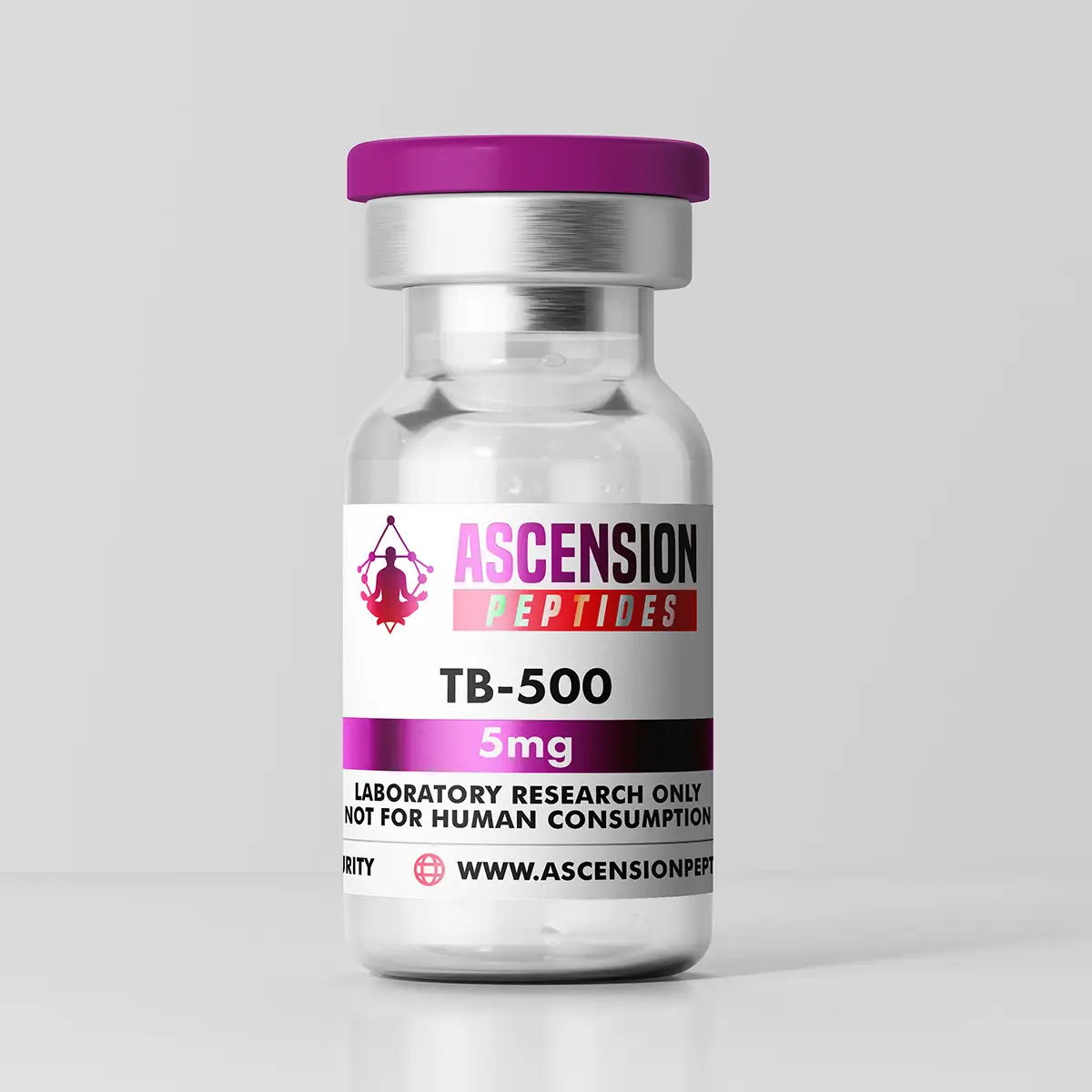
If your primary goal is injury recovery and connective tissue healing, TB-500 from Ascension Peptides covers similar territory with more published research behind it — and their quality control is well-documented. TB-500 is a solid alternative or complement if PEG-MGF isn't available from your preferred source.