Collagen peptides are simple but overhyped.
They are short pieces of collagen protein that are easier to mix, digest, and absorb than whole collagen. Most people use them for skin texture, joint comfort, hair and nail support, bone health, or as a protein add-on in coffee and smoothies.
🔑 Key Takeaways
- Collagen Peptides are hydrolyzed collagen fragments, usually sold as powder, capsules, gummies, or liquid shots.
- The main search intent is practical: what they are, whether they work, how much to take, which type to buy, and how long results take.
- The best-supported uses are skin hydration and elasticity, joint comfort, bone-density support in older adults, and muscle support when paired with resistance training.
- Collagen is not a complete protein. It can help protein intake, but it should not replace whey, eggs, meat, dairy, soy, or other complete protein sources.
- Look for hydrolyzed collagen peptides, clear source labeling, third-party testing, realistic dosing, and a product that matches your goal.
This guide matches what readers want from the top-ranking pages: a plain-English definition, honest benefits, dosage, timing, type comparisons, side effects, brand-selection criteria, and where collagen peptides fit next to skin peptides like GHK-Cu.
What Are Collagen Peptides?
Collagen peptides are hydrolyzed collagen.
Collagen is the main structural protein in skin, tendons, ligaments, cartilage, bones, blood vessels, and connective tissue. Whole collagen is large and difficult to absorb intact, so supplement makers break it into smaller peptide chains through hydrolysis. Those smaller fragments are what labels call collagen peptides, hydrolyzed collagen, or collagen hydrolysate.
That smaller size is the practical difference. Collagen peptides dissolve more easily than gelatin, mix into warm or cold drinks, and are usually easier to use daily. They are still made from animal collagen, most often bovine hide, fish skin, chicken cartilage, or porcine sources.
Simple version
Collagen is the raw structural protein. Collagen peptides are collagen broken into smaller pieces so they can be mixed into drinks and absorbed through digestion.
Collagen Peptides vs Collagen vs Gelatin
The names overlap, but they do not behave the same in a kitchen or supplement routine.
If your goal is a supplement routine, collagen peptides are usually the easiest form. If your goal is cooking texture, gelatin is the better tool. If your goal is whole-food collagen, bone broth and collagen-rich animal cuts can contribute, but the dose is less predictable.
Do Collagen Peptides Work?
They can, but the effect is modest.
The top search results split into two camps. Some pages list benefits confidently. Others ask whether collagen supplements are worth the hype. The fair answer sits between those extremes.
Collagen peptides are not magic wrinkle erasers, joint rebuilders, or hair-growth pills. They are a source of glycine, proline, hydroxyproline, and short collagen-derived peptides. Those inputs may support collagen turnover, especially when someone is consistent for weeks and already has enough calories, protein, vitamin C, zinc, copper, and training stimulus.
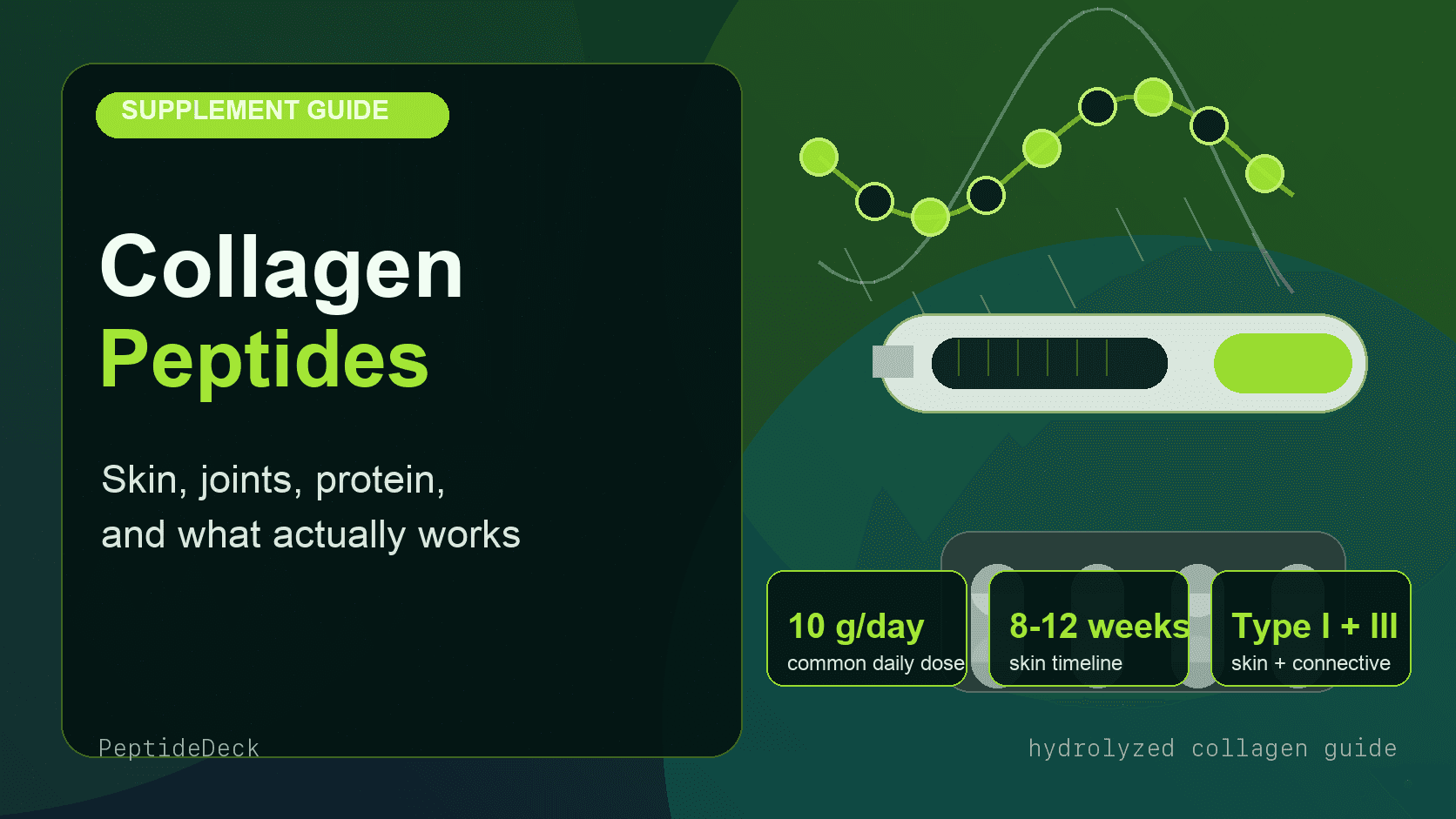
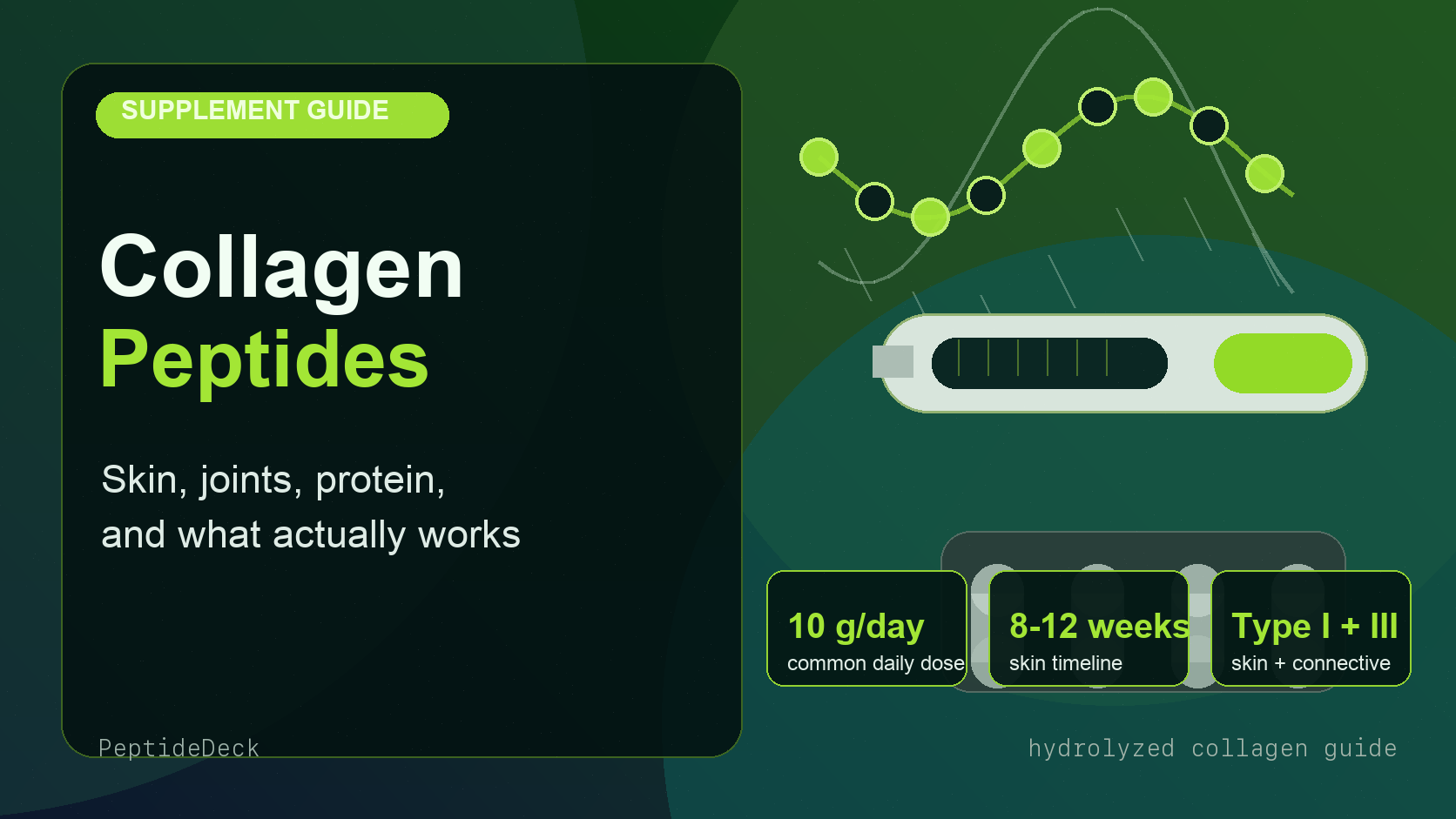
Most benefits are gradual. Skin studies often look at 8 to 12 weeks. Joint studies often run 12 to 24 weeks. Bone-density work takes months to years. If a product promises a dramatic change in a few days, that is marketing, not a realistic expectation.
Collagen Peptides Benefits
The most common benefits fall into five buckets: skin, joints, bones, muscle, and beauty claims like hair and nails.
Skin Hydration, Elasticity, and Wrinkles
Skin is the biggest reason people buy collagen peptides.
Clinical reviews have found that oral collagen can improve hydration and elasticity in some adults, especially when used daily for at least two to three months. The effect is usually subtle: better moisture, smoother texture, and small changes in elasticity or wrinkle depth, not a cosmetic procedure result.
Skin results also depend on the rest of the routine. Collagen peptides will not cancel out smoking, heavy UV exposure, poor sleep, low protein intake, or an inconsistent sunscreen habit. For skin-specific peptide context, compare this with GHK-Cu copper peptide, which is usually discussed through a different skin-signaling lens.
Joint Comfort and Tendon Support
Joint intent is almost as strong as skin intent.
Collagen peptides may help some active adults with joint comfort, especially when discomfort is tied to training load, tendons, or repetitive stress. A common practical dose is around 10g per day, often used for several months.
The strongest routine is not collagen alone. It is collagen plus progressive loading, adequate total protein, enough sleep, and enough vitamin C. Many athletes take collagen 30 to 60 minutes before tendon-focused training, often with vitamin C, but timing is less important than consistency for most casual users.
Bone Support
Bone claims need slower expectations.
Some trials in postmenopausal women have used specific collagen peptides for 12 months and measured bone mineral density and bone markers. That does not make collagen a replacement for calcium, vitamin D, resistance training, medication when needed, or medical care for osteopenia or osteoporosis.
Think of collagen peptides as a possible support layer, not the whole bone plan.
Muscle and Recovery
Collagen is not a muscle-building protein by itself.
It is low in leucine and missing tryptophan, so it does not behave like whey, eggs, meat, dairy, or soy for muscle protein synthesis. Still, some work suggests collagen peptides can support body composition and strength when paired with resistance training, especially in older adults or people with low connective-tissue protein intake.
If your main goal is muscle, use collagen as an add-on. Do not count it as your only protein source.
Hair and Nails
Hair and nail claims are popular but less clean.
Many collagen beauty products include biotin, vitamin C, hyaluronic acid, silica, zinc, or other ingredients. That makes it hard to know whether collagen itself caused the benefit. Brittle nails may improve in some users, but hair-growth promises are usually overstated.
Collagen Peptides Dosage
Most people use 5 to 15 grams daily.
The right dose depends on the goal, the product, and how much total protein you already eat. A scoop of collagen powder often contains 10 to 20 grams, while gummies and capsules may provide far less per serving.
If collagen causes bloating, reflux, or nausea, start lower. A half scoop for one week is more useful than a full scoop that you stop after three days.
How to Take Collagen Peptides
Daily consistency matters most.
Collagen peptides can go into coffee, tea, smoothies, oatmeal, yogurt, water, or soup. Unflavored powders are easiest to use because they do not force one flavor every day. Hot drinks are fine for most products because collagen peptides are already hydrolyzed and do not need to stay in a fragile structure.
- Take collagen at the same time each day if routine helps adherence.
- Use vitamin C-rich foods such as citrus, berries, peppers, or broccoli.
- Do not use collagen as your only protein source.
- Track one goal at a time: skin, joints, training, or nails.
- Give the routine at least 8 to 12 weeks before deciding it failed.
Best practical routine
Use 5-10g of hydrolyzed collagen peptides daily, pair it with enough total protein and vitamin C, and judge results after two to three months rather than after a week.
Types of Collagen Peptides
Most supplement labels talk about collagen type and collagen source. Those are related, but they are not the same thing.
Marine vs Bovine Collagen Peptides
Marine collagen is not automatically better.
Marine collagen usually provides Type I collagen and is often marketed for skin. Bovine collagen usually provides Type I and Type III and is common in general collagen powders. Both can be useful if the dose is meaningful and the product is tested.
Choose marine collagen if you prefer fish-derived collagen or avoid bovine products. Choose bovine collagen if you want a widely available, usually lower-cost powder. Avoid marine collagen if you have fish allergies unless a clinician confirms it is safe for you.
Are Grass-Fed Collagen Peptides Better?
Grass-fed can be a quality signal, but it is not the whole quality story.
A grass-fed label tells you something about sourcing. It does not prove the product contains the stated dose, avoids contamination, or matches the amino acid profile on the label. Third-party testing, transparent sourcing, and clean labeling matter more than a single front-label claim.
How to Choose the Best Collagen Peptides
The top commercial results focus heavily on “best collagen peptides” lists. Most readers do not need a perfect brand. They need a product that is tested, dosed properly, and easy enough to use daily.
Collagen Peptides Side Effects and Safety
Collagen peptides are usually well tolerated.
The most common complaints are mild digestive issues: bloating, fullness, gas, reflux, nausea, or an unpleasant taste. These are more likely when someone starts with a large scoop, uses a heavily flavored product, or takes collagen on top of a supplement stack that already irritates digestion.
People with fish, shellfish, beef, pork, egg, or chicken allergies should check the source carefully. Pregnant or breastfeeding people, people with kidney disease, and anyone on a medically restricted protein plan should ask a qualified clinician before adding collagen.
Also watch beauty formulas with extra biotin. High-dose biotin can interfere with some lab tests, including heart and thyroid-related tests. If you take biotin, tell your clinician before bloodwork.
Collagen Peptides vs Protein Powder
Collagen is not a complete protein.
This is one of the most important points in the top intent. Collagen can add grams of protein to a drink, but it does not contain all essential amino acids in the right balance. It is especially weak for muscle-building compared with whey, casein, egg, beef isolate, pea-rice blends, soy, and regular protein-rich foods.
Do Collagen Peptides Help Weight Loss?
Not directly.
Collagen peptides can make a drink more filling because they add protein calories. That may help some people reduce snacking. But collagen is not a GLP-1, appetite medication, thermogenic, or fat-loss peptide.
If weight loss is the main goal, collagen is a small nutrition tool. It should not be compared with GLP-1 topics like peptides for weight loss or dosing-focused guides for GLP-1 medications.
Collagen Peptides vs GHK-Cu
These are different categories.
Collagen peptides are oral protein fragments. GHK-Cu is a copper peptide commonly discussed for skin quality, wound-repair signaling, and cosmetic routines. Collagen peptides supply amino acid building blocks. GHK-Cu is usually discussed as a signal peptide.
That is why some readers compare them after collagen stops feeling strong enough. If your goal is nutrition support, collagen peptides make more sense. If your goal is a skin-focused peptide strategy, read the GHK-Cu before-and-after guide and the GHK-Cu benefits and dosage guide.
How Long Do Collagen Peptides Take to Work?
Most people should think in months, not days.
If nothing changes after three months at a real dose, with enough total protein and vitamin C, the product may not be worth continuing for that goal.
Common Collagen Peptide Mistakes
- Counting collagen as complete protein. It adds protein grams, but it does not replace complete protein.
- Using underdosed gummies. Many gummies provide only a few grams or less per serving.
- Expecting fast wrinkle changes. Skin outcomes need consistent use and realistic expectations.
- Ignoring vitamin C and total diet. Collagen production needs more than collagen peptides.
- Buying only by brand hype. Testing, dose, source, and price per serving matter more.
- Changing too many things at once. If you start collagen, biotin, hyaluronic acid, retinol, and a new diet together, you will not know what helped.
Who Should Consider Collagen Peptides?
Collagen peptides are a reasonable option for adults who want a simple supplement for skin, joints, connective tissue, or protein add-on use and can afford to take it consistently.
They are less compelling if you already eat plenty of complete protein, have no skin or joint goal, dislike powders, or expect a dramatic before-and-after result. They are also a poor choice as a substitute for medical care when pain, bone loss, wounds, or skin changes need diagnosis.
Frequently Asked Questions
Sources
- Cleveland Clinic: Collagen, types, function, and collagen peptides
- Healthline: Collagen benefits, side effects, and supplement cautions
- Verywell Health: Collagen peptide benefits and dosage range
- Academy of Nutrition and Dietetics: Are collagen supplements worth the hype?
- Nutrients: Effects of oral collagen for skin anti-aging, systematic review and meta-analysis
- Clark et al.: 24-week collagen hydrolysate study in athletes with activity-related joint pain
- Nutrients: Specific collagen peptides and bone mineral density in postmenopausal women
- British Journal of Nutrition: Collagen peptides with resistance training in older men