🔑 Key Takeaways
- BPC-157 capsules are real and widely available — but systemic bioavailability is debated
- For gut health and GI conditions, oral BPC-157 may work as well as injectable (local effect)
- For tendon, ligament, muscle, and joint healing — injectable is the superior choice
- BPC-157 Arginate is a more stable oral form, better absorbed than standard acetate capsules
- Typical capsule doses run 500mcg–1,000mcg twice daily; injectable is typically 250–500mcg once or twice daily
BPC-157 capsules show up constantly on research peptide vendor sites. They're convenient, painless, and easy to dose — no needles, no reconstitution, no math. So why do most serious researchers still go with injectable?
The answer is bioavailability. Peptides are generally broken down in the gut before they can reach the bloodstream. BPC-157 is unusual because it was actually derived from gastric juice protein — it has some inherent stability in the GI environment — but that stability doesn't automatically translate into reliable systemic absorption. For local gut effects, that stability is the whole point. For healing a torn tendon or a strained muscle, you need the compound to actually reach the tissue, and injection is the only route with consistent evidence for that.
This article breaks down what capsules are good for, when injectable is the better call, and what to look for if you do decide to go the oral route.
What Are BPC-157 Capsules?
BPC-157 capsules are simply the same lyophilized peptide powder — Body Protection Compound 157 — encapsulated in a gelatin or vegetarian shell for oral consumption. The peptide itself is identical to what's used in injectable form. The difference is the delivery route and what happens to it along the way.
Two main forms exist:
- BPC-157 Acetate (standard form) — the original research form, used in most injectable products. When encapsulated, it has to survive the GI tract to produce any systemic effect.
- BPC-157 Arginate (stable salt form) — a modified version that's more stable in the gut environment. Specifically developed for oral use. Some vendors market this as "oral BPC-157" or "stable BPC-157."
The arginate form is meaningfully different and generally considered more appropriate for capsule delivery — if you're going oral, this is the version worth seeking out.
Capsules vs Injectable: The Bioavailability Problem
Here's the core issue: most peptides are broken down by peptidases (enzymes in the gut and liver) before they can be absorbed intact. This is why insulin, for example, can't be taken as a pill — it's destroyed before it reaches the bloodstream. BPC-157 has some resistance to this process because of its structural properties, but "some resistance" isn't the same as "reliable systemic delivery."
Injectable wins for anything systemic. The compound goes subcutaneously into fat tissue, enters circulation directly, and gets distributed throughout the body. There's no first-pass metabolism issue, no gut enzyme exposure, no uncertainty about what percentage of the dose actually reaches target tissue.
When Capsules Actually Make Sense
There are two situations where capsules are a legitimate choice — not a compromise:
1. Gut Health and GI Conditions
BPC-157 was discovered in gastric juice protein. Its most-researched applications in preclinical models include gastric ulcer healing, inflammatory bowel disease, leaky gut, and intestinal repair. For these uses, you want the compound to stay in the gut — which is exactly what oral delivery achieves.
When you swallow a BPC-157 capsule, the peptide is present throughout the GI tract as it's slowly digested. For someone dealing with gut inflammation, colitis symptoms, or intestinal permeability issues, that local delivery is actually ideal. Injecting it subcutaneously and hoping it travels back to the gut works, but oral delivery puts it directly where it needs to be.
2. Needle Aversion or Travel
If injecting isn't practical for lifestyle or logistical reasons — travel, needle aversion, living situations — capsules provide a reasonable alternative even for systemic goals. The bioavailability issue is real, but it's not zero. Some researchers dose capsules at 2–3× the injectable dose to compensate, acknowledging that not all of it will be absorbed.
The BPC-157 Arginate Advantage
Standard BPC-157 (acetate form) in capsules is the most common product you'll find, but BPC-157 Arginate is specifically engineered for oral use. The arginate salt is more stable in acidic environments (like the stomach) and shows better resistance to peptidase degradation.
It's not a magic fix for the bioavailability problem — oral peptides still face challenges — but it's a meaningfully better choice for capsule delivery than standard acetate. If you do choose capsules, look specifically for the arginate form.
Read more: Where to Buy BPC-157 Arginate: Best Oral BPC-157 Vendors
BPC-157 Capsule Dosing
Because oral bioavailability is lower than injectable, capsule doses are typically higher to compensate:
Injectable BPC-157: Why It's Still the Gold Standard
The preclinical research on BPC-157 — the studies showing tendon healing, muscle repair, bone healing, ligament regeneration, neural protection, and gut repair — is almost entirely based on injectable protocols. Subcutaneous injection in rodent models. That's the evidence base.
When you inject BPC-157 subcutaneously, absorption is direct and predictable. You know roughly what's getting into your system. With capsules, you're making assumptions about how much survives digestion and how much crosses the intestinal barrier into circulation — and the honest answer is that nobody knows for sure in humans.
The injection itself is almost painless. Insulin syringes (29–31 gauge) are extremely fine — most people find it far less intimidating in practice than in theory. The reconstitution process takes about 5 minutes once you've done it a couple of times.
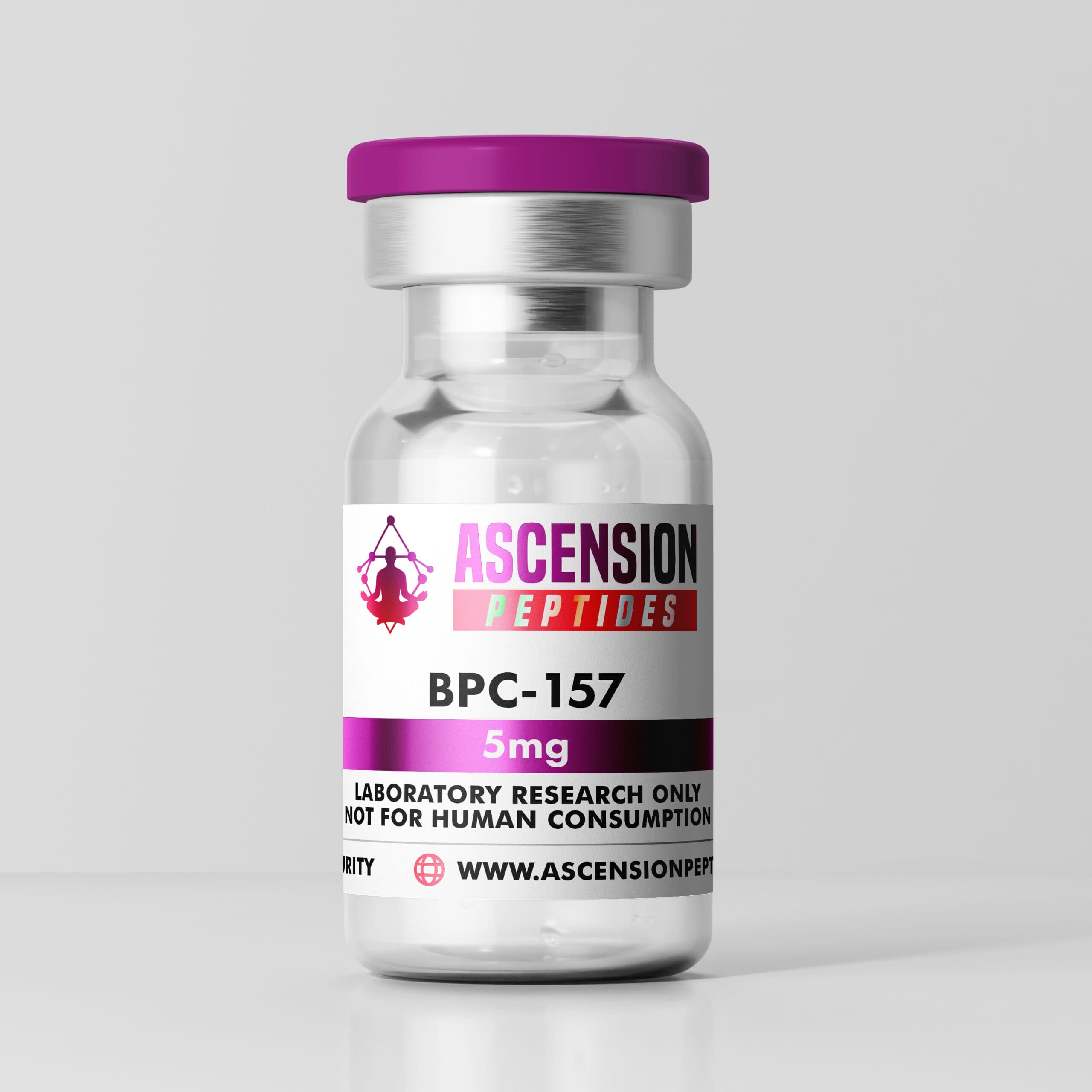
If you want to go injectable, Ascension Peptides carries BPC-157 5mg with third-party purity verification — the kind of quality control that matters when you're injecting something.
What About Combining Both?
Some researchers use both simultaneously — injectable for systemic healing, capsules specifically for gut support. It's not a common protocol but the logic is sound: each route delivers BPC-157 to different tissue compartments. If someone is using BPC-157 for injury recovery and also has GI issues, dual delivery isn't unreasonable.
This does increase cost and complexity. Most people pick one based on their primary goal.
What to Look For in BPC-157 Capsules
The capsule market is less regulated than injectable peptides (which already operate in a gray zone). Quality varies substantially. Things to check:
- Form: Arginate > Acetate for oral use. Make sure the vendor specifies which form is in the capsule.
- Third-party testing: Look for HPLC certificates of analysis with batch numbers. Any vendor worth buying from publishes actual test data.
- Mg per capsule: Most capsules are 500mcg–1,000mcg. Verify the actual content per capsule, not just the bottle size.
- Filler ingredients: Some capsule products use poor-quality fillers. Check the ingredient list.
- Vendor transparency: If they can't tell you the purity percentage and the testing lab, pass.
Top BPC-157 Capsule Products on the Market in 2026
The oral capsule market has fragmented quickly since BPC-157 came back into the spotlight. Most vendors land in one of two camps: pharmaceutical-grade single-ingredient products (500 mcg of BPC-157 in a clean shell, around $90 to $140 per bottle), or formulated stacks that add absorption enhancers like SNAC, anti-inflammatories like PEA, or arginine-salt buffering.
The pattern across the 2026 market is consistent: pay roughly $1.40 to $2.80 per 500 mcg dose, and prioritize either the arginate salt form or a formulation with a real absorption enhancer if you are taking capsules for anything beyond pure gut effects. For gut-only protocols, the standard acetate works fine because local contact with the intestinal lining matters more than systemic uptake.
If your goal is anything systemic (tendons, joints, ligaments), capsules are the wrong tool even at the premium tier. Switch to the injectable route through a vendor with a real third-party COA. See our BPC-157 entity page for full benefits and mechanism breakdown, and the BPC-157 dosage guide for exact protocols by goal.
BPC-157 Capsules After the 2026 FDA Reversal
The February 2026 reclassification (RFK Jr. removing BPC-157 from the FDA Category 2 bulk substances list) reopened the compounding pharmacy channel for the injectable form. Oral BPC-157 was less affected, because most capsule vendors operate as supplement makers rather than compounders, but the broader regulatory thaw has loosened restrictions on what oral product labels can claim.
What did not change: the bioavailability question. Even at 1,000 mcg doses, oral BPC-157 reaches the systemic circulation in much smaller fractions than a 250 mcg subcutaneous injection. For local gut effects, that is a feature, not a bug, because the peptide is concentrated where you want it. For tendon repair or joint healing, it remains the wrong delivery route. The science did not move in 2026, only the legal map did. Full route comparison at where to buy BPC-157 legally in 2026.
The Honest Bottom Line
BPC-157 capsules aren't a scam — they have real applications, particularly for gut health. But they're also not a substitute for injectable BPC-157 if your goal is systemic healing. The bioavailability difference is real and meaningful.
If you're dealing with gut inflammation, leaky gut, or GI issues: capsules are a completely reasonable choice, and possibly the better delivery method for that specific application.
If you're trying to heal a tendon, recover from an injury, reduce joint inflammation, or get any systemic effect: injectable is more reliable, better-evidenced, and honestly not as intimidating as it sounds once you've done it a few times.
Read more: BPC-157 Oral vs Injection: Which Method Actually Works Better?