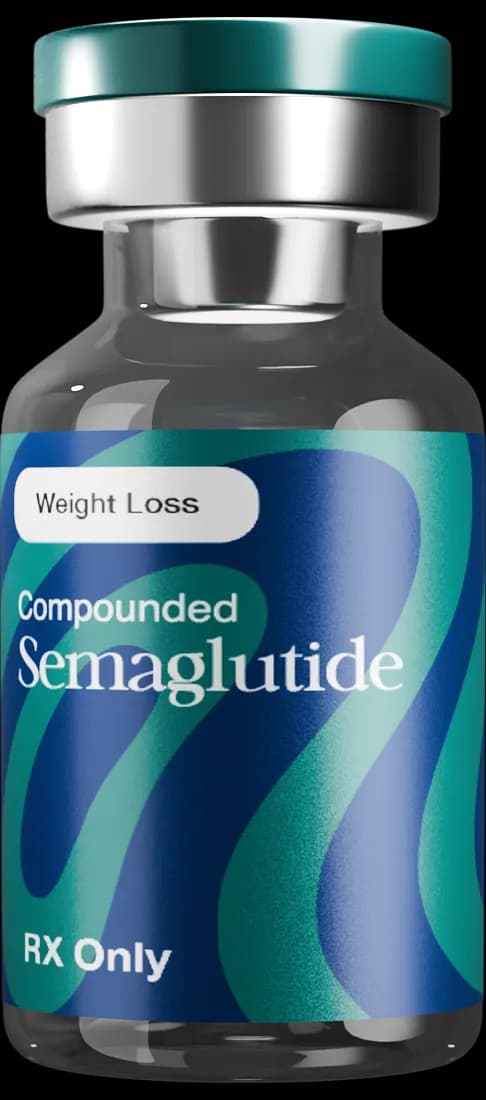
Every week a new supplement lands on the market claiming to replicate what prescription semaglutide or tirzepatide does — without the injections, without the prescription, and without the side effects. Advanced Bionutritionals GLP-1 Plus is one of the most-searched products in this crowded category, attracting people who want appetite control and metabolic support from a capsule rather than a needle.
That desire is entirely understandable. Prescription GLP-1 receptor agonists are expensive, require weekly injections, and cause nausea, fatigue, and gastrointestinal distress in a significant subset of users. But the gap between marketing language and peer-reviewed evidence in the supplement world is wide — and when it comes to GLP-1, it's wider than most. This guide breaks down what Advanced Bionutritionals GLP-1 Plus actually contains, what the published research says about each ingredient, and what you can realistically expect from this product.
- Product type: Oral dietary supplement (capsule)
- Primary claim: Supports natural GLP-1 production and appetite regulation
- Key ingredients: Berberine, Irvingia gabonensis, L-arabinose, chromium, cinnamon bark extract
- Prescription required: No
- FDA approved: No — classified as a dietary supplement
- Best suited for: Adults seeking mild metabolic and appetite support alongside diet and exercise
What Is GLP-1 and Why Does It Matter?
Glucagon-like peptide-1 (GLP-1) is an incretin hormone produced in the gut in response to food intake. It plays a central role in blood sugar regulation, gastric emptying, and satiety signaling. When GLP-1 is released after a meal, it prompts the pancreas to secrete insulin in a glucose-dependent manner, slows the rate at which food leaves the stomach, and sends satiety signals to the hypothalamus — the brain region that governs appetite and energy balance.
Prescription GLP-1 receptor agonists like semaglutide work by mimicking this hormone at the receptor level with a modified peptide structure that resists enzymatic breakdown, producing a prolonged and potent effect. Clinical trials show 10–15% average body weight reduction over 68 weeks in non-diabetic adults with obesity.
Oral supplements claiming to "boost GLP-1" operate through an entirely different mechanism. Rather than binding to GLP-1 receptors directly, they attempt to stimulate the body's own GLP-1-secreting L-cells through dietary signals. The science here is real but modest — and that distinction matters enormously when setting expectations.
Ingredient-by-Ingredient Breakdown
Advanced Bionutritionals does not publish its full label with exact milligrams for every ingredient on their main product page, which is itself a yellow flag when evaluating any supplement. Based on publicly available information and third-party analysis, the core ingredient profile includes the following compounds.
Berberine
Berberine is the most clinically studied ingredient in this class of supplements and arguably the most credible. A plant alkaloid found in goldenseal, barberry, and Oregon grape, berberine activates AMPK (AMP-activated protein kinase), an enzyme that regulates cellular energy balance similarly to the way metformin functions. Multiple randomized controlled trials have shown berberine reduces fasting blood glucose, HbA1c, and triglycerides in people with type 2 diabetes or metabolic syndrome.
Importantly for GLP-1 relevance: several studies suggest berberine modestly increases endogenous GLP-1 secretion, likely by stimulating intestinal L-cells. A 2012 study in the Journal of Endocrinology found berberine increased plasma GLP-1 levels in diabetic rats, and human data — while limited — shows directional consistency. Effective doses in research typically range from 1,000–1,500 mg/day in divided doses. Whether GLP-1 Plus reaches this threshold is unknown without full label transparency.
Irvingia Gabonensis (African Mango Seed Extract)
Irvingia gabonensis is a West African fruit whose seed extract has been studied for effects on leptin sensitivity, adipogenesis inhibition, and weight management. A 2009 randomized, double-blind, placebo-controlled trial published in Lipids in Health and Disease reported statistically significant reductions in body weight, body fat, and waist circumference with 150 mg twice daily over 10 weeks. However, this trial was conducted by researchers with financial ties to the supplement industry, and independent replication has been limited.
The proposed GLP-1 mechanism involves Irvingia's fiber-rich seed reducing the rate of carbohydrate absorption, indirectly stimulating L-cell GLP-1 output. Plausible, but not proven in direct human GLP-1 measurement studies.
L-Arabinose
L-arabinose is a naturally occurring pentose sugar found in plant cell walls. Its primary studied mechanism is inhibition of sucrase, the intestinal enzyme responsible for breaking down sucrose into absorbable glucose and fructose. By slowing sucrose absorption, L-arabinose blunts post-meal glucose spikes — which in turn reduces the demand on insulin and may support sustained GLP-1 activity. A 2010 study in Nutrition & Metabolism found L-arabinose reduced sucrose-induced glycemic response in healthy adults. Research is still early-stage but mechanistically coherent.
Cinnamon Bark Extract
Cinnamon has a long history of traditional use for blood sugar support, and the modern research partially validates this. The active compound, type-A polyphenols (specifically proanthocyanidins), appear to enhance insulin receptor sensitivity and slow gastric emptying — the latter being a key mechanism shared with GLP-1 receptor agonists. A 2019 meta-analysis in Nutrition Research found cinnamon supplementation significantly reduced fasting blood glucose and HOMA-IR in people with prediabetes or type 2 diabetes. Direct GLP-1 elevation data remains limited.
Chromium
Chromium is an essential trace mineral included in this formulation as chromium picolinate. It enhances the action of insulin at the receptor level and has modest evidence for reducing carbohydrate cravings. The FDA permits a qualified health claim for chromium picolinate regarding insulin resistance. Its inclusion here is standard for metabolic formulations; however, chromium's clinical effect size is considered small by most researchers.
- Berberine: Strong evidence for glucose control; moderate evidence for GLP-1 elevation
- Irvingia gabonensis: Early positive data; independent replication needed
- L-arabinose: Good mechanistic rationale; limited human GLP-1 data
- Cinnamon bark: Solid glucose/insulin data; indirect GLP-1 support
- Chromium: Small effect size; well-tolerated addition
How Does GLP-1 Plus Compare to Prescription GLP-1 Drugs?
This comparison is where honest analysis matters most, because the marketing language around products like GLP-1 Plus deliberately borrows the equity of pharmaceutical GLP-1 success without being subject to the same evidence standards.
Prescription GLP-1 receptor agonists bind directly to GLP-1 receptors throughout the body — in the pancreas, the gut, the brain's satiety centers, and cardiovascular tissue — with affinities engineered to produce sustained, high-magnitude effects. Clinical trial data shows average weight loss of 10–15% body weight and robust reductions in cardiovascular mortality in high-risk patients.
GLP-1 Plus, like all oral supplements in this category, works upstream — attempting to nudge the body toward producing marginally more of its own GLP-1 through dietary signals. The ceiling on this approach is physiological. Human L-cells can only secrete so much GLP-1 in response to nutritional stimuli before the system reaches its natural set point. There is no oral supplement that bypasses this limitation without a prescription mechanism.
A realistic expectation for GLP-1 Plus: modest appetite modulation, improved post-meal glucose control, reduced carbohydrate cravings, and incremental support for a caloric deficit achieved primarily through diet and exercise. It is not a pharmaceutical alternative. It is a metabolic support supplement with a specific and scientifically coherent mechanism — just a far smaller effect size than the marketing implies.

Who Is Advanced Bionutritionals GLP-1 Plus Best For?
Despite the gap between marketing claims and pharmaceutical-level outcomes, GLP-1 Plus may offer genuine utility for a specific user profile. The candidate who is most likely to experience meaningful benefit looks like this:
- Adults with mild to moderate insulin resistance who are not yet on medication but are managing blood sugar through lifestyle interventions
- People experiencing carbohydrate-driven cravings who want nutritional support to reduce the frequency or intensity of these urges
- Individuals already committed to caloric deficit who want an additional layer of appetite regulation to make adherence easier
- Those who cannot access or tolerate prescription GLP-1 drugs due to cost, contraindications, or side effect sensitivity — understanding that results will be substantially more modest
- Adults looking to complement a semaglutide or tirzepatide protocol during dose titration phases when appetite suppression is less pronounced
GLP-1 Plus is not appropriate as a standalone obesity treatment, a diabetes medication replacement, or a substitute for medical supervision in metabolic disease management.
Potential Side Effects and Safety Considerations
The ingredient profile in GLP-1 Plus is generally well-tolerated, but several considerations are worth flagging for prospective users.
Berberine can cause gastrointestinal discomfort — cramping, loose stools, and nausea — particularly at higher doses or when taken on an empty stomach. Starting at a lower dose and titrating up reduces this risk. Berberine also inhibits CYP3A4 and P-glycoprotein enzymes, meaning it can interact with medications including statins, certain antibiotics, and blood-thinning agents. Anyone on prescription medication should consult their physician before using any berberine-containing supplement.
Chromium picolinate at high doses has rare reports of kidney damage; at doses used in supplements, it is considered safe for the vast majority of adults.
Irvingia gabonensis and L-arabinose have limited long-term safety data in humans but no established serious adverse event profile at typical supplemental doses.
Pregnant or breastfeeding individuals should avoid this product. People with diabetes managing blood glucose with medication should use caution and monitor glucose closely, as the combined glucose-lowering effect of the supplement plus medication could theoretically cause hypoglycemia.
Frequently Asked Questions
The Bottom Line
Advanced Bionutritionals GLP-1 Plus is a thoughtfully assembled metabolic support supplement. Its core ingredients — especially berberine — have legitimate peer-reviewed support for blood glucose regulation and modest GLP-1 stimulation. The product is not a scam, and it is not without potential utility for the right user.
But it is also not a pharmaceutical alternative, and the marketing that leverages the cultural moment around prescription GLP-1 drugs deserves scrutiny. Anyone approaching this supplement with expectations calibrated to semaglutide-level outcomes will be disappointed. Anyone approaching it as one tool among several in a disciplined diet-and-exercise protocol may find genuine supporting value.
If you are exploring the GLP-1 landscape more broadly — including the difference between oral supplements, research peptides, and prescription medications — the peptide research guides on this site offer a deeper evidence-based foundation for making that evaluation.