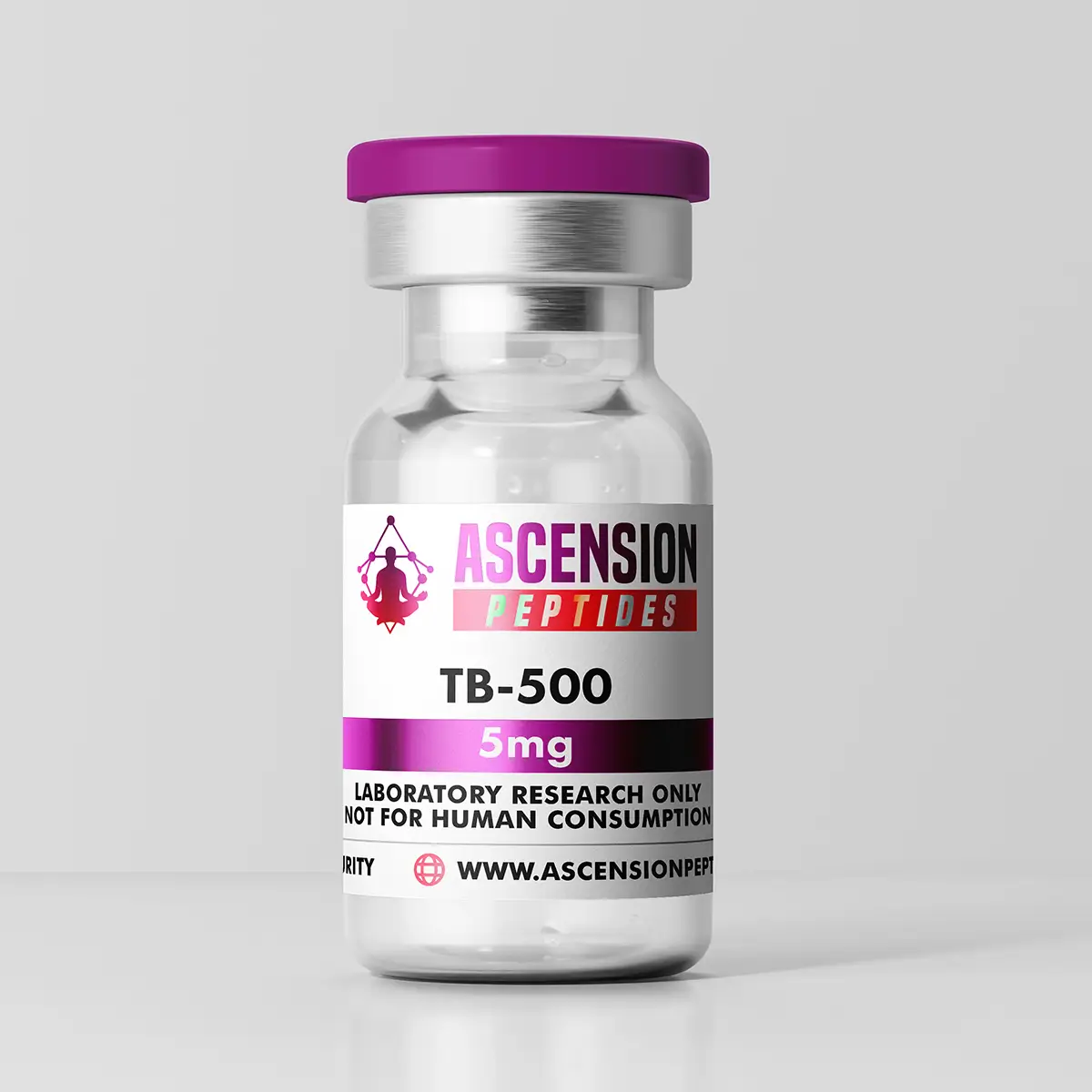
🔑 Key Takeaways
- TB-500 is well tolerated — most people experience only mild injection site reactions
- No significant systemic side effects at standard doses (2–5mg)
- Most common: brief redness or swelling at injection site, fades in hours
- Rare: temporary fatigue in the first week, mild headache
- Theoretical concern: angiogenesis (new blood vessel formation) — not a documented issue at standard doses
- Do NOT use if you have active cancer — TB-500 promotes cell migration, which could theoretically be problematic
What Is TB-500?
TB-500 is a synthetic version of Thymosin Beta-4, a naturally occurring protein found in virtually every cell in your body. It's studied primarily for accelerating tissue repair — tendons, muscles, ligaments, skin. It works by upregulating actin, which is essential for cell movement and tissue remodeling.
Common Side Effects (Most People Experience These)
- Injection site redness — small pink area, fades within 1–2 hours
- Minor swelling at injection site — especially if injecting the same spot repeatedly. Rotate sites.
- Brief fatigue — some users report feeling slightly tired for 1–2 days after the first injection. Usually disappears after the first week.
- Mild aching at injection site — passes quickly
Less Common Side Effects
- Temporary headache (first week) — mild, usually resolves without intervention. Stay hydrated.
- Flu-like feeling after first injection — occasionally reported. Mild and short-lived (24–48 hours). May be an immune response to the novel peptide.
- Nausea at higher doses — not typical at 2mg but reported at 5mg+. Reduce dose if this occurs.
- Increased healing sensitivity — some users notice that existing injuries feel more active/aware during the first 1–2 weeks. This is considered a normal sign the peptide is working on damaged tissue.
The Angiogenesis Question
The most cited concern about TB-500 is its role in angiogenesis (new blood vessel formation). Because TB-500 promotes blood vessel growth as part of tissue repair, there's a theoretical question about whether it could promote tumor growth.
- This concern exists for anyone with active cancer — do not use TB-500 if you have a current cancer diagnosis
- For healthy individuals with no cancer history, standard doses show no problematic angiogenesis in clinical observation
- This is not a documented real-world problem at standard doses — it's a theoretical mechanism concern
- Standard doses (2–5mg 2–3x per week) are far below amounts that would cause systemic angiogenesis issues
What's NOT Caused by TB-500
- Hormonal changes — TB-500 has no androgenic, estrogenic, or GH-related activity
- Weight changes — no appetite or metabolic effects
- Mood or cognitive effects — not a mechanism of TB-500
- Cardiovascular effects — not documented at standard doses
If you experience these, the cause is likely something else in your stack.
TB-500 vs BPC-157 Side Effects

How to Minimize Side Effects
- Rotate injection sites every dose
- Start at lower end of dose range (2mg) before going to 5mg
- Use a fine-gauge needle (29–31G insulin syringe)
- Inject slowly (5–10 seconds)
- Don't inject cold peptide — let vial sit at room temp 5 min
When to Stop
- If injection site pain worsens after 24–48 hours (possible infection)
- Persistent systemic allergic reaction (rare)
- If you receive a cancer diagnosis — discontinue and consult your oncologist
- Any symptoms that concern you — better to pause and check
The information in this article is for educational purposes only and does not constitute medical advice. Always consult a healthcare professional before starting any new supplement or compound. Results vary by individual.