GLP-1 receptor agonists are producing body weight reductions of up to 24% in clinical trials — and most people still can't explain how they actually work.
🔑 At a Glance
- What GLP-1 is: An incretin hormone produced in the gut after eating — controls insulin, glucagon, digestion speed, and brain hunger signals
- Why it works for weight loss: Activates hypothalamic satiety pathways, reducing caloric intake by 20–35% without willpower
- Natural vs. drug GLP-1: Natural GLP-1 lasts ~2 minutes; semaglutide lasts ~7 days — same receptor, vastly different duration
- GIP adds synergy: Combining GLP-1 + GIP (tirzepatide) produces stronger weight loss than either alone — ~22% vs ~15%
- Triple agonism (retatrutide): Adds glucagon receptor to boost energy expenditure — Phase 2 data shows 24.2% weight loss
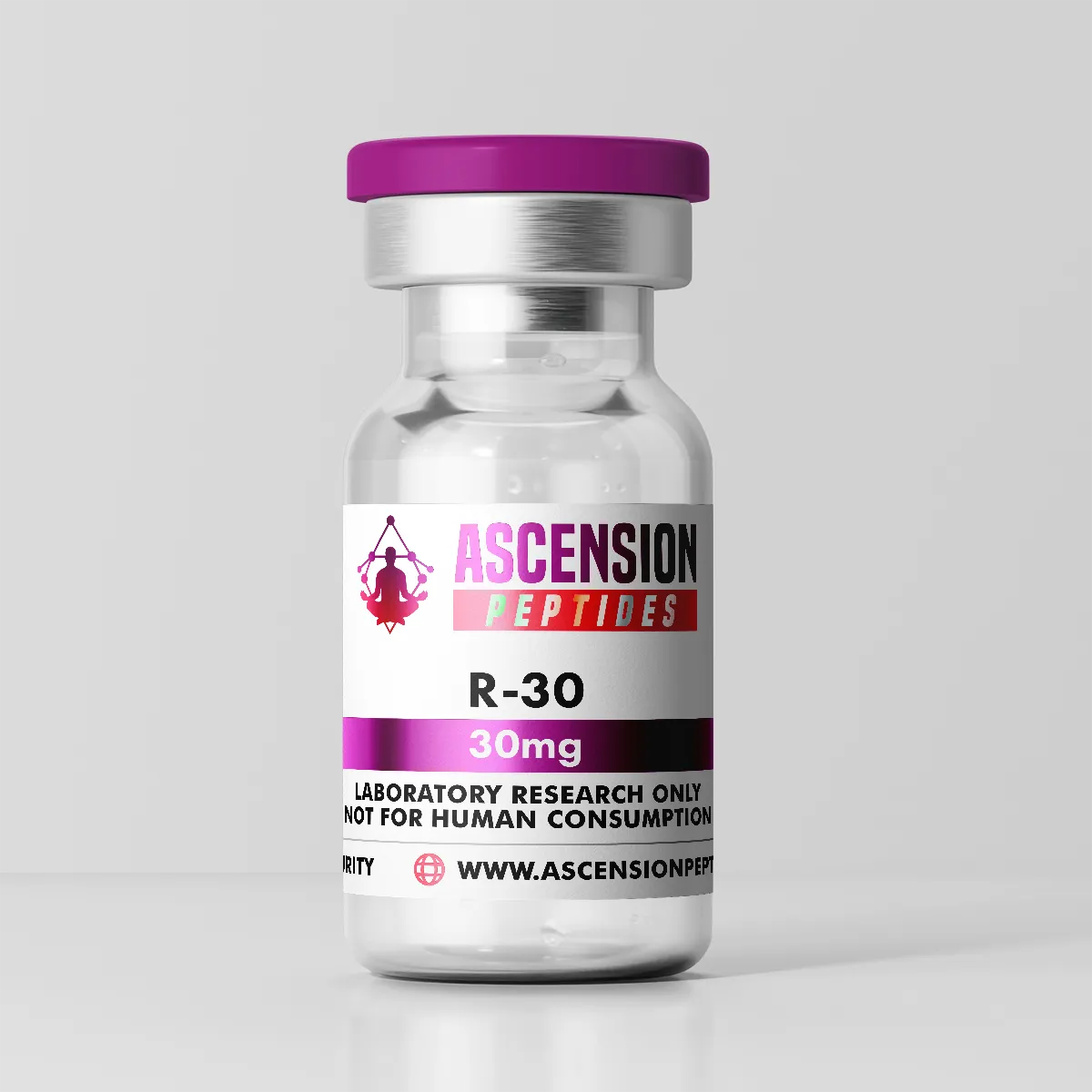
- Research access: R-30 (retatrutide) and S-5 (semaglutide) are available from Ascension Peptides for investigational use
GLP-1 drugs dominate the obesity conversation right now — Ozempic, Wegovy, Mounjaro, you've heard the names. But the actual science of how they work is more interesting than "appetite suppression." There are multiple simultaneous mechanisms, a compelling story about incretin synergy, and a new class of triple agonists pushing weight loss to numbers never seen in pharmaceutical trials. This guide covers all of it.
What Is GLP-1? The Incretin Explained
GLP-1 stands for glucagon-like peptide-1. It's produced by L-cells in your small intestine, released within minutes of eating — particularly after carbohydrates and fatty acids reach your gut. It belongs to a family of hormones called incretins, which broadly means: gut-derived signals that enhance insulin release in response to meals.
Here's what happens every time you eat a meal, assuming your GLP-1 system is working normally:
- GLP-1 spikes within 15–30 minutes of food entering the small intestine
- It signals the pancreas to release insulin (but only when blood glucose is already elevated — more on this in a moment)
- It suppresses glucagon, the hormone that tells your liver to dump glucose into the bloodstream
- It slows gastric emptying — food leaves your stomach more slowly, flattening glucose spikes
- It sends satiety signals to the brain via the vagus nerve and direct receptor activation in the hypothalamus
The whole sequence takes about 30–90 minutes and then reverses — because natural GLP-1 is destroyed by an enzyme called DPP-4 in roughly 2 minutes. That's why you can't just take GLP-1 in pill form and have it work. The body dismantles it almost immediately.
How GLP-1 Works: The Full Mechanism
When people ask how does GLP-1 work, they usually get a one-liner about appetite. But it's actually five distinct pathways firing at the same time.
Pathway 1: Glucose-Dependent Insulin Release
GLP-1 binds to receptors on pancreatic beta cells and triggers insulin secretion — but only when blood glucose is already elevated. This is a safety feature baked into the mechanism. Your pancreas won't flood your bloodstream with insulin from GLP-1 activation alone, without glucose present to justify it. This is why GLP-1 agonists, used on their own, carry very low hypoglycemia risk compared to older diabetes drugs that force insulin release unconditionally.
The technical term for this is "glucose-dependent insulinotropic action." It means the hormone amplifies the pancreas's natural glucose-sensing response, rather than overriding it.
Pathway 2: Glucagon Suppression
Simultaneously, GLP-1 suppresses alpha cells in the pancreas, reducing glucagon release. Glucagon is insulin's counterpart — it signals the liver to release stored glucose. High glucagon after meals is a major driver of postprandial hyperglycemia in type 2 diabetes. GLP-1 pulls glucagon down while pushing insulin up, which keeps post-meal blood glucose in a tighter range.
Pathway 3: Slowed Gastric Emptying
This one matters enormously for both blood sugar control and weight loss. GLP-1 slows how quickly food moves from your stomach into the small intestine. Practically, this does two things: it flattens glucose absorption (no sharp spikes), and it keeps you feeling full for longer after each meal. The gastric emptying effect is also why nausea is so common — more on that in the side effects section.
Pathway 4: Brain Satiety — The CNS Mechanism
This is the most important pathway for weight loss. GLP-1 receptors are found throughout the central nervous system, including:
- The hypothalamic arcuate nucleus — the main hunger/satiety control center
- The nucleus tractus solitarius — where vagal signals from the gut are processed
- The area postrema — the brain's "nausea center" (also explains the side effects)
- The nucleus accumbens — involved in food reward and hedonic eating
When GLP-1 activates these areas, it reduces hunger signals, lowers the perceived reward value of food, and decreases cravings. People consistently report that food just doesn't call to them the same way. That's not willpower — it's the nucleus accumbens being quieted by a hormone.
Pathway 5: Vagus Nerve Signaling
The gut communicates with the brain partly through the vagus nerve — a massive cranial nerve that runs from the brainstem down into the abdomen. GLP-1 receptors exist on vagal afferents (sensory neurons running from gut to brain), and activation here sends "I'm full, slow down" signals directly up to the brainstem. This is a peripheral pathway that complements the direct central actions.
Hypothalamic Satiety
Directly activates arcuate nucleus to reduce hunger drive and food-seeking behavior
Gastric Braking
Slows gastric emptying — food stays in your stomach longer, extending satiety per meal
Glucose-Safe Insulin
Amplifies insulin only when glucose is elevated — hypoglycemia risk stays minimal
Reward Dampening
Quiets nucleus accumbens activity, reducing hedonic eating and food craving intensity
GLP-1 for Weight Loss: What's Actually Happening
GLP-1 doesn't directly dissolve fat. It doesn't upregulate lipolysis in a meaningful direct way. The weight loss mechanism is primarily behavioral — and that's not a criticism, it's just accurate.
Here's the actual chain of events: GLP-1 activation suppresses appetite → caloric intake drops 20–35% (documented across multiple STEP and SURMOUNT trials) → sustained caloric deficit → fat oxidation → weight loss. The appetite suppression piece does the heavy lifting. Everything downstream — lower insulin, reduced liver fat, improved insulin sensitivity — follows from eating less and losing weight, not from GLP-1 directly burning fat.
There is some evidence of direct effects on adipose tissue — GLP-1 receptors exist in fat cells and may modestly reduce fat storage signaling — but these effects are secondary. The appetite mechanism is the engine.
What makes GLP-1 different from willpower-based caloric restriction is that the hunger signal itself is altered. Most diets fail because the brain's hunger drive eventually wins. GLP-1 works by changing the output of that drive, not by fighting it.
GLP-1 vs GIP: Why Dual Agonism Matters
GIP — glucose-dependent insulinotropic polypeptide — is the other major incretin hormone, produced by K-cells in the proximal small intestine. It also stimulates insulin secretion after meals. But GLP-1 and GIP have meaningfully different profiles:
- GLP-1 alone strongly suppresses appetite and slows gastric emptying
- GIP alone is a weaker insulin stimulator and, in early research, showed potential to promote fat storage — which made it seem like a poor obesity drug target
- GLP-1 + GIP together produces synergistic effects that exceed either alone
That last point is why tirzepatide outperforms semaglutide in head-to-head data. The SURMOUNT-5 trial, published in 2024, showed tirzepatide producing 20% more weight loss than semaglutide in a direct comparison. The mechanism isn't fully worked out, but the leading hypothesis involves complementary receptor signaling in the hypothalamus — the two hormones acting on overlapping but distinct neural circuits, reinforcing each other's effects.
💡 The GIP Paradox
GIP was actually considered a bad target for obesity drugs in the early 2000s — some data suggested it promoted fat storage. But when Eli Lilly combined GIP with GLP-1 agonism in tirzepatide, results outpaced everything that came before. The current hypothesis is that GIP's effect on fat metabolism reverses in the presence of sustained GLP-1 activation — the two systems interact in ways that weren't obvious from studying either hormone alone.
Triple Agonism: How Retatrutide Takes This Further
Retatrutide adds a third receptor — the glucagon receptor (GCGR) — to the GLP-1/GIP combination. This is the key differentiator from tirzepatide, and it's where things get genuinely interesting from a mechanism standpoint.
Glucagon normally tells the liver to release stored glucose — the opposite of what you want in a metabolic disease context. So why activate it? Because the glucagon receptor does more than glucose signaling. In hepatocytes and adipose tissue, glucagon receptor activation:
- Increases hepatic fat oxidation (fat burning in the liver)
- Boosts energy expenditure — effectively raising metabolic rate
- Promotes mitochondrial function in fat tissue
- Reduces hepatic lipogenesis (the liver making new fat)
When you combine this with GLP-1's appetite suppression and GIP's insulin-sensitizing effects, you get: eating less + metabolic rate increased + fat oxidation upregulated. Three separate axes of energy balance, all pushed in the same direction simultaneously.
The Phase 2 trial (Jastreboff et al., NEJM 2023) tested retatrutide at 1mg, 4mg, 8mg, and 12mg weekly doses. At the 12mg dose, 48-week weight loss reached 24.2% — the largest body weight reduction ever recorded for a pharmaceutical in a controlled clinical trial. Phase 3 (TRIUMPH program) trials are ongoing as of 2026.
GLP-1 Receptor Agonists Comparison: Semaglutide vs Tirzepatide vs Retatrutide
The half-life difference between liraglutide (~13 hours, daily injections) and semaglutide (~7 days, weekly injection) comes down to molecular engineering. Semaglutide has a fatty acid chain attached that binds to albumin in the bloodstream, protecting it from DPP-4 degradation. Retatrutide has similar structural modifications. The longer something stays bound to albumin, the slower it clears — and the less frequently you need to inject.
Natural GLP-1 vs GLP-1 Agonist Drugs
The question that comes up often: if GLP-1 exists naturally in your body, why don't normal levels prevent obesity? A few reasons.
First, natural GLP-1 is gone in 2 minutes. The postprandial GLP-1 spike triggers beneficial signals, but those signals fade fast. A GLP-1 agonist drug keeps those receptors activated continuously — 24/7, not just for 30 minutes after eating. That sustained activation is what produces the sustained appetite suppression and weight loss.
Second, many people with obesity and type 2 diabetes have a blunted GLP-1 response. They produce less of it after meals, or the receptors respond to it less effectively. The drugs bypass this by providing exogenous receptor activation at pharmacological doses.
Third, GLP-1 agonist drugs are engineered to be resistant to DPP-4. Natural GLP-1 gets cleaved immediately; semaglutide has structural substitutions at key amino acid positions (Aib8 substitution) that make it resistant to the same enzyme. Same receptor target, completely different pharmacokinetics.
💡 Why You Can't Supplement GLP-1
Natural GLP-1 is a 30-amino acid peptide. It gets degraded by DPP-4 in ~2 minutes and would be destroyed in the gut before it could reach circulation orally. GLP-1 shots (injectable GLP-1 agonists) are engineered analogs — same receptor target, but structurally modified for resistance to degradation. Oral semaglutide (Rybelsus) works only because of a special absorption enhancer (SNAC) that protects it briefly in the stomach — even so, bioavailability is only about 1%.
Research Peptide Options: R-30 and S-5

For researchers and investigators interested in studying these mechanisms outside the prescription pathway, two compounds are worth knowing about:
R-30 — Retatrutide (Triple Agonist)
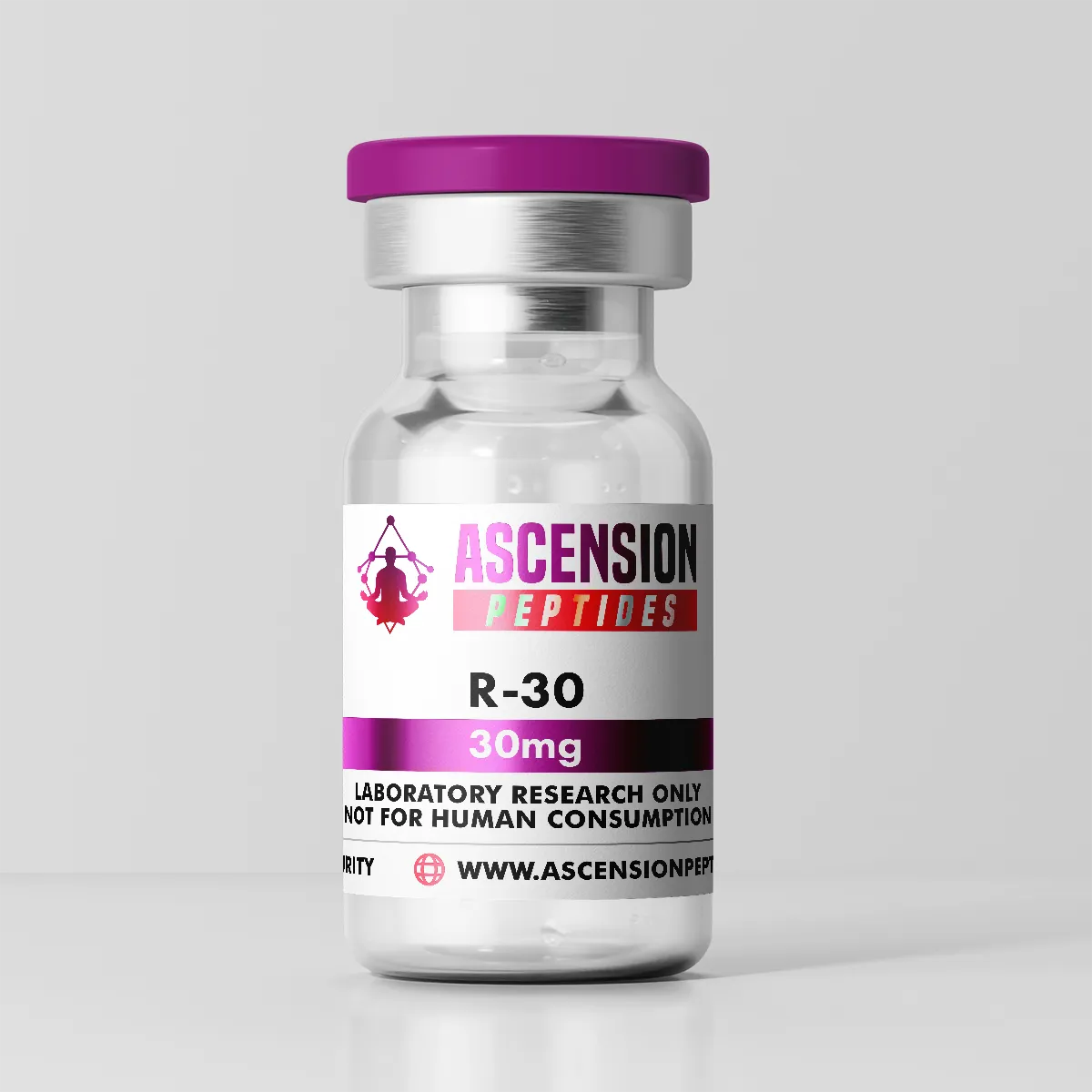
Ascension Peptides carries retatrutide under the designation R-30, available in a 30mg vial. This is the same triple agonist compound (GLP-1/GIP/GCGR) studied in the NEJM Phase 2 trial, supplied for research purposes while Phase 3 trials are ongoing. The R-30 designation refers to the 30mg vial format.
S-5 — Semaglutide Research Peptide
For researchers specifically studying the GLP-1 single-agonist mechanism, S-5 (semaglutide) is also available through Ascension. This allows direct comparison between single GLP-1 agonism and the triple agonist mechanism in controlled research settings.
GLP-1 Side Effects: Why They Happen
Side effects are exactly what you'd predict from the mechanism — they're not random, they're the mechanism working too aggressively.
Nausea and vomiting: Direct result of gastric emptying slowdown. When your stomach is emptying 30–50% slower than normal, your brain interprets that as "overfull" and triggers nausea. Worse when starting or increasing dose; improves significantly by week 8–12 as the GI tract adapts.
Constipation or diarrhea: General GI motility slowdown affects transit time throughout the colon. Individual responses vary — some people get constipated, some get loose stools, some both at different phases.
Reduced appetite to extremes: Some people find their appetite suppressed so much they struggle to eat enough protein to maintain muscle mass during rapid weight loss. This is a real concern, particularly at higher doses of tirzepatide or retatrutide.
Pancreatitis risk: Rare but documented. GLP-1 receptors exist on pancreatic tissue and prolonged activation may increase pancreatitis risk in susceptible individuals. Anyone with a history of pancreatitis or gallstones should discuss this carefully with a physician.
Thyroid risk: Rodent studies showed thyroid C-cell tumors with GLP-1 agonist exposure. Human relevance is uncertain, but all semaglutide and liraglutide labels carry a black-box warning for anyone with personal/family history of medullary thyroid carcinoma or MEN2 syndrome.
GLP-1 Drugs Full List: What's Available
One thing worth knowing: Ozempic and Wegovy are the same molecule (semaglutide) at different maximum doses. Ozempic goes up to 2mg weekly for T2D; Wegovy goes up to 2.4mg for obesity. Same deal with Mounjaro (T2D, up to 15mg) and Zepbound (obesity, same doses) — both tirzepatide, different labels.