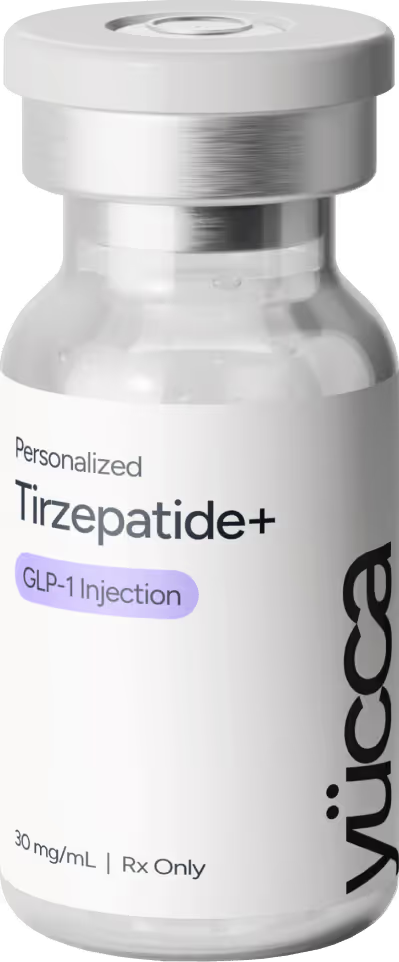
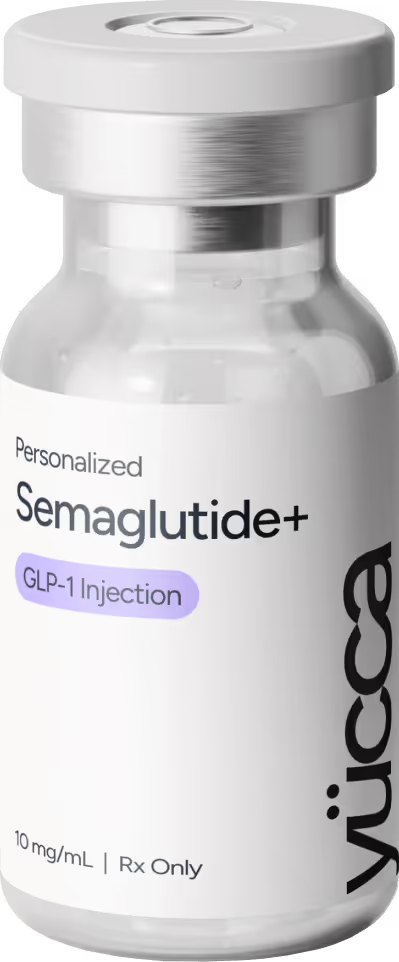
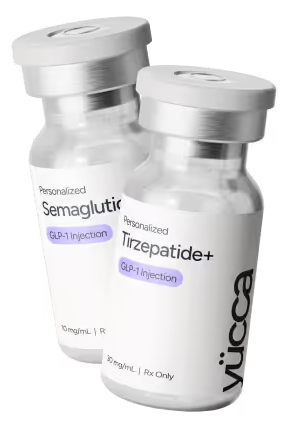
Semaglutide is still the most Googled weight loss drug in the world. But actually getting it — at a price that won't require a second mortgage — is a lot messier than it used to be.
The compounding pharmacy route that kept millions of people on affordable semaglutide for the past few years is under increasing regulatory pressure. The FDA ended the official shortage designation in early 2024, which means compounders lost their clearest legal cover. Some pharmacies stopped altogether; others moved to alternative formulations. And brand-name Wegovy at $1,300–$1,500/month without insurance remains out of reach for most people.
So where does that leave someone who wants semaglutide in 2026? Three real options — and one genuinely better alternative that's worth knowing about.
🔑 Key Takeaways
- Semaglutide is FDA-approved under the brand names Wegovy (obesity) and Ozempic (diabetes) — legitimate prescriptions remain available but expensive
- Compounding pharmacies faced major FDA crackdowns after the shortage designation was lifted; fewer reliable options exist now
- Research peptide suppliers remain an available route for semaglutide outside the prescription system
- Retatrutide, a newer GLP-1/GIP/glucagon triple agonist, is showing significantly stronger weight loss results (24% vs ~15%) and is widely available from research suppliers
- Whatever route you choose, third-party COA testing is non-negotiable
Option 1: Prescription Through a Telehealth Platform
The most legitimate route. Telehealth platforms like Ro Body, Sequence, and Calibrate can prescribe semaglutide after an online consultation. Some direct-to-consumer programs bundle medication + coaching.
Pros:
- Pharmaceutical-grade product from licensed manufacturers
- Medical supervision included
- Insurance may cover it (Ozempic for diabetes more often than Wegovy for obesity)
Cons:
- Brand Wegovy typically runs $1,300–$1,500/month without insurance
- Insurance coverage for obesity (vs. diabetes) remains inconsistent
- Manufacturer savings programs (Novo Nordisk's WeightChoice) exist but have income caps and can run out
This is the right path if you have insurance that covers GLP-1s, or if you can access a manufacturer's savings card. For everyone else, it's often financially impossible.
Option 2: Compounding Pharmacies — The Shrinking Window
Compounding pharmacies are licensed facilities that can prepare medications not commercially available or not available in the needed dose. During the Ozempic/Wegovy shortage (2022–2024), they operated with relatively clear legal authority to compound semaglutide because it was on the FDA shortage list.
That changed. The FDA formally removed injectable semaglutide from the shortage list in February 2024. Since then, the legal standing for compounding semaglutide has been significantly murkier.
Some compounding pharmacies shifted to semaglutide sodium or semaglutide acetate salt formulations — chemically related but not identical to the pharmaceutical form used in Wegovy. The FDA has called these out specifically as potentially problematic. If you're using a compounding pharmacy, ask directly whether they're compounding the base form or a salt variant.
If you pursue this route, look for:
- PCAB-accredited 503B outsourcing facility (higher regulatory bar than 503A)
- Full certificate of analysis (COA) available on request
- US-based pharmacy with a verifiable license number
- Clear communication about what form of semaglutide they're using
Realistic cost: $200–$500/month depending on dose and pharmacy.
Option 3: Research Peptide Suppliers
This is the route most people end up on when compounding isn't available and brand pricing is untenable. Research peptide suppliers sell semaglutide for laboratory and research purposes — it is not sold for human consumption, and ordering it is legal in most jurisdictions for research use.
The quality varies enormously. This is the most important thing to understand going in.
What to Look For in a Research Supplier
Third-Party COA
A certificate of analysis from an independent lab — not their own internal testing. HPLC purity data and mass spectrometry confirmation are the minimum standard.
US Domestic
Domestic suppliers don't face import seizure risk and are generally more accountable. International orders can take weeks and arrive with unknown cold chain handling.
Transparent Sourcing
The good suppliers are clear about where their raw material comes from. Chinese API (active pharmaceutical ingredient) isn't automatically bad — but you want to know.
Consistent Availability
Stock-outs are a red flag if they happen constantly. Reliable suppliers maintain inventory and are transparent when they're genuinely out.
Red Flags — Avoid These
- No COA, or a COA that's clearly their own internal document
- No clear physical address or customer service contact
- Prices suspiciously lower than competitors (semaglutide synthesis is expensive)
- Claims that their product is "pharmaceutical grade" without actual documentation
- No information about storage or cold chain handling
- Testimonials written like marketing copy, not user reports
Price Comparison
| Source | Monthly Cost (approx.) | Prescription Required | Quality Assurance | Legal Status |
|---|---|---|---|---|
| Brand Wegovy | $1,300–$1,500 | Yes | FDA-approved, highest | Fully legal |
| Compounding Pharmacy | $200–$500 | Yes | Variable — PCAB best | Gray area, tightening |
| Research Supplier | $80–$200 | No | Varies — COA critical | Research use only |
There's a Better Option: Retatrutide
Here's the thing about semaglutide in 2026: it's become the floor, not the ceiling. Retatrutide — a triple agonist hitting GLP-1, GIP, and glucagon receptors simultaneously — is showing substantially better weight loss outcomes in clinical trials.
The Phase 2 data published in the New England Journal of Medicine showed an average 24.2% body weight reduction at 48 weeks on retatrutide's highest dose. Semaglutide (Ozempic/Wegovy) tops out at around 15% in comparative studies. Tirzepatide sits in the middle at roughly 20–22%.
If you're evaluating semaglutide primarily for weight loss, retatrutide is worth a serious look. The mechanism is more aggressive — the glucagon component drives additional fat oxidation that GLP-1 alone doesn't produce — and the early data on lean mass preservation is encouraging.
🔬 Considering Retatrutide Instead?
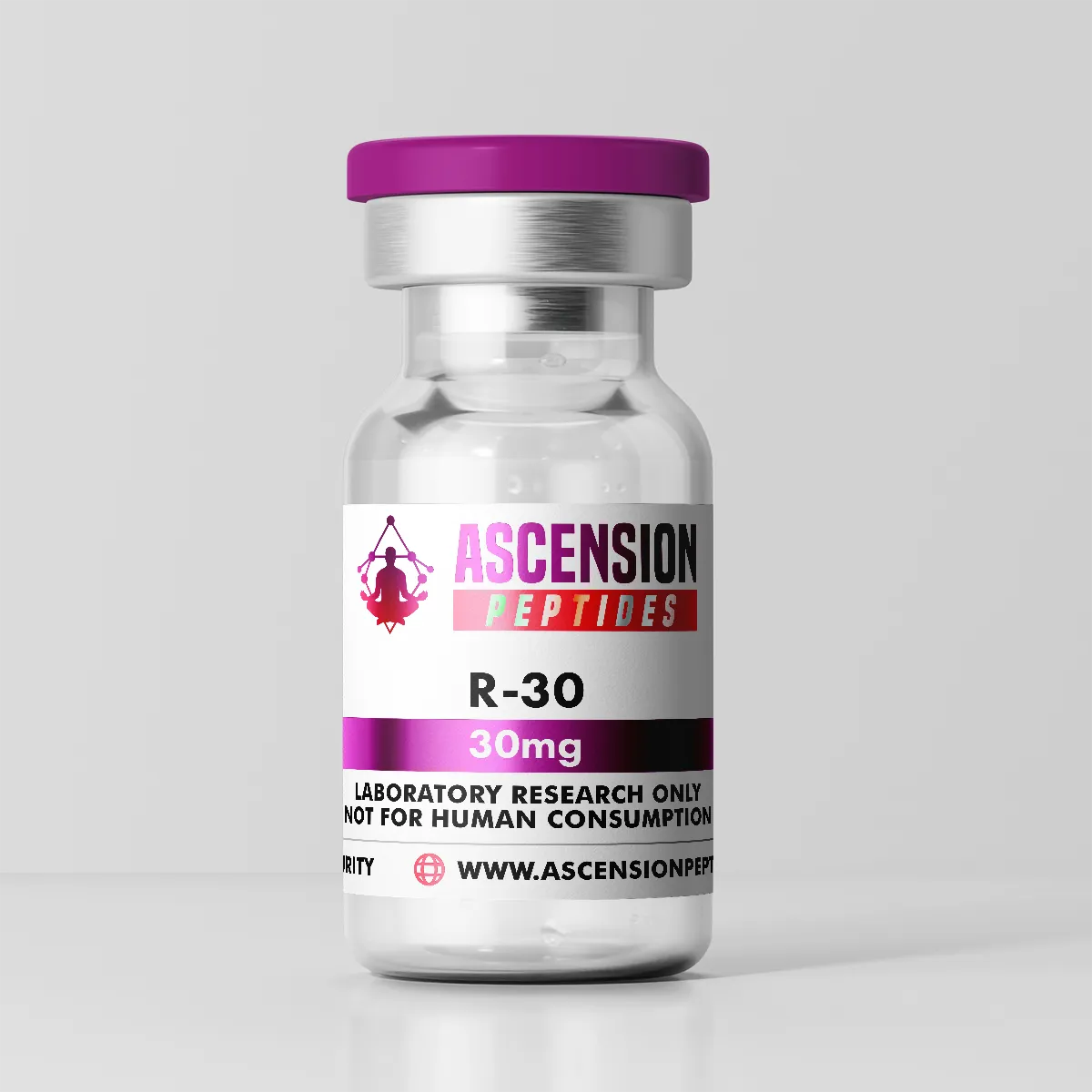
Ascension Peptides carries R-30 (Retatrutide 30mg) with third-party tested COAs. For people who would have been on semaglutide, retatrutide represents a meaningful step up in fat loss potential — and the supply situation is more stable in 2026.