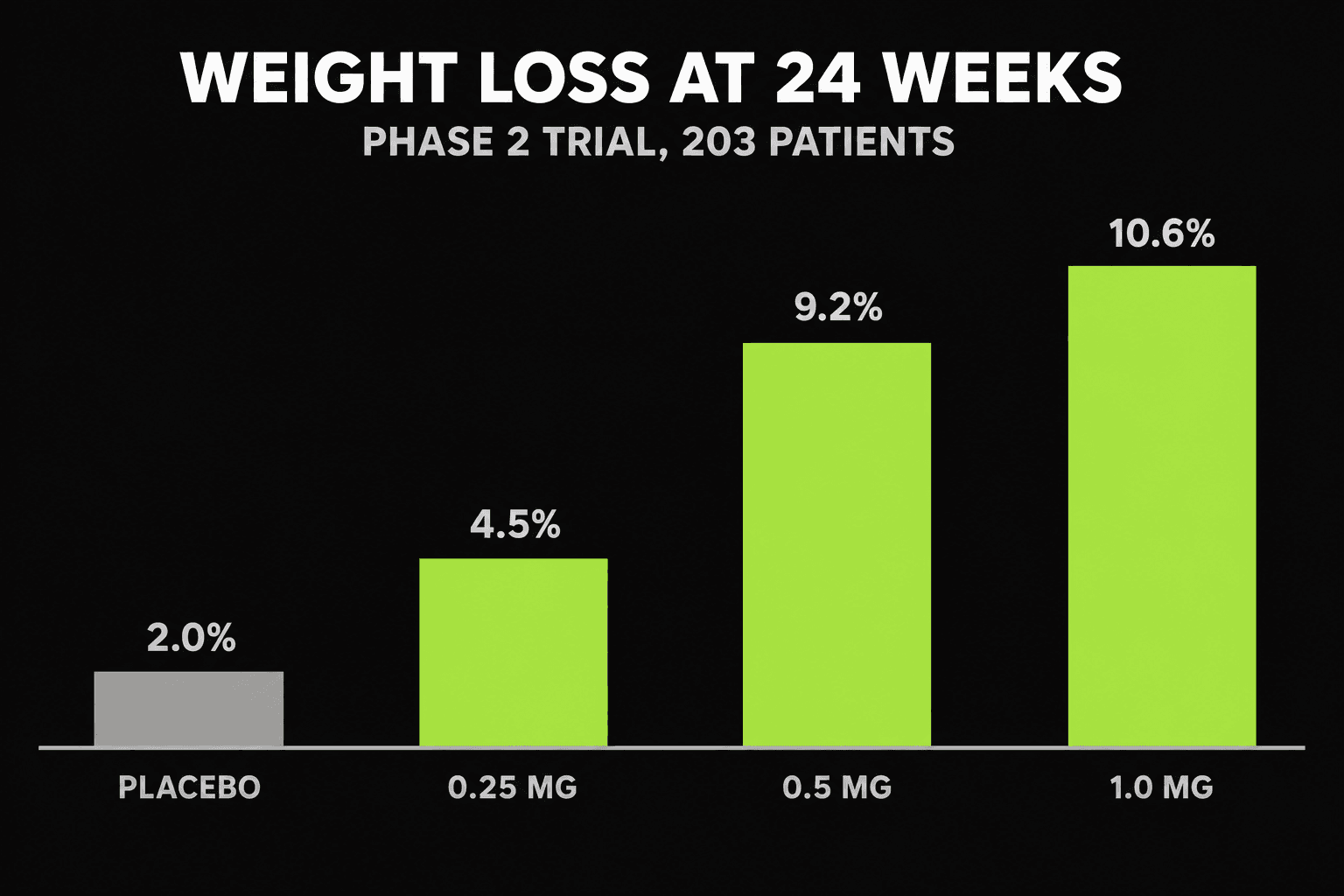

In the TIPO-1 Phase 2 trial, 0.5mg of tesofensine daily produced an average 9.2% body weight loss over 24 weeks. That outperformed every comparison weight loss drug tested in the same period.
🔑 At a Glance
- Tesofensine is a triple reuptake inhibitor available in capsule form
- TIPO-1 data showed 0.5mg/day as the sweet spot: strong fat loss, manageable side effects
- Most common side effects are elevated heart rate, dry mouth, and insomnia
- Always dose in the morning — afternoon dosing causes sleep problems
- Standard cycle runs 12-16 weeks with a break equal to cycle length
- Not suitable for anyone with cardiovascular disease, MAOI use, or anxiety disorders
Tesofensine sits in a different category from most weight loss compounds. It works through the brain, not the gut. That makes its dosage protocol, timing, and side effect profile quite different from peptides for weight loss like semaglutide or tirzepatide. Getting the dose right matters more than it does with most compounds.
New to the compound? Start with our full tesofensine guide — what it is, how it works, and what the trial evidence actually supports — then come back here for the dosing detail.
What Is Tesofensine?
Tesofensine is a triple monoamine reuptake inhibitor. It blocks the reuptake of serotonin, dopamine, and noradrenaline simultaneously. That triple action is why its weight loss results are dramatically stronger than single-target compounds.
It was originally developed to treat Parkinson's disease and Alzheimer's. During those trials, researchers noticed significant unintended weight loss in participants. That observation kicked off a dedicated obesity program, leading to the TIPO-1 trial.
Tesofensine comes in capsule form. Typical capsules are dosed at 250mcg (0.25mg) or 500mcg (0.5mg). It works by reducing appetite, increasing satiety, and slightly elevating metabolic rate.
Tesofensine Dosage: The Clinical Data
The TIPO-1 trial is the main reference point for tesofensine dosage. It ran for 24 weeks, using three active doses against placebo. The results were clear enough to draw solid conclusions about which dose does what.
Here is what each dose produced over 24 weeks:
- 0.25mg/day: ~4.5% body weight loss. Modest side effects. Good starting point for new users.
- 0.5mg/day: ~9.2% body weight loss. The clinical sweet spot. Strong results with a side effect profile most people can manage.
- 1.0mg/day: ~10.6% body weight loss. Meaningful extra loss but significantly more cardiovascular side effects. Higher dropout rate in the trial.
- Placebo: ~2% weight loss over the same period.
Those numbers include participants following a calorie deficit. Tesofensine is not a magic pill — it amplifies a diet. The mechanism (appetite suppression, slight metabolic boost) means results stack well on top of good habits.
Tesofensine Capsule Dosage Protocols
Based on the TIPO-1 data and general experience with stimulant-class compounds, three protocol tiers make sense. Each tier has a different risk-to-reward ratio.
| Protocol | Dose | Timing | Cycle | Notes |
|---|---|---|---|---|
| Conservative | 0.25mg/day | Morning | 12 weeks | Best for first-timers, minimal cardiovascular risk |
| Standard | 0.5mg/day | Morning | 12-16 weeks | Optimal efficacy/side effect balance |
| Advanced | 0.5-1.0mg/day | Morning | 16 weeks | Only with cardiovascular monitoring |
If you have never used tesofensine before, start at 0.25mg. Two weeks at the lower dose gives your body time to adjust to the cardiovascular and stimulant effects. Then step up to 0.5mg if you are tolerating it well.
How to Take Tesofensine Capsules
Timing matters with tesofensine. The compound has a stimulant-like effect and a half-life long enough to affect sleep if taken too late. Morning dosing is the standard for good reason.
When to take it: Take your capsule in the morning, ideally before 9am. Some users find taking it with a small meal reduces nausea. Others prefer fasted dosing for slightly faster absorption. Either works.
Titration approach: Start at 0.25mg for the first 1-2 weeks. Monitor your resting heart rate daily. If it stays within 10 beats per minute of your baseline, you can move up to 0.5mg. If heart rate is elevated, stay at 0.25mg longer.
Consistency over timing: Take it at roughly the same time every day. Tesofensine works through daily accumulation of effect on monoamine availability. Skipping days or inconsistent timing blunts results.
Do not stack tesofensine with other stimulants. No pre-workout, no high-dose caffeine, no other appetite suppressants. The cardiovascular load compounds quickly.
Tesofensine Side Effects: Full Profile

Tesofensine has a real side effect profile. Knowing what to expect means you can plan for it rather than panic when it happens. Most side effects are manageable; a few are serious enough to be deal-breakers for certain people.
| Side Effect | Frequency | Severity | Management |
|---|---|---|---|
| Elevated heart rate | Common | Mild-Moderate | Monitor resting HR, reduce dose if >10bpm increase |
| Dry mouth | Common | Mild | Increase water intake |
| Insomnia | Common | Mild-Moderate | Morning dosing only, avoid afternoon |
| Nausea | Occasional | Mild | Take with food |
| Anxiety/restlessness | Occasional | Mild-Moderate | Start at 0.25mg, avoid caffeine |
| Blood pressure increase | Less common | Moderate | Regular BP monitoring |
| Reduced appetite | Expected | — | This is the mechanism |
Cardiovascular effects are the primary concern with tesofensine. Heart rate elevation is common, typically 5-15 bpm above baseline at the 0.5mg dose. Blood pressure can also increase. These effects are dose-dependent — they are more pronounced at 1.0mg.
Sleep disruption is the second major complaint. Tesofensine's stimulant properties extend its effective window well into the evening if dosed too late. Morning dosing eliminates most of this problem. A few users still experience insomnia even with early dosing; those individuals usually do better at 0.25mg.
Dry mouth and nausea tend to be worst in the first two weeks and then fade. The body adapts to the monoamine changes fairly quickly. Staying well-hydrated helps with both.
Managing Side Effects
Side effect management with tesofensine follows a clear set of principles. Start low, monitor the right metrics, and remove compounding factors.
Start low, really low. The 0.25mg starting dose is not optional for new users. Even if you have experience with stimulants, tesofensine's triple reuptake mechanism hits differently. Two weeks at 0.25mg before stepping up is the standard approach.
Monitor heart rate daily. Get a cheap pulse oximeter or use a fitness tracker. Check your resting heart rate each morning before getting out of bed. If it is consistently more than 10 bpm above your pre-cycle baseline, reduce your dose. Do not wait to see if it normalizes.
Cut caffeine significantly. Caffeine adds cardiovascular load and anxiety risk on top of tesofensine's effects. Many users cut caffeine completely during a cycle. If that is not realistic, reduce it to one small coffee in the morning only.
Avoid stacking with other stimulants. Pre-workout supplements, fat burners, DMAA, ephedrine — none of these should be used alongside tesofensine. The cardiovascular compounding is not worth it.
Cycle breaks matter. Continuous use leads to tolerance and increases side effect burden over time. Stick to planned cycle lengths and take proper breaks.
Who Should Avoid Tesofensine
Tesofensine is not appropriate for everyone. Certain conditions and medications make it genuinely dangerous, not just mildly inadvisable.
Cardiovascular disease: Anyone with hypertension, arrhythmia, prior heart attack, or structural heart disease should not use tesofensine. The heart rate and blood pressure effects are consistent enough that the risk is real.
MAOI use: Combining tesofensine with monoamine oxidase inhibitors is dangerous. MAOIs block the breakdown of the same monoamines tesofensine affects. The combination can trigger serotonin syndrome or hypertensive crisis. Full stop.
Anxiety disorders: If you have generalized anxiety, panic disorder, or PTSD, tesofensine's stimulant effects are likely to worsen symptoms. The anxiogenic effects at 0.5mg and above are significant enough to be a contraindication.
Pregnancy and breastfeeding: Do not use. No safety data exists, and the mechanism of action gives no reason to think it would be safe.
Other contraindications: Active eating disorders, current use of other serotonergic drugs, and severe hepatic or renal impairment are all reasons to avoid tesofensine. If you are on any prescription medication, check interactions before using.
If tesofensine is contraindicated for you, there are alternatives. Compounded semaglutide works through a completely different mechanism and is better tolerated in people with cardiovascular sensitivities.

Tesofensine Cycle Length and Post-Cycle
Cycle length with tesofensine follows the data from TIPO-1: the trial ran 24 weeks, but meaningful results appeared well before that. Most practical protocols run 12-16 weeks, which captures the majority of the fat loss benefit without overextending.
Recommended cycle: 12-16 weeks for the standard 0.5mg protocol. First-time users should run 12 weeks and assess before considering an extension. Advanced users running higher doses should cap at 16 weeks.
Post-cycle break: Take a break equal to your cycle length. A 12-week cycle gets a 12-week break. This allows monoamine systems to normalize and maintains sensitivity to the compound for future cycles.
What to expect coming off: Appetite typically returns within the first week off-cycle. Some users experience mild low mood or fatigue for 1-2 weeks as dopamine and serotonin tone re-equilibrates. This is normal and temporary. Supporting sleep, exercise, and nutrition during this window helps significantly.
Weight maintenance after cycle: The habits built during the cycle are what hold the results. Tesofensine is not a permanent metabolic shift; the appetite suppression goes away when dosing stops. Build calorie awareness and protein intake habits during the cycle so they persist after.
For those who have responded well to tesofensine for weight loss, subsequent cycles can be run after the break period with comparable results. Tolerance to the weight loss effect does not appear to be a major issue based on available data.
Where to Source Tesofensine Capsules
Tesofensine is available as a compound from select vendors. Quality and purity vary significantly between suppliers, which matters given the cardiovascular effects at play.
Limitless Life Nootropics carries tesofensine capsules at 500mcg per capsule. They are one of the more established vendors in the compound space with third-party testing. You can find their tesofensine product through the link below.
When evaluating any source, look for published certificates of analysis (COAs), clear dosing information on the label, and a track record in the community. Given tesofensine's cardiovascular profile, dosing accuracy matters more than it does with lower-risk compounds.
For a broader view of the weight loss landscape, see the tesofensine for weight loss guide, which covers mechanism, results comparison, and how it stacks against other options.