Best Peptides for Immune System Support: 2026 Guide
Peptides for immune system support represent one of the most clinically mature areas of peptide research. Unlike some peptide applications that rely almost entirely on animal studies, immune-modulating peptides like Thymosin Alpha-1 have decades of human clinical trial data behind them — including approved use in over 35 countries. This guide covers the best peptides for immune system support (boosting a compromised system) and immune system modulation (calming overactive or dysregulated immunity) in 2026, ranking the best peptides immune system options head to head.
Whether you are researching compounds for post-illness recovery, chronic fatigue, autoimmunity, or general immune resilience, the compounds below are the most evidence-backed options currently available in the research peptide space. Most readers comparing the best peptides for immune system support land on the same shortlist of five, and the rest of this article explains exactly why.
How Peptides Support Immune Function
Before getting into rankings, it helps to understand how the best immune peptides actually do their work. The immune system is extraordinarily complex — involving innate immunity (fast, non-specific), adaptive immunity (targeted, memory-based), and the balance between pro-inflammatory and anti-inflammatory signaling. Peptides for immunity can act on multiple levels:
- T-cell maturation and activation: Thymic peptides support the development and activation of T-lymphocytes, the core of adaptive immunity
- Cytokine modulation: Certain peptides reduce pro-inflammatory cytokines (IL-6, TNF-alpha, IL-1beta) while preserving or enhancing protective responses
- Antimicrobial activity: Some peptides (like LL-37) directly kill bacteria, viruses, and fungi while simultaneously signaling immune cells
- Gut-immune axis: A significant portion of immune tissue is gut-associated; peptides that improve gut barrier function indirectly improve immune health
#1: Thymosin Alpha-1
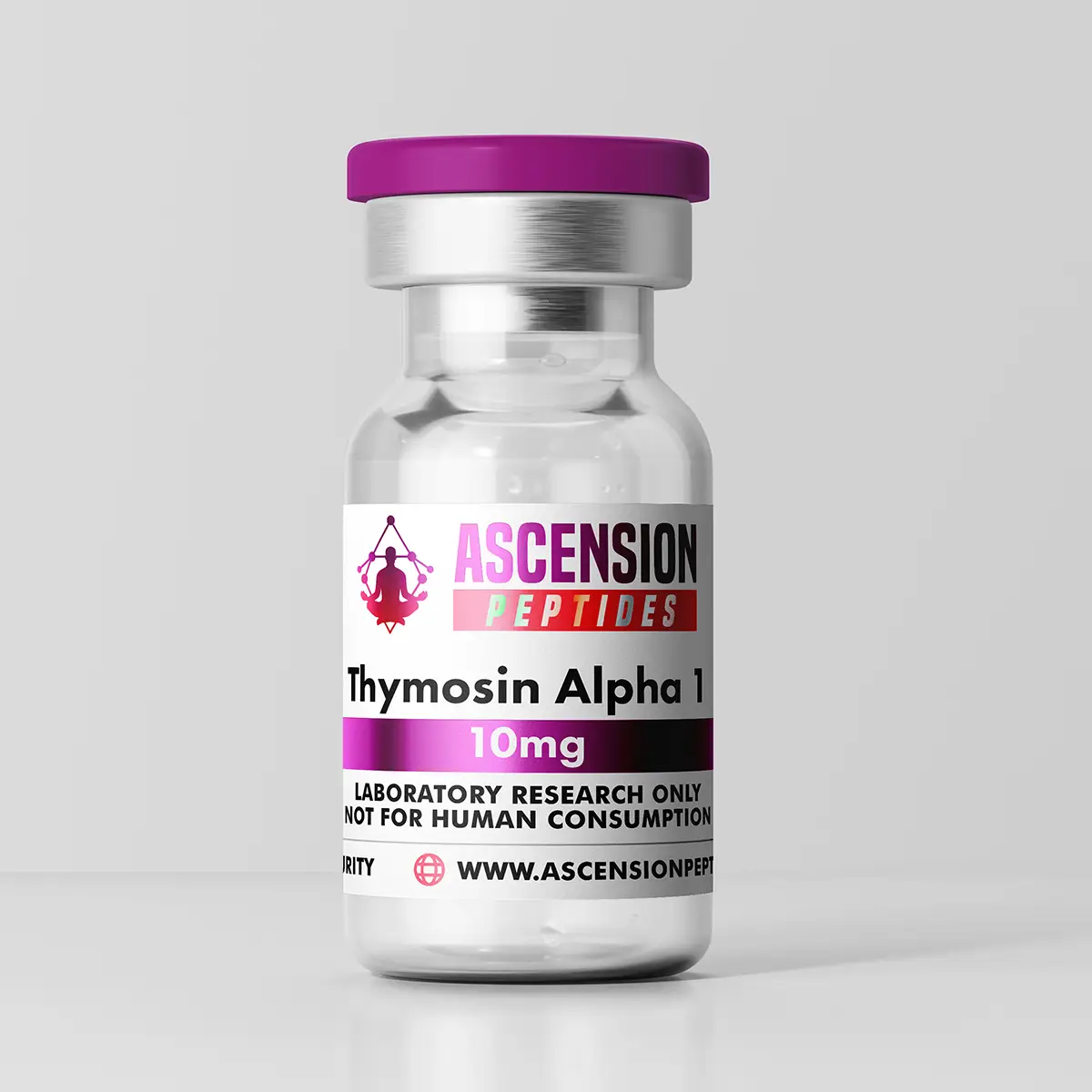
Thymosin Alpha-1 is the gold standard immune peptide and the single most studied entry on any list of best peptides for immune system support. It is a 28-amino acid peptide derived from the thymus gland — the organ primarily responsible for T-cell maturation. As the thymus naturally shrinks with age, production declines, and immune competence decreases with it.
Evidence Base:
- Approved as a drug (Zadaxin) in over 35 countries for hepatitis B, hepatitis C, and immune deficiency
- Used in clinical settings during COVID-19 for severe immune dysregulation
- Dozens of human trials demonstrating enhancement of dendritic cell function, NK cell activity, and T-helper cell production
- Studied in cancer patients undergoing chemotherapy to reduce infection risk and preserve immune function
Research Protocols: Typical research dosage is 1.0–1.5 mg subcutaneously 2–3 times per week. Acute immune challenges may use daily dosing for short periods. Cycles of 4–12 weeks are common.
Applications: Post-viral recovery, immunosenescence (age-related immune decline), chronic infections, cancer support protocols, autoimmunity where T-regulatory cell support is needed.
#2: LL-37 (Cathelicidin)
LL-37 is a human antimicrobial peptide — part of the cathelicidin family naturally produced by immune cells, skin, and lung epithelium. It serves dual roles: directly killing pathogens and modulating immune cell behavior.
Why LL-37 Stands Out:
- Broad-spectrum antimicrobial activity against bacteria (including antibiotic-resistant strains), viruses, and fungi
- Chemotactic for immune cells — recruits neutrophils, monocytes, and T-cells to sites of infection
- Promotes wound healing alongside immune function
- Deficiency linked to increased infection susceptibility and chronic inflammatory skin conditions
Research Protocols: Injectable LL-37 is typically dosed at 100–200 mcg subcutaneously 3–5 times per week. Cycles of 4–8 weeks are standard.
Caution: LL-37 is a powerful immune signal. At high doses, it can be pro-inflammatory. Dosing precision matters more with LL-37 than with many other peptides.
#3: BPC-157 for Immune Support
BPC-157 is better known for gut healing and injury recovery, but its immune relevance is substantial. BPC-157 regulates the nitric oxide pathway and has potent anti-inflammatory effects without global immune suppression.
Immune-Relevant Effects:
- Reduces gut permeability (leaky gut), which directly reduces systemic inflammatory burden and endotoxin translocation
- Downregulates excessive cytokine production in inflammatory states
- Promotes healing of gut-associated lymphoid tissue (GALT) — the immune system's first line of defense
- Has been shown to accelerate recovery from various infectious and inflammatory states in animal models
Best Use Case: Gut-driven immune dysfunction, chronic low-grade inflammation, post-GI illness recovery, inflammatory bowel conditions with immune involvement.
#4: KPV (Lys-Pro-Val)
KPV is a tripeptide fragment of alpha-melanocyte-stimulating hormone — specifically the C-terminal portion that carries its anti-inflammatory properties without the pigmentation effects of the full molecule.
Mechanism: KPV binds to melanocortin receptors in immune cells and the gut epithelium, potently suppressing NF-kB signaling — the master regulator of the inflammatory response. This makes it particularly useful for conditions involving overactive, chronic, or inappropriate immune activation.
Research Applications:
- Inflammatory bowel disease (Crohn's, ulcerative colitis)
- Autoimmune skin conditions
- Sepsis models (animal data shows remarkable survival improvement)
- General cytokine storm modulation
KPV can be taken orally due to its small size and stability, or injected for more systemic effect.
#5: Thymosin Beta-4 (TB-500)
TB-500 is primarily researched for healing and recovery, but its immune connections are significant. TB-500 promotes T-cell migration and activation, regulates inflammation via actin cytoskeleton modulation, and is naturally produced in high concentrations by immune cells themselves.
In immune contexts, TB-500 is most relevant for: wound healing with infectious risk, post-surgical immune support, and combined recovery/immune protocols where both healing and immune function need support simultaneously.
Comparing Immune Peptide Applications
Each of the best peptides for immune system support has a different sweet spot. The quick reference below maps the five candidates above to the immune scenarios they fit best, so you can pair the right peptide with the right problem instead of stacking blindly.
- Thymosin Alpha-1 — Best for adaptive immunity, T-cell support, post-viral recovery, immunosenescence
- LL-37 — Best for direct antimicrobial defense, infection resistance, respiratory immune health
- BPC-157 — Best for gut-immune axis, anti-inflammatory protocols, GI-driven immune issues
- KPV — Best for autoimmunity, overactive immune response, chronic inflammation management
- TB-500 — Best for combined healing and immune support, post-injury or post-surgical protocols
Stacking Immune Peptides
Several combinations are frequently used in research protocols:
Immune Deficiency / Low Immune Function Stack:
- Thymosin Alpha-1: 1.0 mg subcutaneous 3x/week
- LL-37: 100 mcg subcutaneous 3x/week (alternate days with Thymosin Alpha-1)
- BPC-157: 250 mcg subcutaneous daily for gut barrier and systemic anti-inflammation
- Cycle: 8 weeks on, 4 weeks off
Autoimmune / Overactive Immune Stack:
- KPV: 200–500 mcg oral or subcutaneous daily
- BPC-157: 250 mcg subcutaneous daily
- TB-500: 2.5 mg subcutaneous 2x/week
- Note: Avoid Thymosin Alpha-1 in purely autoimmune contexts without immunologist guidance
Safety and Side Effects
Immune peptides generally have favorable safety profiles, but several considerations apply:
- Thymosin Alpha-1 has the strongest human safety data with decades of clinical use
- LL-37 can cause inflammation if dosed too aggressively — start low and titrate
- BPC-157 and KPV are well-tolerated with minimal reported side effects
- Anyone with active autoimmune conditions should approach immunostimulating peptides with physician oversight
Across the candidates above, the best peptides for immune system support in 2026 still come down to matching the compound to the immune problem you are actually solving. Thymosin Alpha-1 leads the pack of best immune peptides for adaptive immunity and post-viral recovery, while peptides for immunity like KPV and BPC-157 shine when the issue is overactive inflammation or gut-driven dysfunction.
Frequently Asked Questions
This content is for informational and educational purposes only. Peptides discussed on this page are research compounds not approved by the FDA for human use. Always consult a licensed medical professional before using any peptide or supplement.