Retatrutide vs Tirzepatide: The Ultimate Comparison for Weight Loss
Retatrutide vs Tirzepatide: Which peptide is better for weight loss? We break down the mechanism, results, and side effects of the new "Triple G" agonist vs the reigning champion.
Retatrutide vs Tirzepatide: The Ultimate Comparison for Weight Loss
Retatrutide vs Tirzepatide: Which peptide is better for weight loss? We break down the mechanism, results, and side effects of the new "Triple G" agonist vs the reigning champion.
In the rapidly evolving world of weight loss medications, the landscape changes almost monthly. Just as the world got comfortable with Ozempic (Semaglutide), a new champion emerged: Tirzepatide (Mounjaro/Zepbound). But before the dust could settle, an even more powerful contender appeared on the horizon: Retatrutide.
If you are trying to decide between these two powerhouses—or simply wondering if you should wait for the "next big thing"—this guide gives you the bottom line. We will compare Retatrutide vs Tirzepatide head-to-head, covering the science, the weight loss percentages, and the safety profiles.
Disclaimer: This article is for informational purposes only and does not constitute medical advice. Retatrutide is currently an investigational drug in clinical trials and is not yet FDA-approved.
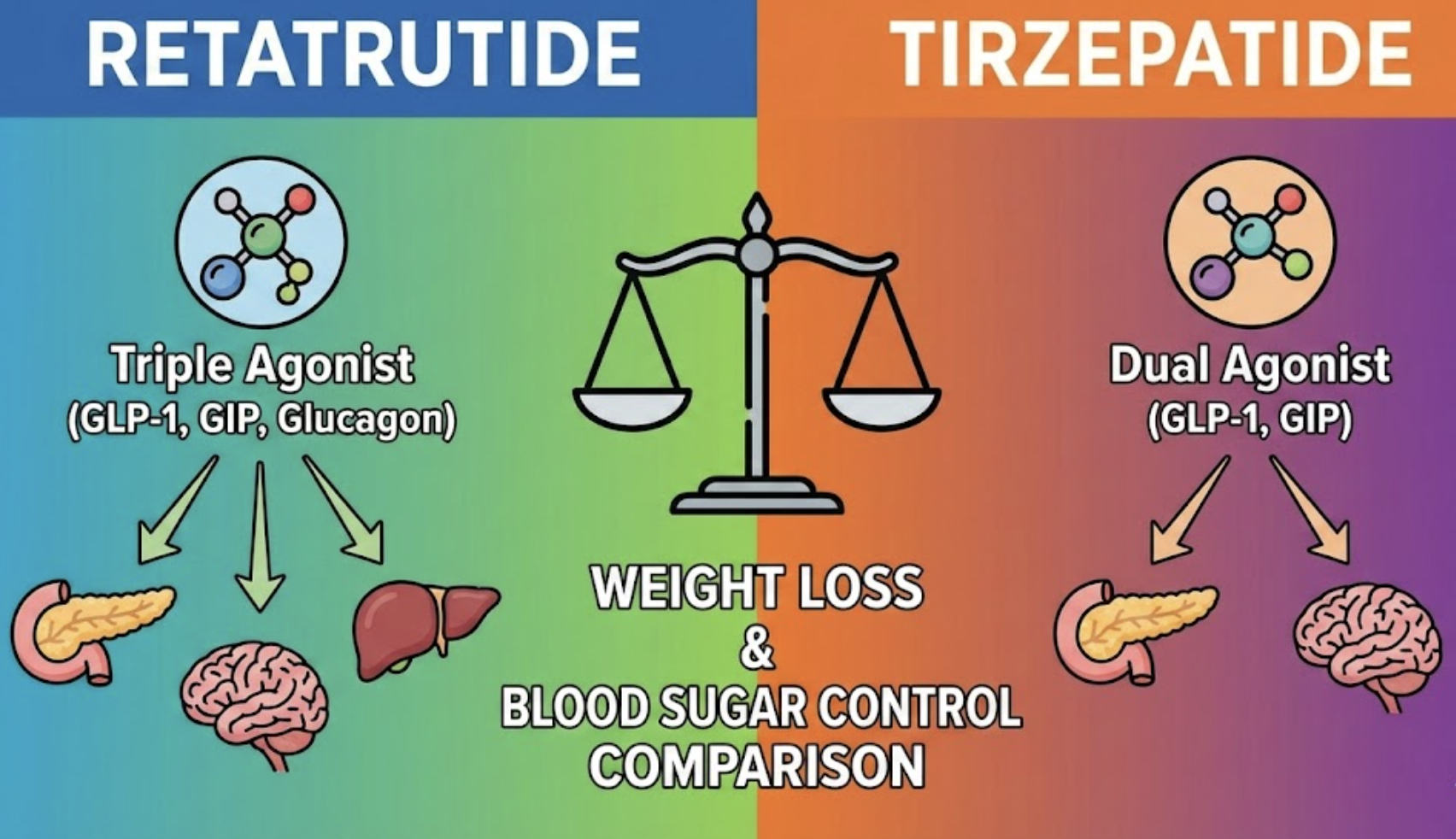
The Core Difference: "Triple G" vs. "Dual G"
To understand why one might be stronger than the other, you have to look under the hood. Both of these peptides work by mimicking natural hormones your body produces after eating. These hormones tell your brain you are full, slow down digestion, and help regulate blood sugar.
The difference lies in how many hormones they mimic.
Tirzepatide: The Dual Agonist
Tirzepatide is a dual agonist. It mimics two specific hormones:
- GLP-1 (Glucagon-like peptide-1): Reduces appetite and slows gastric emptying.
- GIP (Glucose-dependent insulinotropic polypeptide): Enhances insulin release and helps break down fat.
By hitting two targets instead of one (like Semaglutide/Ozempic does), Tirzepatide proved to be significantly more effective in clinical trials.
Retatrutide: The Triple Agonist
Retatrutide has earned the nickname "Triple G" because it mimics three hormones:
- GLP-1: The appetite suppressor.
- GIP: The fat-burning synergist.
- Glucagon: The energy expenditure booster.
This is the game-changer. Glucagon is a hormone that typically raises blood sugar, but when combined in this specific tri-agonist structure, it increases your resting metabolic rate. While GLP-1 and GIP reduce how much energy you take in (calories), Glucagon increases the energy you burn off (thermogenesis). Retatrutide doesn't just starve the fat; it actively burns it.
Explore Premium Research Peptides
Discover high-quality peptides from our trusted research partner.
Apollo PeptidesWeight Loss Results: What Do the Numbers Say?
When it comes to retatrutide vs tirzepatide, the winner on paper is clear, although the real-world application is still being studied.
Tirzepatide Results (SURMOUNT Trials)
Tirzepatide set a new standard for medical weight loss. In the landmark SURMOUNT-1 clinical trial, participants without diabetes saw staggering results:
- Average Weight Loss: Up to 22.5% of total body weight.
- Timeframe: Results were measured over 72 weeks.
- The Verdict: This was revolutionary, far surpassing the ~15% generic benchmark set by Ozempic/Wegovy.
Retatrutide Results (TRIUMPH Trials)
Retatrutide is currently obliterating those records in its Phase 2 trials.
- Average Weight Loss: Up to 24.2% of total body weight.
- Timeframe: These results were achieved in just 48 weeks.
- The Verdict: Retatrutide achieved more weight loss in less time. Even more impressive, nearly 100% of participants on the highest dose lost at least 5% of their body weight, compared to about 90% for standard therapies.
Key Takeaway: While Tirzepatide is the current heavyweight champion of approved drugs, Retatrutide is showing the potential to be roughly 50% more effective speed-wise, with total weight loss potentially approaching bariatric surgery levels (30%+) in longer trials.
Mechanism of Action: Why Retatrutide Burns More
Why is the addition of Glucagon such a massive deal? It changes the equation of weight loss.
With Ozempic and Mounjaro (Tirzepatide), the primary mechanism is caloric restriction. You feel full. You eat less. You lose weight. It is essentially willpower in a bottle.
Retatrutide keeps that appetite suppression but adds increased energy expenditure.
- Liver Fat Reduction: The Glucagon component specifically targets the liver, rapidly clearing fatty liver deposits. In trials, Retatrutide normalized liver fat in nearly 90% of patients with fatty liver disease (MASLD).
- Thermogenesis: It ramps up the body’s heat production. You are burning more calories while sitting on the couch than you would be on Tirzepatide.
This unique third mechanism suggests that Retatrutide might be particularly effective for people with "slow metabolisms" or those who have plateaued on other GLP-1 medications.
Explore Premium Research Peptides
Discover high-quality peptides from our trusted research partner.
Apollo PeptidesSafety and Side Effects profile
With great power often comes great responsibility—or in this case, potential side effects. Does adding a third hormone make Retatrutide harder to tolerate?
Common Side Effects
Both drugs share the standard "incretin" side effect profile. If you have used Semaglutide, you know the drill:
- Nausea
- Diarrhea
- Constipation
- Vomiting (rare if dose is managed well)
The Retatrutide "Heart Rate" Factor
Because Retatrutide stimulates the Glucagon receptor, trials have noted a slight increase in resting heart rate compared to Tirzepatide.
- In Phase 2 trials, heart rate peaks at around 24 weeks and then tends to decline thereafter.
- This is a known effect of Glucagon agonism. For most healthy adults, it is negligible, but for those with pre-existing cardiac arrhythmias, it will likely be a point of caution once the drug is approved.
The "Skin Sensitivity" Issue
Both Tirzepatide and Retatrutide users have reported allodynia (increased skin sensitivity or a "sunburn" sensation) on the skin, though it appears anecdotal reports are slightly higher with the newer, stronger peptides. This is generally temporary and harmless but can be annoying.
Overall Tolerance: surprisingly, despite being more potent, dropout rates in Retatrutide trials due to side effects were comparable to Tirzepatide. The specific titration schedule (how slowly you increase the dose) seems to be the key to avoiding nausea.
Availability and Approval Status
Here is the biggest practical difference for you right now.
Tirzepatide:
- Status: FDA Approved.
- Brand Names: Mounjaro (Diabetes), Zepbound (Obesity).
- Availability: Widely available by prescription, though shortages occur due to extreme demand.
Retatrutide:
- Status: Investigational (Phase 3 Clinical Trials).
- Estimated Approval: Likely late 2026 or 2027.
- Availability: Currently only available to participants in clinical trials or through research peptide suppliers for laboratory use. It is not yet prescribed by doctors.
Which One Should You Choose?
If you are looking to start a weight loss journey today, Tirzepatide is the logical choice. It is approved, safety data is robust, and the results (22% weight loss) are life-changing for most people. Waiting 2-3 years for Retatrutide is unnecessary when an incredible tool is already on the shelf.
However, Retatrutide represents the future. It will likely be the "silver bullet" for:
- Non-Responders: People who didn't lose much weight on Ozempic or Mounjaro.
- Fatty Liver Patients: Its ability to strip fat from the liver is unmatched.
- The Super-Obese: Those needing to lose 100+ lbs who want alternatives to gastric bypass surgery.
Summary Comparison Table
| Feature | Tirzepatide (Zepbound) | Retatrutide (Triple G) |
|---|---|---|
| Mechanism | Dual Agonist (GLP-1, GIP) | Triple Agonist (GLP-1, GIP, Glucagon) |
| Max Weight Loss | ~22.5% (72 Weeks) | ~24.2% (48 Weeks) |
| Metabolic Effect | Appetite Suppression | Appetite Suppression + Thermogenesis |
| FDA Status | Approved | In Clinical Trials (Phase 3) |
| Key Advantage | Proven Safety Record | Faster Results & Liver Health |
The Bottom Line
The battle of retatrutide vs tirzepatide is a win-win for patients. We have gone from having zero effective obesity treatments to having multiple options that rival surgery. While Retatrutide is technically the stronger molecule, Tirzepatide is the one you can use today.
Before starting any peptide therapy, verify your source. Research peptides should be third-party tested for purity (aim for >99%), as the popularity of these drugs has led to an influx of low-quality generic versions. Always consult with your physician to manage your dosage and monitor your health markers.
Explore Premium Research Peptides
Discover high-quality peptides from our trusted research partner.
Apollo Peptides