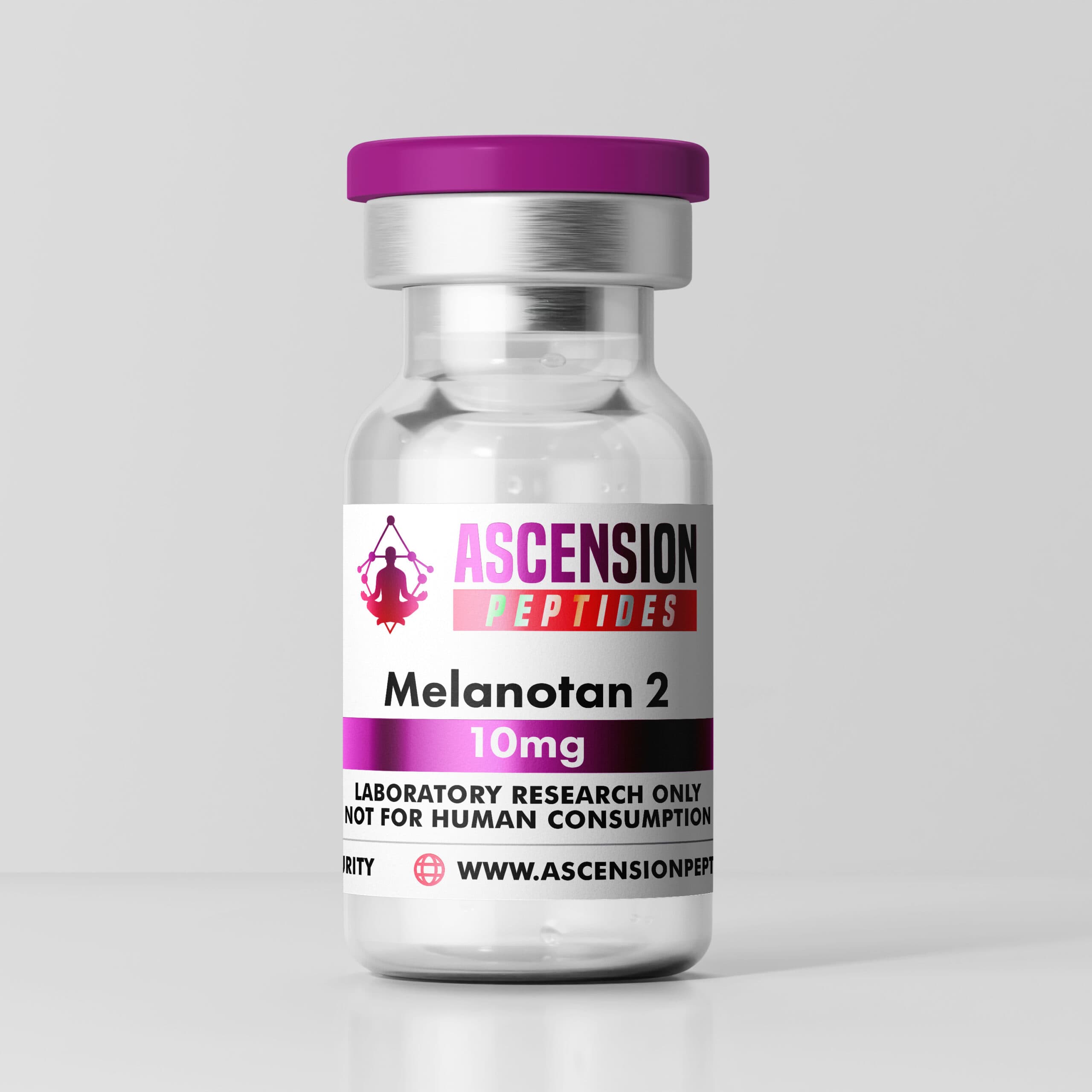
Melanotan I and Melanotan II are two synthetic peptides that have garnered significant research interest for their effects on melanogenesis—the process of skin pigmentation. While their names suggest they're simply sequential versions of the same compound, these peptides have distinct molecular structures, receptor binding profiles, and biological effects that researchers and consumers should understand.
This comprehensive comparison examines the science behind both peptides, their mechanisms of action, research findings, and the key differences that distinguish them from one another.
🔑 Key Takeaways
- Melanotan I (afamelanotide) is a selective MC1R agonist now FDA-approved for erythropoietic protoporphyria
- Melanotan II has broader receptor activity, affecting MC1R, MC3R, MC4R, and MC5R
- MT-II produces additional effects including appetite suppression and sexual arousal
- Both peptides stimulate melanin production but through different receptor selectivity profiles
What Are Melanocortin Peptides?
Both Melanotan I and II are synthetic analogs of alpha-melanocyte-stimulating hormone (α-MSH), a naturally occurring peptide hormone produced from the precursor protein proopiomelanocortin (POMC). The melanocortin system plays crucial roles in pigmentation, energy homeostasis, sexual function, and inflammation.
The melanocortin receptor family consists of five G-protein coupled receptors (MC1R through MC5R), each with distinct tissue distributions and physiological functions:
- MC1R: Primarily expressed in melanocytes; controls skin and hair pigmentation
- MC3R: Found in the brain and gut; involved in energy homeostasis
- MC4R: Expressed in hypothalamus; regulates appetite and sexual function
- MC5R: Present in exocrine glands; involved in sebaceous gland function
The differing receptor selectivity of Melanotan I and II explains their distinct biological profiles and why they produce different effects beyond simple tanning.
Melanotan I (Afamelanotide)
Melanotan I, also known as afamelanotide and marketed as Scenesse®, is a linear tridecapeptide (13 amino acids) analog of α-MSH. It was developed at the University of Arizona in the 1980s by researchers studying melanocortin peptides for potential photoprotective applications.
Molecular Structure
The sequence of Melanotan I is: Ac-Ser-Tyr-Ser-Nle-Glu-His-D-Phe-Arg-Trp-Gly-Lys-Pro-Val-NH₂. Key modifications from natural α-MSH include:
- Norleucine (Nle) substitution at position 4 for increased stability
- D-Phenylalanine at position 7 for enhanced receptor binding
- N-terminal acetylation and C-terminal amidation for increased half-life
Receptor Selectivity
Melanotan I demonstrates high selectivity for the MC1R receptor with minimal activity at MC3R, MC4R, and MC5R. This selectivity results in potent melanogenic effects with fewer off-target effects compared to less selective melanocortin agonists.
Clinical Development
The targeted receptor profile of Melanotan I led to its successful clinical development. In October 2019, the FDA approved afamelanotide (Scenesse®) for the treatment of erythropoietic protoporphyria (EPP), a rare genetic disorder causing severe photosensitivity. The drug is administered as a subcutaneous implant every two months.
Melanotan II
Melanotan II (MT-II) is a shorter, cyclic heptapeptide (7 amino acids) also developed at the University of Arizona. Its sequence is: Ac-Nle-c[Asp-His-D-Phe-Arg-Trp-Lys]-NH₂. The cyclic structure differentiates it fundamentally from the linear Melanotan I.
Molecular Structure
The cyclization occurs between the side chains of aspartic acid and lysine, creating a lactam ring that constrains the peptide's conformation. This structural feature:
- Increases metabolic stability compared to linear peptides
- Enhances binding affinity across multiple melanocortin receptors
- Extends biological half-life
- Allows for more potent effects at lower doses
Receptor Profile
Unlike Melanotan I, MT-II is a non-selective melanocortin agonist with significant activity at MC1R, MC3R, MC4R, and MC5R. This broad receptor activation explains its diverse biological effects beyond pigmentation.
Multiple Biological Effects
Due to its non-selective receptor binding, Melanotan II produces several effects beyond tanning:
Melanogenesis
Stimulates melanin production via MC1R activation in melanocytes.
Appetite Effects
MC4R activation produces anorectic effects, reducing food intake.
Sexual Effects
MC4R/MC3R activation increases sexual arousal and erection.
Melanotan I vs II: Key Differences
Mechanism of Melanogenesis
Both peptides stimulate melanin production through MC1R activation, but the pathway downstream is identical:
Receptor Binding
Peptide binds to MC1R on melanocyte surface, activating the receptor.
cAMP Elevation
Activated receptor stimulates adenylate cyclase, increasing intracellular cAMP.
MITF Activation
cAMP activates PKA, which phosphorylates CREB, increasing MITF expression.
Melanin Synthesis
MITF upregulates tyrosinase and other enzymes, producing eumelanin (dark pigment).
The key difference lies in what happens outside the melanogenesis pathway. Melanotan I's MC1R selectivity means it produces pigmentation with minimal off-target effects. Melanotan II's broader receptor activation means simultaneous effects on appetite (MC4R), sexual function (MC3R/MC4R), and potentially sebaceous gland activity (MC5R).
Research Findings: Melanotan I
Clinical research on Melanotan I/afamelanotide has focused primarily on photoprotection and photosensitivity disorders:
Erythropoietic Protoporphyria (EPP)
Phase III trials demonstrated that afamelanotide significantly increased pain-free time in sun exposure for EPP patients. The 16 mg subcutaneous implant provided protection for approximately 60 days, transforming quality of life for patients with this debilitating condition.
Polymorphic Light Eruption
Studies showed afamelanotide reduced symptoms and extended sun tolerance in patients with polymorphic light eruption, a common photosensitivity disorder.
Vitiligo
Research combining afamelanotide with narrowband UVB phototherapy showed enhanced repigmentation in vitiligo patients compared to phototherapy alone.

Research Findings: Melanotan II
Melanotan II research has explored its diverse biological effects:
Sexual Dysfunction
Early clinical studies demonstrated MT-II's ability to induce erections in men with erectile dysfunction. This research directly led to development of PT-141 (bremelanotide), a metabolite of MT-II now FDA-approved for female hypoactive sexual desire disorder.
Obesity Research
Studies examining MT-II's MC4R-mediated appetite suppression showed reduced food intake and body weight in animal models. However, side effect profiles limited clinical development for this indication.
Tanning Studies
Research confirmed MT-II increases skin melanin content and provides photoprotection. Studies showed reduced erythema (sunburn) following UV exposure in treated subjects.
Side Effects and Safety Profile
Melanotan I (Afamelanotide)
Clinical trials identified the following side effects with afamelanotide:
- Common: Nausea, headache, injection site reactions, skin discoloration
- Uncommon: Fatigue, abdominal pain, new mole development
- Rare: Changes in existing moles requiring monitoring
Long-term safety studies supported the drug's approval, with appropriate monitoring recommendations for mole changes.
Melanotan II
Due to its non-selective receptor activity, MT-II produces a broader side effect profile:
- Common: Nausea (often severe initially), facial flushing, fatigue
- Frequent: Spontaneous erections, increased libido
- Cardiovascular: Blood pressure changes, heart rate alterations
- Dermatological: Darkening of existing moles, new nevus formation
- Other: Yawning, stretching reflexes, appetite suppression
Nausea Management
Nausea is particularly common with Melanotan II, especially during initial administration. Research protocols have employed several strategies:
Pro Tip
Starting with lower doses and gradually increasing (dose titration) significantly reduces nausea incidence. Many research protocols begin at 0.1 mg and increase incrementally.
- Evening administration (sleeping through peak nausea)
- Pre-treatment with antiemetics in clinical settings
- Gradual dose escalation over 1-2 weeks
- Taking with small amounts of food
Which Peptide for Which Purpose?
Understanding the distinct profiles of these peptides helps clarify their research applications:
For Pigmentation Research Only
Melanotan I/afamelanotide offers targeted MC1R activation with minimal off-target effects. Its FDA approval for EPP provides clinical validation and established safety data. Researchers focused purely on melanogenesis may prefer this more selective approach.
For Multi-System Research
Melanotan II's non-selective profile makes it valuable for studying melanocortin system interactions across multiple receptors. Its effects on sexual function, appetite, and pigmentation simultaneously can model the complexity of endogenous melanocortin signaling.
Storage and Handling
Both peptides require similar storage and handling procedures:
- Lyophilized powder: Store at -20°C for long-term stability
- Reconstituted solution: Refrigerate at 2-8°C, use within 3-4 weeks
- Reconstitution: Use bacteriostatic water; add slowly along vial wall
- Light sensitivity: Protect from direct light exposure
See our peptide storage guide and reconstitution guide for detailed protocols.
Frequently Asked Questions
Conclusion
Melanotan I and Melanotan II, despite their similar names, represent distinct research tools with different receptor profiles, effects, and regulatory statuses. Melanotan I's selective MC1R activation led to its successful development as an FDA-approved treatment for erythropoietic protoporphyria, validating the therapeutic potential of targeted melanocortin modulation.
Melanotan II's non-selective profile produces broader effects—tanning, appetite suppression, and sexual arousal—making it a more complex research compound. While this complexity limited its direct clinical development, it spawned PT-141/bremelanotide, now approved for female sexual dysfunction.
For researchers and those exploring the melanocortin system, understanding these distinctions is essential. The choice between peptides depends on research goals, acceptable side effect profiles, and the regulatory environment in which research occurs.
Both peptides underscore the importance of receptor selectivity in peptide drug development and illustrate how the same receptor family can be leveraged for diverse therapeutic applications—from rare photosensitivity disorders to sexual health.