Thymulin
Facteur Thymique Sérique (FTS, Serum Thymic Factor)
Get Thymulin
Sourced from BioLongevity Labs. Verified ≥≥99% purity, third-party tested. COA included.
Table of Contents
What is Thymulin?
Thymulin, scientifically designated as Facteur Thymique Sérique (FTS) or Serum Thymic Factor, represents one of the most precisely characterized hormones produced by the thymus gland. This 9-amino acid peptide—with the sequence pyroglutamyl-alanyl-lysyl-seryl-glutaminyl-glycyl-glycyl-seryl-asparagine (pGlu-Ala-Lys-Ser-Gln-Gly-Gly-Ser-Asn)—was first isolated and characterized by French researchers in the 1970s and has since become central to our understanding of thymic function and immune system development.
What makes thymulin absolutely unique among thymic peptides is its strict requirement for zinc. The peptide alone is biologically inactive—it must bind a zinc ion to adopt the three-dimensional configuration necessary for receptor interaction and biological activity. This zinc-thymulin complex represents the true active hormone, and this dependency has profound implications for both research applications and our understanding of nutrition-immune connections.
The thymus gland, located behind the breastbone, is often called the "school" of the immune system—it's where T-cells learn to distinguish self from non-self. Thymulin plays a crucial role in this education process, influencing T-cell maturation and differentiation. The peptide is secreted by thymic epithelial cells and can be measured in the bloodstream, making it a valuable biomarker of thymic function.
Perhaps the most clinically relevant aspect of thymulin is its dramatic decline with age. As the thymus involutes (shrinks) after puberty, thymulin production plummets—by age 60, levels may be less than 10% of what they were during adolescence. This decline correlates strongly with age-related immune dysfunction, increased infection susceptibility, and reduced vaccine effectiveness in elderly populations. This connection has made thymulin a focal point of immunosenescence research and anti-aging investigations.
Research Benefits
Promotes T-cell maturation and differentiation
Modulates immune system balance (Th1/Th2 responses)
Supports thymic function and output
Demonstrates neuroprotective effects in animal models
May counteract age-related immune decline
Shows potential in hair growth research applications
Anti-inflammatory properties in autoimmune models
Zinc-dependent activity allows for precise regulation
How Thymulin Works
How Thymulin Works
Thymulin's mechanism of action centers on its role as a true endocrine hormone of the thymus, exerting effects on immune cell development and function through specific receptor interactions and downstream signaling cascades.
T-Cell Maturation
Promotes differentiation of immature thymocytes into functional T-cell subsets.
Immune Balance
Modulates Th1/Th2 balance and supports regulatory T-cell function.
Zinc-Dependent
Requires zinc binding for receptor recognition and biological activity.
The Zinc-Thymulin Complex
The absolute requirement for zinc is thymulin's most distinctive feature. The zinc ion binds to specific amino acid residues—particularly the asparagine at position 9 and the serine residues—creating a conformational change essential for biological activity. Without zinc:
- The peptide cannot achieve its active three-dimensional structure
- Receptor binding and signal transduction fail to occur
- No immunological effects are observed in bioassays
This relationship has significant implications. Zinc deficiency—common in elderly populations and those with poor nutrition—directly impairs thymulin function even if the peptide is being produced. Conversely, zinc supplementation can partially restore thymulin activity in zinc-deficient individuals, providing a mechanistic explanation for zinc's well-documented immune-enhancing effects.
Effects on T-Cell Development
Within the thymus, thymulin influences multiple stages of T-cell maturation:
- Early thymocyte differentiation: Promotes progression from double-negative to double-positive stages
- T-cell subset determination: Influences the balance between CD4+ helper and CD8+ cytotoxic T-cells
- Functional maturation: Enhances cytotoxic T-lymphocyte (CTL) activity
- Peripheral T-cell function: Continues to modulate T-cell activity outside the thymus
Immunomodulatory Effects
Beyond T-cell development, thymulin exerts broader immunomodulatory effects:
- Cytokine modulation: Influences production of interleukins and interferons
- Regulatory T-cell support: May enhance Treg function, important for preventing autoimmunity
- Th1/Th2 balance: Helps maintain appropriate balance between cell-mediated and humoral immunity
- NK cell activity: Some studies suggest effects on natural killer cell function
Neuroendocrine Connections
Thymulin also demonstrates activity beyond the immune system proper. The peptide can cross the blood-brain barrier and has been shown to influence hypothalamic-pituitary function. Research indicates bidirectional communication between the thymus and nervous system, with thymulin serving as one molecular messenger in this network. This neuroendocrine dimension may explain thymulin's observed effects on pain perception and neuroinflammation.
🔑 Key Takeaways: Mechanism
- Zinc binding is absolutely required—no zinc, no activity
- Primary effects on T-cell maturation and differentiation
- Broader immunomodulatory roles including cytokine modulation
- Neuroendocrine connections with effects beyond pure immunity
Research Applications
Immunosenescence and aging
Active research area with published studies
T-cell development and function
Active research area with published studies
Autoimmune disease modulation
Active research area with published studies
Neuroprotection and neuroinflammation
Active research area with published studies
Hair follicle biology
Active research area with published studies
Thymus regeneration
Active research area with published studies
Zinc homeostasis in immunity
Active research area with published studies
Infectious disease immunity
Active research area with published studies
Research Findings
Research Findings
Thymulin research spans nearly five decades, beginning with its isolation in 1977 and continuing through modern investigations into aging, neuroprotection, and regenerative applications. Here's what the scientific literature demonstrates:
Aging and Immunosenescence
The relationship between thymulin and aging represents the most extensively studied aspect of this peptide. Landmark studies in the 1980s established that circulating thymulin levels decline progressively with age—a finding consistently replicated across multiple research groups and populations.
| Age Range | Relative Thymulin Level | Thymic Status |
|---|---|---|
| 0-20 years | 100% (peak) | Fully functional thymus |
| 20-40 years | 50-70% | Beginning involution |
| 40-60 years | 20-40% | Significant involution |
| 60+ years | <10% | Fatty replacement predominant |
Research by Fabris and colleagues demonstrated that this decline correlates with measurable immune dysfunction—reduced T-cell responsiveness, impaired vaccine responses, and increased susceptibility to infections. Importantly, studies showed that administering thymulin to aged animals could partially restore T-cell function, suggesting the decline is not merely a marker but potentially a driver of immunosenescence.
Zinc and Immunity
The zinc-thymulin connection has illuminated broader understanding of nutritional immunology. Studies show:
- Zinc-deficient individuals have low or undetectable serum thymulin despite normal thymic tissue
- Zinc supplementation can restore thymulin activity within days in deficient subjects
- Many immune benefits of zinc supplementation correlate with restored thymulin function
- The elderly often have combined zinc deficiency and thymic involution, compounding immune decline
Autoimmune Disease Models
Research has examined thymulin in various autoimmune models with promising preliminary results:
- Experimental autoimmune encephalomyelitis (EAE): Thymulin administration reduced disease severity in this multiple sclerosis model
- Arthritis models: Anti-inflammatory effects observed with reduced joint inflammation
- Type 1 diabetes models: Some studies suggest potential for modulating autoimmune destruction of beta cells
The proposed mechanism involves thymulin's support of regulatory T-cells (Tregs) and modulation of inflammatory cytokine profiles. However, autoimmune applications remain investigational, with no human clinical trials completed.
Neuroprotection Research
An emerging research direction examines thymulin's effects on the nervous system:
- Thymulin crosses the blood-brain barrier and exerts direct CNS effects
- Analgesic (pain-reducing) properties demonstrated in multiple pain models
- Anti-inflammatory effects in neuroinflammation models
- Potential for modulating microglial activation
Studies published in the Annals of the New York Academy of Sciences demonstrated that thymulin gene expression in the brain could reduce inflammatory markers and provide neuroprotection. This represents a fascinating intersection of immunology and neuroscience.
Hair Follicle Biology
More recent research has explored thymulin in dermatological contexts, particularly hair growth:
- Hair follicles are immunologically privileged sites where thymulin may modulate local immunity
- Zinc-thymulin complexes show potential for extending anagen (growth) phase duration
- May protect follicles from immune-mediated damage in alopecia areata
- Several cosmetic formulations now incorporate zinc-thymulin
Gene Therapy Approaches
Innovative research has explored thymulin gene therapy to achieve sustained elevation of thymulin levels. Studies using vectors to deliver the thymulin gene to aged animals demonstrated:
- Prolonged restoration of serum thymulin levels
- Improved T-cell function lasting months after single treatment
- Potential for addressing both thymic involution and zinc deficiency components
While gene therapy approaches remain experimental, they suggest future possibilities for sustained immune restoration in aging.
🔑 Key Takeaways: Research
- Age-related thymulin decline is well-documented and correlates with immune dysfunction
- Zinc supplementation can restore thymulin activity in deficient individuals
- Autoimmune and neuroprotection applications show promise but remain preclinical
- Hair growth research is emerging with cosmetic applications already in market
Dosage & Administration
Dosage and Administration
Thymulin dosing in research settings requires careful attention to several unique factors, most notably the requirement for zinc complexation. All dosing information derives from animal studies and limited human research—standardized clinical protocols do not exist.
Preparation: Creating the Active Complex
Unlike most peptides, thymulin requires preparation as a zinc complex before use:
Reconstitute the Peptide
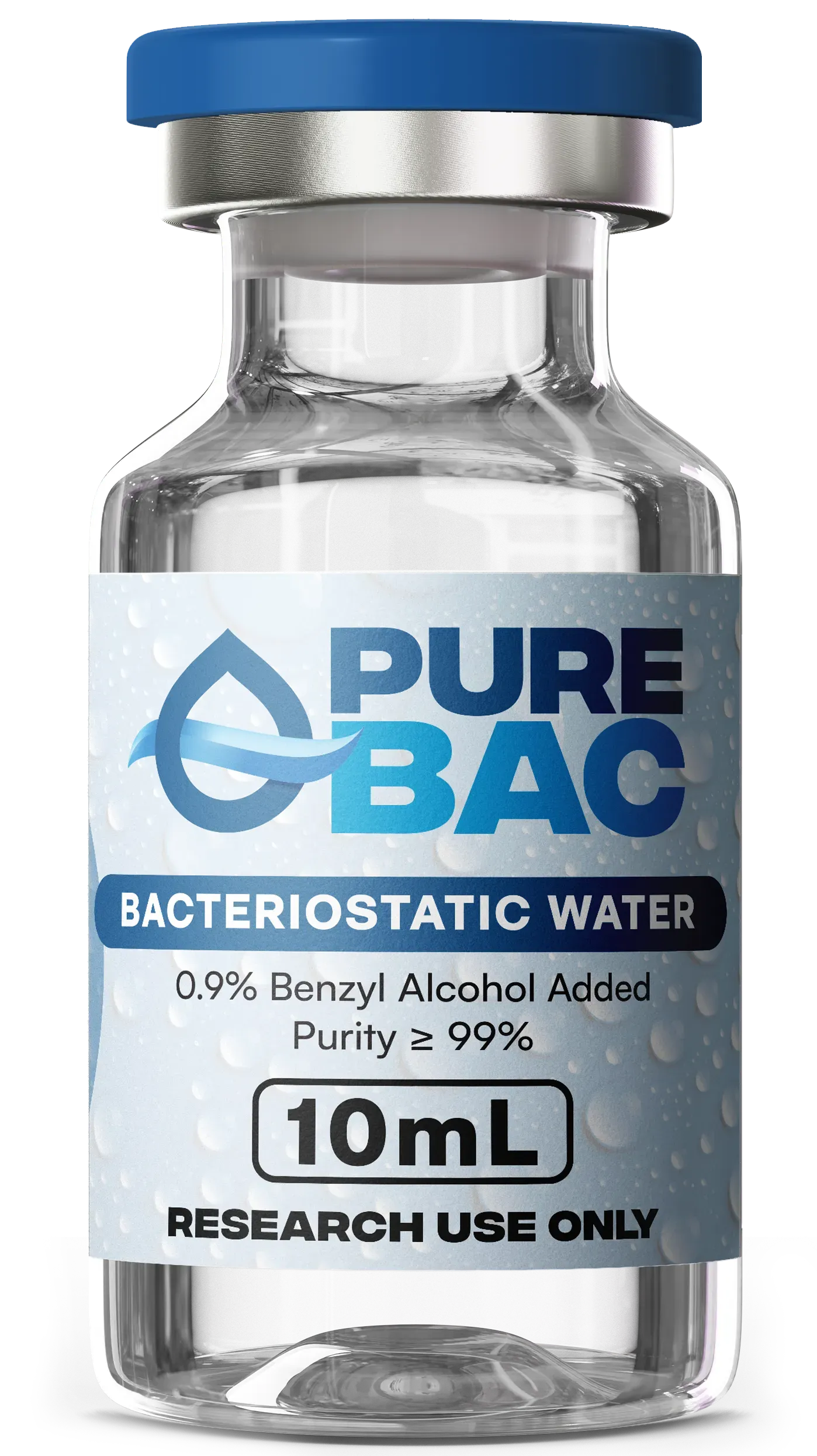
Dissolve lyophilized thymulin in bacteriostatic water or sterile saline to desired concentration.
Prepare Zinc Solution
Create equimolar zinc chloride (ZnCl₂) solution. Calculate based on peptide amount.
Combine for Active Complex
Mix 1:1 molar ratio of thymulin to zinc. Allow 15-30 minutes for complex formation at room temperature.
Store Properly
Refrigerate at 2-8°C. Use within 7-14 days. Do not freeze reconstituted solution.
Research Dosing Ranges
| Application | Animal Dose | Route | Frequency |
|---|---|---|---|
| Immunomodulation | 1-10 μg/kg | Subcutaneous/IP | Daily |
| Neuroprotection | 1-5 μg/kg | IP or Intranasal | Daily |
| Anti-aging studies | 1-10 μg/kg | Subcutaneous | Daily-Weekly |
| Topical (hair) | 0.1-1% solution | Topical | 1-2x daily |
Administration Routes
Subcutaneous Injection: The most common route in research for systemic effects. Absorption is reliable, and the technique is straightforward. The short half-life (15-20 minutes) means systemic exposure is brief per injection.
Intraperitoneal (IP): Used in rodent studies for rapid systemic distribution. Provides higher peak levels than subcutaneous but shorter duration.
Intranasal: Explored for neuroprotection applications, potentially allowing CNS delivery while bypassing first-pass metabolism. Research is limited but suggests feasibility.
Topical: Used in cosmetic/dermatological applications. Zinc-thymulin in appropriate vehicles for scalp application. Penetration and local bioavailability vary with formulation.
Half-Life and Dosing Frequency
Thymulin's serum half-life of approximately 15-20 minutes presents dosing challenges:
- Single daily dosing may not maintain sustained levels
- Multiple daily doses could theoretically improve exposure
- Despite short half-life, biological effects may persist longer due to cellular response duration
- Some research uses intermittent dosing (every few days) with apparent efficacy
Pro Tip
For research purposes, ensure adequate zinc status before and during thymulin use. The peptide cannot function without zinc, and zinc deficiency would negate any potential effects.
Storage Requirements
- Lyophilized powder: Store at -20°C, protected from light, stable for months to years
- Reconstituted thymulin (without zinc): 2-8°C, use within 2-4 weeks
- Zinc-thymulin complex: 2-8°C, use within 7-14 days for optimal activity
- Avoid repeated freeze-thaw cycles
- Protect from light during storage and handling
🔑 Key Takeaways: Dosing
- Must prepare as zinc-thymulin complex (1:1 molar ratio) for activity
- Research doses typically 1-10 μg/kg in animal studies
- Short half-life but effects may persist longer at cellular level
- Proper storage essential due to limited stability of reconstituted complex
Work out your Thymulin draw in units
Enter the vial size, the bacteriostatic water you add and the dose you want, and the calculator gives the syringe units, how long the vial lasts and when to discard it.
Open the peptide calculatorSafety & Side Effects
Safety and Side Effects
Thymulin's safety profile benefits from being a naturally occurring human hormone, though the typical caveats apply: most data comes from animal studies, and long-term human safety data is limited.
General Safety Profile
Available evidence suggests thymulin has a favorable safety profile:
- It's an endogenous human hormone—the body produces it naturally
- Animal toxicity studies have not revealed significant adverse effects at research doses
- No evidence of carcinogenicity or mutagenicity in available studies
- Limited human use in research settings has not reported serious adverse events
Potential Considerations
Immune System Effects: As an immunomodulator, thymulin could theoretically exacerbate certain conditions:
- Individuals with T-cell lymphomas or leukemias should avoid T-cell-stimulating agents
- Effects in organ transplant recipients (on immunosuppression) are unknown
- Autoimmune conditions might theoretically worsen or improve—unpredictable without specific research
Zinc Considerations: The zinc component of the active complex introduces its own factors:
- Excessive zinc intake (from any source) can cause copper deficiency
- Zinc-thymulin provides relatively small zinc amounts, but total zinc intake should be monitored
- Individuals with Wilson's disease or other zinc/copper metabolism disorders should exercise caution
Reported Side Effects
Based on available research, reported side effects are minimal:
- Injection site reactions: Mild, transient redness or discomfort (common to all injectable peptides)
- Immune responses: Theoretical risk of altered immune function
- No significant adverse events: Reported in published animal or limited human research
Contraindications and Precautions
Avoid use in:
- T-cell malignancies (lymphomas, certain leukemias)
- Active uncontrolled infections (immune modulation could be unpredictable)
- Pregnancy and breastfeeding (no safety data available)
- Organ transplant recipients on immunosuppression (without medical supervision)
Use with caution in:
- Autoimmune conditions (effects unpredictable)
- Concurrent immunotherapy or immunosuppressive treatment
- Individuals with zinc metabolism disorders
Quality and Purity Concerns
As with all research peptides, quality varies by source:
- Ensure peptide purity ≥98% verified by HPLC and mass spectrometry
- Contamination with endotoxins, solvents, or synthesis byproducts can cause reactions
- Only obtain from reputable suppliers with third-party testing
- Incorrect sequence or degraded peptide will lack activity
🔑 Key Takeaways: Safety
- Generally favorable safety profile as an endogenous hormone
- Avoid in T-cell malignancies and active infections
- Monitor total zinc intake to prevent copper deficiency
- Quality sourcing essential—verify purity and authenticity