PACAP-38
Pituitary Adenylate Cyclase-Activating Polypeptide-38
Get PACAP-38
Sourced from Ascension Peptides. Verified ≥≥99% purity, third-party tested. COA included.
Off with code
PEPTIDEDECK
Table of Contents
What is PACAP-38?
PACAP-38, or Pituitary Adenylate Cyclase-Activating Polypeptide-38, is a 38-amino acid neuropeptide that has emerged as one of the most potent endogenous neuroprotective substances known to science. First isolated from sheep hypothalamus in 1989 by Japanese researcher Akira Arimura, PACAP was initially characterized for its ability to stimulate adenylate cyclase in pituitary cells—hence its name. However, subsequent decades of research have revealed a far broader biological importance.
PACAP exists in two bioactive forms: PACAP-38 (the predominant form, comprising approximately 90% of PACAP in most tissues) and PACAP-27 (a truncated version containing the first 27 amino acids). Both forms share the same N-terminal sequence essential for receptor binding, but PACAP-38 generally shows superior potency and longer duration of action in most biological systems.
What makes PACAP-38 particularly remarkable is its extraordinary evolutionary conservation. The peptide sequence has remained virtually unchanged for over 700 million years—from invertebrates like tunicates to humans, PACAP-38 shows greater than 90% sequence identity. This degree of conservation across such vast evolutionary time suggests fundamental importance in nervous system function that transcends species boundaries. In humans, PACAP-38 is widely distributed throughout the central and peripheral nervous systems, with particularly high concentrations in the hypothalamus, brainstem, and sensory ganglia.
The peptide acts through three G-protein coupled receptors: PAC1 (PACAP-specific), VPAC1, and VPAC2 (shared with Vasoactive Intestinal Peptide). This receptor profile enables PACAP-38 to influence diverse physiological processes including neurodevelopment, neuronal survival, inflammation, circadian rhythms, metabolism, and reproduction. The PAC1 receptor, which binds PACAP with 1000-fold higher affinity than VIP, is considered primarily responsible for PACAP's neuroprotective effects. For broader context on peptide therapy, see our complete guide.
Research Benefits
Potent neuroprotection against ischemia and traumatic brain injury
Anti-inflammatory effects across multiple tissue types
Promotes neuronal survival and regeneration
Modulates stress response and anxiety-related behaviors
Supports retinal ganglion cell protection in glaucoma models
Cardioprotective effects during ischemia-reperfusion
Potential therapeutic target for migraine prevention
Enhances memory consolidation and cognitive function
How PACAP-38 Works
PACAP-38's biological effects stem from its activation of three distinct G-protein coupled receptors, each triggering multiple downstream signaling cascades. This multi-receptor, multi-pathway mechanism underlies the peptide's remarkable versatility as a neuroprotective and regulatory agent.
Receptor Binding and Signal Transduction
Upon binding to PAC1 receptors—the primary mediators of neuroprotection—PACAP-38 activates the Gαs pathway, stimulating adenylate cyclase to produce cyclic AMP (cAMP). This "canonical" signaling activates Protein Kinase A (PKA), which phosphorylates CREB (cAMP Response Element Binding protein), a transcription factor that turns on genes essential for neuronal survival. PAC1 receptors also couple to Gαq, activating phospholipase C and increasing intracellular calcium through non-harmful pathways that promote cellular functions rather than excitotoxicity.
Neuroprotection
Activates survival pathways through cAMP/PKA/CREB signaling cascade.
Anti-Apoptotic
Upregulates Bcl-2 and suppresses caspase activation to prevent cell death.
Anti-Inflammatory
Suppresses microglial activation and pro-inflammatory cytokine production.
Neurotrophic Support
Increases BDNF, NGF, and other growth factors via CREB activation.
Neuroprotective Mechanisms
PACAP-38's neuroprotection operates through several complementary pathways:
- Anti-apoptotic signaling: PKA-mediated phosphorylation increases Bcl-2 expression while suppressing pro-apoptotic factors like BAX and caspase-3, preventing programmed cell death
- Excitotoxicity prevention: PACAP-38 modulates glutamate receptor activity and calcium channel function, preventing the calcium overload that kills neurons during ischemia and trauma
- Neurotrophic factor induction: CREB activation drives expression of BDNF, NGF, and other neurotrophins essential for neuronal health and plasticity
- Oxidative stress reduction: The peptide enhances antioxidant enzyme expression and reduces reactive oxygen species production
- Inflammation suppression: PACAP-38 inhibits NF-κB signaling in immune cells, reducing production of TNF-α, IL-1β, and other pro-inflammatory mediators
VPAC Receptor Contributions
While PAC1 mediates most neuroprotective effects, VPAC1 and VPAC2 receptors contribute significantly to PACAP-38's peripheral actions. These receptors, shared with VIP, are highly expressed on immune cells, vascular smooth muscle, and epithelial tissues. Their activation accounts for PACAP-38's immunomodulatory, vasodilatory, and secretory effects. In the context of inflammation, VPAC receptor activation on macrophages and dendritic cells promotes an anti-inflammatory phenotype.
Research Applications
Traumatic brain injury and stroke
Active research area with published studies
Neurodegenerative diseases (Alzheimer's, Parkinson's)
Active research area with published studies
Migraine pathophysiology and treatment
Active research area with published studies
PTSD and stress-related disorders
Active research area with published studies
Retinal degeneration and glaucoma
Active research area with published studies
Cardiac ischemia-reperfusion injury
Active research area with published studies
Inflammatory bowel disease
Active research area with published studies
Diabetic complications
Active research area with published studies
Research Findings
Research on PACAP-38 has expanded dramatically over the past three decades, with over 3,000 published studies establishing its roles in neuroprotection, neuroinflammation, stress response, and numerous pathological conditions. The following summarizes key findings across major research areas.
Traumatic Brain Injury
Preclinical studies have consistently demonstrated PACAP-38's remarkable efficacy in traumatic brain injury (TBI) models. In controlled cortical impact studies, post-injury PACAP-38 administration significantly reduced lesion volume by 40-60%, decreased neuronal death in vulnerable regions like the hippocampus, and improved cognitive outcomes on spatial memory tests. Critically, these benefits occurred even when treatment was delayed up to 6 hours post-injury—a clinically relevant finding given real-world treatment delays.
Key TBI Research Finding
A 2025 study in pigs—whose brain structure closely resembles humans—demonstrated that IV-delivered PACAP-38 reduced secondary brain damage and improved neurological outcomes, supporting progression toward human clinical trials.
The mechanisms underlying TBI protection include suppression of neuroinflammation (reduced microglial activation and cytokine production), preservation of blood-brain barrier integrity, and enhancement of endogenous repair mechanisms including neurogenesis in the dentate gyrus.
Stroke and Cerebral Ischemia
In rodent models of middle cerebral artery occlusion (MCAO), PACAP-38 administered within 2 hours of reperfusion reduced infarct volume by 30-50% and improved functional neurological scores. The peptide protected against both the acute excitotoxic phase and delayed inflammatory damage. Studies demonstrate PACAP-38 reduces expression of matrix metalloproteinases that contribute to blood-brain barrier breakdown, while simultaneously promoting angiogenesis in peri-infarct regions during recovery.
Migraine Pathophysiology
The connection between PACAP-38 and migraine represents a major therapeutic opportunity. Seminal research published in Brain showed that intravenous PACAP-38 infusion triggered migraine-like attacks in 58% of migraine patients—an effect not seen with the closely related peptide VIP. This specificity implicated PAC1 receptor activation in migraine pathophysiology.
Subsequent studies revealed:
- PACAP-38 plasma levels are elevated during migraine attacks
- PACAP triggers prolonged vasodilation of meningeal and cerebral arteries
- PAC1 receptors on trigeminal neurons mediate pain transmission
- PACAP causes mast cell degranulation contributing to neurogenic inflammation
These findings have driven development of PAC1 receptor antagonists and anti-PACAP antibodies as novel migraine preventives, with several candidates showing efficacy in Phase 2 clinical trials.
Alzheimer's Disease
Research suggests PACAP-38 deficiency may contribute to Alzheimer's disease pathology. Post-mortem studies found reduced PACAP levels in brains of Alzheimer's patients compared to age-matched controls. In transgenic mouse models of Alzheimer's, PACAP-38 administration reduced amyloid-beta deposition, decreased tau phosphorylation, and improved cognitive performance on memory tasks. The peptide appears to enhance microglial phagocytosis of amyloid aggregates while suppressing the inflammatory response that normally accompanies plaque formation. For more on cognitive enhancement, see our profiles on Semax and Dihexa.
Parkinson's Disease
In MPTP-induced and 6-OHDA models of Parkinson's disease, PACAP-38 protected dopaminergic neurons in the substantia nigra and preserved dopamine levels in the striatum. Treatment improved motor function on rotational behavior and pole tests. Mechanistic studies indicate PACAP-38 protects against mitochondrial dysfunction and oxidative stress—key contributors to dopaminergic neuron vulnerability.
PTSD and Stress-Related Disorders
A landmark 2011 Nature Neuroscience paper established the PACAP system as a key regulator of stress response, with particular relevance to PTSD. The study found that a single nucleotide polymorphism in the PACAP receptor gene predicted PTSD symptoms in women with trauma exposure, and that estrogen regulation of PACAP receptor expression might explain sex differences in PTSD prevalence.
In animal models, PACAP signaling in the bed nucleus of stria terminalis mediates anxiety-like responses to threat. These findings suggest PACAP pathway modulation could offer novel therapeutic approaches for trauma and anxiety disorders. Other peptides studied for anxiolytic effects include Selank.
🔑 Key Research Takeaways
- PACAP-38 demonstrates consistent neuroprotection in TBI and stroke models, with clinical translation efforts underway
- The peptide's role in migraine has led to novel therapeutic approaches currently in clinical trials
- Neurodegenerative disease research shows potential for PACAP-38 in Alzheimer's and Parkinson's
- Stress and psychiatric applications represent an emerging area with genetic associations to PTSD
Dosage & Administration
Establishing dosing protocols for PACAP-38 presents unique challenges due to its extremely short half-life of 2-5 minutes. All available dosing information derives from preclinical research and limited human provocation studies—no therapeutic dosing guidelines exist for clinical use. The following represents what has been used in research contexts.
Preclinical Research Doses
In rodent neuroprotection studies, effective doses typically range from 0.1 to 10 μg/kg administered via various routes:
| Route | Typical Dose | Frequency | Application |
|---|---|---|---|
| Intravenous | 0.1-1 μg/kg | Single or repeated | TBI/stroke studies |
| Intracerebroventricular | 1-5 μg | Single dose | Direct CNS delivery |
| Intranasal | 10-100 μg/kg | Repeated daily | Non-invasive CNS targeting |
| Subcutaneous | 1-10 μg/kg | Varies | Peripheral effects |
Human Provocation Studies
In migraine research, human subjects have received intravenous PACAP-38 infusions at doses of 10-20 pmol/kg/min for periods of 20-30 minutes. These doses reliably trigger headache and migraine-like attacks in susceptible individuals, confirming biological activity but also highlighting the need for receptor-selective approaches in therapeutic development.
Administration Challenges
PACAP-38's ultrashort half-life necessitates specialized delivery approaches:
- Continuous infusion: Maintains steady-state plasma levels but requires IV access
- Intranasal delivery: Shows promise for CNS targeting while bypassing peripheral metabolism
- Modified analogs: DPP-IV-resistant PACAP variants with extended half-life are in development
- Nanoparticle formulations: Encapsulation protects against degradation and enables sustained release
- Local injection: Direct delivery to target tissue minimizes systemic exposure and degradation
Intranasal Delivery
Intranasal administration has emerged as a particularly promising approach for PACAP-38 delivery to the CNS. Studies show this route achieves detectable brain concentrations within minutes while largely bypassing systemic circulation and DPP-IV degradation.
Reconstitution and Handling
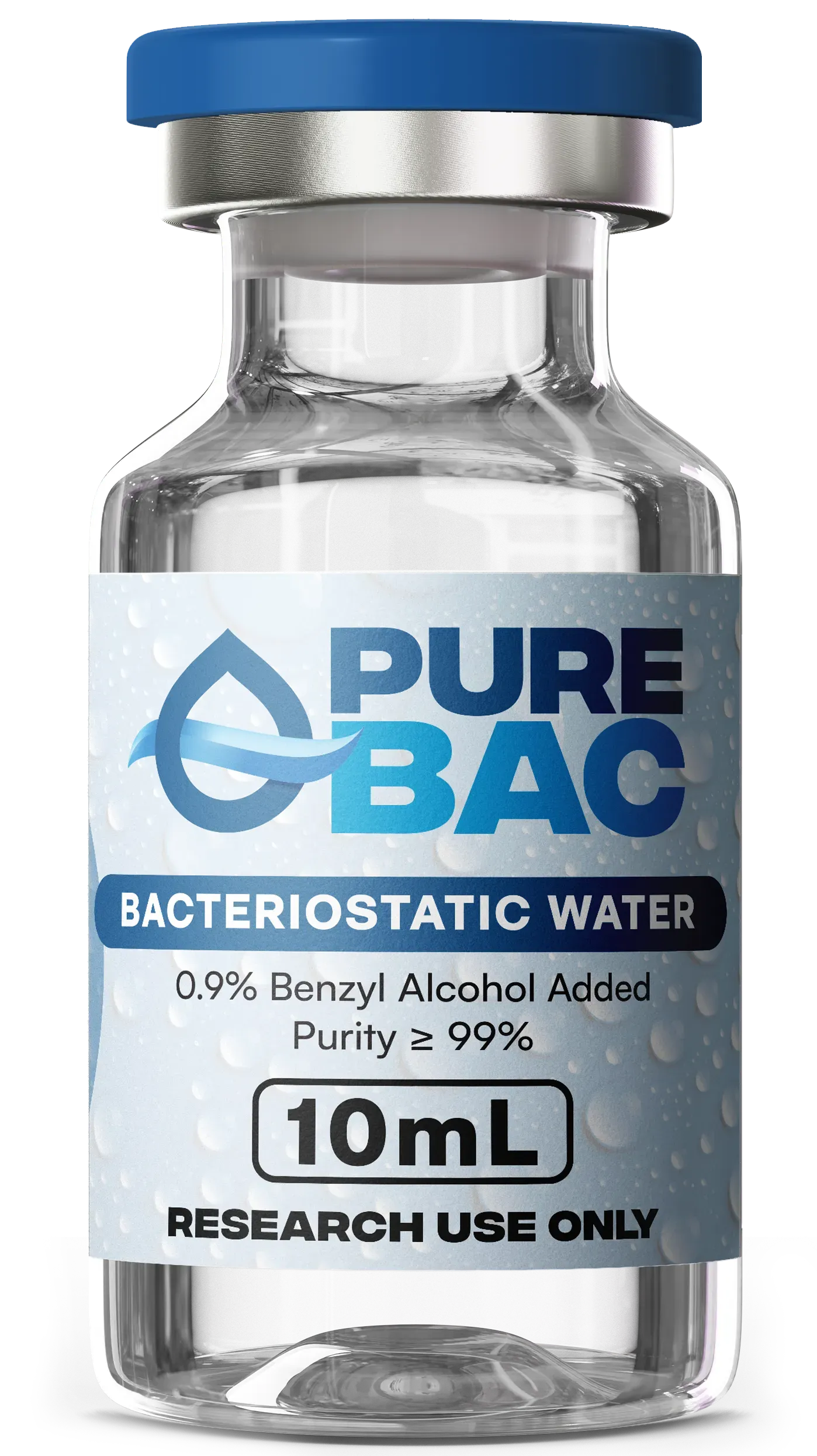
For research use, PACAP-38 is typically supplied as a lyophilized powder. For detailed reconstitution instructions, see our guide on how to reconstitute peptides:
Storage of Lyophilized Powder
Store at -20°C or colder. Peptide is stable for extended periods in lyophilized form when protected from moisture.
Reconstitution
Reconstitute in sterile water, saline, or appropriate buffer. Add solvent slowly and avoid vigorous shaking.
Solution Storage
Store reconstituted solution at 2-8°C. Use within 7 days. For longer storage, aliquot and freeze at -80°C to avoid repeated freeze-thaw cycles.
Work out your PACAP-38 draw in units
Enter the vial size, the bacteriostatic water you add and the dose you want, and the calculator gives the syringe units, how long the vial lasts and when to discard it.
Open the peptide calculatorSafety & Side Effects
PACAP-38 is an endogenous human peptide present throughout the nervous system and peripheral tissues. While this native origin suggests basic tolerability, research has identified several effects that have implications for therapeutic development and safety considerations.
Known Physiological Effects
At doses used in human research studies, PACAP-38 produces predictable physiological effects related to its receptor activation profile:
- Vasodilation: PACAP-38 causes potent vasodilation, particularly in cerebral and meningeal vessels, leading to flushing, warmth, and potentially headache
- Headache induction: In migraine-susceptible individuals, PACAP-38 reliably triggers migraine-like attacks—a desired effect in research but a concern for therapeutic use
- Heart rate changes: Transient tachycardia may occur due to vasodilation and reflex sympathetic activation
- Blood pressure effects: Peripheral vasodilation can cause temporary hypotension
- Gastrointestinal effects: PACAP-38 affects gut motility and secretion, potentially causing nausea or discomfort
Preclinical Safety Data
Animal toxicology studies have not revealed significant safety concerns at doses orders of magnitude above those showing biological activity. PACAP-38 does not appear to be mutagenic, teratogenic, or carcinogenic in standard screening assays. The peptide's endogenous nature and rapid metabolism provide inherent safety margins.
However, several considerations merit attention:
- Cardiovascular effects: Potent vasodilatory activity requires caution in individuals with cardiovascular disease or those taking blood pressure medications
- Tumor biology: Some studies suggest PACAP signaling may influence tumor cell behavior; implications for cancer patients are unclear
- Reproductive effects: PACAP plays roles in reproductive physiology; effects of exogenous administration during pregnancy are not characterized
- Drug interactions: Theoretical interactions with medications affecting cAMP signaling, blood pressure, or DPP-IV activity
Contraindications and Precautions
Based on known pharmacology, potential contraindications for PACAP-38 administration include:
- Active migraine or migraine history (for non-provocation research purposes)
- Uncontrolled hypertension or hypotension
- Significant cardiovascular disease
- Pregnancy or breastfeeding
- Known malignancy (until tumor biology is better understood)
Modified Analogs and Safety
Therapeutic development efforts focus on modified PACAP analogs or receptor-selective compounds that may have improved safety profiles. DPP-IV-resistant analogs with extended half-lives show similar efficacy with potentially more predictable effects. PAC1-selective agonists may provide neuroprotection without the migraine-triggering effects mediated partly through VPAC receptors on blood vessels. These modified approaches are currently in preclinical and early clinical development.