SARMs vs Peptides: Complete Comparison
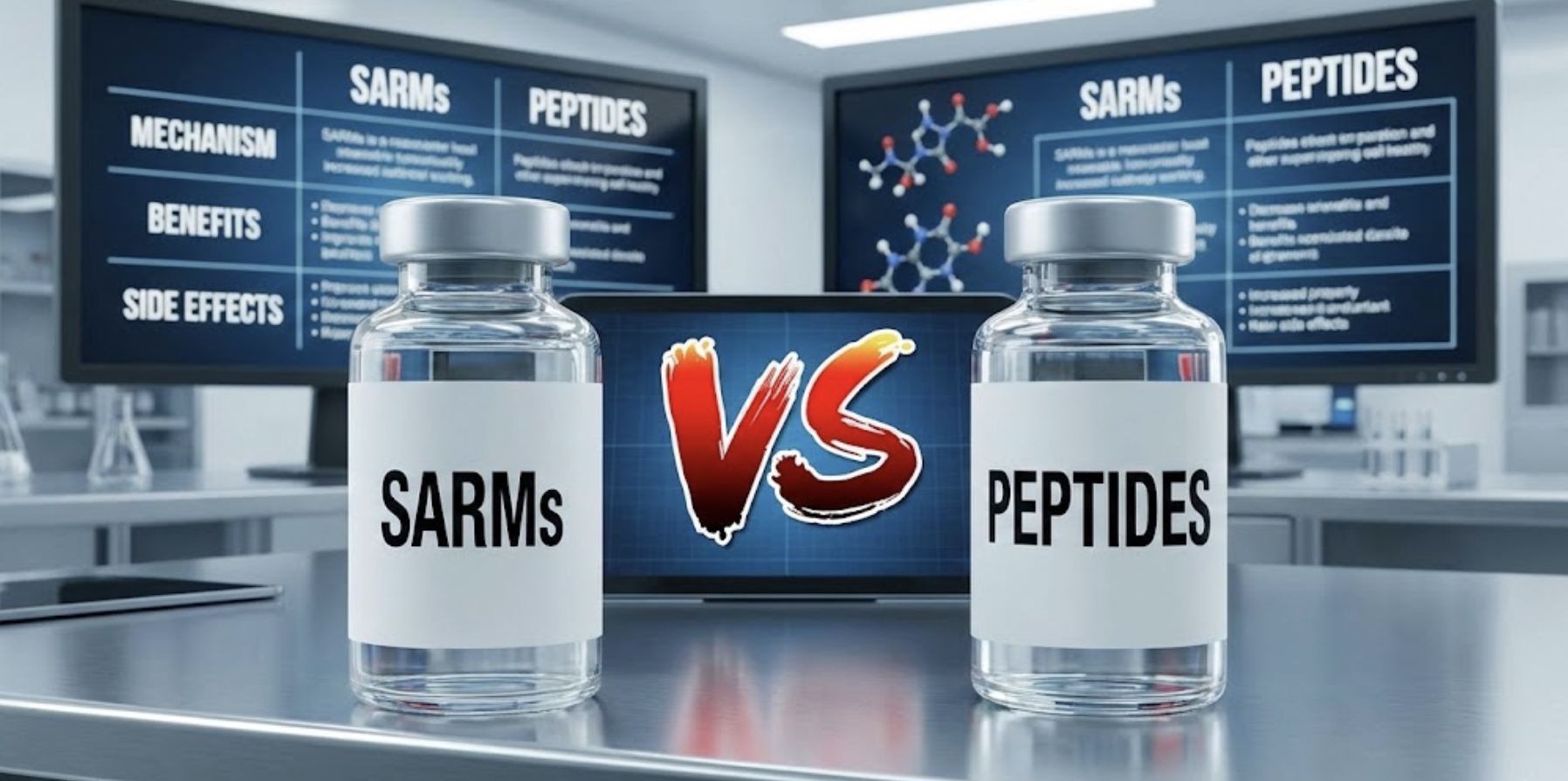
The worlds of SARMs (Selective Androgen Receptor Modulators) and peptides often overlap in discussions about muscle building, fat loss, and performance enhancement. Both are popular alternatives to traditional anabolic steroids, but they work through completely different mechanisms and offer distinct advantages and disadvantages.
Introduction
The worlds of SARMs (Selective Androgen Receptor Modulators) and peptides often overlap in discussions about muscle building, fat loss, and performance enhancement. Both are popular alternatives to traditional anabolic steroids, but they work through completely different mechanisms and offer distinct advantages and disadvantages.
This comprehensive guide breaks down everything you need to know about SARMs vs peptides—what they are, how they work, their benefits and risks, and which might be better suited for specific goals. Whether you're researching these compounds for scientific understanding or exploring options for body composition, this comparison provides the scientific foundation you need.
Important Disclaimer: Neither SARMs nor most peptides are FDA-approved for human use outside of specific medical conditions. This article is for educational purposes only. Always consult with a healthcare provider before considering any performance-enhancing compounds.
Table of Contents
- Quick Comparison: SARMs vs Peptides
- What Are SARMs?
- What Are Peptides?
- Key Differences Explained
- Popular SARMs Breakdown
- Popular Peptides Breakdown
- Benefits Comparison
- Side Effects & Risks
- Which Is Better For Your Goals?
- Legal Status & Regulations
- Can You Stack SARMs and Peptides?
- Frequently Asked Questions
- Conclusion
Quick Comparison: SARMs vs Peptides
Before diving deep, here's a high-level overview of the key differences:
| Factor | SARMs | Peptides |
|---|---|---|
| What They Are | Synthetic compounds that bind to androgen receptors | Short chains of amino acids (mini-proteins) |
| Mechanism | Direct androgen receptor activation | Various (GH release, healing signaling, etc.) |
| Primary Effects | Muscle growth, strength, bone density | GH stimulation, healing, fat loss, recovery |
| Origin | 100% synthetic, not found in nature | Many occur naturally in the body |
| Testosterone Impact | Suppresses natural testosterone | Generally does not suppress testosterone |
| Liver Toxicity | Documented hepatotoxicity risk | Minimal to none |
| Typical Cycle Length | 8-12 weeks | Weeks to months (varies by peptide) |
| PCT Required? | Usually yes | Typically no |
| FDA Approved | No (investigational) | Some approved; many research-only |
| WADA Banned | Yes (since 2008) | Most are banned |
What Are SARMs?
Definition
SARMs (Selective Androgen Receptor Modulators) are a class of synthetic compounds designed to mimic the effects of anabolic steroids while being more selective in their action. Unlike steroids that affect androgen receptors throughout the entire body, SARMs are engineered to preferentially target androgen receptors in muscle and bone tissue.
The "selective" part is key—SARMs aim to provide anabolic (muscle-building) effects while minimizing androgenic effects (like prostate enlargement, hair loss, and virilization in women) that occur with traditional steroids.
How SARMs Work
Mechanism of Action:
- Receptor Binding: SARMs enter cells and bind to androgen receptors (AR), similar to testosterone
- Tissue Selectivity: Unlike testosterone, SARMs preferentially activate receptors in muscle and bone
- Gene Transcription: The SARM-AR complex translocates to the nucleus and modulates gene expression
- Protein Synthesis: This triggers increased protein synthesis and muscle growth
Why Tissue Selectivity Occurs:
The androgen receptor is found throughout the body, but the cofactors and coregulatory proteins required for AR activation vary by tissue. SARMs take advantage of this by:
- Not being substrates for 5α-reductase (unlike testosterone)
- Not being converted to estrogen via aromatase
- Preferentially activating muscle/bone AR over prostate/hair follicle AR
Types of SARMs
The most commonly researched SARMs include:
| SARM | Other Names | Primary Use | Potency |
|---|---|---|---|
| Ostarine | MK-2866, Enobosarm | Cutting, recomposition | Mild |
| Ligandrol | LGD-4033 | Bulking, muscle mass | Moderate-High |
| Testolone | RAD-140 | Strength, lean mass | High |
| Andarine | S4 | Cutting, hardening | Moderate |
| Cardarine | GW-501516 | Endurance, fat loss | N/A (not a true SARM) |
| YK-11 | Myostine | Muscle growth | Very High |
| S-23 | — | Lean mass, hardening | Very High |
Note: Cardarine (GW-501516) is often grouped with SARMs but is technically a PPARδ receptor agonist, not an androgen receptor modulator.
History & Development
SARMs were first developed in the late 1990s by pharmaceutical companies searching for treatments for:
- Muscle wasting diseases (cancer cachexia, AIDS wasting)
- Osteoporosis
- Hypogonadism (low testosterone)
- Benign prostatic hyperplasia (BPH)
Despite promising early results, no SARM has received FDA approval as of 2025. Several remain in clinical trials, with Ostarine (Enobosarm) being the most advanced in the approval process.
What Are Peptides?
Definition
Peptides are short chains of amino acids—typically 2 to 50 amino acids linked together. They're essentially small proteins that act as signaling molecules in the body, instructing cells to perform specific functions.
Unlike SARMs, which are entirely synthetic, many peptides occur naturally in the human body. Insulin, for example, is a peptide. Growth hormone-releasing hormones, healing factors, and neurotransmitters are all peptides.
Research peptides are either:
- Synthetic versions of naturally occurring peptides
- Modified peptides designed for enhanced stability or effects
- Novel peptides created in laboratories
How Peptides Work
Peptides work through various mechanisms depending on their type:
1. Growth Hormone Secretagogues (GHS)
- Stimulate the pituitary gland to release more natural growth hormone
- Examples: CJC-1295, Ipamorelin, GHRP-2, GHRP-6, MK-677
- Increase IGF-1 levels
2. Healing/Recovery Peptides
- Promote tissue repair through growth factors and cellular signaling
- Examples: BPC-157, TB-500, Thymosin Alpha-1
- Enhance angiogenesis (new blood vessel formation)
3. Fat Loss Peptides
- Target fat metabolism specifically
- Examples: HGH Fragment 176-191, AOD-9604, Tesamorelin
- Promote lipolysis without affecting blood sugar
4. Cognitive/Nootropic Peptides
- Enhance brain function and neuroprotection
- Examples: Semax, Selank, Dihexa
- Support nerve growth factor production
Types of Peptides
Growth Hormone Peptides:
| Peptide | Mechanism | Half-Life | Primary Effects |
|---|---|---|---|
| CJC-1295 | GHRH analog | 5-8 days | Sustained GH elevation |
| Ipamorelin | Ghrelin mimetic | ~2 hours | Clean GH pulse |
| GHRP-2 | Ghrelin mimetic | ~30 min | Strong GH release + hunger |
| GHRP-6 | Ghrelin mimetic | ~30 min | Strong GH release + intense hunger |
| MK-677 | Oral ghrelin mimetic | 24 hours | Oral GH elevation |
| Sermorelin | GHRH analog | ~10-20 min | Natural GH stimulation |
Healing Peptides:
| Peptide | Primary Action | Key Benefits |
|---|---|---|
| BPC-157 | Gastric peptide | Gut healing, tendon/ligament repair, systemic healing |
| TB-500 | Thymosin Beta-4 | Muscle repair, wound healing, inflammation reduction |
| Thymosin Alpha-1 | Immune modulator | Immune function, inflammation |
| GHK-Cu | Copper peptide | Skin healing, collagen, anti-aging |
Fat Loss Peptides:
| Peptide | Mechanism | Notes |
|---|---|---|
| HGH Fragment 176-191 | Lipolysis activation | Fat-specific, no muscle effects |
| AOD-9604 | Modified HGH fragment | FDA GRAS status for food |
| Tesamorelin | GHRH analog | FDA-approved for HIV lipodystrophy |
Key Differences Explained
1. Chemical Structure
SARMs:
- Small molecule drugs (not proteins)
- Entirely synthetic—don't exist in nature
- Typically taken orally (many are bioavailable)
- Chemically stable
Peptides:
- Chains of amino acids (2-50+)
- Many are natural or modified versions of natural compounds
- Usually require injection (broken down if taken orally)
- More fragile, require proper storage
2. Mechanism of Action
SARMs:
- Direct action on androgen receptors
- Work like a "key in a lock"—binding directly to ARs
- Selectively activate muscle/bone androgen receptors
- Directly stimulate protein synthesis
- Mimic testosterone's anabolic effects
Peptides:
- Indirect action through various signaling pathways
- Work like a "messenger"—telling your body to do something
- GH peptides: Stimulate your pituitary to release your own growth hormone
- Healing peptides: Activate repair pathways and growth factors
- Don't directly bind androgen receptors
3. Hormonal Impact
SARMs:
- Suppress natural testosterone production
- The body senses elevated androgen signaling and reduces its own output
- Suppression varies by SARM and dose (20-70% reduction common)
- Typically requires Post-Cycle Therapy (PCT) to recover
- Can affect cholesterol (lower HDL, raise LDL)
Peptides:
- Generally don't suppress testosterone
- GH peptides work with your natural systems, not instead of them
- No PCT typically required
- Some may even support healthy testosterone indirectly
4. Speed & Nature of Results
SARMs:
- Faster, more dramatic muscle-building effects
- Results often visible within 2-4 weeks
- Effects are dose-dependent and relatively predictable
- Strength gains can be significant
- Results may partially reverse after stopping (especially if PCT is poor)
Peptides:
- Slower, more gradual effects
- Full benefits may take 3-6 months
- Effects build over time
- More subtle but often longer-lasting
- Recovery/healing benefits can be rapid (BPC-157, TB-500)
5. Research Status
SARMs:
- Developed as pharmaceutical candidates
- Several in Phase II/III clinical trials
- More human research data available
- No FDA approvals yet
Peptides:
- Some FDA-approved for specific conditions
- Many remain research-only
- Variable quality of human research
- Some with decades of clinical use (e.g., growth hormone)
Popular SARMs Breakdown
Ostarine (MK-2866)
Overview: The most researched SARM with the mildest side effect profile. Originally developed for muscle wasting and osteoporosis.
Key Characteristics:
- Best for: Cutting, recomposition, beginners
- Typical dose: 10-25mg daily
- Half-life: ~24 hours
- Cycle length: 8-12 weeks
Research Findings:
- Phase II trials showed 1-1.5kg lean mass gains in cancer patients
- Minimal testosterone suppression at lower doses
- Well-tolerated in clinical settings
Pros:
- Mildest suppression among SARMs
- Good for preserving muscle while cutting
- Most clinical data available
Cons:
- Less powerful than other SARMs
- Still suppressive, especially at higher doses
- Not FDA-approved
Ligandrol (LGD-4033)
Overview: One of the strongest SARMs for bulking, with significant lean mass gains documented in research.
Key Characteristics:
- Best for: Bulking, mass gaining
- Typical dose: 5-10mg daily
- Half-life: ~24-36 hours
- Cycle length: 8-10 weeks
Research Findings:
- Clinical study showed 1.21kg lean mass gain in just 21 days at 1mg/day
- Dose-dependent suppression of testosterone
- No significant fat loss or strength improvements at low doses
Pros:
- Strong anabolic effects
- Good human trial data
- Effective at low doses
Cons:
- More suppressive than Ostarine
- Requires PCT
- May affect lipids
RAD-140 (Testolone)
Overview: Considered the most potent SARM, originally developed for breast cancer and muscle wasting.
Key Characteristics:
- Best for: Strength, lean mass, advanced users
- Typical dose: 10-20mg daily
- Half-life: ~60 hours (longest among popular SARMs)
- Cycle length: 8-12 weeks
Research Status:
- Limited human data compared to Ostarine/LGD
- Animal studies show strong anabolic effects
- Potentially neuroprotective properties being studied
Pros:
- Strongest anabolic SARM
- Long half-life (once daily dosing)
- Significant strength gains reported
Cons:
- Most suppressive SARM
- Most hepatotoxic based on case reports
- Least clinical data
- Requires robust PCT
Popular Peptides Breakdown
CJC-1295 + Ipamorelin (The Classic Combo)
Overview: The most popular peptide combination for growth hormone optimization. CJC-1295 provides sustained GH elevation while Ipamorelin provides clean GH pulses.
How They Work Together:
- CJC-1295: GHRH analog with 5-8 day half-life
- Ipamorelin: Ghrelin mimetic with ~2 hour half-life
- Combined: Fast onset (Ipamorelin) + sustained release (CJC-1295)
Research Findings:
- CJC-1295 increases GH 2-10x for 6+ days after single injection
- IGF-1 elevated for 9-11 days
- Ipamorelin selectively releases GH without affecting cortisol
Benefits:
- Increased lean muscle mass
- Fat loss (especially visceral fat)
- Improved sleep quality
- Enhanced recovery
- Better skin quality
Typical Protocol:
- 100-300mcg each, 1-2x daily
- Usually before bed and/or morning
- Cycles of 8-12 weeks common
BPC-157 (Body Protection Compound)
Overview: A naturally occurring gastric peptide with remarkable healing properties across multiple tissue types.
Mechanism:
- Promotes angiogenesis (new blood vessel formation)
- Increases growth hormone receptor expression
- Modulates nitric oxide pathways
- Upregulates growth factors
Research Applications:
- Tendon and ligament healing
- Muscle injury repair
- Gut healing (IBD, ulcers, leaky gut)
- Neuroprotection
- Bone healing
Key Research:
- Demonstrated healing effects in tendons, ligaments, muscle, bone, and gut in animal models
- Enhances growth hormone receptor expression in tendon fibroblasts
- Short half-life (<30 minutes) but lasting effects
Typical Protocol:
- 250-500mcg, 1-2x daily
- Inject near injury site for localized effects
- Systemic administration also effective
- Cycles of 4-8 weeks
TB-500 (Thymosin Beta-4)
Overview: A synthetic version of a naturally occurring peptide involved in wound healing and tissue repair.
Mechanism:
- Promotes actin formation (essential for cell structure and movement)
- Enhances cell migration to injury sites
- Stimulates angiogenesis
- Reduces inflammation
- Works systemically (whole-body effects)
Key Differences from BPC-157:
- More systemic vs. BPC-157's localized action
- Better for muscle and cardiac tissue
- Longer-lasting effects
- Often combined with BPC-157 for synergy
Typical Protocol:
- 2-5mg, 2x per week (loading phase)
- 2-5mg, 1x per week (maintenance)
- Cycles of 4-6 weeks
MK-677 (Ibutamoren)
Overview: An oral growth hormone secretagogue—technically not a peptide but often grouped with them. Mimics ghrelin to stimulate GH release.
Key Advantage: Oral bioavailability (no injections needed)
Effects:
- Sustained GH elevation over 24 hours
- Increased IGF-1 levels
- Improved sleep quality
- Increased appetite (ghrelin effect)
- Water retention common
Considerations:
- Can significantly increase appetite
- May cause water retention and lethargy
- Blood sugar effects possible
- Not a SARM despite sometimes being marketed as one
Benefits Comparison
Muscle Building
| Aspect | SARMs | Peptides |
|---|---|---|
| Speed | Faster (2-4 weeks noticeable) | Slower (1-3 months) |
| Magnitude | Greater direct muscle gains | Moderate indirect gains |
| Mechanism | Direct AR activation | GH/IGF-1 mediated |
| Retention | Variable (depends on PCT) | Generally well-retained |
Winner for Pure Muscle Mass: SARMs (particularly LGD-4033, RAD-140)
Winner for Sustainable Gains: Peptides (GH peptides support natural systems)
Fat Loss
| Aspect | SARMs | Peptides |
|---|---|---|
| Direct Fat Burning | Minimal (mostly muscle-sparing) | Strong (GH peptides, HGH Frag) |
| Metabolic Boost | Moderate (via increased muscle) | Significant (GH elevation) |
| Body Recomposition | Excellent (Ostarine, S4) | Good (CJC/Ipa combo) |
Winner for Fat Loss: Peptides (especially HGH Fragment 176-191, Tesamorelin)
Winner for Recomposition: Tie (Both effective with different approaches)
Recovery & Healing
| Aspect | SARMs | Peptides |
|---|---|---|
| Injury Healing | Indirect (via anabolism) | Direct (BPC-157, TB-500) |
| Joint Support | Some (Ostarine noted for joints) | Strong (BPC-157, TB-500, GH peptides) |
| Workout Recovery | Good | Excellent |
| Sleep Quality | Neutral to negative | Often improved (GH peptides) |
Winner for Healing: Peptides (BPC-157 + TB-500 specifically designed for this)
Anti-Aging & Wellness
| Aspect | SARMs | Peptides |
|---|---|---|
| Skin Quality | Minimal effect | Improved (GH/collagen effects) |
| Energy | Can improve (via muscle/strength) | Often improved |
| Sleep | Variable | Often significantly improved |
| Cognitive | Limited data | Some benefits (GH, nootropic peptides) |
| Long-term Safety | Concerning (liver, hormones) | Generally favorable |
Winner for Anti-Aging: Peptides
Side Effects & Risks
SARMs Side Effects
Hormonal Effects:
- Testosterone suppression (20-70% depending on SARM and dose)
- FSH/LH suppression
- Potential fertility impacts
- May require PCT (Nolvadex, Clomid, Enclomiphene)
Liver Effects:
- Elevated liver enzymes documented
- Case reports of drug-induced liver injury (DILI)
- RAD-140 most commonly implicated
- Risk increases with higher doses and longer cycles
Cardiovascular Effects:
- HDL ("good") cholesterol reduction
- LDL ("bad") cholesterol elevation
- Potential long-term cardiovascular risks unknown
Other Reported Effects:
- Headaches
- Nausea
- Hair shedding (temporary, some SARMs)
- Vision issues (Andarine/S4 specifically—yellow tint)
- Fatigue (often during suppression)
FDA Warning (2017):
"SARMs pose a risk for serious, life-threatening side effects including heart attack, stroke, and liver damage."
Peptide Side Effects
Growth Hormone Peptides:
- Water retention (common initially)
- Tingling/numbness (carpal tunnel-like)
- Increased hunger (GHRP-2, GHRP-6, MK-677)
- Fatigue/lethargy (MK-677)
- Potential blood sugar effects
- Joint pain at high doses
Healing Peptides (BPC-157, TB-500):
- Generally very well tolerated
- Injection site reactions
- Headache (rare)
- Dizziness (rare)
- Theoretical cancer concerns (promoting growth in existing tumors)
Important Distinctions:
- Peptides don't suppress testosterone
- No liver toxicity associated with most peptides
- No lipid profile disruption
- Side effects generally mild and transient
Risk Comparison Summary
| Risk Factor | SARMs | Peptides |
|---|---|---|
| Testosterone Suppression | HIGH | LOW/NONE |
| Liver Toxicity | MODERATE-HIGH | LOW/NONE |
| Cardiovascular Risk | MODERATE | LOW |
| Required PCT | USUALLY | RARELY |
| Long-term Safety Data | LIMITED | LIMITED (but more favorable) |
| Quality Control Issues | HIGH (black market) | HIGH (black market) |
Which Is Better For Your Goals?
Goal: Build Maximum Muscle Mass
Better Choice: SARMs
Specifically: LGD-4033 or RAD-140
Why: SARMs directly activate androgen receptors in muscle, producing more dramatic and faster muscle gains than peptides. The direct anabolic signaling is more potent for pure hypertrophy.
Caveat: You'll need PCT, and results may partially reverse if hormones aren't properly recovered.
Goal: Lose Fat While Preserving Muscle
Better Choice: TIE (Depends)
For Aggressive Cutting: Peptides (HGH Fragment 176-191 + GH peptides)
- Direct fat-burning without muscle effects
- GH elevation promotes lipolysis
- No hormonal suppression
For Body Recomposition: SARMs (Ostarine or S4)
- Excellent muscle preservation
- Mild fat loss
- Works well in caloric deficit
Goal: Heal an Injury Faster
Better Choice: Peptides
Specifically: BPC-157 + TB-500 stack
Why: These peptides are specifically designed for tissue healing. They promote angiogenesis, reduce inflammation, and accelerate repair of tendons, ligaments, muscles, and even gut tissue. SARMs have no direct healing mechanism.
Goal: Anti-Aging / Long-Term Wellness
Better Choice: Peptides
Specifically: CJC-1295 + Ipamorelin or low-dose GH peptides
Why:
- Support natural GH production (which declines with age)
- Improve sleep, skin, energy
- Better long-term safety profile
- Don't suppress natural hormones
- Can be used for extended periods
Goal: Improve Athletic Performance
Better Choice: Depends on Sport
Strength/Power Sports: SARMs may provide faster gains
Endurance Sports: Peptides (sustained GH benefits, better recovery)
Contact Sports: Peptides (healing benefits crucial)
Note: Both are banned by WADA and most athletic organizations.
Goal: First-Time User / Beginner
Better Choice: Peptides
Why:
- Lower risk profile
- No PCT required
- Don't suppress natural hormones
- Gentler introduction to performance compounds
- Easier to stop without hormonal consequences
If choosing SARMs as a beginner, Ostarine at conservative doses (10-15mg) is typically recommended.
Legal Status & Regulations
United States
SARMs:
- Not FDA-approved for human use
- Not legal to sell for human consumption
- Can be sold as "research chemicals"
- Illegal to include in dietary supplements
- DEA has considered scheduling (not yet scheduled)
Peptides:
- Most are not FDA-approved for human use
- Some exceptions: Tesamorelin (FDA-approved), certain peptides compounded by pharmacies
- Can be sold as "research chemicals"
- Similar gray-area status as SARMs
United Kingdom
SARMs:
- Legal to buy for personal use
- Illegal to sell for human consumption
- Available as "research chemicals"
Peptides:
- Similar status to SARMs
- Prescription required for some
- Research chemical sales permitted
Australia
SARMs:
- Schedule 4 (Prescription Only)
- Illegal to import without prescription
- Strict enforcement
Peptides:
- Most are Schedule 4
- Some are Schedule 8 (Controlled)
- Cannot be imported without authorization
Sports Regulations
WADA (World Anti-Doping Agency):
- All SARMs banned since 2008
- Most peptides banned under:
- S2: Peptide Hormones, Growth Factors
- S0: Non-Approved Substances
NCAA, MLB, NFL, Olympics:
- All prohibit SARMs and most peptides
- Testing has improved significantly
- Detection windows vary by compound
Can You Stack SARMs and Peptides?
Short Answer: Yes, But With Caution
Some users combine SARMs and peptides to leverage the benefits of both. Common approaches:
Stack Example 1: Muscle Building + Recovery
- RAD-140 or LGD-4033 (SARM for muscle)
- BPC-157 + TB-500 (peptides for joint/tendon support)
- Rationale: SARMs stress tendons/ligaments; healing peptides may mitigate
Stack Example 2: Recomposition
- Ostarine (SARM for muscle preservation)
- CJC-1295 + Ipamorelin (peptides for GH/fat loss)
- Rationale: Multiple pathways for body recomposition
Stack Example 3: Recovery Focus
- Low-dose Ostarine (joint benefits)
- BPC-157 + TB-500 + GH peptides
- Rationale: Maximum healing and recovery
Considerations
Potential Benefits:
- Synergistic effects through different mechanisms
- Peptides may offset some SARM side effects (healing, sleep)
- More comprehensive approach
Potential Concerns:
- More variables = harder to identify issues
- Increased cost
- No research on combined safety
- More injection frequency
Recommendation: If stacking, start compounds separately to understand individual responses before combining.
Frequently Asked Questions
General Questions
Are SARMs safer than steroids?
SARMs are generally considered to have fewer and milder side effects than anabolic steroids. However, "safer" is relative—SARMs still suppress testosterone, can affect liver function, and lack long-term safety data. They're not "safe," just potentially less harmful than traditional steroids.
Are peptides safer than SARMs?
Generally, yes. Peptides typically don't suppress testosterone, don't cause liver toxicity, and work with your body's natural systems rather than overriding them. However, safety varies by peptide, and quality control is a concern with both compound classes.
Do peptides build muscle like SARMs?
Not directly. GH peptides can support muscle growth indirectly through elevated growth hormone and IGF-1, but the anabolic effects are more subtle than SARMs. SARMs directly activate muscle-building pathways and produce faster, more dramatic results. Peptides excel at recovery, fat loss, and healing.
Can women use SARMs and peptides?
- Peptides: Generally yes, with similar protocols to men
- SARMs: Possible but with greater caution. Lower doses recommended. Risk of virilization (masculine effects) exists, though less than with steroids. Ostarine and Andarine are most commonly used by women.
Practical Questions
How long until I see results from SARMs?
Most users notice strength increases within 1-2 weeks and visible muscle changes by weeks 3-4. Full effects typically manifest by weeks 6-8.
How long until I see results from peptides?
GH peptides: Sleep improvement within days; body composition changes over 2-3 months
Healing peptides: Effects can be felt within 1-2 weeks for injuries
Do I need PCT after SARMs?
Usually, yes. The degree of suppression depends on the SARM, dose, and cycle length. Blood work is the only way to know for certain. Common PCT options include Nolvadex (Tamoxifen), Clomid (Clomiphene), and Enclomiphene.
Do I need PCT after peptides?
Typically, no. Peptides generally don't suppress the HPTA (hypothalamus-pituitary-testicular axis). You can usually stop peptides without PCT.
Can I take SARMs orally? What about peptides?
- SARMs: Most are orally bioavailable and taken as capsules or liquid
- Peptides: Most require injection (subcutaneous or intramuscular). MK-677 and some newer peptides are orally available. Oral peptides are generally destroyed by digestive enzymes.
Safety Questions
Are SARMs liver toxic?
Evidence suggests yes, particularly with RAD-140. Case reports document drug-induced liver injury. Liver enzymes should be monitored, and cycles should be kept reasonable in length and dose.
Do peptides affect my liver?
No significant liver toxicity has been associated with common peptides like BPC-157, TB-500, or GH secretagogues.
Can I use SARMs or peptides with other medications?
Both can interact with medications. Consult a healthcare provider, particularly if you take:
- Diabetes medications (both can affect blood sugar)
- Cardiovascular medications
- Hormone therapies
- Immunosuppressants
Are research-grade SARMs/peptides safe?
Quality is a major concern. Studies have found that many products sold as SARMs contain:
- Different compounds than labeled
- Incorrect dosing
- Dangerous adulterants
- No active ingredient at all
Third-party testing (Certificate of Analysis from independent labs) is essential.
Conclusion
The SARMs vs peptides debate doesn't have a clear winner—the better choice depends entirely on your goals, risk tolerance, and priorities.
Choose SARMs If:
- Your primary goal is building muscle mass and strength
- You want faster, more dramatic results
- You're willing to accept hormonal suppression and run PCT
- You understand and accept the liver and cardiovascular risks
- You're an experienced user comfortable with monitoring health markers
Choose Peptides If:
- Your goals include healing, recovery, and anti-aging
- You want to work with your body's natural systems
- You prefer a gentler approach with fewer side effects
- You want to avoid hormonal suppression and PCT
- You're focused on long-term health optimization
- You're new to performance-enhancing compounds
Key Takeaways
SARMs are more powerful for muscle building but come with testosterone suppression, liver stress, and cardiovascular concerns
Peptides are generally safer with fewer side effects, but produce more subtle and gradual results for muscle growth
Peptides excel at healing and recovery—BPC-157 and TB-500 have no equivalent in the SARM world
Neither is FDA-approved for performance enhancement, and both carry legal and quality control concerns
Blood work is essential regardless of which you choose—monitor hormones, liver function, and lipids
Quality matters enormously—third-party tested products from reputable sources reduce (but don't eliminate) risk
Ultimately, both SARMs and peptides represent alternatives to traditional anabolic steroids with their own unique risk-benefit profiles. Understanding these differences allows for more informed decision-making based on individual goals and health considerations.
Scientific References
SARMs Research
- Selective Androgen Receptor Modulators (SARMs) - PMC/NCBI
- Selective Androgen Receptor Modulators: The Future of Androgen Therapy - PMC
- SARMs Effects on Physical Performance: Systematic Review - Wiley
- Drug-Induced Liver Injury by SARMs - PMC
- SARMs Safety Review in Healthy Adults - PMC
- USADA: Selective Androgen Receptor Modulators
- Cleveland Clinic: SARMs Side Effects and Risks
- Self-Reported Side Effects of SARMs - PMC
Peptides Research
- CJC-1295 Stimulation of GH and IGF-I - PubMed
- BPC 157 Enhances Growth Hormone Receptor Expression - PMC
- BPC-157 in Orthopaedic Sports Medicine: Systematic Review - PMC
- BPC-157: Science-Backed Uses and Benefits - Rupa Health
- TB-500 and BPC-157 Synergy - Yahoo Finance
Comparison Articles
- SARMs vs Peptides: The Ultimate Showdown - Swolverine
- Peptides vs SARMs: What's the Difference - Peptides.org
- Peptides vs SARMs for Muscle Growth - Peptide Sciences
- SARMs vs Peptides 2025 Guide - Smart SARMs UK
- Peptides vs SARMs Comparison - LIVV Natural
Last Updated: December 2025
Disclaimer: This article is for educational and informational purposes only. Neither SARMs nor most peptides are FDA-approved for human performance enhancement. The information provided does not constitute medical advice. Always consult with a qualified healthcare provider before using any performance-enhancing compounds. Both SARMs and peptides are banned by WADA and most sports organizations.
Keywords: SARMs vs peptides, selective androgen receptor modulators, peptides for muscle growth, ostarine vs BPC-157, LGD-4033, RAD-140, CJC-1295, ipamorelin, TB-500, SARMs side effects, peptides benefits, muscle building supplements, performance enhancing compounds, SARMs comparison, peptide therapy