HGH 191AA: The Complete Guide to Somatropin
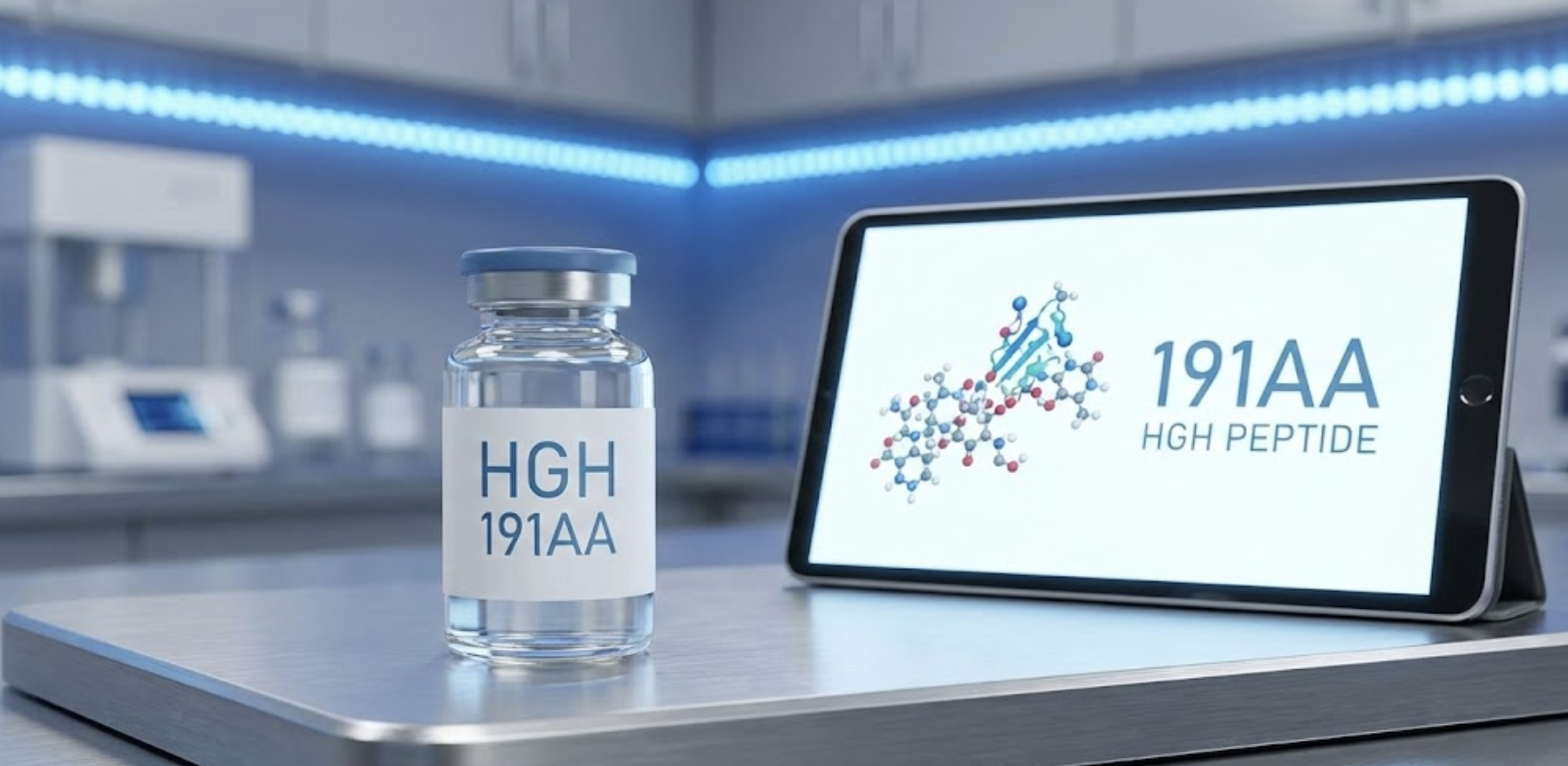
HGH 191AA (Human Growth Hormone 191 Amino Acid) is the bioidentical form of somatropin, the growth hormone naturally produced by your pituitary gland. Unlike older 192AA formulations that contained an extra methionine amino acid, HGH 191AA is structurally identical to what your body produces, making it the gold standard in growth hormone research and therapy.
Introduction
HGH 191AA (Human Growth Hormone 191 Amino Acid) is the bioidentical form of somatropin, the growth hormone naturally produced by your pituitary gland. Unlike older 192AA formulations that contained an extra methionine amino acid, HGH 191AA is structurally identical to what your body produces, making it the gold standard in growth hormone research and therapy.
This comprehensive guide covers everything you need to know about HGH 191AA: how it works, the difference between 191AA and 192AA, research-backed benefits, dosage protocols, side effects, proper storage, and frequently asked questions. Whether you're exploring HGH for medical purposes or research, this guide provides the scientific foundation you need.
Medical Disclaimer: This article is for educational and informational purposes only. HGH is a prescription medication in most countries. Always consult with a qualified healthcare provider before considering any hormone therapy.
Table of Contents
- What is HGH 191AA?
- HGH 191AA vs 192AA: Key Differences
- How HGH 191AA Works: Mechanism of Action
- Benefits of HGH 191AA
- HGH 191AA Dosage Protocols
- Administration & Injection Guidelines
- Reconstitution & Storage
- Side Effects & Safety Profile
- Who Should Consider HGH 191AA
- HGH 191AA vs Other Peptides
- Frequently Asked Questions
- Scientific References
What is HGH 191AA?
Definition & Overview
HGH 191AA (also written as HGH-191aa or Somatropin) is recombinant human growth hormone that consists of exactly 191 amino acids—the identical sequence produced by somatotropic cells in the anterior pituitary gland. The "191AA" designation specifically indicates this bioidentical structure, distinguishing it from older synthetic variants.
Human growth hormone is a single-chain polypeptide hormone essential for:
- Growth and development during childhood and adolescence
- Metabolism regulation throughout life
- Body composition maintenance (muscle mass, fat distribution)
- Cellular repair and regeneration
- Bone density preservation
The History of Synthetic HGH
1950s-1985: Cadaver-Derived HGH
The first growth hormone treatments used HGH extracted from human cadaver pituitary glands. This method was discontinued in 1985 after cases of Creutzfeldt-Jakob disease (CJD) were linked to contaminated batches.
1985: Introduction of Recombinant HGH
Genentech introduced the first recombinant human growth hormone (Protropin), produced using recombinant DNA technology in E. coli bacteria. This 192AA version contained an extra N-terminal methionine.
1987: True 191AA HGH
Eli Lilly introduced Humatrope, the first true 191AA recombinant HGH that was structurally identical to natural human growth hormone. This became the new standard.
Today: Multiple 191AA Products
All modern pharmaceutical-grade HGH products (Genotropin, Norditropin, Humatrope, Omnitrope, Saizen) are 191AA formulations.
Key Facts About HGH 191AA
| Property | Specification |
|---|---|
| Amino Acids | 191 |
| Molecular Weight | ~22,124 Da (22 kDa) |
| Structure | Single-chain polypeptide with 2 disulfide bonds |
| Half-Life | 2-3 hours (plasma) |
| Administration | Subcutaneous or intramuscular injection |
| Dosing Frequency | Once daily (typically evening) |
| Storage | Refrigerated (2-8°C / 36-46°F) |
HGH 191AA vs 192AA: Key Differences
One of the most important distinctions in growth hormone products is the difference between 191AA and 192AA formulations. Understanding this difference is crucial for anyone researching or using HGH.
Structural Difference
191AA (Somatropin)
- Contains exactly 191 amino acids
- Structurally identical to endogenous (natural) human growth hormone
- No extra amino acids attached
- Examples: Humatrope, Genotropin, Norditropin, Omnitrope
192AA (Somatrem / Met-hGH)
- Contains 192 amino acids
- Has an extra N-terminal methionine (Met) attached
- Also called "methionyl human growth hormone" or "met-hGH"
- Historical example: Protropin (discontinued)
Immunogenicity & Antibody Formation
The extra methionine in 192AA creates a key concern:
192AA Issues:
- The body may recognize the extra methionine as "foreign"
- Can trigger antibody formation against the growth hormone
- Antibody formation increases with use beyond 4 months
- Some users experience injection site reactions (redness, swelling)
- May reduce effectiveness over time due to antibody binding
191AA Advantages:
- Bioidentical to natural HGH—body recognizes it as "self"
- Significantly lower risk of antibody formation
- Better tolerated for long-term use
- Fewer injection site reactions
Bioactivity Comparison
Interestingly, research has shown that the bioactivity of both forms is essentially equivalent:
"The bioactivity assessed by both in vitro cell proliferation assays and in vivo bioassays failed to distinguish between the two hormones. The NH2-terminal methionine on bacterially derived growth hormone results in altered antigenicity without any measurable effect on bioactivity."
This means both 191AA and 192AA will produce similar biological effects in the short term. However, the potential for antibody formation with 192AA can reduce effectiveness over time.
Why 191AA is the Standard Today
| Factor | 191AA | 192AA |
|---|---|---|
| Structure | Bioidentical to natural HGH | Extra methionine attached |
| Antibody Risk | Low | Higher (especially >4 months) |
| Pharmaceutical Availability | All current brands | No current pharmaceutical brands |
| Long-term Tolerance | Excellent | May decrease over time |
| Injection Site Reactions | Minimal | More common |
| Cost | Standard | N/A (not commercially available) |
Bottom Line: If you're using or researching HGH, ensure it's a 191AA formulation. There are no legitimate pharmaceutical 192AA products currently on the market—any 192AA products are from non-pharmaceutical sources and may have additional quality concerns.
How HGH 191AA Works: Mechanism of Action
Understanding how HGH 191AA works at the cellular level helps explain its wide-ranging effects on the body.
The GH-IGF-1 Axis
HGH 191AA exerts its effects through two primary mechanisms:
1. Direct Effects
HGH binds directly to growth hormone receptors (GHR) on target cells throughout the body. When HGH binds to these receptors, it triggers intracellular signaling cascades that influence:
- Cell growth and division
- Protein synthesis
- Fat metabolism (lipolysis)
- Glucose regulation
2. Indirect Effects (via IGF-1)
The majority of HGH's anabolic effects are mediated indirectly through Insulin-like Growth Factor 1 (IGF-1):
- HGH stimulates the liver to produce and secrete IGF-1
- IGF-1 then circulates throughout the body
- IGF-1 binds to its own receptors, promoting growth and anabolic effects
- This is called the "somatomedin hypothesis"
Cellular Signaling Pathways
When HGH binds to the growth hormone receptor, it initiates several key signaling pathways:
JAK-STAT Pathway:
- HGH binds to GHR, causing receptor dimerization
- Janus kinases (JAK1 and JAK2) are activated
- JAKs phosphorylate STAT proteins (STAT1, STAT3, STAT5)
- Activated STATs translocate to the nucleus
- Gene transcription is initiated, leading to:
- IGF-1 production
- Protein synthesis
- Cell proliferation
MAPK Pathway:
- Influences cell differentiation and proliferation
- Important for metabolic regulation
PI3K-Akt Pathway:
- Promotes cell survival and growth
- Influences glucose and lipid metabolism
Natural Regulation of GH
Your body tightly regulates growth hormone through a feedback system:
Stimulators of GH Release:
- GHRH (Growth Hormone-Releasing Hormone) from the hypothalamus
- Ghrelin from the stomach
- Sleep (deep sleep stages)
- Exercise
- Low blood glucose
- Stress
Inhibitors of GH Release:
- Somatostatin (Growth Hormone-Inhibiting Hormone)
- High blood glucose
- IGF-1 (negative feedback)
- Elevated free fatty acids
Pulsatile Secretion Pattern
Natural GH is released in pulses, not continuously:
- Major pulse during deep sleep (stages 3-4)
- Smaller pulses throughout the day
- Total daily production: ~0.4-1.0 mg in adults
- Production decreases with age (~14% per decade after age 30)
Synthetic HGH 191AA mimics these effects but is typically administered once daily, creating a more sustained elevation rather than natural pulsing.
Benefits of HGH 191AA
Research and clinical experience have documented numerous benefits of HGH therapy in individuals with growth hormone deficiency. Below are the evidence-based benefits:
1. Body Composition Improvements
Increased Lean Body Mass
HGH stimulates protein synthesis and promotes muscle growth:
- Studies show 5-10% increase in lean body mass over 6-12 months
- Enhances muscle protein synthesis (MPS)
- Inhibits muscle protein breakdown (MPB)
- Improves nitrogen retention
Reduced Body Fat
HGH is highly lipolytic (fat-burning):
- Promotes breakdown of stored triglycerides
- Increases fatty acid oxidation
- Preferentially reduces visceral (abdominal) fat
- Studies show 10-20% reduction in body fat
- Enhances metabolic rate
2. Metabolic Benefits
Improved Lipid Profile
- Reduces LDL ("bad") cholesterol
- May increase HDL ("good") cholesterol
- Decreases triglycerides
- Reduces cardiovascular risk markers
Glucose Metabolism
- Complex effects on glucose
- Can cause insulin resistance at higher doses
- Lower doses may improve metabolic health
- Monitoring blood glucose is recommended
3. Bone Health
Increased Bone Mineral Density
- Stimulates osteoblast (bone-building cell) activity
- Enhances calcium absorption
- Improves bone turnover markers
- May reduce fracture risk over time
- Effects may take 12-24 months to manifest
4. Skin, Hair & Connective Tissue
Collagen Synthesis
- Stimulates fibroblast activity
- Increases collagen production
- Improves skin thickness and elasticity
- May reduce wrinkle depth
- Enhances wound healing
Hair & Nails
- May improve hair thickness
- Can enhance nail growth and strength
5. Recovery & Healing
Tissue Repair
- Accelerates wound healing
- Enhances recovery from injuries
- Improves surgical recovery times
- Supports tendon and ligament repair
- Reduces recovery time between training sessions
6. Cognitive & Psychological
Quality of Life
- Improved energy levels
- Enhanced mood and well-being
- Better sleep quality
- Reduced anxiety and depression symptoms
- Improved cognitive function (memory, concentration)
7. Cardiovascular Function
Heart Health
- May improve cardiac output
- Enhances exercise capacity
- Improves endothelial function
- Potential reduction in cardiovascular mortality
Summary of Benefits by System
| System | Benefits |
|---|---|
| Muscular | ↑ Lean mass, ↑ Strength, ↑ Protein synthesis |
| Adipose | ↓ Body fat, ↓ Visceral fat, ↑ Lipolysis |
| Skeletal | ↑ Bone density, ↑ Calcium absorption |
| Integumentary | ↑ Skin thickness, ↑ Collagen, Improved healing |
| Cardiovascular | ↑ Exercise capacity, Improved lipids |
| Neurological | ↑ Mood, ↑ Energy, ↑ Cognitive function |
| Metabolic | ↑ Metabolic rate, Improved body composition |
HGH 191AA Dosage Protocols
Dosing HGH 191AA depends on the therapeutic goal, individual response, and medical guidance. Below are general protocols based on clinical and research literature.
Understanding HGH Units
HGH is measured in International Units (IU) or milligrams (mg):
- 1 mg = approximately 3 IU (varies slightly by product)
- 1 IU = approximately 0.33 mg
Most protocols reference IU as the standard measure.
Dosage by Goal
Medical/Replacement Therapy
For adults with diagnosed growth hormone deficiency:
- Starting dose: 0.15-0.3 mg/day (0.5-1 IU/day)
- Maintenance dose: 0.4-0.8 mg/day (1.2-2.4 IU/day)
- Maximum: Usually not exceeding 1.0 mg/day (3 IU/day)
Anti-Aging / General Wellness
Off-label use for age-related decline:
- Conservative: 1-2 IU/day
- Moderate: 2-3 IU/day
- Typically used: 5-6 days per week
Body Composition / Fat Loss
For improving body composition:
- Beginner: 2-3 IU/day
- Intermediate: 3-4 IU/day
- Advanced: 4-6 IU/day
Performance / Bodybuilding (Off-Label)
Higher doses used in athletic contexts:
- Moderate: 4-6 IU/day
- High: 6-10 IU/day
- Very High: 10-15+ IU/day (professional level, higher risk)
Warning: Higher doses significantly increase the risk of side effects including insulin resistance, fluid retention, and joint pain. These doses are NOT medically recommended.
Dosing Schedule
Once Daily (Most Common)
- Single injection, typically in the evening
- Mimics natural nighttime GH surge
- Simpler protocol with good results
Split Dosing
- Divide daily dose into 2 injections
- Morning + evening (or post-workout)
- May provide more stable levels
- Often used at higher doses to reduce side effects
5 Days On / 2 Days Off
- Some protocols include rest days
- Theory: prevents receptor downregulation
- Evidence for this approach is limited
Titration Protocol
Starting low and gradually increasing helps minimize side effects:
| Week | Daily Dose | Notes |
|---|---|---|
| 1-2 | 1-2 IU | Assess tolerance |
| 3-4 | 2-3 IU | Increase if no issues |
| 5-6 | 3-4 IU | Target dose for many |
| 7+ | 4+ IU | Only if needed/tolerated |
Cycle Length
- Minimum effective: 3-4 months
- Optimal: 6-12 months
- Long-term: Can be used indefinitely for medical indications
- Benefits continue to improve over 6-12 months of use
Administration & Injection Guidelines
Proper administration technique is essential for safety and effectiveness.
Injection Routes
Subcutaneous (SubQ) - Preferred
- Injected into fat tissue just below the skin
- Most common method
- Slower, more sustained absorption
- Less painful than intramuscular
Intramuscular (IM)
- Injected directly into muscle tissue
- Faster absorption
- Less commonly used for HGH
Injection Sites
Rotate injection sites to prevent lipoatrophy (localized fat loss):
Subcutaneous Sites:
- Abdomen (most common): 2 inches from navel
- Thigh: Front or outer thigh
- Upper arm: Back of upper arm
- Buttocks: Upper outer quadrant
Rotation Schedule:
- Use a different site each day
- Don't inject in same spot within 1 inch for at least 1 week
- Keep a log to track rotation
Injection Technique
Step-by-Step SubQ Injection:
- Wash hands thoroughly with soap and water
- Prepare injection site: Clean with alcohol swab, let dry
- Prepare syringe: Draw correct dose from vial
- Pinch skin: Lift a fold of skin at injection site
- Insert needle: 45-90° angle depending on needle length
- Inject slowly: Push plunger steadily over 5-10 seconds
- Remove needle: Pull straight out
- Apply pressure: Hold cotton ball/gauze briefly (don't rub)
- Dispose properly: Use sharps container
Best Time to Inject
Evening/Before Bed (Most Recommended)
- Mimics natural GH surge during sleep
- May enhance sleep quality
- Allows GH to work during fasting state
Morning (Fasted)
- Alternative timing
- Take on empty stomach
- Wait 30-60 minutes before eating
Post-Workout
- Some prefer this timing
- Theoretical benefit for recovery
- Often used as second dose in split protocols
Important Considerations
- Fasting state preferred: Food (especially carbs/sugar) can blunt GH release and effects
- Avoid injecting near insulin: If using both, separate injection sites and timing
- Consistency matters: Inject at the same time daily
- Never share needles: Single-use only
Reconstitution & Storage
Proper handling of HGH is critical—the molecule is fragile and easily degraded by heat, shaking, or improper storage.
Reconstitution Instructions
HGH typically comes as a lyophilized (freeze-dried) powder that must be reconstituted before use.
What You'll Need:
- HGH vial (lyophilized powder)
- Bacteriostatic water (BAC water) or sterile water
- Insulin syringes
- Alcohol swabs
Step-by-Step Reconstitution:
- Remove caps from both HGH and water vials
- Wipe tops with alcohol swabs
- Draw water into syringe:
- Standard: 1-2 mL per vial (depends on desired concentration)
- Common: 1 mL water per 10 IU vial = 10 IU/mL
- Inject water slowly: Aim at the vial wall, not directly on powder
- DO NOT SHAKE: Let it sit, or gently swirl/roll
- Wait for dissolution: May take 5-15 minutes
- Inspect solution: Should be clear and colorless
Concentration Examples:
| Water Added | Vial Size | Concentration |
|---|---|---|
| 1.0 mL | 10 IU | 10 IU per mL (1 IU = 10 units on insulin syringe) |
| 2.0 mL | 10 IU | 5 IU per mL (1 IU = 20 units on insulin syringe) |
| 1.0 mL | 36 IU | 36 IU per mL |
Storage Guidelines
Before Reconstitution (Lyophilized Powder)
| Storage Method | Duration |
|---|---|
| Refrigerated (2-8°C / 36-46°F) | Until expiration date |
| Room temperature (<25°C / 77°F) | Up to 30 days max |
| Frozen | NOT recommended |
After Reconstitution
| Diluent Used | Refrigerated Stability |
|---|---|
| Bacteriostatic water | 14-28 days |
| Sterile water (no preservative) | Use immediately, discard unused |
Critical Storage Points
DO:
- ✅ Keep refrigerated at all times (preferred)
- ✅ Protect from light (store in box or dark container)
- ✅ Check for cloudiness or particles before use
- ✅ Note reconstitution date on vial
- ✅ Transport with cold pack if traveling
DON'T:
- ❌ Freeze HGH (destroys the molecule)
- ❌ Shake vials (denatures the protein)
- ❌ Expose to heat or direct sunlight
- ❌ Use cloudy or discolored solution
- ❌ Use past recommended timeframe after reconstitution
Signs of Degraded HGH
Discard if you notice:
- Cloudiness or haziness
- Particles or floaters
- Unusual color (should be clear/colorless)
- Clumping or gel-like consistency
Note: Degraded HGH may not always show visible signs. Strict adherence to storage guidelines is the best way to ensure potency.
Side Effects & Safety Profile
Like all hormones, HGH 191AA has potential side effects that are typically dose-dependent. Understanding these risks helps with informed decision-making and proper monitoring.
Common Side Effects
Fluid Retention (Most Common)
- Peripheral edema (swelling in hands, feet, ankles)
- Facial puffiness
- Usually transient and dose-related
- Often resolves within first few weeks
- Management: Reduce dose, increase water intake
Joint & Muscle Discomfort
- Arthralgia (joint pain)
- Myalgia (muscle pain)
- Stiffness, especially in extremities
- More common at higher doses
- Usually improves with dose adjustment
Carpal Tunnel Syndrome
- Numbness/tingling in hands
- Caused by fluid retention pressing on nerves
- More common at doses >4 IU/day
- Usually reversible with dose reduction
Injection Site Reactions
- Redness, swelling, or pain at injection site
- Lipoatrophy with repeated same-site injections
- Prevented by proper site rotation
Metabolic Side Effects
Insulin Resistance / Glucose Effects
- HGH antagonizes insulin action
- Can raise fasting blood glucose
- May unmask or worsen diabetes
- Higher risk at higher doses
- Monitoring blood glucose recommended
Hypothyroidism
- HGH can increase T4 to T3 conversion
- May unmask subclinical hypothyroidism
- Thyroid function should be monitored
- May require thyroid supplementation
Serious/Rare Side Effects
Intracranial Hypertension (Rare)
- Headache, visual changes, nausea
- More common in children
- Usually resolves with discontinuation
Cancer Risk Considerations
- GH/IGF-1 promotes cell growth
- Contraindicated in active malignancy
- Theoretical concern for cancer promotion
- Long-term epidemiological data is reassuring in GHD patients
Acromegaly-like Effects (High Doses)
- Enlargement of hands, feet, jaw
- Only with prolonged supraphysiological doses
- Reversible if caught early
Side Effects by Dose Level
| Dose Range | Common Side Effects | Risk Level |
|---|---|---|
| 1-2 IU/day | Minimal | Low |
| 2-4 IU/day | Mild fluid retention, joint stiffness | Low-Moderate |
| 4-6 IU/day | Edema, carpal tunnel, joint pain | Moderate |
| 6-10 IU/day | Significant fluid retention, glucose effects | Moderate-High |
| 10+ IU/day | All above + acromegaly risk | High |
Contraindications
HGH 191AA should NOT be used in:
- Active cancer or malignancy
- Diabetic retinopathy (proliferative)
- Acute critical illness
- Closed epiphyses with intent to increase height
- Known hypersensitivity to HGH or excipients
- Prader-Willi syndrome with severe obesity/respiratory issues
Monitoring Recommendations
| Test | Frequency | Purpose |
|---|---|---|
| IGF-1 levels | Every 1-3 months | Ensure levels in normal range |
| Fasting glucose / HbA1c | Every 3-6 months | Monitor insulin resistance |
| Thyroid panel (TSH, T4, T3) | Every 6 months | Check for hypothyroidism |
| Lipid panel | Every 6-12 months | Track cardiovascular markers |
Who Should Consider HGH 191AA
FDA-Approved Indications
HGH is FDA-approved for specific medical conditions:
In Children:
- Growth hormone deficiency (GHD)
- Turner syndrome
- Prader-Willi syndrome
- Chronic renal insufficiency
- Small for gestational age (SGA) without catch-up growth
- Idiopathic short stature
- SHOX gene deficiency
- Noonan syndrome
In Adults:
- Adult growth hormone deficiency (AGHD)
- HIV-associated wasting/cachexia
- Short bowel syndrome
Off-Label Uses
While not FDA-approved, HGH is used off-label for:
- Age-related GH decline
- Anti-aging and wellness optimization
- Body composition improvement
- Athletic performance/recovery
- Injury healing support
Important: Off-label use should only occur under medical supervision with appropriate monitoring.
Who May Benefit Most
Good Candidates:
- Adults with documented GH deficiency
- Those with significantly low IGF-1 levels
- Individuals with age-related symptoms: fatigue, decreased muscle mass, increased body fat, poor recovery
- Patients who have failed other interventions
- Those willing to commit to proper monitoring
Poor Candidates:
- Anyone with active or recent cancer
- Uncontrolled diabetes
- Those seeking quick fixes without lifestyle optimization
- Individuals unwilling to monitor health markers
- Those with unrealistic expectations
HGH 191AA vs Other Peptides
How does HGH 191AA compare to other growth hormone-related peptides?
HGH 191AA vs Growth Hormone Secretagogues
| Peptide | Mechanism | Advantages | Disadvantages |
|---|---|---|---|
| HGH 191AA | Direct GH replacement | Precise dosing, predictable results, bioidentical | Suppresses natural GH, higher cost |
| GHRH (Sermorelin, CJC-1295) | Stimulates natural GH release | Preserves pulsatile release, less suppression | Variable response, less predictable |
| GHRP (Ipamorelin, GHRP-6) | Mimics ghrelin, stimulates GH | Strong GH release, synergistic with GHRH | Can increase hunger (GHRP-6), cortisol effects |
| MK-677 (Ibutamoren) | Oral ghrelin mimetic | Oral dosing, sustained GH elevation | Water retention, increased appetite |
HGH 191AA vs HGH Fragment 176-191
| Feature | HGH 191AA | HGH Fragment 176-191 |
|---|---|---|
| Structure | Full 191 amino acid hormone | Fragment of HGH (amino acids 176-191) |
| Effects | Full spectrum (anabolic + metabolic) | Primarily fat loss |
| Muscle Building | Strong | Minimal |
| Fat Burning | Strong | Strong (possibly superior per mg) |
| IGF-1 Increase | Yes | No |
| Blood Sugar Effects | Can increase | Minimal/none |
| Cost | Higher | Lower |
When to Choose HGH 191AA Over Alternatives
Choose HGH 191AA when:
- You want comprehensive benefits (muscle, fat loss, recovery, skin, etc.)
- You have documented GH deficiency
- You want predictable, dose-dependent results
- Budget allows for pharmaceutical-grade product
Consider alternatives when:
- Primary goal is fat loss only (consider HGH Frag)
- Want to preserve natural GH production (consider secretagogues)
- Budget is limited
- Prefer oral options (MK-677)
Frequently Asked Questions
General Questions
What does 191AA mean in HGH?
The "191AA" refers to the amino acid count—human growth hormone consists of exactly 191 amino acids. This designation indicates the product is bioidentical to natural HGH, as opposed to older 192AA formulations that had an extra methionine amino acid.
Is HGH 191AA the same as somatropin?
Yes. HGH 191AA and somatropin are the same thing. Somatropin is the pharmaceutical/generic name for recombinant human growth hormone with 191 amino acids. Brand names include Genotropin, Norditropin, Humatrope, and Omnitrope.
Is HGH 191AA legal?
HGH is a prescription medication in the United States and most countries. It's legal to possess and use with a valid prescription from a licensed physician. Possession without a prescription or distribution is illegal. Laws vary by country.
How long does it take to see results from HGH?
- 2-4 weeks: Improved sleep, energy, recovery
- 1-2 months: Reduced body fat, improved skin
- 3-6 months: Noticeable body composition changes
- 6-12 months: Full benefits including muscle gain, bone density
Dosing Questions
What is the best HGH 191AA dosage for beginners?
Beginners should start with 1-2 IU per day and assess tolerance for 2-4 weeks before considering increases. This allows the body to adapt and minimizes side effects.
Should I take HGH in the morning or at night?
Evening/before bed is most commonly recommended as it mimics the natural GH surge during sleep. However, morning (fasted) is also effective. Consistency matters more than specific timing.
Can I take HGH every day?
Yes, daily administration is standard. Some protocols use 5-6 days per week with 1-2 rest days, though evidence for this approach's superiority is limited.
How long should an HGH cycle be?
Minimum 3-4 months to see significant results. Optimal is 6-12 months. For medical indications, HGH can be used long-term or indefinitely.
Side Effect Questions
Will HGH make my hands and feet grow?
At normal therapeutic doses, no. Acromegaly-like effects (bone/tissue enlargement) only occur with prolonged supraphysiological doses (typically 10+ IU/day for extended periods).
Does HGH cause diabetes?
HGH can cause insulin resistance and may raise blood sugar, potentially unmasking or worsening pre-existing diabetes. Regular glucose monitoring is recommended, especially at higher doses.
Is HGH safe for long-term use?
In individuals with GH deficiency, long-term HGH replacement appears safe and beneficial. For off-label use, long-term safety data is less robust. Regular medical monitoring is essential.
Can HGH cause cancer?
HGH is contraindicated in active cancer because GH/IGF-1 promotes cell growth. However, studies in GHD patients have not shown increased cancer risk with appropriate HGH therapy. The relationship remains an area of ongoing research.
Practical Questions
How do I know if my HGH is real?
- Purchase from reputable sources (pharmaceutical-grade preferred)
- Check for proper packaging, batch numbers, expiration dates
- Blood test: IGF-1 levels should increase significantly after 2-4 weeks
- Serum GH testing 3-4 hours post-injection (expensive)
Can I travel with HGH?
Yes, with a prescription. Keep in original packaging, carry prescription documentation, and transport with a cold pack. TSA/customs may ask questions—a prescription letter from your doctor helps.
How should I store HGH if I don't have a refrigerator available?
Unreconstituted HGH can be kept at room temperature (below 25°C/77°F) for up to 30 days. Use a cooler with ice packs when traveling. Once reconstituted, refrigeration is essential.
Scientific References
Primary Literature
Growth Hormone Physiology
Somatropin Clinical Information
HGH Safety & Side Effects
Storage & Handling
191AA vs 192AA Comparison
Dosage Protocols
Conclusion
HGH 191AA represents the gold standard in growth hormone therapy—a bioidentical peptide that matches the exact 191 amino acid sequence produced by your pituitary gland. Whether used for diagnosed growth hormone deficiency or researched for its potential anti-aging and body composition benefits, understanding the science behind HGH 191AA empowers better decision-making.
Key Takeaways:
- 191AA is bioidentical to natural human growth hormone, making it the preferred form over older 192AA versions
- Mechanism: Works both directly on tissues and indirectly through IGF-1 production
- Benefits are dose and time-dependent, including improved body composition, recovery, skin quality, and energy
- Start low: Begin with 1-2 IU/day and increase gradually
- Side effects are typically dose-related and manageable with proper monitoring
- Storage is critical: Refrigerate, never freeze, never shake
- Medical supervision is essential for safe and effective use
As with any hormone therapy, HGH 191AA is not a magic solution—it works best as part of a comprehensive approach including proper nutrition, exercise, sleep, and medical monitoring. If you're considering HGH therapy, consult with a qualified healthcare provider who can assess whether it's appropriate for your individual situation.
Last Updated: December 2025
Disclaimer: This article is for educational and informational purposes only. HGH 191AA is a prescription medication. The information provided does not constitute medical advice. Always consult with a qualified healthcare provider before starting any hormone therapy. Off-label use of HGH carries risks and should only be considered under medical supervision.
Keywords: HGH 191AA, somatropin, human growth hormone, 191 amino acid, HGH dosage, HGH side effects, HGH benefits, HGH vs 192AA, growth hormone therapy, recombinant HGH, HGH storage, HGH reconstitution