Peptide Therapy for Weight Loss: A Complete Guide to GLP-1s, Metabolic Peptides & More (2026)
A complete guide to weight loss peptides — semaglutide, tirzepatide, retatrutide, MOTS-c, 5-amino-1MQ, AOD-9604, and tesamorelin. Learn how each works, what the research says, and how to choose the right compound.
💡 Quick Summary
Peptide therapy for weight loss isn't one thing — it's a whole category of compounds that target fat loss through different mechanisms. GLP-1 agonists like semaglutide slow gastric emptying and crush appetite. Metabolic peptides like MOTS-c and 5-amino-1MQ work at the cellular level, shifting how you burn fuel. This guide covers the full spectrum: what each compound does, what the research says, and how to think about picking one.
Weight loss peptides have gone from fringe research compounds to mainstream conversation faster than almost anything in metabolic medicine. And honestly, for good reason — some of these compounds produce fat loss numbers that diet and exercise alone rarely match.
But "peptide therapy" has become a catch-all term that lumps together some very different mechanisms. Semaglutide and a GLP-1 receptor agonist isn't the same category of intervention as, say, MOTS-c or tesamorelin — even if both end up reducing body fat. The mechanisms, protocols, side effect profiles, and appropriate use cases are all different. So before you start chasing a specific compound, it's worth understanding what class you're even working with.
This is that breakdown.
🔑 Key Takeaways
- GLP-1 peptides (semaglutide, tirzepatide, retatrutide) produce the most dramatic clinical weight loss — up to 24% body weight in Phase 2 trials for retatrutide
- Metabolic peptides (MOTS-c, 5-amino-1MQ, tesamorelin, AOD-9604) work through different pathways — mitochondrial activation, lipase inhibition, and GH stimulation rather than appetite suppression
- GLP-1 agonists require slow dose escalation to minimize GI side effects
- Many weight loss peptides are available as research compounds from verified suppliers like Ascension Peptides
- Stacking metabolic peptides with GLP-1s is increasingly common in research settings — but isn't well-studied in combination yet
What Is Peptide Therapy for Weight Loss?
Peptide therapy, in the weight loss context, means using short-chain amino acid sequences — or compounds that mimic them — to influence the biological systems that regulate body weight. That includes appetite, insulin sensitivity, fat cell metabolism, growth hormone secretion, and mitochondrial energy use.
The word "peptide" technically refers to chains of 2–50 amino acids. GLP-1 agonists like semaglutide are peptide-based drugs (modified versions of the natural glucagon-like peptide-1). Others in the weight loss space — like 5-amino-1MQ or AOD-9604 — are peptide fragments or small molecules with peptide-like behavior. The term gets used loosely, but they're all targeting the same goal: changing how your body manages fat.
What makes peptide therapy different from traditional diet drugs is specificity. Older weight loss drugs like phentermine worked by flooding your system with stimulants. Modern weight loss peptides tend to work through more targeted receptor pathways — which generally means better tolerability profiles and more predictable outcomes. Generally. Side effects still exist, and some are significant.
💡 Note
Not all "weight loss peptides" are classified the same way. GLP-1 agonists are FDA-approved drugs (Ozempic, Wegovy, Mounjaro). Most metabolic peptides are research compounds not approved for human use. This distinction matters significantly for how you source and use them.
How Weight Loss Peptides Work
Different peptides hit different targets. There isn't one "weight loss mechanism" — there are several, and different compounds use different ones.
Appetite Suppression (Central)
GLP-1 agonists act on receptors in the hypothalamus and brainstem, reducing hunger signals. Semaglutide and tirzepatide work here — you genuinely feel less hungry, not just disciplined.
Gastric Emptying Delay
GLP-1s slow how fast your stomach empties. Food stays in your stomach longer, which prolongs satiety. This is partly why GI side effects happen — but it's also a big part of why these drugs work.
Mitochondrial Activation (MOTS-c, 5-Amino-1MQ)
Some peptides work at the cellular metabolism level — activating AMPK pathways, improving mitochondrial function, increasing how efficiently cells burn fat for fuel. Less appetite suppression, more metabolic shifting.
Growth Hormone Stimulation (Tesamorelin, Sermorelin)
GH-releasing peptides boost growth hormone, which has significant effects on fat mobilization — particularly visceral fat. Tesamorelin specifically targets abdominal fat and is FDA-approved for HIV-associated lipodystrophy.
Adipogenesis Inhibition (AOD-9604)
AOD-9604 is a fragment of the GH molecule that appears to inhibit the conversion of non-fat food sources into body fat and stimulate lipolysis. Preclinical data is encouraging; human data is thinner.
Insulin Sensitivity & Glucose Control
GLP-1 agonists and some metabolic peptides improve insulin signaling. Better insulin sensitivity reduces fat storage and helps with blood sugar regulation — a key piece of the metabolic puzzle for many people.
The Top Peptides for Weight Loss in 2026
There's a clear tier structure here. GLP-1 agonists are in a category of their own for sheer efficacy — the clinical trial numbers are legitimately impressive. Metabolic peptides occupy a different tier: meaningful effects, but typically less dramatic fat loss, with more of a body recomposition flavor than "lose 20% of your bodyweight."
Those numbers are averages across trials. Individual variation is real — some people get much better results, some get less. But the trend is clear: triple-agonist compounds (retatrutide) are outperforming dual-agonists (tirzepatide) which outperform single-agonists (semaglutide). At least in terms of raw fat loss percentage.
The metabolic peptides don't have head-to-head comparisons with GLP-1s in clinical trials. Most of the human data on MOTS-c, 5-amino-1MQ, and AOD-9604 is limited. What exists is interesting, but you should hold the efficacy claims for these compounds at a different evidence standard than GLP-1s. Preclinical ≠ clinical.
GLP-1 Peptides: Semaglutide, Tirzepatide, Retatrutide
These are the heavy hitters. GLP-1 (glucagon-like peptide-1) is a naturally occurring hormone released from gut cells after eating — it signals satiety, stimulates insulin, and slows gastric emptying. GLP-1 agonists are synthetic versions engineered to be more stable and longer-acting.
Semaglutide
The original blockbuster. Semaglutide — marketed as Ozempic (type 2 diabetes) and Wegovy (obesity) — produces average weight loss of around 15% of body weight over 68 weeks, based on the STEP-1 trial. It's a once-weekly injection. The mechanism is straightforward: GLP-1 receptor activation that blunts appetite and slows digestion.
It's probably the most well-documented weight loss peptide in existence at this point. The clinical dataset is enormous. Side effects are manageable for most people with proper dose escalation — nausea, fatigue, GI discomfort in the first few weeks, usually improving by week 8–12.
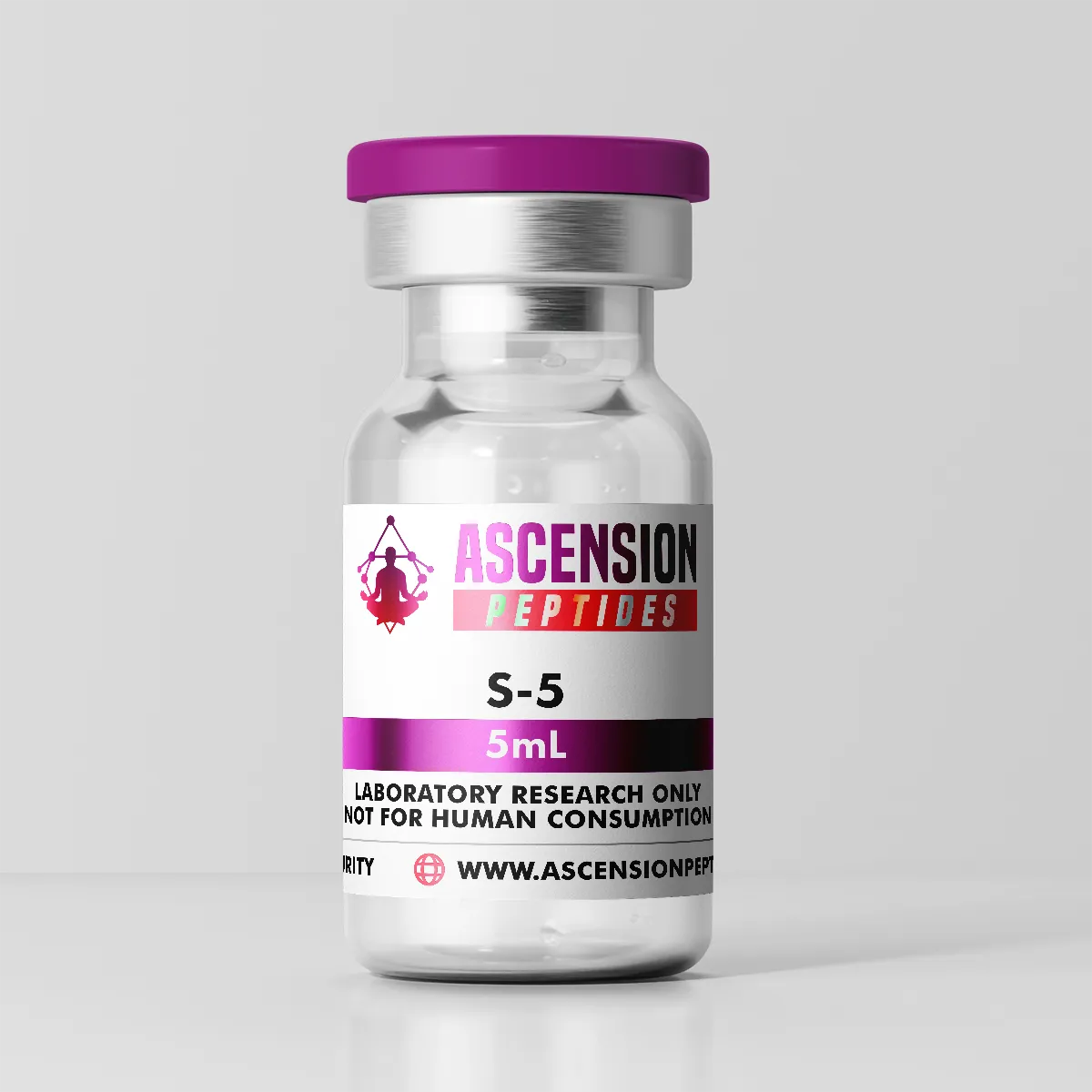
For research purposes, semaglutide is available from Ascension Peptides as S-5 — their designation for semaglutide. It's one of the more popular compounds they carry, and the quality is consistent based on community reports.
Tirzepatide
The step-up from semaglutide. Tirzepatide is a dual GIP/GLP-1 agonist — it hits two receptor types instead of one. GIP (glucose-dependent insulinotropic polypeptide) adds another appetite-suppressing pathway on top of GLP-1. The result: better weight loss than semaglutide in head-to-head comparisons, with roughly similar side effect profiles.
The SURMOUNT-1 trial showed ~21% body weight reduction at the highest dose (15mg) over 72 weeks. That's about 6 percentage points better than semaglutide. Not small. Whether the extra mechanism justifies the (sometimes) higher cost is a personal calculation.
Retatrutide
The newest and currently most potent option. Retatrutide is a triple agonist — GLP-1, GIP, and glucagon receptors all activated simultaneously. That glucagon component adds thermogenic effects on top of appetite suppression, which is why the weight loss numbers are so striking.
In a Phase 2 trial published in the New England Journal of Medicine (Jastreboff et al., 2023), retatrutide at 12mg produced mean body weight reduction of 24.2% over 48 weeks. For context: that's in the range of bariatric surgery outcomes. The trial was smaller than the semaglutide and tirzepatide Phase 3 datasets, so some caution is warranted — but the results were consistent enough to generate serious attention.
Check out the retatrutide before and after gallery to see what real-world results look like. And if you're researching this compound specifically, Ascension's R-30 is their 30mg retatrutide vial — a popular option for longer research protocols.
For a full breakdown of retatrutide dosing, the retatrutide dosing guide covers the full escalation protocol in detail.
Metabolic Peptides: MOTS-c, 5-Amino-1MQ, AOD-9604, Tesamorelin
These work differently. Instead of targeting appetite-regulating receptors in the brain, metabolic peptides tend to work at the cellular level — influencing how mitochondria function, how growth hormone is secreted, and how fat cells store and release energy.
The honest caveat here: human data is much thinner for this category. Most of the exciting findings come from animal studies. Some have Phase 1/2 human safety data, but large-scale efficacy trials don't exist the way they do for GLP-1s. That doesn't mean they don't work — it means the evidence base is different, and you should calibrate expectations accordingly.
MOTS-c
A mitochondrial-derived peptide that was basically unknown outside molecular biology research until about 2015. MOTS-c activates AMPK — essentially a cellular energy sensor that shifts the body toward fat burning when activated. In mouse models, MOTS-c prevented diet-induced obesity and improved insulin sensitivity. In older adults, there's early data suggesting it may improve physical performance metrics.
It's genuinely interesting. But "prevented obesity in mice" is a long way from "works reliably in humans." MOTS-c is probably better thought of as a metabolic optimizer than a standalone weight loss agent — something that might amplify other interventions rather than drive dramatic fat loss on its own.
5-Amino-1MQ
A small molecule (technically not a peptide, but often grouped in this category) that inhibits an enzyme called NNMT — nicotinamide N-methyltransferase. NNMT is expressed in adipose tissue and plays a role in regulating fat cell metabolism. Blocking it, in preclinical models, leads to reduced fat cell size and improved metabolic markers.
The animal data on 5-amino-1MQ is genuinely compelling. Obese mice treated with it showed significant fat loss without changes in food intake — which is a different mechanism than appetite suppression. Human trials are limited, but it's a compound that researchers are watching carefully.
AOD-9604
Short for Anti-Obesity Drug 9604 — a fragment of the human growth hormone molecule (amino acids 176–191) that was developed specifically for fat-targeting properties without the muscle-building or IGF-1-raising effects of full GH. It was in Phase 3 clinical trials as an obesity treatment in the mid-2000s but failed to show significant weight loss versus placebo in those trials.
That's worth acknowledging. The early preclinical data was promising enough to advance to large trials, and the large trials didn't pan out as hoped. That doesn't mean it's useless — some people report body composition improvements, and it has a strong safety record — but the clinical evidence bar for "AOD-9604 causes weight loss" is lower than for GLP-1s.
Tesamorelin
This one has actual FDA approval — specifically for reducing visceral abdominal fat in HIV patients with lipodystrophy (abnormal fat distribution). Tesamorelin is a GHRH (growth hormone-releasing hormone) analog that stimulates natural GH pulses. Higher GH → enhanced lipolysis, particularly in visceral fat depots.
The FDA-approved dataset shows meaningful reduction in visceral fat specifically — but not necessarily total body weight. It's probably most useful as a targeted intervention for abdominal fat accumulation, potentially in combination with other compounds, rather than as a standalone weight loss therapy.
How to Choose the Right Peptide
The honest answer: start with your goal and your risk tolerance, then match the compound to those.
If your primary goal is maximal fat loss and you can tolerate some GI discomfort in the early weeks, a GLP-1 agonist is almost certainly your best option based on current evidence. Semaglutide is the most tested. Tirzepatide gets better results on average. Retatrutide appears to get even better results but has less long-term data.
If you're more interested in body recomposition — improving fat-to-muscle ratio without dramatic caloric restriction — metabolic peptides are probably more relevant. MOTS-c combined with exercise shows interesting potential. Tesamorelin for visceral fat specifically. 5-amino-1MQ if you want to explore something more cutting-edge with a different mechanism.
💡 Pro Tip
Many researchers combine approaches: a GLP-1 for appetite regulation during the fat loss phase, plus something like tesamorelin or a GH-secretagogue to preserve lean mass during the caloric deficit. The combination isn't well-studied in clinical trials yet, but mechanistically it makes sense.
Some questions worth asking yourself before choosing:
- How much weight do I actually need to lose? (GLP-1s shine for 20%+ body weight reduction goals)
- Can I handle potential nausea in the first 4–8 weeks? (relevant for GLP-1s)
- Am I okay with a weekly injection, or do I prefer daily dosing?
- Is body composition (muscle preservation) as important as scale weight?
- What's my risk tolerance for compounds with limited human data?
Typical Protocols & Dosing
Every compound has its own protocol, and the details matter — especially for GLP-1s where dose escalation isn't optional. Starting at full dose causes unnecessary side effects.
| Compound | Starting Dose | Maintenance Dose | Frequency | Route |
|---|---|---|---|---|
| Semaglutide | 0.25mg | 1–2.4mg | Once weekly | SubQ injection |
| Tirzepatide | 2.5mg | 10–15mg | Once weekly | SubQ injection |
| Retatrutide | 2mg | 8–12mg | Once weekly | SubQ injection |
| Tesamorelin | 1mg | 2mg | Once daily | SubQ injection |
| MOTS-c | 5mg | 10–25mg | 2–3x weekly | SubQ or IV |
| 5-Amino-1MQ | 50mg | 100–200mg | Daily | Oral capsule |
| AOD-9604 | 150mcg | 300–500mcg | Once daily | SubQ injection |
These are general research-context ranges — not prescriptive recommendations. Actual clinical protocols, especially for GLP-1s, use defined escalation schedules. The semaglutide escalation in the STEP trials, for example, goes: 0.25mg → 0.5mg → 1mg → 1.7mg → 2.4mg, with 4 weeks at each level.
Side Effects to Know
Each category has its own side effect profile. Don't conflate them.
GLP-1 Agonists (Semaglutide, Tirzepatide, Retatrutide)
- Nausea/vomiting: Most common, especially during dose escalation. Usually improves with time. Eating smaller meals helps.
- Constipation or diarrhea: GI motility is affected. Both can occur. Hydration and fiber matter more on these protocols.
- Fatigue: Often reported in early weeks, usually transient
- Muscle loss: A significant concern with rapid weight loss on GLP-1s. Resistance training and adequate protein intake are not optional — they're essential to preserve lean mass
- Pancreatitis: Rare but potentially serious. Discontinue and seek medical attention if experiencing severe abdominal pain
- "Ozempic face" and skin changes: Rapid fat loss can cause facial volume loss and loose skin. A slower loss rate mitigates this
Metabolic Peptides
- Tesamorelin: Injection site reactions, water retention, carpal tunnel symptoms (elevated GH can cause this). Glucose should be monitored.
- MOTS-c: Generally well-tolerated in existing studies. Limited long-term human data.
- AOD-9604: Excellent safety profile in clinical trials — no significant adverse events at therapeutic doses
- 5-Amino-1MQ: Limited human safety data. Theoretical concerns exist around NNMT inhibition and NAD+ metabolism long-term
Where to Get Weight Loss Peptides
This depends heavily on which compound you're looking at.
GLP-1 agonists (semaglutide, tirzepatide): Available by prescription in most countries. In the US, telehealth platforms like Hims, Noom Med, and others offer prescriptions for appropriate candidates. Compounded versions are also available through compounding pharmacies (legal during drug shortage periods).
Research peptides route: For people looking at research-context sourcing, Ascension Peptides carries semaglutide (S-5) and retatrutide (R-30) as research compounds. This is a legitimate research supplier with consistent quality and COAs available. For semaglutide specifically, their S-5 designation is a well-known product in research circles.
For retatrutide, Ascension's R-30 (30mg vial) is the go-to option for longer research protocols — it's more economical per-dose than the 10mg version.
For metabolic peptides (MOTS-c, AOD-9604, tesamorelin, 5-amino-1MQ), availability varies by supplier. Quality matters enormously in this space — third-party COAs (certificates of analysis) and mass spectrometry testing are the minimum standard to look for.
