🔑 Key Takeaways
- Always use bacteriostatic water (BAC water) for peptide reconstitution — never sterile water
- Never shake peptide vials — swirl gently or let sit to dissolve
- Add water slowly along the vial wall, not directly onto the lyophilized powder
- Store reconstituted peptides at 2–8°C (refrigerator) and use within 4 weeks
- Master the concentration formula: peptide amount ÷ water added = mcg per mL
- Proper technique protects both potency and your investment
Here's something most peptide guides won't tell you upfront: reconstitution mistakes are the single biggest reason people think their peptides "don't work." It's not the peptide. It's not the source. It's the moment you added water too fast, shook the vial like a cocktail, or left it on the counter overnight. That's where potency goes to die.
I've seen people spend $200 on a vial of BPC-157 and then blast sterile water directly onto the powder cake. Gone. Wasted. And the worst part? They don't even realize what happened — they just assume the product was bunk.
This guide covers everything: the right water, the right technique, how to calculate your exact dose down to the syringe unit, proper storage, and the mistakes that silently destroy your peptides. Whether you're reconstituting your first vial or your fiftieth, there's probably something here you haven't considered. For a deeper look at bacteriostatic water specifically, we have a dedicated breakdown.
What Is Peptide Reconstitution?
Peptides arrive as a freeze-dried (lyophilized) powder — a white or off-white cake sitting at the bottom of a small glass vial. They're shipped this way because lyophilized peptides are remarkably stable. They can survive weeks at room temperature and months to years frozen without losing potency.
Reconstitution is the process of adding a liquid solvent — almost always bacteriostatic water — to transform that powder back into an injectable solution. Simple concept. But the execution matters enormously.
Why Lyophilization Matters
During lyophilization, water is removed from the peptide solution through sublimation (ice turning directly to vapor under vacuum). This leaves behind a porous cake that dissolves quickly when water is reintroduced. The porous structure is actually important — it's why the powder looks like a little cake rather than a dense pellet. That porosity allows rapid, even dissolution.
But here's the trade-off: that same porous structure makes the powder fragile. Physical force (shaking, direct water streams) can collapse the structure unevenly, leading to clumping and incomplete dissolution. Gentle handling isn't optional. It's physics.
Essential Supplies You'll Need
Before you touch a vial, gather everything. Fumbling around mid-reconstitution with wet hands and an open needle is how contamination happens.
| Item | Purpose | Notes |
|---|---|---|
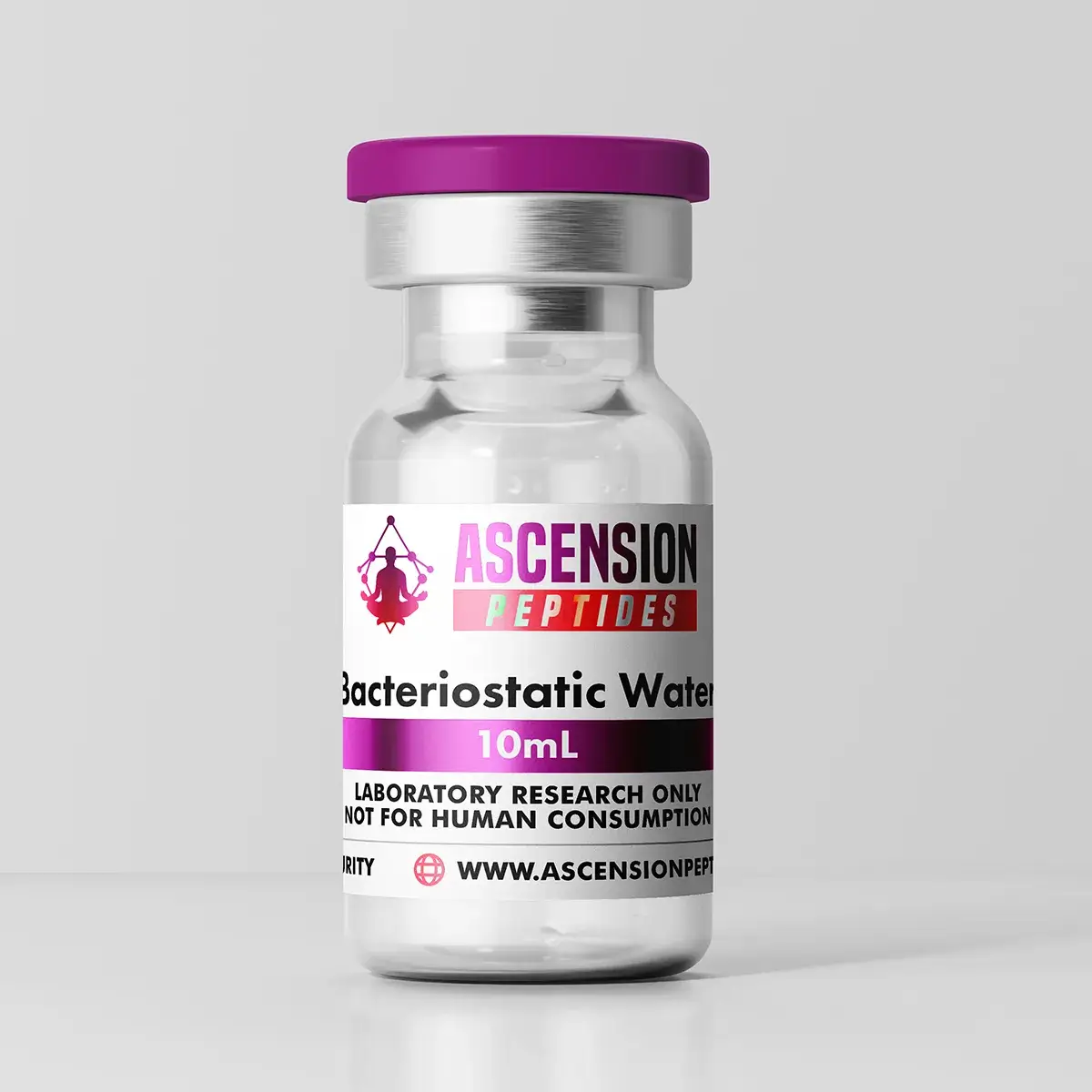
| Bacteriostatic Water | Primary reconstitution solvent | Contains 0.9% benzyl alcohol preservative |
| Alcohol Swabs | Sterilize vial stoppers | 70% isopropyl alcohol wipes |
| Insulin Syringes (0.5mL or 1mL) | Measuring and administering | 29–31 gauge, fine tip |
| Larger Syringe (3mL) | Transferring BAC water | Easier to handle for water transfer |
| Sharps Container | Safe needle disposal | Never recap or reuse needles |
| Labels / Marker | Vial identification | Date, compound, concentration |
| Clean Gloves (optional) | Contamination prevention | Nitrile preferred |
A quick note on syringes: if you're new to this, grab a few extra. Bent tips happen, air bubbles happen, and you don't want to reuse a syringe because you ran out. For a complete walkthrough on injection technique, see our how to inject peptides guide.
Bacteriostatic Water vs Sterile Water: Why It Matters
This is the single most important decision in the entire reconstitution process, and it's not even close.
Bacteriostatic Water (Use This)
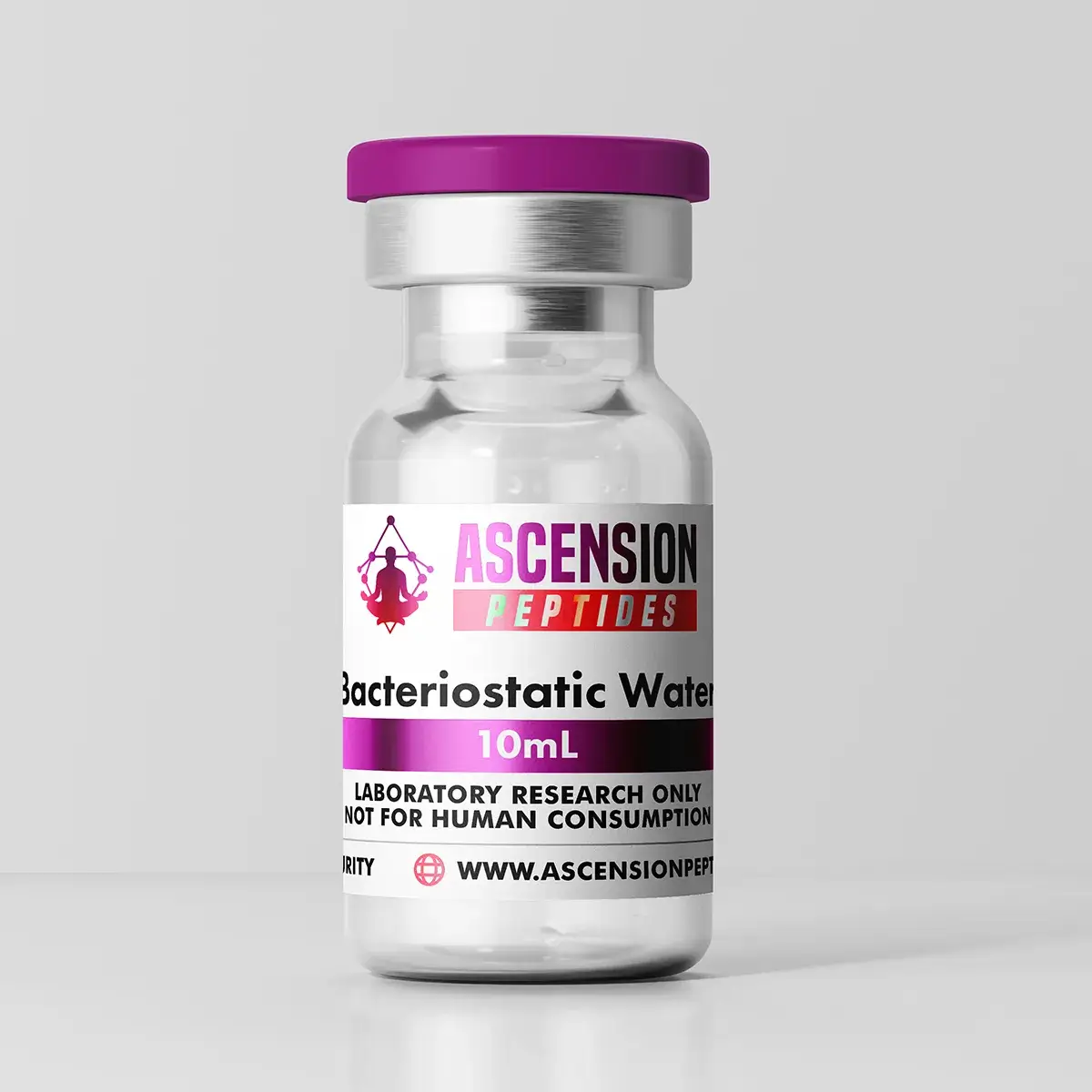
Contains 0.9% benzyl alcohol that actively inhibits bacterial growth. Safe for multi-dose vials over 2–4 weeks. The standard for peptide reconstitution.
Sterile Water (Avoid for Multi-Use)
No preservative whatsoever. Once punctured, bacteria colonize rapidly. Only appropriate for single-use applications — and peptide vials are never single-use.
For a complete breakdown of sourcing, storage, and usage details, check our bacteriostatic water guide.
Other Reconstitution Solvents
Most common peptides — BPC-157, TB-500, Ipamorelin, CJC-1295, Sermorelin, and others — dissolve perfectly in bacteriostatic water. But a few edge cases require different solvents:
- Acetic Acid (0.6% solution): Needed for peptides with poor water solubility, like certain GH fragments and some melanocortin peptides
- Sodium Chloride 0.9% (Normal Saline): Occasionally specified for pharmaceutical-grade peptides
- DMSO: Rare — only for specific compounds that resist aqueous dissolution entirely
When in doubt, bacteriostatic water is your default. It works for 95%+ of peptides you'll encounter.
Step-by-Step Peptide Reconstitution Process
This is where most guides rush through the steps and call it a day. We're going slower, because the details matter.
Prepare Your Workspace
Clear a flat, clean surface. Wash your hands thoroughly with soap — at least 20 seconds. If using gloves, put them on now. Lay out all supplies before opening anything. You want zero fumbling once needles are in play.
Decide How Much Water to Add
This sets your concentration. Adding 1mL to a 5mg vial gives you 5,000mcg/mL — simple math. Adding 2mL gives 2,500mcg/mL — larger injection volumes but easier to measure small doses. There's no universal "right" amount; it depends on your dosing needs. See the calculation section below.
Sterilize Both Vial Tops
Wipe the rubber stopper on both your peptide vial and bacteriostatic water vial with an alcohol swab. Let air dry for 10–15 seconds. Don't blow on them. Don't touch them after wiping.
Draw Bacteriostatic Water
Using a sterile syringe, draw slightly more BAC water than you need. Then push the plunger forward to your exact target volume, expelling any air bubbles in the process. This is the cleanest way to get a precise measurement.
Add Water to the Peptide Vial — Slowly
This is the critical moment. Insert the needle through the rubber stopper at a slight angle. Aim the tip toward the inside wall of the vial — not at the powder cake. Release the water slowly, letting it trickle down the glass wall. The water will pool at the bottom and begin dissolving the powder from beneath. Do NOT inject directly onto the powder.
Let It Dissolve — Do NOT Shake
Set the vial upright on your workspace. Walk away for 2–5 minutes. Most peptides dissolve completely on their own. If powder remains after 5 minutes, pick up the vial and roll it gently between your palms. Tilt it side to side. Swirl. But never shake. Shaking creates foam, introduces air, and can physically damage peptide bonds through mechanical stress.
Check for Complete Dissolution
Hold the vial up to light. The solution should be perfectly clear and colorless — no particles, no cloudiness, no undissolved chunks. If you see any powder remnants, give it more time (up to 30 minutes for stubborn compounds). If it still won't dissolve, the peptide may need a different solvent or may have degraded before you received it.
Label the Vial Immediately
Write: peptide name, concentration (mcg/mL), and today's date. Stick a small label or write directly on the vial with a fine-tip marker. Unlabeled vials are dangerous — identical-looking clear liquids sitting in your fridge with no way to tell them apart. Don't skip this.
How to Calculate Peptide Concentration and Doses
Math anxiety is real, and peptide dosing math trips people up constantly. But there's really only one formula you need.
The Core Formula
💡 Concentration Formula
Peptide Amount (mcg) ÷ Water Added (mL) = Concentration (mcg/mL)
Then: Desired Dose (mcg) ÷ Concentration (mcg/mL) = Volume to Inject (mL)
And: Volume (mL) × 100 = Units on Insulin Syringe
Common Reconstitution Scenarios
| Vial Size | Water Added | Concentration | Volume for 250mcg | Syringe Units |
|---|---|---|---|---|
| 5mg (5,000mcg) | 1mL | 5,000mcg/mL | 0.05mL | 5 units |
| 5mg (5,000mcg) | 2mL | 2,500mcg/mL | 0.10mL | 10 units |
| 10mg (10,000mcg) | 2mL | 5,000mcg/mL | 0.05mL | 5 units |
| 10mg (10,000mcg) | 3mL | 3,333mcg/mL | 0.075mL | 7.5 units |
| 2mg (2,000mcg) | 1mL | 2,000mcg/mL | 0.125mL | 12.5 units |
| 2mg (2,000mcg) | 2mL | 1,000mcg/mL | 0.25mL | 25 units |
Understanding Insulin Syringe Units
This confuses almost everyone at first. Here's the conversion:
- 100 units = 1mL (the full syringe)
- 10 units = 0.1mL
- 1 unit = 0.01mL
So when someone says "inject 10 units," they mean 0.1mL. The actual dose in micrograms depends entirely on your reconstitution concentration. Ten units from a 5,000mcg/mL solution is 500mcg. Ten units from a 2,500mcg/mL solution is 250mcg. Same syringe marking, wildly different doses. This is why labeling your vials is non-negotiable.
Practical Dose Calculation Examples
Let's walk through two real scenarios people commonly encounter:
Scenario 1: BPC-157, 5mg vial, targeting 250mcg twice daily
Add 2mL BAC water → 2,500mcg/mL. Each 250mcg dose = 0.1mL = 10 units. At 500mcg/day, the vial lasts 10 days. For dosing specifics, see our BPC-157 dosage guide.
Scenario 2: Ipamorelin, 5mg vial, targeting 200mcg per injection
Add 2.5mL BAC water → 2,000mcg/mL. Each 200mcg dose = 0.1mL = 10 units. At 200mcg once daily, the vial lasts 25 days. Clean math, easy measurements.
💡 Pro Tip: Choose Water Volume for Clean Math
Pick your water volume so that your target dose lands on a round number of syringe units. Measuring 10 or 20 units is easy. Measuring 7.3 units precisely is a headache. Work backwards from your desired dose to find the ideal water amount.
How to Store Peptides Correctly
Storage is where the second half of the potency battle happens. You can nail the reconstitution and still lose everything to bad storage habits. For a more detailed breakdown, see our how to store peptides guide.
Before Reconstitution (Lyophilized Powder)
| Storage Method | Temperature | Expected Stability | Best For |
|---|---|---|---|
| Freezer (Optimal) | -20°C (-4°F) | 1–2+ years | Long-term stockpiling |
| Refrigerator | 2–8°C (36–46°F) | 6–12 months | Peptides you'll use within months |
| Room Temperature | 15–25°C (59–77°F) | Weeks to a few months | Transit only — not for storage |
After Reconstitution (In Solution)
| Storage Method | Temperature | Expected Stability | Notes |
|---|---|---|---|
| Refrigerator (Required) | 2–8°C (36–46°F) | 2–4 weeks | The standard; always do this |
| Freezer | -20°C (-4°F) | 4–8 weeks potentially | Debated; some peptides tolerate it, others don't |
| Room Temperature | 15–25°C | Hours to days | Never acceptable for reconstituted peptides |
Critical Storage Rules
- Store vials upright — minimizes solution contact with the rubber stopper, reducing leaching
- Avoid the refrigerator door — temperature swings every time you open it; use the back of a shelf
- Protect from light — some peptides (especially melanocortin-based ones) are photosensitive; wrap in foil if needed
- Never leave reconstituted peptides at room temperature — even 30 minutes accelerates degradation
- Only reconstitute what you'll use — powder form is always more stable than solution
Can You Freeze Reconstituted Peptides?
This is one of the most debated topics in peptide communities, and honestly, the answer isn't clean-cut.
Some peptides handle a single freeze-thaw cycle reasonably well. Others degrade significantly. The real killer isn't freezing itself — it's the freeze-thaw cycling. Each transition between frozen and liquid states creates ice crystal formation that can physically disrupt peptide structures.
My take: if you have more peptide than you can use in 4 weeks, don't reconstitute all of it. Keep the excess as powder in the freezer where it's genuinely stable. Only mix what you need for the current cycle.
If you absolutely must freeze a reconstituted vial — say you're traveling and can't keep it refrigerated — do it once. Thaw in the refrigerator (not at room temp), and use the entire vial without refreezing.
Signs Your Peptide Has Degraded
Peptide degradation isn't always obvious, which is part of the problem. But there are visible red flags that mean immediate disposal:
- Cloudiness or haziness — a clear solution should stay clear; cloudiness suggests protein aggregation or contamination
- Visible particles or floaters — anything suspended in the solution means contamination or degradation products
- Color change — yellowing, browning, or any tint indicates chemical breakdown
- Unusual odor — properly reconstituted peptides are odorless; any smell is a warning sign
- Clumping that won't dissolve — if the powder resists dissolution despite adequate time and gentle swirling
The 7 Most Common Reconstitution Mistakes
I've compiled these from forums, community posts, and years of seeing the same questions repeated. Every single one is avoidable.
Mistake 1: Shaking the Vial
By far the most common error. People treat peptide vials like cocktail shakers. The foam looks harmless, but it represents mechanical stress that denatures the peptide chain. Swirl. Roll. Tilt. Never shake.
Mistake 2: Spraying Water Directly onto the Powder
A fast stream of water blasting into the powder cake disrupts the lyophilized structure unpredictably. Some peptide gets dissolved while chunks remain dry and clumped. Aim for the vial wall. Let gravity do the mixing.
Mistake 3: Using Sterile Water Instead of Bacteriostatic Water
We've covered this, but it bears repeating: sterile water has no preservative. Every needle puncture introduces potential bacteria into an unprotected solution. Within days, you could be injecting a contaminated mess.
Mistake 4: Leaving Reconstituted Peptides at Room Temperature
Even an hour at 25°C accelerates degradation compared to refrigeration. Reconstitute, draw your dose, and get that vial back in the fridge. Don't leave it sitting on your desk while you browse Reddit.
Mistake 5: Reusing Needles
Each time a needle punctures the rubber stopper, it should be a fresh, sterile needle. Reused needles are contamination vectors — they carry bacteria from the environment, your skin, and the stopper itself. Syringes are cheap. Infections are not.
Mistake 6: Forgetting to Label Vials
You reconstitute three peptides on the same day. They all look identical — clear, colorless liquid in identical vials. Now what? Without labels, you're guessing at compounds and concentrations. This is how dosing errors happen.
Mistake 7: Reconstituting Everything at Once
Enthusiastic beginners sometimes reconstitute an entire stockpile on day one. But reconstituted peptides have a 3–4 week window. Lyophilized powder lasts months to years. Only mix what you'll use in the immediate cycle.
Mixing Multiple Peptides in One Vial
Yes, you can do this — with caveats. Peptides that are commonly combined (like CJC-1295 and Ipamorelin) can be reconstituted into the same vial. This reduces the number of injections and simplifies your protocol.
When Mixing Works
- Both peptides dissolve in bacteriostatic water
- They're commonly used together at similar timing
- Neither peptide interferes with the other's stability
- You've calculated the combined concentration correctly
When to Keep Them Separate
- Peptides that require different solvents
- Compounds you dose at different frequencies
- Any combination where stability data is unknown
- If you need to adjust one peptide's dose independently
💡 Pro Tip
If you're mixing two peptides into one vial, reconstitute the first peptide with your full water volume, then draw the desired amount and inject it into the second peptide vial. This way each peptide dissolves properly in adequate volume.
Reconstitution for Specific Popular Peptides
Different peptides have slightly different considerations. Here are the most commonly reconstituted compounds and any special notes:
BPC-157
Dissolves easily in BAC water. Typically sold in 5mg or 10mg vials. No special solvent needed. Standard 2mL water addition works well for most dosing protocols. Stable for 3–4 weeks refrigerated. Check our BPC-157 dosage guide for protocol specifics.
TB-500 (Thymosin Beta-4)
Another easy reconstitution. Dissolves quickly in BAC water. Usually sold in 5mg vials. Higher dosing (2–5mg per injection during loading) means you might use the entire vial in 1–2 doses, so shelf life is less of a concern.
CJC-1295 / Ipamorelin
Both dissolve readily. Often purchased together and can be mixed in one vial for convenience. Common reconstitution: 2mL BAC water per 5mg vial. These peptides are particularly sensitive to heat — get them refrigerated promptly after mixing.
Semaglutide / Retatrutide
Larger peptides that dissolve well in BAC water but may take slightly longer (5–10 minutes). Don't panic if dissolution isn't instant. These are typically dosed weekly at higher volumes, so consider adding more water (2–3mL) for easier measurement.
Melanocortin Peptides (PT-141, Melanotan)
Usually dissolve in BAC water without issues, but are photosensitive. Wrap the vial in aluminum foil after reconstitution, or store in a dark container within the fridge.
Where to Source Quality Peptides and Supplies
Your reconstitution technique only matters if the peptide itself is legitimate. The difference between a trusted supplier and a random vendor can be the difference between a genuine 98%+ purity compound and something questionable. We maintain an updated list of best peptide sources for 2026 — it's worth checking before your next order.
What to Look For in a Supplier
- Third-party testing (COAs): Certificates of Analysis from independent labs showing purity, identity, and sterility
- Proper packaging: Lyophilized peptides should arrive sealed, often with a color-coded cap and clear labeling
- Cold shipping options: Especially for temperature-sensitive compounds during summer months
- Transparent business practices: Real customer service, clear return policies, and verifiable lab results
Troubleshooting Common Issues
Powder Won't Dissolve
Give it more time — up to 30 minutes for some compounds. Gently swirl every few minutes. If it absolutely won't dissolve, the peptide may have degraded during shipping (heat exposure) or may require a different solvent. Check the manufacturer's documentation.
Small Bubbles in Solution
Tiny bubbles after reconstitution are normal and harmless. They'll dissipate on their own within minutes. Don't shake the vial to try to remove them — you'll make it worse. Just let it sit.
Solution Looks Slightly Hazy
Minor haziness immediately after adding water can be normal — give it 5 minutes. If haziness persists after full dissolution, that's a concern. Persistent cloudiness indicates aggregation or contamination. Don't use it.
Rubber Stopper Fragments in Vial
Occasionally, coring (small pieces breaking off the stopper) happens when you puncture with a larger gauge needle. Use a fine-gauge needle (29–31 gauge) and insert at a slight angle rather than straight down. If you see floaters, draw your dose through a filter needle or discard the vial.
Frequently Asked Questions
✓ Pre-Reconstitution Checklist
- ☐ Bacteriostatic water ready (NOT sterile water)
- ☐ Sterile syringes available (plus spares)
- ☐ Alcohol swabs on hand
- ☐ Calculator for concentration math
- ☐ Labels and marker for vials
- ☐ Clean, flat workspace prepared
- ☐ Sharps container accessible
✓ Post-Reconstitution Checklist
- ☐ Solution is crystal clear (no cloudiness, particles, or color)
- ☐ Vial labeled with compound name, concentration, and date
- ☐ Vial stored upright in refrigerator (back of shelf, not door)
- ☐ Used syringes disposed in sharps container
- ☐ Calendar marked to discard after 4 weeks
Reconstitution is a skill, not a mystery. Once you've done it correctly two or three times, it becomes muscle memory. The key is getting the fundamentals right from the start — proper water, gentle technique, clean math, and diligent storage. Nail those four things and you'll never waste a vial again.