SS-31 / Elamipretide
SS-31 (Elamipretide, Bendavia, MTP-131)
Get SS-31 / Elamipretide
Sourced from Ascension Peptides. Verified ≥≥99% for research applications purity, third-party tested. COA included.
Off with code
PEPTIDEDECK
Table of Contents
What is SS-31 / Elamipretide?
SS-31 is a mitochondria-targeted peptide, a compound engineered to act inside the cell's energy-producing organelles rather than at the cell surface. It belongs to a family of aromatic-cationic peptides, sometimes called Szeto-Schiller peptides after the researchers who developed them, that share the ability to accumulate within mitochondria. SS-31 is a tetrapeptide, meaning it is built from just four amino acids, and its compact sequence D-Arg-Dmt-Lys-Phe gives it both stability and its unique targeting behavior.
SS-31's targeting is not achieved by attaching it to a bulky delivery molecule, which is how many mitochondria-directed compounds work. Instead, its intrinsic chemistry, an alternating pattern of aromatic and positively charged residues, allows it to be drawn into and concentrated within the inner mitochondrial membrane. Once there, it associates with cardiolipin, a specialized phospholipid found almost exclusively in that membrane and critical to the operation of the energy-generating machinery.
SS-31, developed under the name elamipretide, has been investigated across a range of conditions united by mitochondrial dysfunction. The underlying concept is a shift in strategy: rather than trying to neutralize oxidative damage after it has spread through the cell, SS-31 acts at the source, protecting the mitochondrial membrane where much of that damage originates. This upstream approach is what makes the peptide scientifically notable within the growing field of mitochondrial medicine.
Research Benefits
Protects mitochondria from oxidative damage
Improves cellular ATP production
Reduces mitochondrial ROS generation
Stabilizes cardiolipin in inner mitochondrial membrane
May improve exercise capacity in mitochondrial disease
Protects tissues during ischemia-reperfusion
Potential anti-aging effects at cellular level
Crosses blood-brain barrier
How SS-31 / Elamipretide Works
SS-31 works by binding to cardiolipin in the inner mitochondrial membrane and stabilizing the structure and function of the energy-producing machinery. This single point of action, at the membrane where cellular energy is generated, produces a cascade of protective effects on mitochondrial performance and cell survival.
Stabilizing Cardiolipin
SS-31 concentrates in the inner mitochondrial membrane and associates with cardiolipin, the phospholipid that helps organize this membrane and its embedded electron transport chain. In healthy mitochondria, cardiolipin supports the tight, folded architecture and the proper arrangement of the protein complexes that produce energy. Under stress, cardiolipin becomes oxidized and disordered, and the machinery it supports begins to fail. By binding and stabilizing cardiolipin, SS-31 helps maintain this critical structure.
Improved Energy Output
Preserving membrane organization supports efficient ATP production by the electron transport chain.
Reduced ROS at the Source
Limiting electron leakage cuts the generation of reactive oxygen species where they arise.
Membrane Architecture
Helps maintain the folded inner-membrane structure that energy production depends on.
Protection From Cell Death
Supports mitochondrial integrity, reducing the release of signals that trigger apoptosis.
Improving Efficiency and Cutting Damage
SS-31 improves the efficiency of the electron transport chain, the series of protein complexes that pass electrons along to generate the gradient used to make ATP. When cardiolipin is disorganized, electrons leak from this chain and react with oxygen to form damaging reactive oxygen species. By keeping the chain properly organized, SS-31 both raises energy output and reduces electron leak, which lowers reactive oxygen species production at their point of origin rather than mopping them up afterward.
Protecting Against Cell Death
SS-31 also helps guard against the mitochondrial events that drive programmed cell death. When the inner membrane is damaged, mitochondria can release factors that trigger apoptosis, contributing to tissue loss in conditions like heart attack and neurodegeneration. By preserving cardiolipin and membrane integrity, SS-31 supports the mitochondria's stability and reduces these death signals, an effect that underlies its study in acute injury and chronic disease alike.
Research Applications
Primary mitochondrial myopathies
Active research area with published studies
Heart failure with preserved ejection fraction (HFpEF)
Active research area with published studies
Ischemia-reperfusion injury
Active research area with published studies
Aging and cellular senescence
Active research area with published studies
Neurodegenerative diseases
Active research area with published studies
Kidney injury
Active research area with published studies
Dry age-related macular degeneration
Active research area with published studies
Barth syndrome
Active research area with published studies
Research Findings
SS-31, as elamipretide, has been evaluated in a range of clinical trials and preclinical studies targeting conditions marked by mitochondrial dysfunction. The results have been informative and, in some cases, mixed, which is itself an important part of the scientific picture.
Primary Mitochondrial Disease
SS-31 has been studied in people with primary mitochondrial myopathies, inherited disorders in which defective mitochondria cause muscle weakness and exercise intolerance. Clinical trials examined whether the peptide could improve measures such as exercise capacity. The findings across these studies have been mixed, with some measures showing signals of benefit and key primary endpoints not always met, illustrating the difficulty of treating deeply rooted genetic mitochondrial defects.
🔑 Key Research Observations
- SS-31 concentrates in mitochondria and binds cardiolipin to support energy production
- It has been studied in primary mitochondrial myopathy with mixed clinical results
- Heart failure research has explored its effects on cardiac energy and function
- Preclinical work spans ischemia-reperfusion injury, kidney injury, and aging
- Eye disease research has investigated its role in mitochondrial retinal conditions
Cardiovascular and Ischemia Research
SS-31 has been investigated in heart failure and in ischemia-reperfusion injury, the damage that occurs when blood flow returns to tissue after a period of deprivation. Because the heart is exceptionally dependent on mitochondrial energy, and because reperfusion generates a burst of reactive oxygen species, a mitochondria-protecting peptide is mechanistically attractive here. Research has examined cardiac energy metabolism and function, contributing to the understanding of how mitochondrial support might influence heart disease.
| Research Area | Rationale | Stage |
|---|---|---|
| Mitochondrial myopathy | Restore muscle energy production | Clinical, mixed results |
| Heart failure | Support cardiac mitochondrial energy | Clinical research |
| Ischemia-reperfusion | Limit reperfusion oxidative damage | Preclinical and clinical |
| Retinal disease | Protect energy-demanding eye tissue | Clinical research |
Aging and Other Applications
SS-31 has also been explored in the context of aging and in conditions such as certain retinal diseases and kidney injury, all of which involve mitochondrial stress. Because mitochondrial decline is a recurring theme in aging tissues, research has asked whether protecting the inner membrane can preserve function in aged cells. This work remains investigational, and the overall body of SS-31 research is best summarized as scientifically compelling in mechanism, with clinical outcomes that continue to be studied and refined.
Dosage & Administration
SS-31 dosing information below reflects how the peptide has been handled in clinical research and is provided for context only, not as guidance for personal use. SS-31 is an investigational compound, and any administration should occur strictly within a supervised clinical or research setting.
Formulation and Route
SS-31 is supplied for research as a lyophilized (freeze-dried) powder that must be reconstituted before use, and in clinical trials elamipretide has been administered by subcutaneous injection. Although its measured plasma half-life is relatively short, at roughly one to two hours, the peptide concentrates strongly within mitochondria, so its effect at the site of action can outlast its presence in the bloodstream.
Reconstitution
Gather Materials
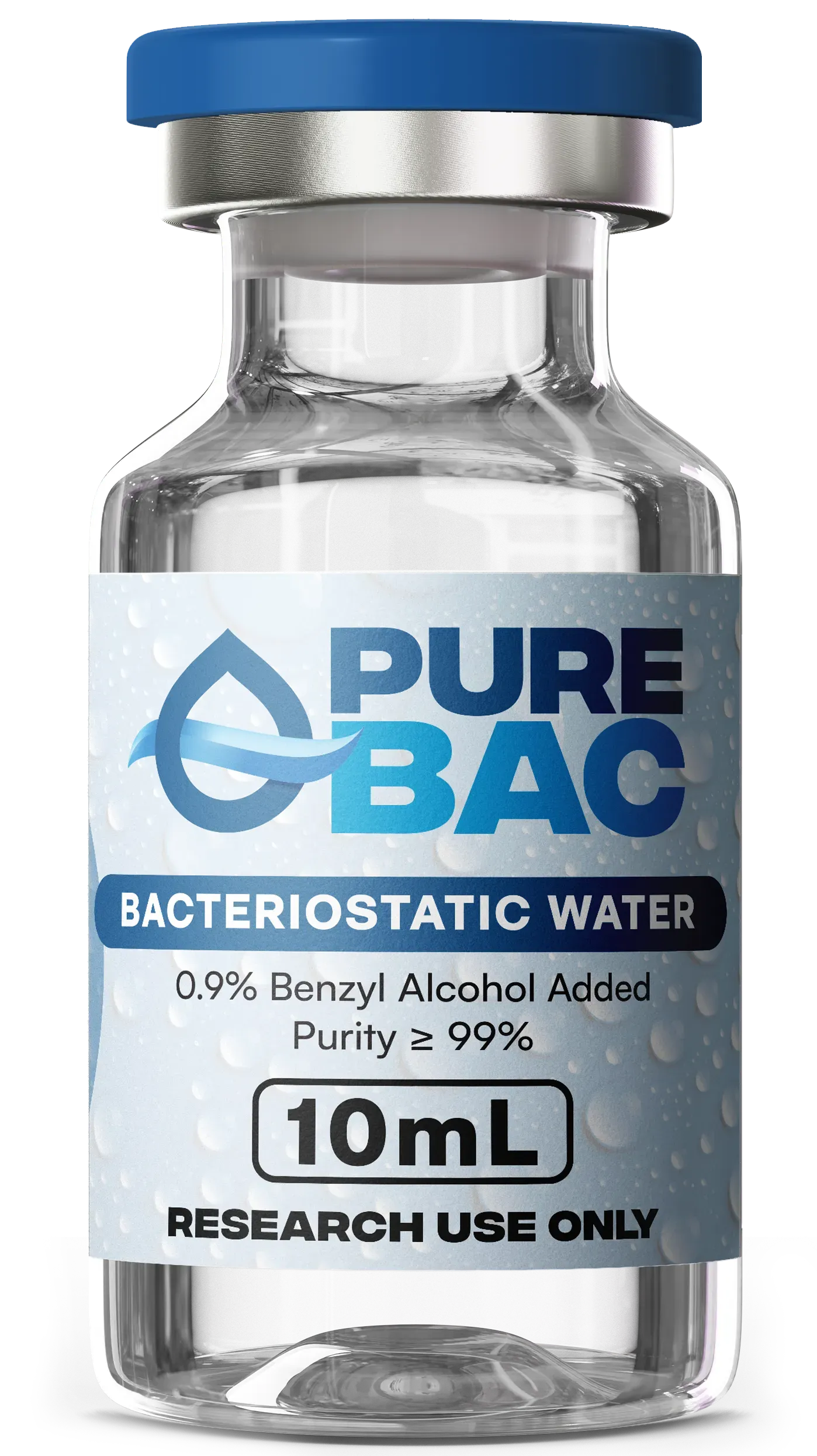
Obtain the powder vial, an appropriate sterile diluent such as bacteriostatic water, and clean supplies.
Add Diluent Gently
Direct the diluent slowly against the vial wall rather than onto the powder.
Dissolve Without Shaking
Swirl gently to dissolve the peptide; avoid vigorous shaking that can degrade it.
Store Refrigerated
Keep the reconstituted solution refrigerated at 2 to 8 degrees Celsius and protected from light.
Administration in Research
| Parameter | Research Practice | Rationale |
|---|---|---|
| Route | Subcutaneous injection | Used in clinical trials of elamipretide |
| Frequency | Typically daily in studies | Maintain mitochondrial exposure |
| Site rotation | Alternate injection sites | Limit local reactions |
Practical Insight
SS-31 has been studied under formal clinical protocols rather than established for general use, so its regimens come from trial settings. Standardized dosing for routine human use does not exist, and reported protocols reflect specific study designs.
Work out your SS-31 / Elamipretide draw in units
Enter the vial size, the bacteriostatic water you add and the dose you want, and the calculator gives the syringe units, how long the vial lasts and when to discard it.
Open the peptide calculatorSafety & Side Effects
SS-31, as elamipretide, has been evaluated in human clinical trials, giving it more human safety data than many research peptides, and it has generally been reasonably tolerated in those studies. Its most common reported effects relate to the injection itself.
Common Side Effects
SS-31 in clinical trials has most frequently been associated with reactions at the subcutaneous injection site.
Injection Site Reactions
Redness, irritation, or discomfort at the injection site, the most common reported effect.
Headache
Mild headache reported by some participants during treatment.
Gastrointestinal Effects
Occasional nausea or related gastrointestinal symptoms in some studies.
Dizziness
Transient dizziness reported by a minority of participants.
Considerations
SS-31 safety considerations reflect its investigational status and its mechanism:
- Injection site tolerability: Local reactions are the most frequent issue and are managed with site rotation and technique in trials
- Investigational status: Despite substantial trial experience, SS-31 is not approved, and long-term safety continues to be characterized
- Mixed efficacy context: Because some trials did not meet primary endpoints, benefit should not be assumed, and use remains within research
- Product quality: Research-grade material used outside trials lacks the quality assurance of a clinical program, adding risk
- Individual variation: Responses vary, and clinical monitoring is part of any legitimate study protocol
Overall Safety Picture
SS-31 has a comparatively informative human safety record for a research peptide, owing to its formal clinical development, with injection site reactions being the predominant finding. Its considerations are those of any investigational drug: unestablished long-term safety, efficacy still being defined, and the importance of quality and supervision, all of which keep its appropriate use within research settings.