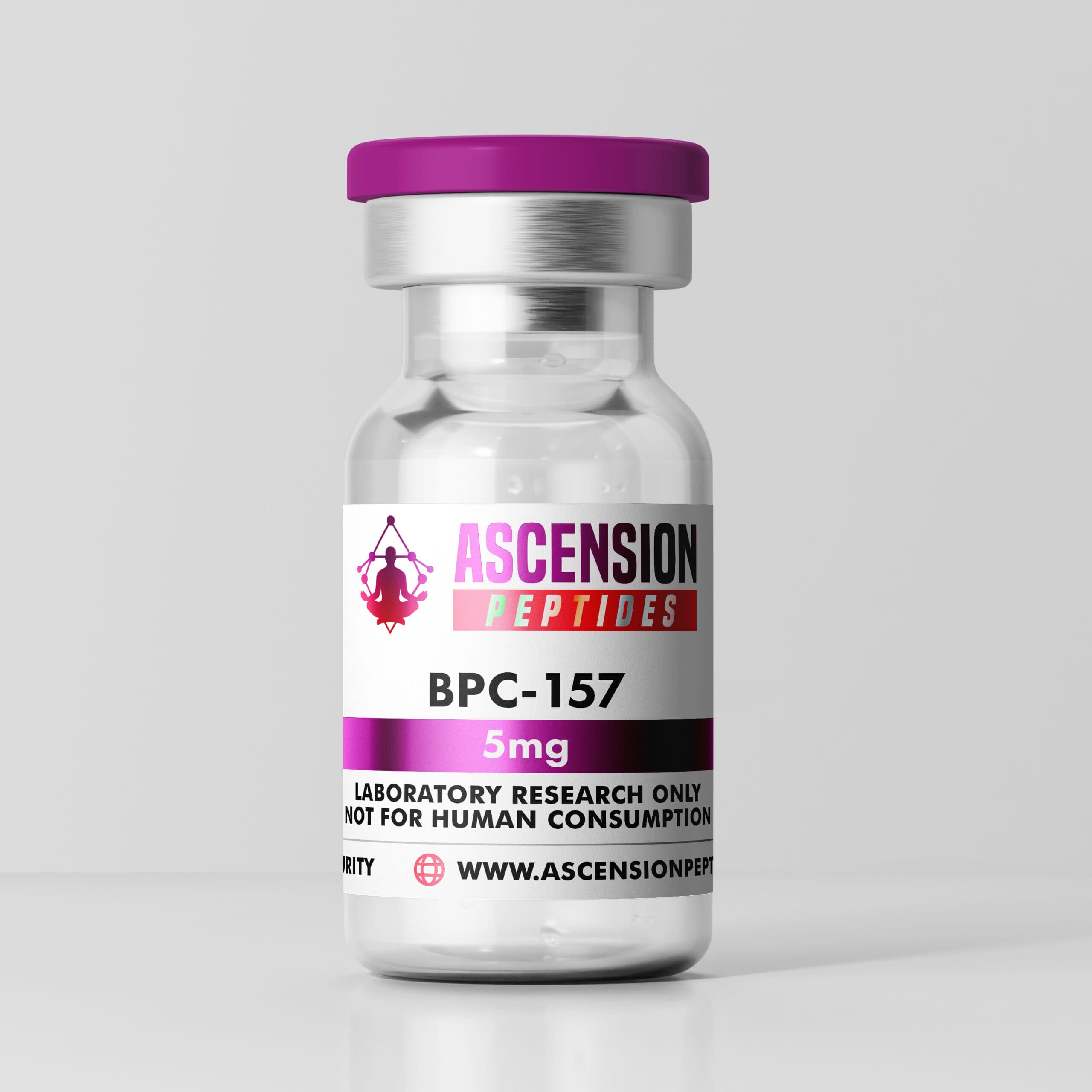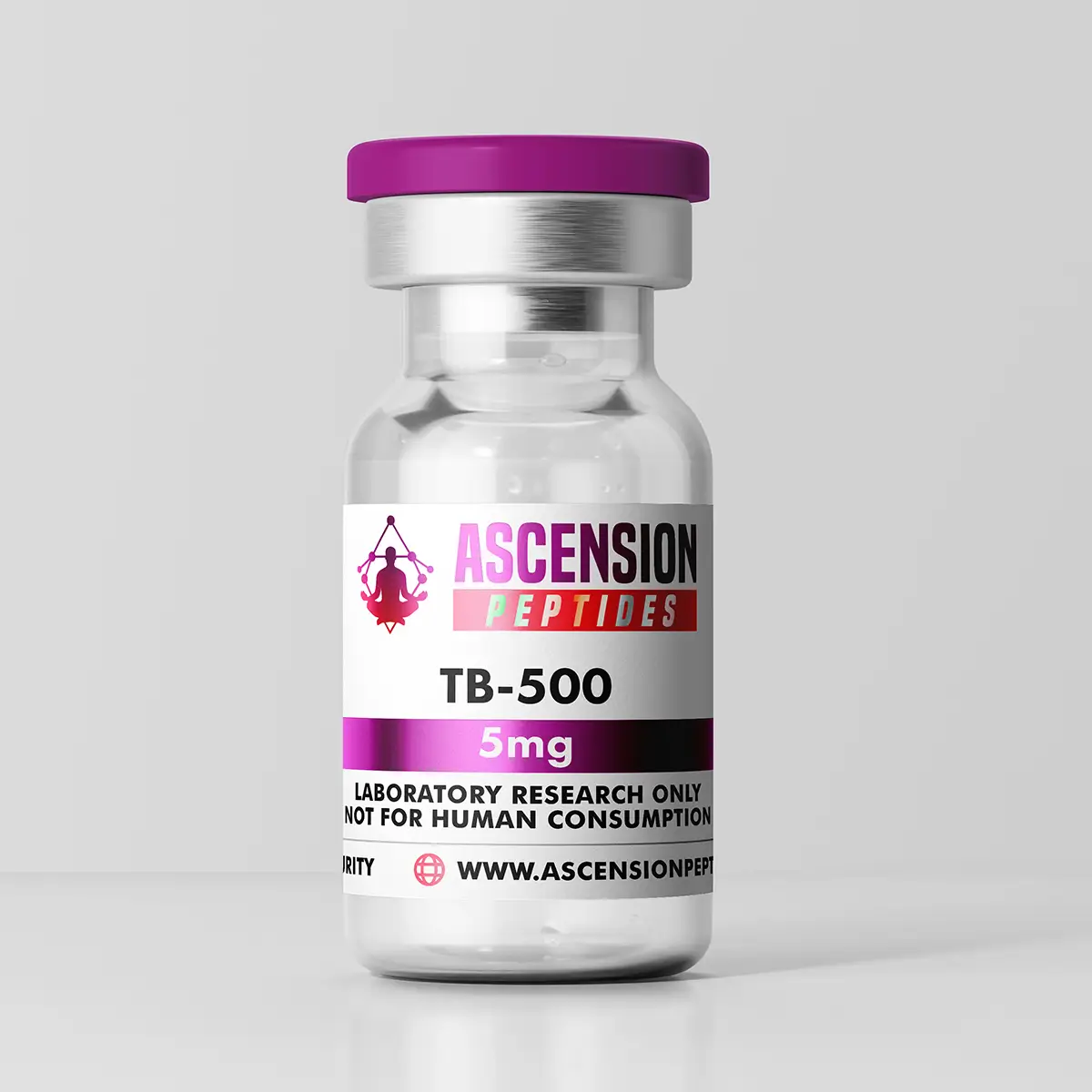
When it comes to peptides studied for tissue healing and recovery, two names dominate the conversation: BPC-157 and TB-500. The BPC-157 vs TB-500 question comes up constantly because both have generated significant interest in the regenerative research community, yet they work through fundamentally different mechanisms. This comprehensive BPC-157 vs TB-500 comparison breaks down what the research shows about each peptide, helping you understand their unique properties and how they differ.
🔑 Key Takeaways
- BPC-157 primarily works through growth factor modulation and nitric oxide system interaction
- TB-500 functions by regulating actin and promoting cell migration
- Both peptides show tissue repair effects in animal studies, but through different pathways
- BPC-157 demonstrates unique oral bioavailability; TB-500 requires injection
- Neither peptide has completed human clinical trials
What Are BPC-157 and TB-500?
BPC-157: The Gastric Pentadecapeptide
BPC-157 (Body Protection Compound-157) is a synthetic 15-amino acid peptide derived from a protective protein naturally found in human gastric juice. Discovered by Croatian researchers in the 1990s, it has been studied extensively for its effects on tissue repair across multiple organ systems. Its sequence—Gly-Glu-Pro-Pro-Pro-Gly-Lys-Pro-Ala-Asp-Asp-Ala-Gly-Leu-Val—grants it unusual stability in acidic environments.
TB-500: The Thymosin Beta-4 Fragment
TB-500 is a synthetic version of a 43-amino acid region of Thymosin Beta-4, a naturally occurring protein present in virtually all human and animal cells. Thymosin Beta-4 plays crucial roles in cell migration, blood vessel formation, and wound healing. TB-500 isolates the active region responsible for many of these effects, making it a focused research tool for studying regenerative mechanisms.
How Each Peptide Works
Understanding the distinct mechanisms of BPC-157 and TB-500 is essential for appreciating why researchers study them for different applications, and why some protocols combine both. Most of the BPC-157 vs TB-500 debate ultimately traces back to these mechanistic differences rather than to broad efficacy claims.
BPC-157's Multi-Pathway Approach
BPC-157 doesn't bind to a single receptor. Instead, it appears to modulate multiple biological systems simultaneously:
- Growth Factor Upregulation: Increases expression of VEGF (vascular endothelial growth factor), promoting new blood vessel formation essential for healing
- Nitric Oxide System Modulation: Uniquely interacts with the NO system to help restore homeostasis rather than simply increasing or decreasing NO levels
- FAK-Paxillin Pathway: Enhances cell adhesion and migration through focal adhesion kinase signaling
- Growth Hormone Receptor Expression: Increases GH receptor expression in tendon fibroblasts
TB-500's Actin-Based Mechanism
TB-500 works primarily through its interaction with actin, a protein fundamental to cell structure and movement:
- Actin Sequestration: Binds to G-actin, promoting cell motility and allowing cells to migrate toward injury sites
- Angiogenesis: Promotes new blood vessel formation through endothelial cell migration
- Anti-Inflammatory Effects: Reduces inflammatory cytokine expression in damaged tissues
- Matrix Metalloproteinase Regulation: Modulates enzymes involved in tissue remodeling
What Does the Research Show?
Any honest BPC-157 vs TB-500 review has to look at the published literature side by side, because the volume and focus of the research differ significantly between the two peptides.
Tendon and Ligament Studies
BPC-157: Multiple studies demonstrate accelerated tendon healing in rats. Research on transected Achilles tendons showed improved collagen organization, increased tensile strength, and faster functional recovery. The peptide also stimulates tendon explant outgrowth in vitro.
TB-500: Studies show TB-500 accelerates dermal wound healing and has been examined in equine tendon injuries. Research demonstrates improved organization of collagen fibers and reduced scar tissue formation. Its effects on tendons may relate to enhanced cell migration to injury sites.
Muscle Injury Research
BPC-157: Animal studies on crush injuries show accelerated muscle fiber regeneration with reduced fibrosis. The peptide appears to promote satellite cell activation—the muscle stem cells responsible for repair.
TB-500: Research demonstrates improved muscle regeneration following injury, with particular benefits for cardiac muscle. Studies show reduced scarring and improved function in cardiac injury models.
Gastrointestinal Applications
BPC-157: This is where BPC-157 truly stands apart. Given its gastric origin, extensive research documents its protective effects on gut mucosa. It counteracts NSAID-induced damage, alcohol-induced lesions, and shows potential for inflammatory bowel conditions.
TB-500: Limited research exists on TB-500's direct gut effects. Its primary applications have been studied in musculoskeletal and cardiovascular contexts.
Administration and Stability
BPC-157 Administration
BPC-157's gastric origin gives it a remarkable property: oral bioavailability. Unlike virtually all other peptides, BPC-157 remains stable in the highly acidic stomach environment and retains biological activity when administered orally. Research shows healing effects on distant tissues (like tendons) even with oral dosing, though studies typically use higher oral doses compared to injection.
Subcutaneous injection remains the most studied route for musculoskeletal applications. Animal studies commonly use 10-50 μg/kg body weight, administered once or twice daily.
TB-500 Administration
TB-500 requires injection—subcutaneous or intramuscular—as it lacks oral bioavailability. However, its longer half-life (estimated at 7-12 days) means less frequent dosing may maintain tissue levels. Animal studies typically use doses ranging from 0.1 to 0.5 mg/kg.
Stability Comparison
- BPC-157: Exceptional stability in acidic conditions (pH as low as 1.0). Maintains activity in gastric juice. Reconstituted solutions stable for 2-4 weeks refrigerated.
- TB-500: Stable when lyophilized; standard peptide handling applies. Reconstituted solutions should be used within 2-3 weeks refrigerated.

Safety and Tolerability in Research
BPC-157 Safety Profile
Across hundreds of animal studies spanning three decades, no significant toxicity has been reported. Researchers have been unable to establish an LD50 even at doses many times higher than effective amounts. Chronic administration studies show no cumulative toxicity. Importantly, despite promoting cell proliferation and angiogenesis, available evidence does not indicate tumor-promoting effects.
TB-500 Safety Profile
TB-500 (Thymosin Beta-4) has been studied in human clinical trials for wound healing and cardiac applications, providing more human safety data than BPC-157. These trials have generally shown good tolerability. However, theoretical concerns about angiogenesis in cancer contexts have been raised—though direct evidence of tumor promotion is lacking.
Can BPC-157 and TB-500 Be Used Together?
Given their different mechanisms, some researchers have explored whether combining BPC-157 and TB-500 might provide complementary effects. In the BPC-157 vs TB-500 conversation, this combination angle often surfaces as a way to bridge the two pathways rather than choose between them. The theoretical rationale is compelling:
Different Pathways
BPC-157's growth factor modulation complements TB-500's actin-based cell migration mechanism.
Multi-Phase Healing
TB-500 may enhance cell migration to injury sites while BPC-157 promotes tissue organization and blood supply.
Synergistic Angiogenesis
Both promote new blood vessel formation through different mechanisms, potentially enhancing overall vascular support.
However, it's important to note that no controlled studies have directly examined BPC-157 and TB-500 in combination. While the theoretical basis for synergy exists, empirical evidence is lacking. Any combination protocols remain purely experimental.
BPC-157 vs TB-500: Making the Comparison
Framing BPC-157 vs TB-500 as a winner-take-all matchup misses the point. Rather than declaring one peptide "better," researchers select based on their specific research questions:
When Researchers Choose BPC-157
- Studies involving gastrointestinal healing or protection
- Research requiring oral administration capability
- Investigations into nitric oxide system modulation
- Studies on tendon and ligament repair mechanisms
- Research on NSAID-induced damage protection
When Researchers Choose TB-500
- Studies on cell migration and wound closure
- Cardiac tissue regeneration research
- Investigations into actin dynamics and cytoskeletal biology
- Studies requiring less frequent dosing (longer half-life)
- Research with existing human trial data as foundation
Pro Tip
When comparing peptides for research purposes, consider not just efficacy data but also practical factors: stability, administration route, dosing frequency, and how well the mechanism aligns with your specific research question.
Frequently Asked Questions
Conclusion: Two Distinct Tools for Regenerative Research
BPC-157 and TB-500 represent two of the most studied peptides in regenerative research, yet they are far from interchangeable. BPC-157's multi-pathway mechanism—involving growth factors, nitric oxide modulation, and the FAK-paxillin pathway—produces broad effects across gut, tendon, muscle, and neural tissue. Its unique oral bioavailability sets it apart from virtually all peptide compounds.
TB-500's actin-based mechanism offers a more focused approach to cell migration and wound healing, with particular strengths in musculoskeletal and cardiac applications. Its longer half-life allows less frequent dosing, and it benefits from some human clinical trial data that BPC-157 lacks.
Neither peptide has achieved regulatory approval for therapeutic use. The extensive animal research provides valuable mechanistic insights but cannot substitute for the human trials necessary to establish clinical safety and efficacy. Researchers, clinicians, and individuals considering these compounds should maintain realistic expectations about current evidence levels.
As regenerative medicine advances, compounds like BPC-157 and TB-500 offer valuable tools for understanding tissue repair mechanisms. The BPC-157 vs TB-500 discussion will likely continue evolving as more data emerges, especially around combination protocols and route comparisons. Whether future research validates their therapeutic potential in humans remains to be seen, but their contribution to our understanding of healing biology is already substantial.